
" We don't sell the wine without touching the vine "

| Country: | France |
| Region: | Loire |
| Winery: | Joseph Mellot Jean-Michel |
| Grape Type: | Sauvignon Blanc |
| Vintage: | 2005 |
| Bottle Size: | 750 ml |
All older vintage wines have been purchased from a single collectors cellar. Pictures can be requested before shipment.
The Domaine Joseph Mellot Jean-Michel Estate
Located in the town of Preuilly, Domaine Joseph Mellot is one of the leaders in the Loire Valley. The Mellot dynasty was founded in Sancerre almost five centuries ago by Pierre-Etienne Mellot and, since then, the family has always been involved in winemaking. In fact, in 1698 Cesar Mellot was entrusted with the weighty task of advising King Louis XIV on his choice of wines. Throughout the years, each new generation has continued to enrich and perfect the family's winemaking skills. In 1984, Joseph's son, Alexandre, took over the estate with quality as his main objective and a focus on the artisanal winemaking process and philosophy transmitted from one owner to the other.
Jeam-Michel Sorbe took over the family estate in 1973 and for about 30 years devoted his energy and passion to develop the reputation if the Quincy and Reuilly appellations. His wines had a great success and Jean-Michel Sorbe became a well-known personality in the region.
The Sorbe and Mellot families met through a mutual friend and began working together in 1988. In 1999, since his children had chosen to follow other paths, Jean-Michel decided to hand his estate over to Alexandre Mellot.
The Domaine Joseph Mellot Jean-Michel Vineyards
They farm 11 hectares (27 acres) in Reuilly (10 hectares in the commune of Preuilly, 1 hectare in Reuilly), and 3 hectares (7.4 acres) in Quincy.
Soils:
- Preuilly: orange colored clay on ancient alluvial deposits (clay and silt). Deep, structured sols.
- Reuilly: grainy sand, Fairly light soils with a clay subsoil.
- Quincy: 2 parcels are planted on alluvial deposits (sand and gravel from the beginning of the quaternary period); 1 parcel has a higher clay content with the presence of lacustrine limestone on the surface.
The Quincy appellation (A.O.C. founded in 1936) measures 200 hectares (494 acres). It is the second oldest A.O.C. in France after Châteauneuf du Pape. The appellation almost disappeared as a wine after World War II, but today is staging a come back with new blood and new plantings. The vineyards lie around and between two towns, Quincy and Brinay. Quincy is a A.O.C. on the move and its A.O.C. status only applies to white wines, not red or rosé.
The vineyards of Reuilly (A.O.C. founded in 1939) measures 150 hectares (370.50 acres). The grapes grown are Sauvignon, Pinot Gris, and Pinot Noir. Reuilly was once known for a vin Gris de Pinot Noir, which today is 15% of the area’s production.
Diane de Galinière is another property owned by Joseph Mellot. Once again, they have decided to keep the yield low in order to obtain the best quality. Coteaux du Giennois A.O.C. was unknown a few years ago and is now an appellation to watch thanks to the care provided by Joseph Mellot. The Coteaux du Giennois vineyards measure 160 hectares (395.2 acres) composed of siliceous-clay soil in the northern part and Kimmeridgian marl in the south.
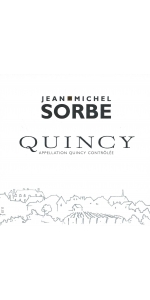
Jean-Michel Sorbe Quincy Blanc is made from 100 percent Sauvingon Blanc.
The first nose is expressive and opens up to notes of acacia, citrus (lemon, grapefruit). Full on the palate with lovely freshness. This wine boasts nice balance and good length.
The vines are 15 to 20 years old and are located on the left bank of the Cher River, southwest of Quincy. This vineyard enjoys good exposure to the sun and overlies hillocks composed of sandy alluvial deposits and gravel dating back to the Quaternary Period. Each terroir is managed with minimal intervention in an environmentally friendly approach. Vinification: Slow pressing. Fermentation took place under controlled temperatures (18°C).The wine was aged on fine lees for a minimum of 4 months. It was filtered only once before being bottled.
Pair with crustaceans, asparagus, or goat's cheeses.
After pouring, allow the wine to breathe for a few moments in the glass before enjoying so that it may fully release all of its aromas.
Jean-Michel Sorbe Quincy Blanc is made from 100 percent Sauvignon Blanc.
The first nose is expressive and opens up to notes of acacia, citrus (lemon, grapefruit). Full on the palate with lovely freshness. This wine boasts nice balance and good length.
The vines are 15 to 20 years old and are located on the left bank of the Cher River, southwest of Quincy. This vineyard enjoys good exposure to the sun and overlies hillocks composed of sandy alluvial deposits and gravel dating back to the Quaternary Period. Each terroir is managed with minimal intervention in an environmentally friendly approach. Vinification: Slow pressing. Fermentation took place under controlled temperatures (18°C).The wine was aged on fine lees for a minimum of 4 months. It was filtered only once before being bottled.
Pair with crustaceans, asparagus, or goat's cheeses.
After pouring, allow the wine to breathe for a few moments in the glass before enjoying so that it may fully release all of its aromas.
Jean-Michel Sorbe Quincy Blanc is made from 100 percent Sauvingon Blanc.
The first nose is expressive and opens up to notes of acacia, citrus (lemon, grapefruit). Full on the palate with lovely freshness. This wine boasts nice balance and good length.
The vines are 15 to 20 years old and are located on the left bank of the Cher River, southwest of Quincy. This vineyard enjoys good exposure to the sun and overlies hillocks composed of sandy alluvial deposits and gravel dating back to the Quaternary Period. Each terroir is managed with minimal intervention in an environmentally friendly approach. Vinification: Slow pressing. Fermentation took place under controlled temperatures (18°C).The wine was aged on fine lees for a minimum of 4 months. It was filtered only once before being bottled.
Pair with crustaceans, asparagus, or goat's cheeses.
After pouring, allow the wine to breathe for a few moments in the glass before enjoying so that it may fully release all of its aromas.
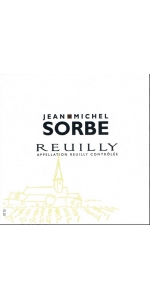
Jean-Michel Sorbe Reuilly Blanc is made from 100 percent Sauvignon Blanc.
The first nose is expressive and opens up to notes of acacia, citrus (lemon, grapefruit). Full on the palate with lovely freshness. This wine boasts nice balance and good length.
The vines are 15 to 20 years old and are located on the left bank of the Cher River, southwest of Quincy. This vineyard enjoys good exposure to the sun and overlies hillocks composed of sandy alluvial deposits and gravel dating back to the Quaternary Period. Each terroir is managed with minimal intervention in an environmentally friendly approach. Vinification: Slow pressing. Fermentation took place under controlled temperatures (18°C).The wine was aged on fine lees for a minimum of 4 months. It was filtered only once before being bottled.
Pair with crustaceans, asparagus, or goat's cheeses.
After pouring, allow the wine to breathe for a few moments in the glass before enjoying so that it may fully release all of its aromas.
Jean-Michel Sorbe Reuilly Blanc is made from 100 percent Sauvignon Blanc.
The first nose is expressive and opens up to notes of acacia, citrus (lemon, grapefruit). Full on the palate with lovely freshness. This wine boasts nice balance and good length.
The vines are 15 to 20 years old and are located on the left bank of the Cher River, southwest of Quincy. This vineyard enjoys good exposure to the sun and overlies hillocks composed of sandy alluvial deposits and gravel dating back to the Quaternary Period. Each terroir is managed with minimal intervention in an environmentally friendly approach. Vinification: Slow pressing. Fermentation took place under controlled temperatures (18°C).The wine was aged on fine lees for a minimum of 4 months. It was filtered only once before being bottled.
Pair with crustaceans, asparagus, or goat's cheeses.
After pouring, allow the wine to breathe for a few moments in the glass before enjoying so that it may fully release all of its aromas.
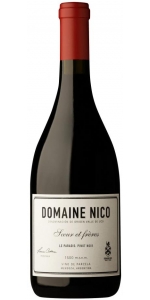
Domaine Nico le Paradis Pinot Noir is made from 100 percent Pinot Noir.
The cool climate vineyard that belongs to Laura and her sister Adrianna Catena feels like paradise itself to Laura. It is lined by trees and fruit orchards, with majestic views of the Andes. Inside the 12 Hectare vineyard, there is a little house with two tiny bedrooms and a kitchen, where Laura dreams of spending a whole month reading books-Laura's version of paradise. The little house is affectionately named Chateau Laura. About the Vineyard The tiny parcel where Le Paradis is grown was planted in 2011 with Dijon 667 Clones over two acres. Wine Production The grapes from this small parcel were elaborated in 15 separate microvinifications.
All the microvinifications were fermented with indigenous yeast. 20% of the microvinifications were fermented with 100% whole clusters in oak roll-fermentor of 600L and low temp (22 Celcius degrees). 40% were fermented with 20% whole cluster in small vats of 800L and 40% fermented in small vats of 800L without sulfites until 4%V/V of alcohol.
Review:
From soils rich in calcium carbonate and sand, in a vineyard 1,600 meters above sea level, this wine comes from a selection of 2.7 hectares that produced very little fruit in 2016, just barely enough to fill 800 bottles. But watch out for this white, with its edge, its minerality, those saline notes that are so characteristic of chardonnay from the chalky Gualtallary soils. The wine was aged for a year in used barrels, and it has some of the toast, but here it’s the deep minerality that dominates.
Patricio Tapia - Descorchados 96 Points
ER3 is the very essence of balance and delicacy – the intensity of Côte des Blancs grand crus and the complexity of its perpetual reserve are combined with immense finesse.
ER3 reveals an extremely delicate, blush pink hue. The nose is superb, with a beautifully complex and delicate aromatic palette that offers up aromas of white flowers, redcurrant, and wild strawberry, before unveiling slightly smoky notes. With a particularly fine and ethereal effervescence, the mouth is fresh and vibrant with superb white fruit and citrus evolving into more complex notes of candied fruit, soft spices, and toasted almonds. The finish is incredibly persistent, underpinned by a magnificent chalky minerality.
The wine is aged on lees in the dark in our cellars for three years.
Chardonnay 75% – Pinot Noir 25% / This edition has been made from a base of the 2018 vintage. / Disgorged in May 2022. / Dosage: 4.5 G/L.
Review:
"This graceful rosé Champagne layers a rich base of roasted almond, toast and smoke accents with nectarine and pureed raspberry fruit, oyster shell, blood orange zest and chalk notes. Fresh and fluid on the palate, with a creamy mousse consisting of fine, pinprick-sized bubbles. Long, rich finish. Chardonnay and Pinot Noir. Drink now through 2030. 750 cases made."
-Wine Spectator 95 Points
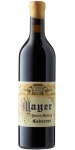
Wine Production: 100% whole bunches undergo a natural yeast fermentation. The wine is then left on lees for a year, with just one handling into the blending tank before bottling. A small amount of Sulphur is added at this point. Wines are bottled without fining or filtration.
Tasting Notes: Spicy and stalky, it has the customary black and red berry notes of Cabernet with a perfumed freshness and medium body. Fine-grained tannins are tempered by the influence of some carbonic maceration in the ferment.
“Cabernet from a north-facing slope on Hans and Anna Orth's vineyard in Coldstream. 100% whole bunches, matured in hogsheads (10% new). A bit darker and denser than last year's wine but equally elegant and perfumed with its scents of blackcurrant, cherry, blackberry leaf and violets. Medium bodied with balanced, mouthcoating yet fine tannins. A lovely wine, more reminiscent of great cabernet franc than sauvignon.”
- James Halliday 96 Points
“Superbly delineated aromas of dried sage, cassis, bay leaves, green beans and mossy forest scents. 100% whole bunch without an ounce of edginess or astringency. This is gorgeous, medium-bodied, perfumed and succulent. There’s a gentle raft of tannins rather than a chunky heaviness. Not dissimilar to the levity and élan of top Loire cabernet franc. Delicious.”
-James Suckling 95 Points



