
" We don't sell the wine without touching the vine "

Wolfberger Alsace Grand Cru Riesling Rangen de Thann is made from 100 percent Riesling.
Mineral, spicy, minty with some eucalyptus notes, tropical fruits, grapefruit. Balanced and exotic in the finish, with long lasting flavors.
The Rangen Grand Cru is located in Thann, deep in the south of Alsace. Its particular soil is made of volcano-clastic rocks that drink up the heat of the day and send it back out again at night. The composition of the soil allows the roots of the vines to drink deeply from the mineral-rich sub-soil. Its southern exposure has the advantage of refreshing, drying winds in case of dampness. The high slopes are quite steep, reaching 68% in some places, requiring that the harvest be done by abseiling or roping down. Perfect for aging, these wines will reveal even more qualities after several years in the cellar.
Pair with Serve with fish, seafood, sushi, sashimi, goat cheese, vegetarian food.
Review:
-Wine Enthusiast 93 Points
-Wine Enthusiast Magazine 90 Points
Wolfberger Alsace Grand Cru Riesling Rangen de Thann is made from 100 percent Riesling.
Mineral, spicy, minty with some eucalyptus notes, tropical fruits, grapefruit. Balanced and exotic in the finish, with long lasting flavors.
The Rangen Grand Cru is located in Thann, deep in the south of Alsace. Its particular soil is made of volcano-clastic rocks that drink up the heat of the day and send it back out again at night. The composition of the soil allows the roots of the vines to drink deeply from the mineral-rich sub-soil. Its southern exposure has the advantage of refreshing, drying winds in case of dampness. The high slopes are quite steep, reaching 68% in some places, requiring that the harvest be done by abseiling or roping down. Perfect for aging, these wines will reveal even more qualities after several years in the cellar.
Pair with Serve with fish, seafood, sushi, sashimi, goat cheese, vegetarian food.
Review:
-Wine & Spirits Magazine 93 Points

Domaine Jean Grivot Clos de Vougeot Grand Cru is made from 100 percent Pinot Noir.
Domaine Jean Grivot is among the great names in Burgundian wine. Étienne Grivot and his wife Marielle took over from Étienne’s father Jean Grivot in 1987. The vineyards are densely planted and farmed organically “sans certification” while the aim in the cellar is for balance and clear expression of terroir.
Jean Grivot’s 38.3 acres spread across 22 appellations with vineyards in the communes of Vosne-Romanée, Vougeot, Chambolle-Musigny, and Nuits-Saint-Georges. Besides the three grand crus, there are 8 premier crus including the much lauded Les Beaux Monts and Suchots in Vosne-Romanée. The grapes are completely de-stemmed and fermentation is spontaneous.
About the Vineyard:
Clos de Vougeot grand cru was acquired by Étienne’s grandfather, Gaston Grivot, in 1919. The total holding is 4.6 acres from the middle of the vineyard to the lower wall and the average vine age is 40 years old. A good Clos de Vougeot should be a complete wine without any one feature standing out. It is a perfect balance of power, aroma, and flavor.
Wine Production:
The grapes are destemmed and maceration à froid usually lasts just a day or two. The alcoholic fermentation is spontaneous and malolactic fermentation occurs in barrel. Depending on the vintage, the proportion of new oak is around 40-70% percent for the grands crus.
Tasting Notes:
The wine shows aromas and flavors of red berries, herbs, and purple flowers. The palate is rich with ripe fruit and medium weight with bright acidity and fine tannins. Aging in 40-70% new Burgundian pièce brings notes of vanilla, toast, and baking spices.
Food Pairing:
Red Burgundy might be the world’s most flexible food wine. The wine’s high acidity, medium body, medium alcohol, and low tannins make it very food-friendly. Red Burgundy, with its earthy and sometimes gamey character, is a classic partner to roasted game birds, grilled duck breast, and dishes that feature mushrooms, black truffles, or are rich in umami.
Review:
-Wine Spectator 95 Points
-Jasper Morris MW 97 Points

Domaine Jean Grivot Echezeaux Grand Cru is made from 100 percent Pinot Noir.
Domaine Jean Grivot is among the great names in Burgundian wine. Étienne Grivot and his wife Marielle took over from Étienne’s father Jean Grivot in 1987. The vineyards are densely planted and farmed organically “sans certification” while the aim in the cellar is for balance and clear expression of terroir.
Jean Grivot’s 15.5 hectares spread across 22 appellations with vineyards in the communes of Vosne-Romanée, Vougeot, Chambolle-Musigny, and Nuits-Saint-Georges. Besides the three grand crus, there are 8 premier crus including the much lauded Les Beaux Monts and Suchots in Vosne-Romanée. The grapes are completely de-stemmed and fermentation is spontaneous.
About the Vineyard:
Echézeaux grand cru is a large vineyard of 38 hectares divided into 11 individual climats. Grivot’s parcel is in the climat of Les Cruots and lies at the southern end of Echézeaux near the premier cru of Les Suchots. A good Echézeaux should have rich fruit, considerable earthiness, and be very complete on the palate.
Tasting Notes:
The wine shows aromas and flavors of red berries, herbs, and purple flowers. The palate is rich with ripe fruit and medium weight with bright acidity and fine tannins. Aging in 40-70% new Burgundian pièce brings notes of vanilla, toast, and baking spices.
Food Pairing:
Red Burgundy might be the world’s most flexible food wine. The wine’s high acidity, medium body, medium alcohol, and low tannins make it very food-friendly. Red Burgundy, with its earthy and sometimes gamey character, is a classic partner to roasted game birds, grilled duck breast, and dishes that feature mushrooms, black truffles, or are rich in umami.
Review:
-Decanter 97 Points
-Wine Spectator 97 Points

Échezeaux is loyal to its appellation through the finesse of its attack on the palate and its overall balance. But it's also a wine with pronounced acidity, which gives it freshness and structure and bestows upon it a sometimes austere finish.
"The 2020 Échezeaux Grand Cru Les Rouges du Bas bursts with aromas of ripe cherries, berries and plums, mingled with notions of rose petals, raw cocoa and loamy soil. Full-bodied, ample and dramatic, it's broad and enveloping, with succulent acids and a rich core of fruit." - 95 Pts. William Kelley (Robert Parker)
Review:
-William Kelley (Robert Parker) 95 Points
-Neal Martin (Vinous) 93 Points

Wolfberger Alsace Grand Cru Hengst Gewurztraminer is made from 100 percent Grand Cru Gewurztraminer.
Hengst means stallion in alsatian.
Floral nose, yellow fruits, sweet spices. The mouth is ample with the same aromatic.
Tangential filtration before bottling.Vinification in stainless steel tanks at 16°C then aging on fine lees until spring of the following year.
Full-bodied cheese (munster, époisses), curry, dessert with fresh fruit
Review:
-Wine Enthusiast 90 Points
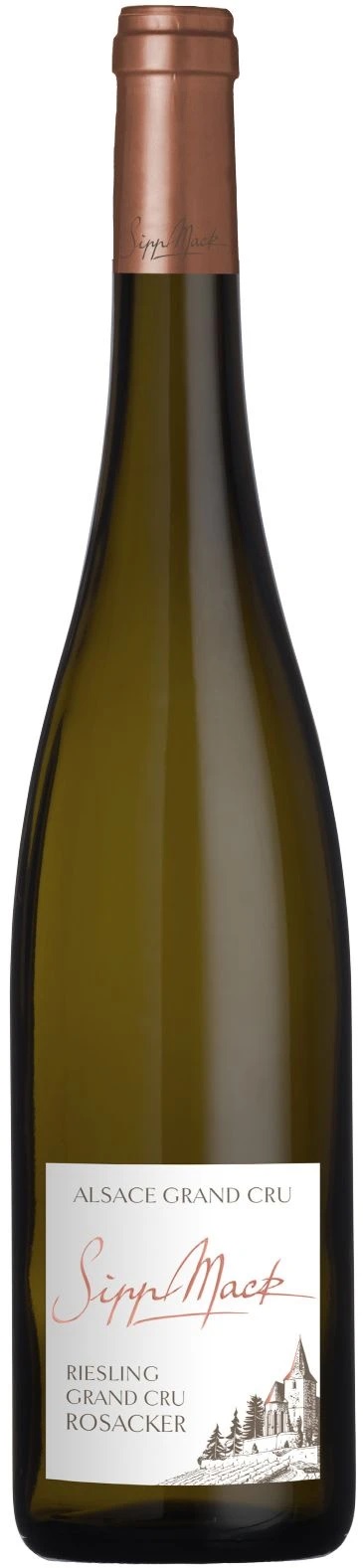
Domaine Sipp Mack Riesling Grand Cru ROSACKER is made from 100 percent Riesling.
Named after the wild roses growing along its border, the Grand Cru Rosacker vineyards extend to the north of Hunawihr over a surface of 26.18 Ha (64.7 acre). The vineyards face east-south-east at an altitude between 260 and 330m. The soil, a heavy, grey limestone with intertwined layers of marl (calcareous clay), is very rich in calcium and magnesium. Sipp Mack cultivates 2.10 Ha (5.2 acre) of Riesling Grand Cru Rosacker.
Wines from our Grand Cru Rosacker in Hunawihr, planted in Riesling, represent the height of gastronomic balance. These special Alsace wines show full structure, complex pepper and citrus aromas and great elegance when young. As they age, they reveal more mineral flavors and are recognized by wine professionals to be among the best Rieslings of Alsace. These wines can easily be aged beyond 15 years.
When young, the Riesling Rosacker has a racy, firm temperament with a sharp, peppery aroma that mellows with age. The wines reveal full strength over time, expanding in depth, unveiling complex, yet subtle mineral flavors, which are characteristic of Rieslings from great terroirs.
TERROIR The terroir is heavy limestone and marl with light layers of sandstone.
CÉPAGES Riesling : 100% SPECIFICATIONS Residual Sugar (g/l): 7.7 g/l pH: 3.2 Acidity (g/l): 6 g/l
SERVING Can be aged 10-15 years. Store on side between 10-15°C. Ideally served between 8-10°C.
Review:
"Juicy lively tangerine notes dominate on the inviting nose. On the palate this juicy tanginess continues with constant veering between fruity richness of ripe flesh and zesty tart peel. There is an underlying freshness here that shines through all of the fruitful generosity and fills mouth and mind with swirling clouds of ripe citrus. The finish is dry, the body is concentrated and intense, the structure is of vivid freshness. Lovely now, certain to evolve. Drink now through 2038." Anne Krebiehl,
-Wine Enthusiast, 31/12/2018 95 Points
An exceptional environment
The vineyards surrounding Hunawihr whisper the timeless story of the village’s cherished bond with the world of wine. As you wind your way up the picturesque, narrow streets, you can appreciate the Alsace traditions passed down over the centuries as they seep from the timber-framed, geranium-bedecked homes.
Nestled at the top of the village, you will find Sipp Mack, a 9th generation family winery, currently run by Laura and Jacques Sipp with their daughter, Carolyn.
Generational winemaking relays
The Sipp Mack winery was created in 1959 following the marriage of two winemaking families, François Sipp from Ribeauvillé and Marie Louise Mack from Hunawihr. In 1983, following his viticulture and enology studies, business school and work experiences in American wineries for 2 years, their son, Jacques, returned to Alsace to join the family estate. He brought his wife, Laura, a Californian graduate from the University of California Davis wine program, back with him.
Jacques and Laura brought new vision to the vineyard and winery operations. Their desire to make consistently high quality, pure wines that reflect their soils led them to combine Alsatian traditions with modern technology and production methods that protect the environment. After years certified sustainable farming and integrated pest management, they converted the entire domain to certified organic farming.
Today, a new breeze flows through the family winery with the arrival of their daughter, Carolyn. Her dynamism and creative ideas enrich and consolidate the domain’s artisanal viticulture and winemaking approach.
Rooted in history yet open to the future, each generation brings initiatives and encouragement to the preceding generation while nourishing each other with their experience.
A modern vision
By recognizing the value of team work among their staff, they strive to create a fulfilling and dynamic work atmosphere.
Not surprisingly, Sipp Mack has evolved over the years. Fifty percent of the wines produced are now available in several export markets. In spite of the relatively rapid changes, the estate has managed to keep its family-oriented nature and its appreciation of its rich heritage. Locals, wine amateurs from near and far, and tourists looking for “the road less traveled” enjoy sharing conversations (often multilingual!) around the tasting room table, surrounded by beautiful artifacts from the past nine generations.
Named after the wild roses growing along its border, the Grand Cru Rosacker vineyards extend to the north of Hunawihr over a surface of 26.18 Ha (64.7 acre). The vineyards face east-south-east at an altitude between 260 and 330m. The soil, a heavy, grey limestone with intertwined layers of marl (calcareous clay), is very rich in calcium and magnesium.
Sipp Mack cultivates 2.10 Ha (5.2 acre) of Riesling Grand Cru Rosacker.
Young, the Riesling Rosacker has a racy, firm temperament with a sharp, peppery aroma that mellows with age. The wines reveal full strength over time, expanding in depth, unveiling complex, yet subtle mineral flavors, which are characteristic of Rieslings from great terroirs.
The Grand Cru Osterberg vineyards are located on the steep, sun-drenched, east-south-eastern slopes of Ribeauvillé at an altitude between 250 and 350 meters. They cover 24.60 Ha (60.8 acre) and have stony, clay-over-marl soils.
Sipp Mack’s Grand Cru Osterberg fields, around 0.84 Ha (2.1 acre), are planted in Riesling and Pinot Gris.
The Riesling Osterberg is opulent, and a touch sweeter and richer than the Grand Cru Riesling Rosacker. With age, it develops a strong body, a wonderfully subtle aroma, and an outstanding mineral character. It is a perfect wine for aging.
The Pinot Gris Osterberg is complex and powerful, with rich fruit sweetness. This richness is perfectly balanced with a good acidity, giving the wine elegance and finesse. The Pinot Gris Osterberg also may be kept for 10 years before drinking.

Burgo Viejo Rioja Gran Reserva is made from 100 percent Tempranillo. 30 year old vines.
Burgo Viejo Gran Reserva shows a deep red ruby color and offers powerful aromas of blackberry jam, spice, leather, chocolate with toasty nuances. Smooth yet full-bodied with firm tannins and a long finish.
Review:
-Antonio Galloni's Vinous 92 Points
-Wine & Spirits 91 Points
-Antonio Galloni's Vinous 91 Points

Bernardins Muscat de Beaumes de Venise Hommage is made from 75% Muscat petits grains blancs, 25% Muscat petits grains noirs.
The wine shows a golden hue with orangy highlights. Endearing nose of grape, orange peel and a honeyed accent. Mild at point of entry, spendid aromatic intensity, sultana, candied orange, rose petal and refined spice. Our Muscat de Beaumes de Venise has a great age ability.
For every vintage of our Muscat de Beaumes de Venise, the grapes are picked by hand. We press them straightaway to ferment the juice without skins. We don’t add any yeasts and keep the alcoholic fermentation in check by temperature control. Vin Doux Naturel winemaking involves stopping fermentation to preserve the grapes’ natural sweetness. During vinification, we watch the vats day and night and add 95% grape spirit just at the right moment. At this stage, the wine’s final balance is at stake. For the Hommage, we blend different vintages, aged in stain steel vats, to create the complexity of a long lasting wine.
The Hommage is a versatile companion to many deserts. Most expressive with dry biscuits and dry fruits, it retains all its character served with a fruit tart, puff paestry and chocolate or coffe desserts. To appreciate as well with duck breasts and figs. Served with a roquefort or a silton, it is marvellous. Simply as an aperitif with some dry fruit or grilled almonds. It's also a good compagnion for a classy cigars.

Figgins Estate Red Wine is a blend of Cabernet Sauvignon, Petit Verdot & Merlot
Dark to the rim, with signature aromatic notes of ripe red and blue fruits, tanned leather, black olive, and lilac. The nose simply brings a smile. On the palate, if I had to describe the wine in one word it would be precision. The way the sweet fruit and dramatic length are braced by lively acidity and tannins aligns so perfectly that the wine is, quite simply, delicious.
Review:
-Eric Guido (Vinous) 97 Points
-Jeb Dunnuck 97 Points
-James Suckling 96 Points

Founded in 1902, Argentina’s Bodega Catena Zapata pioneered the revival of Malbec and the discovery of extreme high-altitude terroir in the Andean foothills of Mendoza. Its crown jewel is the Adrianna Vineyard — planted at nearly 5,000 feet in the Uco Valley and often called the Grand Cru of South America.
The River parcel sits in the path of a dried-out riverbed, its stony soil coaxing out an especially aromatic, rich and luxurious Malbec — floral and exuberant, with smooth tannins and a long, lingering finish. Lovely young, but built to age for decades.
Review:
Probably the most austere among the three Adrianna Vineyard malbecs. Arresting nose already, with a touch of white pepper to the deep black and blue fruit. Huge depth and profoundness, but at the same time it is so fresh. The difference is more obvious on the palate if you compare this with the Mundus Bacillus Terrae and Fortuna Terrae bottlings. This shows the claws of the mineral tannins, which are a little less fleshy than Mundus, but with more tension. Seamless, taut and long. Drink from 2026.
-James Suckling 99 Points



