" We don't sell the wine without touching the vine "
| Country: | Germany |
| Region: | Mosel |
| Winery: | Dr. Leimbrock |
| Grape Type: | Riesling |
| Vintage: | 2019 |
| Bottle Size: | 750 ml |

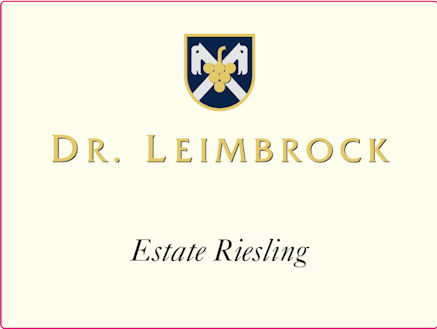
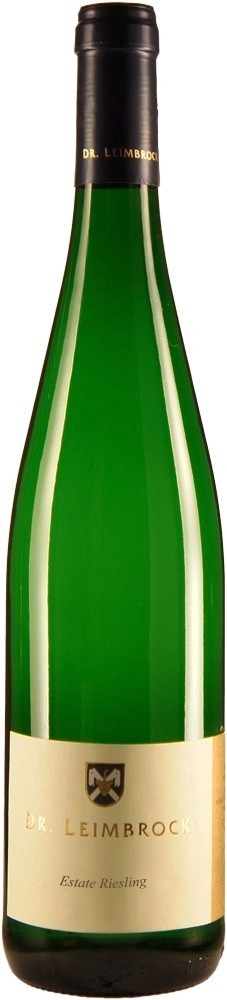
Dr. Leimbrock Estate Riesling is made from 100 percent Riesling.
Typical Riesling, fresh and fruity, easy drinking. Grapes come from Brauneberger Juffer and Juffer-Sonnenuhr - one of the most prestigious vineyards in the Mosel winegrowing region. The vineyard faces south and provides the best conditions for growing Riesling.
Pairs well with barbecue meats, pasta dishes.

Dr. Leimbrock Mulheimer Sonnenlay Riesling Spatlese is made from 100 percent Riesling.
A classic in the residual sweet range that impresses with filigree fruit and mineral spiciness.
The circulating mountain "Mülheimer Sonnenlay" represents a geographical feature of the Moselle. Due to the strong meandering of the Moselle, the mountain was surrounded by the course of the river in geological development in such a way that a so-called circulating mountain arose from it. Located in the northeast-southwest direction, vines are cultivated on both sides of the mountain. The site name "Sonne" and "Lay" (Mosel Franconian for slate) combines the most important prerequisites for the cultivation of Riesling vines. Soils are skeletal-rich, weathered clay-ish shale enriched with sand, stones, and clay. At the beginning of the 1930s, the Mülheim winegrowers proudly pointed out that the local wine was served in the elegant restaurant of the airship "Graf Zeppelin" on its world trips and was obviously very popular.
Pair with spicy dishes, soft cheese, cakes.

Dr. Leimbrock Brauneberger Juffer Sonnenuhr Riesling Kabinett is made from 100 percent Riesling.
Brauneberger Juffer and Juffer-Sonnenuhr are one of the most prestigious vineyards in the winegrowing region Mosel. The vineyard faces south and provides best conditions to plant the Riesling vines.
Juicy and aromatic with a wonderful drinking flow and aromas of melon, stone fruit and apple. Makes you want the next sip.
ABV: 9.1%
TA: 7.5
RS: 36.5 g/liter
Dr. Leimbrock Brauneberger Juffer Sonnenuhr Riesling Kabinett is made from 100 percent Riesling.
Brauneberger Juffer and Juffer-Sonnenuhr are one of the most prestigious vineyards in the winegrowing region Mosel. The vineyard faces south and provides best conditions to plant the Riesling vines.
Juicy and aromatic with a wonderful drinking flow and aromas of melon, stone fruit and apple. Makes you want the next sip.
ABV: 9.1%
TA: 7.5
RS: 36.5 g/liter

It is hard to imagine with the Lithology range receiving 298 points out of 300 for the three single-vineyard wines, that there could possibly be a wine above them. But there is, and it is our Estate wine. Blended several times very intently by masters of their craft Philippe Melka and Michel Rolland, this is the ultimate expression of our house’s work. Positive, full-bodied, and quite powerful, there’s the expected crème de cassis and blackberry from St. Helena Cabernets, with mineral, herb, subtle tobacco and vanilla, plum skins, and pie crust, purple flowers, forest-conifer notes, and very fine tannic structure. It is a magnificent, and magnificently elegant expression of this house, and when asked recently, Monsieur Rolland stated plainly to me, “oh yes indeed – this is the best one, the best yet…”
Review:
Pure perfection in Cabernet, the 2019 Cabernet Sauvignon Alejandro Bulgheroni is all varietal and comes two-thirds from Oakville with the balance from sites in St. Helena and Rutherford. Aged 20 months in 70% new French oak and put together by Philippe Melka and Michel Rolland, it has an incredibly pure, full-bodied, massive yet weightless style that I suspect couldn’t be achieved anywhere outside of Napa Valley. Cassis, blackberries, leafy herbs, lead pencil shavings, and tobacco leaf are just some of the nuances here, and it’s full-bodied, deep, and concentrated on the palate while maintaining an ethereal, seamless, utterly perfect balance between its fruit, alcohol, tannins, and acidity. As good as it gets, it needs just 2-4 years in the cellar and will evolve gracefully for at least 20-25 years.
-Jeb Dunnuck 100 Points

A late harvest Riesling with fruity sweetness and great aging potential, aromatic bouquet of honey, melon, ripe fruits. Grapes come from Brauneberger Juffer and Juffer-Sonnenuhr - one of the most prestigious vineyards in the Mosel winegrowing region. The vineyard faces south and provides the best conditions for growing Riesling.
Pairs well with pâté, Asian cuisine.
Dr. Leimbrock Estate Riesling is made from 100 percent Riesling.
Typical Riesling, fresh and fruity, easy drinking. Grapes come from Brauneberger Juffer and Juffer-Sonnenuhr - one of the most prestigious vineyards in the Mosel winegrowing region. The vineyard faces south and provides the best conditions for growing Riesling.
Pairs well with barbecue meats, pasta dishes.
Dr. Leimbrock has been family-owned for more than 250 years and looks back on a long tradition of producing fine wines. The main focus of our wines are the dry and semi-dry Rieslings. Only when nature allows – which in recent years has increasingly only been possible through the selective picking of the grapes – resulting in the delicate and aromatic Spätlese and Auslese wines. The excellent Leimbrock wines have received both national and international awards. Our wines are only harvested from our own vineyards, only fermented in our own cellars and bottled at our own winery Date Founded: 1750
Owner: Ulrike Oeffling (Leimbrock) Winery Philosophy: Tradition meets Care The Dr. Leimbrock – C. Schmidt winery has been family-owned for more than 250 years and looks back on a long tradition of producing fine wines. The current vineyard of Dr. Leimbrock – C. Schmidt was founded in 1967 by Friedhelm Leimbrock and Lore Leimbrock nee Schmidt from the companies of their forefathers Friedrich Herrmann, Dr. Wilhelm Leimbrock and Conrad Schmidt. Winery/Vineyards Winery Acreage: 22 acres Winery Production: 7,500 cases / 9L cases Varietals Produced: Riesling, Weißer Burgunder, Kerner Winemaker: Dr. Friedhelm Leimbrock We cultivate our Riesling on 8.5 hectares in the best locations in Veldenz, Mülheim, Brauneberg, Bernkastel and Graach.
The soils of our vineyards originate from the ‘Devon’ soil and are composed of weathered slate. 60% of the hills of our vineyard are aptly named – their slopes are 30-80% steep! Ideal locations for Riesling where each area possesses an unmistakable character. Whether Mülheimer Sonnenlay, Veldenzer Bitsch, Brauneberger Juffer, Brauneberger Juffer-Sonnenuhr, Graacher Himmelreich, or the Bernkasteler Badstube, we have some of the best locations on the Mosel. The vineyard is led by Mrs. Ulrike Oeffling. The vines are cultivated in a natural way. We follow guidelines for fertilization, planting and soil protection that are the best for the environment.
The grapes are carefully pressed, the must is fermented in a naturally cooled cellar and the wine is finished in traditional style. Love of the vines, the soil and the wine as well as the certitude of living in one of the most beautiful wine regions is our passion. It is our belief that we can improve our lifestyle through moderate enjoyment of wine. – Lore Leimbrock nee Schmidt, Ulrike Oeffling nee Leimbrock, Rolf-Bernd Leimbrock and Dr. Friedhelm Leimbrock. Acreage per vineyard: Graacher Himmelreich (0,3 ha), Bernkasteler Bratenhöfchen/Badstube (0,4 ha), Brauneberger Juffer-Sonnenuhr (0,6 ha), Brauneberger Juffer (0,9 ha), Mülheimer Sonnenlay (2,8 ha), Other (4 ha)

Indwe Pinotage Coastal Region is made from 100 percent Pinotage.
Pinotage is a true South African grape variety, Our signature grape smilar to the Blue Crane being our national bird. Indwe Pinotage grapes are meticulously sourced from our grape producers along the Coastal region of the Western Cape ensuring complexity, depth and purity of fruit. The wine is layered with sweet cherry notes, and subtle hints of mocha and vanilla flavors.

Intense mahogany. Deep aroma of dried fruits (raisins, figs) bouquet subtle notes of chocolate and coffee. Smooth and velvety in the mouth with a long after taste.
To be served with desserts, at room temperature or slightly chilled, delicious poured over ice cream.
Review:
"Violet color. Aromas and flavors of mashed raisins and prunes and chocolate nuts with a bright, sweet medium-full body and a subtle, long fig paste, mincemeat pie, and baklava finish with no oak. A rich and toothsome PX Sherry with great length and depth."
- Tastings, 2018 World Wine Championships, 93 pts - "EXCEPTIONAL"

Arzuaga Ribera del Duero Crianza 95% Tempranillo and 5% Cabernet Sauvignon.
Dark cherry color with purple highlights. Powerful nose and high aromatic diversity of ripe red and black fruits, spicy and balsamic notes, and a roasted finish. Soft and mellow in the mouth with a great fruitiness and length.
Review:
This is a big wine with alluring aromas of cedary oak and black fruit. Ripe palate of black berries, some dark chocolate and integrated, polished oak. Long spicy finish. Classy Ribera. -Decanter 95 Points

The backbone of this Cabernet Sauvignon is derived from a vineyard in the Atlas Peak AVA of Napa Valley where soils are volcanic in origin and have limited water retention. The balance of fruit is sourced from Coombsville and Oak Knoll. The small berry clusters and intense fruit from low-yielding vines create a wine with full flavor and longevity.
This Cabernet delivers multi-layered aromas of ripe black cherries, toasted oak, dark chocolate, cardamom, vanilla bean, and cedar. A rich medium-bodied wine with plush rounded tannins and juicy blackberries and orange zest that linger on the finish.
TA: 0.72 g/100ml
pH: 3.59