" We don't sell the wine without touching the vine "
| Country: | Spain |
| Region: | La Mancha |
| Winery: | El Cortijillo |
| Grape Type: | Tempranillo |
| Vintage: | 2020 |
| Bottle Size: | 750 ml |

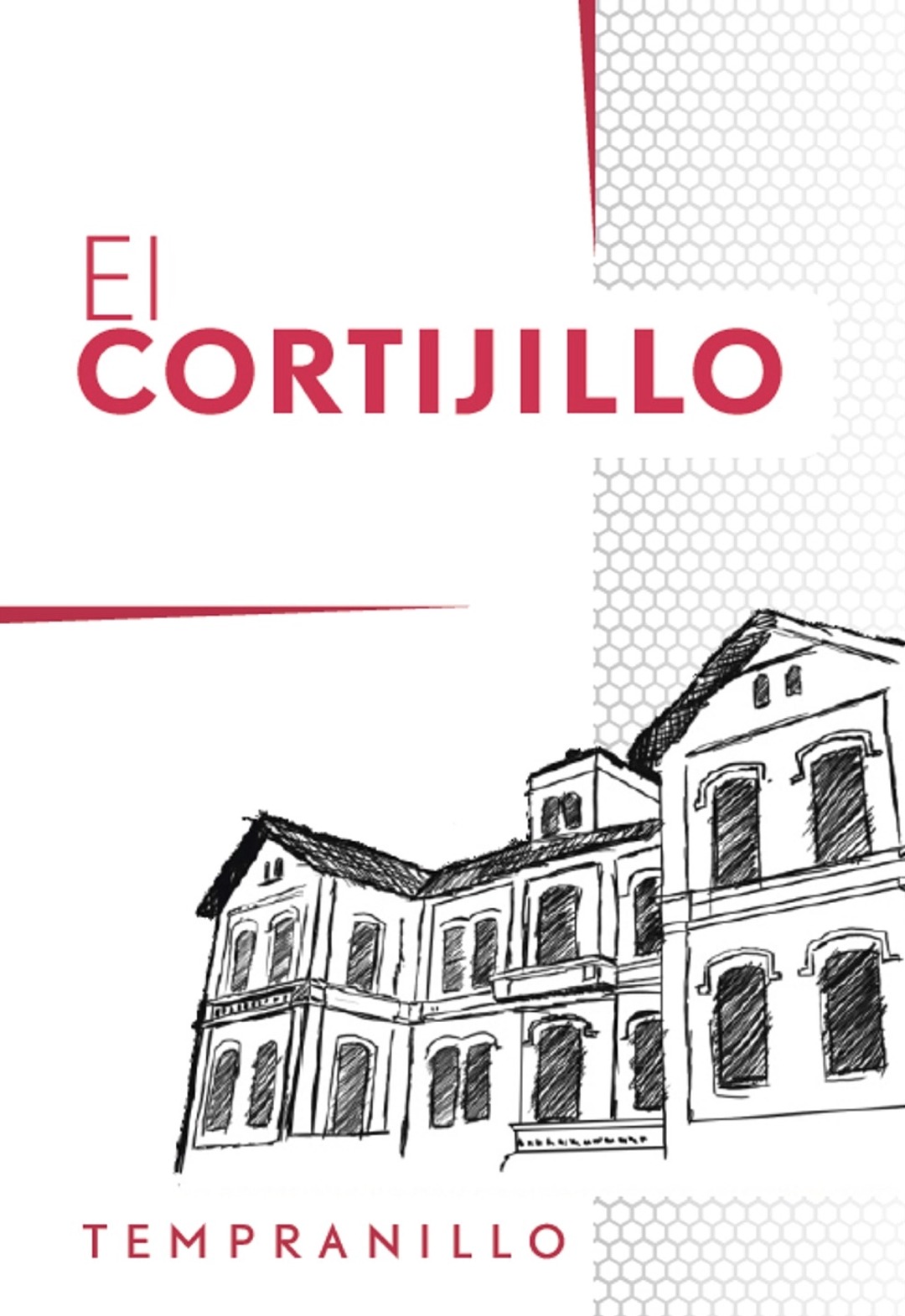
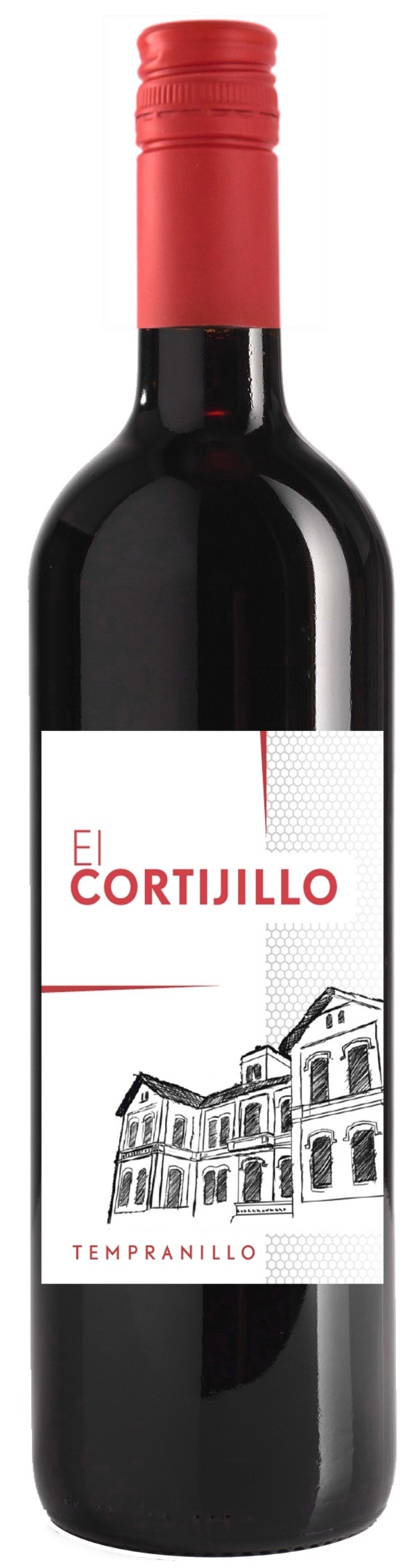
El Cortijillo Tempranillo La Mancha is made from 100% Tempranillo
Up front aromas of raspberry and cherry fruit, medium to light weight, Rhône wine in character, cherry fruit flavors, followed by bright acidity. Reminds of a mythical cross between a Pinot Noir and a Côtes-du-Rhône. Pleasant and fun, bistro red.
Made from 30 year old vine.
Delicious with Paella, hamburger or pasta. But also great with grilled vegetables. (bell pepper, eggplant, etc)

Finca del Castillo Tempranillo La Mancha is made from 30 year old vine Tempranillo (100%).
This pretty little red has a flavor reminiscent of good Cotes du Rhone. Medium bodied, flavorful; hints of raspberry and strawberry. Shows best with picnic fare and grilled meats. Perfect summer red.

Crianza is the essential wine. Balance and integrity. It displays the fine manners of experience and the grace of plethoric vine. Juicy black fruit on the palate inviting you to eat well and feel good.
But there is more. Crianza maintains an invisible pact with the landscape. An imperceptible force that brings us closer to the truth of the place. And instantly turns extreme climate vineyards into the most welcoming place in the world.
Prepared with Tempranillo grapes (100%), this wine has a very bright, intense maraschino cherry colour that fades to a Cardinal red rim.
It has a very marked aroma with a good balance of fruit and wood, where tones of vanilla intermingle with well-ripened fruit, black berries and wild fruits. There are also noticeable hints of leather and liquorice, resulting from the mingling of the French oak and the aromas inherent in this variety of grape.
In the mouth, the wine has a smooth texture but fills the palate with balanced flavours, including fine tannins, which help extend the life of the wine. The finish and aftertaste are both long and elegant.
Vineyard:
Pago de los Capellanes, Pedrosa de Duero.
Variety composition:
100% Tempranillo.
Type of soil:
Clayey and chalky.
Aging:
12 months in barrel and remainder on rack.
Type of oak:
100% French oak, medium toast.
Serving:
Uncork and decant one hour before serving at a temperature of 16-18 ºC.
Selected harvest with yields limited to 5000 kg per hectare. The harvest begins in early October, starting with the most mature parcels. Once the grapes are brought into the winery, the tanks are seeded with indigenous yeast (start culture) and the alcoholic fermentation begins. During the barrelling period, which lasts 30 days, the wine is crushed and pumped over daily, all the while controlling the density, temperature and evolution of the yeast. At the end of this fermentation, the tanks are emptied and the wine taken for malolactic fermentation.
The malolactic fermentation begins without the addition of bacteria. The temperature is held steady at 20ºC for period of 22 days, during which we monitor the levels of malic and lactic acids. When the malic acid content is less than 0.1 grams per litre, the wine is decanted to separate the lees and is transferred directly to the barrels without undergoing any type of filtration, clarification or cold treatment.
The wine is aged for twelve months in new and semi-new French oak barrels (no more than three years old). At the end of this period, it is taken to the tank for homogenisation, where it undergoes light filtration through cartridges (open pore) and is then bottled.
Review:
-Decanter 94 Points
-Jeb Dunnuck 92 Points
-Wine Spectator 91 Points

There are afternoons with indigo skies when we approach one of the oldest plots of the estate. Our stroll from the winery follows a line of cypress trees to the corner of a path. This angle gives its name to our most exceptional vineyard.
El Picón is the great symbol and the most profound reality. The sum of enigmas in a beautiful, pure fruit. The wine of silence and intimate joy, an eternal taste in which generations, labours and nature’s favors culminate.
Grapes from the plot of El Picón, one of the oldest at the Pago de los Capellanes estate in Pedrosa de Duero.
22 months in 225-litre, extra-fine grain French oak barrels dried over 60 months.
Pago de los Capellanes Finca El Picón 2018 is a mature red wine with intense aromas of red and black fruit from the forest accompanied by deep balsamic notes and spicy touches provided by aging. In the mouth it is meaty, deep and very balanced. A medium to full-bodied wine with vibrant acidity and fine, velvety tannins. The finish is long and very persistent.
1.6 hectares of clay loam soil with surface gravel. Very poor fertility and very low vineyard yields.
Review:
-Antonio Galloni 93 Points
-Decanter World Wine Awards 97 Points

La Despensa Boutique Field Blend is made from 45% Grenache, 35% Syrah, 15% Mourvedre and 5% Roussanne.
This is La Despensa's flagship Rhône-blend, produced from grapes from their own, organic vineyard in Colchagua. Their passion is to produce very high-quality grapes - it’s the vineyard work that they love the most. So this blend is always a little different year after year, as they make whatever the vineyard gives them. In 2020 they incorporated a little Roussanne to the blend, which adds some mouthfeel and a tiny background note of tropical fruit, to accompany the fresh fruit and structure that the other varieties bring out.
Review:
-James Suckling 92 Points

La Parcelle 8 Cabernet Sauvignon presents bold and complex aromas of black fruits, chocolate, and toast alongside earthy, herbal, and floral notes. On the palate, it displays a full body, ripe tannins, and a lasting finish.
La Parcelle 8 Cabernet Sauvignon pairs well with roasted lamb, braised short ribs, mushrooms, or fine cheeses.
Review:
-James Suckling 99 Points
El Cortijillo Tempranillo La Mancha is made from 100% Tempranillo
Up front aromas of raspberry and cherry fruit, medium to light weight, Rhône wine in character, cherry fruit flavors, followed by bright acidity. Reminds of a mythical cross between a Pinot Noir and a Côtes-du-Rhône. Pleasant and fun, bistro red.
Made from 30 year old vine.
Delicious with Paella, hamburger or pasta. But also great with grilled vegetables. (bell pepper, eggplant, etc)
The El Cortijillo Estate
El Cortijillo means the little farm in Spanish. The wine is made by Vinicola de Castilla in Manzanares (Ciudad Real) in an up to date, state of the art winemaking facility (30,000 sq meters/300,000 sq ft) with the capacity of producing 2 million liters and holding 8,000 barrels. Founded in 1976, it's a privately owned corporation (not a co-op). Since its inception, a DO La Mancha pioneer in fruit-driven young wines, barrel-aged reds and varietals. More than 600 international awards for their wines.
Production by type: 65% Red wine, 35% White and Sparkling.
Export sales represent 50% of the production. The winery exports to 22 countries.
Capacity is 20,000,000 liters, currently running at 12,000,000 liters of yearly production.
This Bodega likes to promote their Crianza wines.
The El Cortijillo Vineyards
The winery and the vineyards are all located in the "La Mancha" DO. Tempranillo is the primary grape varietals and it represents 70% of the total production.
They grow the following 5 red grape varietals:
· Tempranillo
· Cabernet Sauvignon
· Merlot
· Petit Verdot
· Syrah
They also grow the following 6 differents types of White grape varietals:
· Verdejo
· Airén
· Macabeo
· Sauvignon Blanc
· Moscato
· Chardonnay.
The wines are all produced with grapes they only grow themselves. They own 50 hectares, and they currently rent another 550 hectares (long term leasing contract).

Rubus Brut Rose is made from 60% Tempranillo, 40% Bobal.
The Rubus Project was created by Fran Kysela as a way to source & sell incredible wines at value prices. All wines in this international project are hand-selected by Fran Kysela. Rubus wines are fruit driven, true-to-type values that over deliver - a true representation of quality for the consumer at an excellent price.
Stunning salmon-pink hues. The nose is intense and fine, dominated by notes of red berries. On the palate, the combination of fine bubbles and delicate aromas produces a delightfully light and silky rosé.
Machine harvest. The base wine is fermented at a low temperature. The second fermentation takes place at 14°C for 2 weeks, followed by dosing.

Rudi Pichler is among the elite growers of the Wachau producing wines of precision, power, and longevity. Grüner Veltliner and Riesling make up 95% of the production with the remaining 5% shared between Weißburgunder and Roter Veltliner. Rudi Pichler belongs to the prestigious Vinea Wachau and vinifies under the strict parameters of their codex.
Yields are kept low between 30 and 35 hectoliters per hectare with botrytis carefully removed by hand. Grapes are crushed by foot and receive between three and 36 hours of maceration on the skins. Vinification is entirely in stainless-steel tanks and malolactic fermentation is avoided.
Hochrain, a name meaning "high place," is a southeast-facing terraced vineyard in Wösendorf sitting between 200 and 300 meters of elevation. The vineyard consists of an unusually high content of loess, a mineral-laden soil that produces wines that are especially broad and rich.
Review:
“A stunning wine for this grape that is also rather easy to understand. The Reine Claude plum and peppery nose is complex, but already charming. As exciting as the simultaneously creamy and succulent mid-palate is, what makes this medium- to full-bodied gruner veltliner really stand out is the extremely long, crushed rock finish.”
James Suckling 96 Points

G.D. Vajra Barolo Coste di Rose is made from 100 percent Nebbiolo.
The Coste di Rose is a very seductive wine right out of the gate. Cherries and roses burst on the nose, with hints of amarena, red hard candy, wild berries, wet stone, mint and thyme. The palate is radiant and expressive, with all of the signature elements of Coste di Rose in nice evi-dence: the ethereal character, the saline, up-front tannic structure, and further whiffles of roses and cherries in the finish.
G.D. Vajra is one of Barolo's most beloved family estates, farming organically in La Morra since the early 1970s and known for fragrant, high-toned, transparent Nebbiolo. Coste di Rose is one of the highest and coolest crus in Barolo, its sandy, well-draining soils yielding especially perfumed and graceful wines; the 2022 is a touch more structured and powerful than most.
Review:
Floral, as is typical of this estate, with crunchy red fruit and rose petals. The palate is medium-bodied, with a blanket of delicate, tender fruit defined by chalky, precise yet silky tannins. Drinkable now with proper aeration, but will improve with some bottle age.
James Suckling, 96 points
Review:
-James Suckling 96 Points
-Monica Larner (Robert Parker) 95 Points