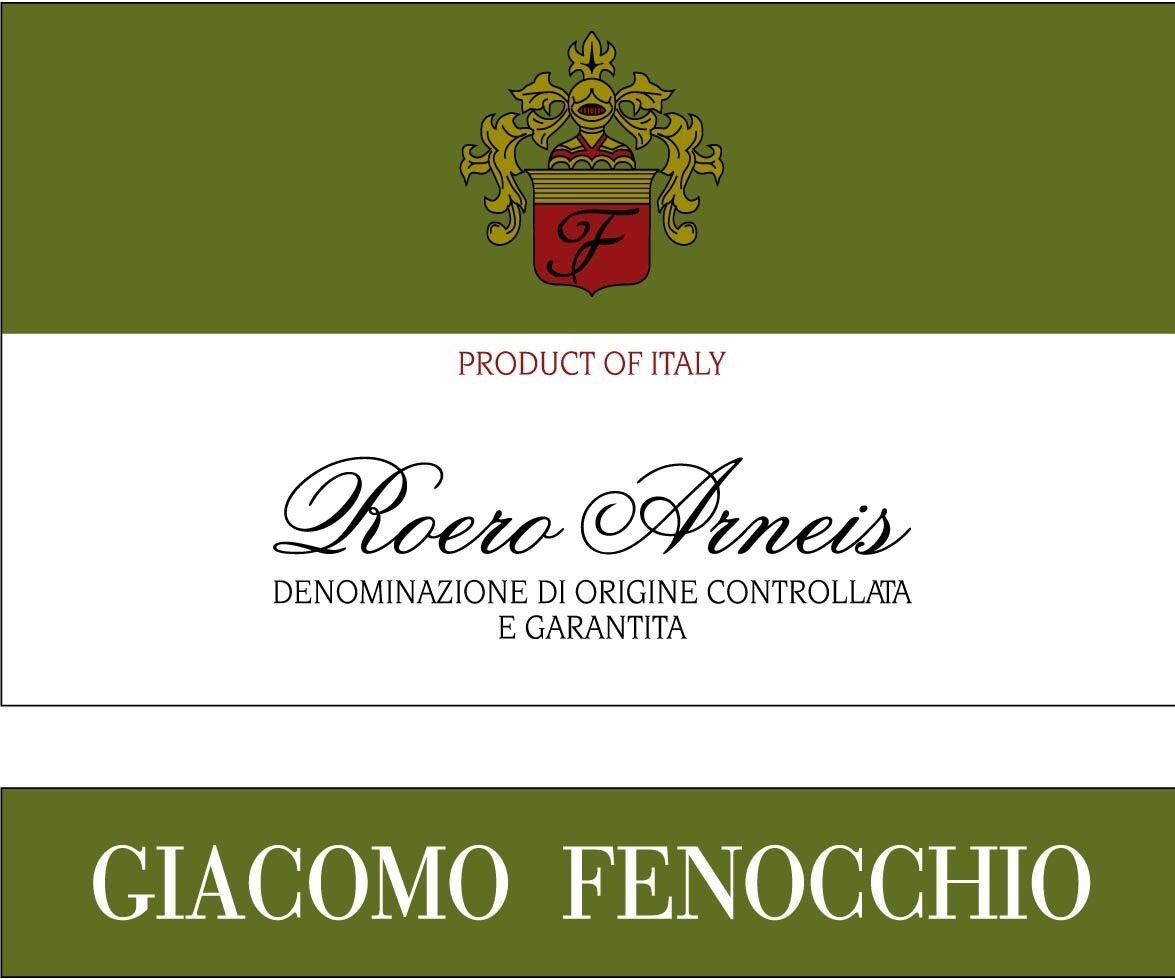
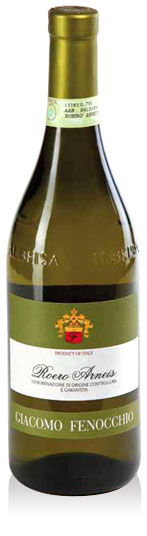
" We don't sell the wine without touching the vine "
| Country: | Italy |
| Regions: | Piemonte Roero |
| Winery: | Giacomo Fenocchio |
| Grape Type: | Arneis |
| Vintage: | 2015 |
| Bottle Size: | 750 ml |

Pazo de Senorans Seleccion de Anada Albarino is made from 100 percent Albarino.
Straw yellow with greenish tints, vivid and brilliant. High intensity and very expressive. Profusion of aromas with traces of mineral. Great volume and ample body leaving a lasting impression from beginning to end.
Reviews:
The 2015 Albariño Selección de Añada is nothing short of phenomenal. For some reason, I hadn't tasted the young 2015 Albariño at the time it was released. It comes from the Los Bancales vineyard planted some 50 years ago and fermented with indigenous yeasts but without malolactic fermentation. It has a bright, almost fluorescent color and a complex, subtle and nuanced, elegant and expressive nose, with notes of sea shells and sea breeze, grass and white flowers. It's very clean, and the palate shows great balance and even feels a bit young. It has remarkable acidity and freshness (seven grams of tartaric acid) with good ripeness and 13% alcohol. This matured in tank with lees for over 30 months and was bottled in June 2024. It feels more serious and less exotic than earlier vintages. 18,000 bottles produced. This is the finest vintage that I can remember. Bravo!
-Wine Advocate 97 Points
Tech:

Fenocchio DOC Barbera d'Alba Superiore Bussia is made from 100 percent Barbera.
The color is a deep ruby red with garnet reflections. It has a rather intense bouquet, with scents typical of the vine and a full bodied and dry flavor, with a distinct and pleasing acidity. It becomes mature with aging, acquiring a full and balanced flavor.
Parcel is 2.5 hectares (6.2 acres) planted at 300 meters above sea level.
It pairs well with red and white meats, tagliatelle pasta and cheeses.

Fenocchio DOC Nebbiolo Langhe Bussia is made from 100 percent Nebbiolo.
The color is a deep ruby red with garnet reflections and an intense and fruity bouquet of plum and cherry. The flavor is dry with good body, well balanced tannins and harmonious with hints of licorice and rose.
Parcel is 2 hectares (5 acres) planted at 300 meters above sea level.
Pairing well with all types of food, from appetizers to cheeses with red and white meat.

Fenocchio DOCG Bussia Barolo is made from 100 percent Nebbiolo
The color is deep garnet red and the bouquet is fine and pleasing, with intense scents of spiced rose and licorice. The flavor is dry, warm, full bodied and balanced with pronounced tannins and a persistent aftertaste. A wine particularly adapted for aging.
Traditional method of long maceration: natural fermentation without added yeasts for 30 days in stainless steel tanks.
The Barolo Bussia, with its structure and body characteristics, pairs well with dishes of meat, game and aged cheeses, typical dishes of the local cuisine, as well as with many rich international dishes.
Review:
" Pleasant dried-cherry aromas, colored with nutty spice and dried leaves. Full-to medium-bodied with fine, firm and velvety tannins and a long finish of candied-cherry and chocolate. Give it a few years to meld together better. Best from 2025."
- James Suckling (January 2022), 93 pts

Salmon hue with bright red tints. Fine and energetic bubbles. A ripe, complex and youthful bouquet of slightly tangy red fruit (redcurrants, blackcurrants), ripe citrus (blood orange) and roasted cocoa beans. After some time in the glass, the wine reveals sappier, floral and sweet notes with a saline, almost briny, core. The first impression of the wine is of a generosity, softness and concentration. One has the sensation of biting into juicy, ripe fruit and blood orange, it is a fabulous aromatic explosion with luscious and slightly tangy overtones. The concentrated and dense body takes over and reinforces the impression of substance, of concentrated liqueur on the mid-palate. The finish stretches out, perfectly-honed, gradually revealing umami notes thanks to the precise and crisp mineral freshness.
Reviews:
The 2015 Brut Vintage Rosé is generous and demonstrative, bursting with aromas of peach, orange and pear mingled with hints of red berries, fresh bread and ginger. Full-bodied, layered and vinous, it's rich and enveloping, its textural attack segueing into an ample, fleshy core that's girdled by bright acids and enlivened by a pillowy mousse. Long and expansive, it's more generous and gourmand than its racier 2014 predecessor, but just as good.
-Wine Advocate 94 Points
This shows lots of cotton candy and peach, together with strawberries and cream. But not overpowering. Some cranberry, too. It’s medium-to full-bodied with fine bubbles and a lively finish. Dosage 8g/L. Drink now or hold.
-James Suckling 94 Points

Paradigm Cabernet Sauvignon is made from 90% Cabernet Sauvignon, 8% Merlot, 1% Petit Verdot, 1% Cabernet Franc
20 months in French oak (only about a third of that is new oak) and for 20 more months in bottle before release
Our winemaking "style" is solely determined by this place or terrior we call "Paradigm." Winemaking is agriculture when you own your vineyards and are able to farm them to promote the very best Earth will give you. All of our selections of wines are made from five varietals on the estate. Every wine is 100% farmed and grown by us.
Complexity in our wines supported by luscious fruit and acidity is our hallmark. Our efforts during harvest and barrel cellaring concentrate on maintaining the freshness from the first day we handpicked each vineyard block. Simple winemaking protocols are employed while crucial “timing” oriented winemaking decisions rule each day.
The 2015 vintage produced delicious concentrated wines in smaller quantity than normal. This black raspberry colored Cabernet has lovely open aromatics of black cherry, berry, and plum layered with a perfect balance of new and used French Oak.
Reviews:
"Owned and managed by the Harris family, Paradigm winery produced its first vintage in 1991 in Oakville with winemaker Heidi Barrett. A self-contained winery estate with 50 acres of vineyards, Paradigm maintains a hands-on approach to all winemaking and vineyard operations. The 2015 Cabernet Sauvignon consists of 89% Cabernet Sauvignon, 6% Merlot, 3% Petit Verdot and 2% Cabernet Franc, and is aged in both new and used French oak for 20 months, then aged a further 20 months in bottle before release. The total production for this vintage was 5,544 bottles." Blind tasted by Dave Allen, Stephen Brook, Terry Kandylis (at Decanter Magazine's December 2019 Californian Cabernet 2015 Panel Tasting, London, 17 Sep 2019) - Decanter 95 Points
Area of production: Monteu Roero
Fenocchio Roero Arneis is made from 100% Arneis
Vineyards area: 1.2 hectares (2.98 acres)
Exposition: Southeast
Altimetry: Hilly zone at around 300/350 meters a.s.l
Soil: calcareous,clay, soil of medium texture
Age of the vineyards: 10/15 years
Grape yield per hectare: 70 quintals
Harvest: Mid September
Vinification: The grapes are gently pressed and then the wine-must obtained is refrigerated in stainless steel vats to allow the lees to settle. After 24-36 hours the juice is separated from the lees and fermented at a controlled temperature. Bottling is done in sterile conditions. Aged in stainless steel tanks and matured in the bottle.
Tasting notes: the light hay coloring is loaded with greenish reflections. The fragrance is soft and complex, especially inviting with aromas hinting broom, chamomile and fresh fruit. The flavor is pleasantly tangy, full and very persistent.
Food Pairing: Great as an aperitif. Pairs nicely with saucy dishes white meats and grilled fish .
Serving temperature: Recommended serving temperature is around 10 - 12 degrees Celcius (52-56 degrees Fahrenheit)
Alcohol: Approx. 13-13,5% Vol
Total acidity: Approx. 5.5 – 5.8 g/L
The Giacomo Fenocchio Estate
The Fenocchio estate was founded in 1864. For over five generations, with its twelve hectares (thirty acres) of vineyards in the heart of the Barolo production zone, it produces and ages important wines, following in the footsteps of traditions handed down from father to son. In the post-war period, new energy was given to the estate’s work by Giacomo Fenocchio, who began to acquire new vineyard land.
Before the Second World War, the wine was sold principally in local markets: either in bulk or in demijohns, Larger ambitions began only in the early 1960’s, with an eye to foreign markets as well.
Today the sons of Giacomo Fenocchio – Claudio, Albino, and Alberto – export close to eighty per cent of their production, thereby creating a name and reputation for the family and a territory as well as for their wines.
The Giacomo Fenocchio Vineyard
All of the Fenocchio wines are made from the grapes of the estate’s proprietary vineyards located in three different townships: the Bussia in Monforte d’Alba; Villero sub-zone of Castiglione Falletto; and Cannubi in Barolo. All are “grand cru” vineyards and have always been recognized as such for the special microclimates which give them the potential to produce wines of exceptional character and personality and an aristocratic structure. The different characteristics of the soil and, in particular, of the sub-soils of these three subzones give wines which are notably different from one another. The microclimates and the excellent exposures (southeast and southwest) create highly favorable conditions for the ripening of the grapes and create as well special bio-chemical characteristics which produce the outstanding aromas and flavors of the wines made from these grapes.
BUSSIA IN MONFORTE D’ALBA
The soils are of Helvetian origin: compact clay and limestone marls along with tuff in Bussia di Monforte.
CASTIGLIONE FALLETTO – THE VILLERO VINEYARD
Approximately twelve kilometers (seven miles) from Alba, the town of Castiglione Falletto dominates the hillside ridge which runs through the central part of the Barolo appellation. Soils are of Helvetian origin with clay and limestone deposits rich in iron.
THE CANNUBI SUB-ZONE OF BAROLO
Historically eminent among the vineyards and sub-zones with the highest potential for fine Barolo: the oldest bottle of the Langhe district is conserved in the city of Bra and bears the inscription “Cannubi 1752”: the Cannubi name has always been a seal of honor and a true, universally recognized guarantee. Soils are of Tortonian origin, marls and tuff together with a significant presence of sand in the Cannubi vineyard in the township of Barolo, which maintains a soft and dry texture in the soil.

Salmon hue with bright red tints. Fine and energetic bubbles. A ripe, complex and youthful bouquet of slightly tangy red fruit (redcurrants, blackcurrants), ripe citrus (blood orange) and roasted cocoa beans. After some time in the glass, the wine reveals sappier, floral and sweet notes with a saline, almost briny, core. The first impression of the wine is of a generosity, softness and concentration. One has the sensation of biting into juicy, ripe fruit and blood orange, it is a fabulous aromatic explosion with luscious and slightly tangy overtones. The concentrated and dense body takes over and reinforces the impression of substance, of concentrated liqueur on the mid-palate. The finish stretches out, perfectly-honed, gradually revealing umami notes thanks to the precise and crisp mineral freshness.
Reviews:
The 2015 Brut Vintage Rosé is generous and demonstrative, bursting with aromas of peach, orange and pear mingled with hints of red berries, fresh bread and ginger. Full-bodied, layered and vinous, it's rich and enveloping, its textural attack segueing into an ample, fleshy core that's girdled by bright acids and enlivened by a pillowy mousse. Long and expansive, it's more generous and gourmand than its racier 2014 predecessor, but just as good.
-Wine Advocate 94 Points
This shows lots of cotton candy and peach, together with strawberries and cream. But not overpowering. Some cranberry, too. It’s medium-to full-bodied with fine bubbles and a lively finish. Dosage 8g/L. Drink now or hold.
-James Suckling 94 Points

Hyde de Villaine Chardonnay Napa Valley Carneros Hyde Vineyard is made from 100 percent Chardonnay.
Star-bright vibrancy. Chiseled acidity and minerality focus the palate with flavors spanning lemon ice to dried mango and hazelnut. The purity of this wine showcases the coolness of the 2023 vintage. A captivating texture of precision and charm highlights this complexity offering.
Review:
This wine is truly excellent, showing a mineral-edged nose with pure energy and tension. Aromas of struck match, citrus blossoms, crushed stones and salted nuts. The palate is taut, with no hard edges and driving acidity that keeps you salivating for minutes. Closing in on perfection. Drink or hold.
-James Suckling 99 Points