
" We don't sell the wine without touching the vine "
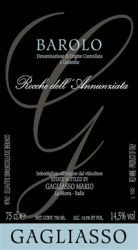

Renato Ratti Rocche dell'Annunziata Barolo is made from 100 percent Nebbiolo. Grapes handpicked in the month of October, de-stemmed and pressed. The alcoholic fermentation takes place in temperature-controlled stainless steel containers. Contact with the skins lasts approximately three to four weeks and includes fermentation and subsequent post-fermentation maceration with the traditional submerged cap system. The malolactic fermentation takes place in steel containers.
The Rocche dell'Annunziata vineyard is historically known as one of the most important in the Barolo zone. In his Barolo Chart, Renato Ratti had already underscored this by entering it in the 1st Category class. Situated at about 300 meters above sea level and with a south-east exposure, it extends over approximately 1 hectare. Rich with typical blue marl interspersed between veins of sand, the earth confers an extraordinary elegance and depth, combined with fine and persistent scents of roses and licorice. A prestigious subzone engenders a Barolo that holds within it suggestions of a radiant future. Warm, persistent, rich: in a word, sumptuous.
The label bears the coat of arms of the local noble family, with a black hawk against a gilt backdrop. The Latin inscription “Probasti me et cogniusti me” means “You tried me, you knew me.”
The Bottle: The Albeisa – named after the city of Alba – is the iconic bottle created by Renato Ratti in 1973, desired as a way of identifying the uniqueness of a territory and its wines.
A garnet red. Delicate and persistent fragrance with trace scents of licorice, rose and violet. Full-flavored, warm, with extremely elegant tannins offering long persistence. A great wine for important dishes, red meats roasted on a spit or grilled, game, dishes of gourmet white and red meats and ripe cheeses.
Review:
-James Suckling 97 Points

Gagliasso Barolo Riserva Oak Box is made from 100% Nebbiolo
Complex and intense aromas of red fruits intermixed with licorice, prune, leather, smoke and notes of toasty oak and vanilla. Full-bodied on the palate with loads of ripe dried and candied fruits, pepper and mocha.
After malolattic fermentation the wine stays for 10 months in French barrels, 10% new oak and 90% different years; after this period all barrels are blended ( 50% Torriglione and 50% Rocche dell’Annunziata) in old barrels for 48 months again. The wine is bottled and refined for 24 months.
There's a gritty, sandy quality to the tannins that would cut through roast pork stuffed with prunes.

G.D. Vajra Bricco Delle Viole Barolo is made from 100 percent Nebbiolo.
The Barolo Bricco delle Viole shows the signature verticality of its vineyard. The wine is beautifully layered and - while restrained as it’s always the case in the youth of Bricco delle Viole - it also shows a complexity of layers with purple flowers, sweet spices and mineral tones. The palate is noble, with a refined acid spine and profound tannins that promise a long aging potential.
Among the historical vineyards of Barolo, Bricco delle Viole is the highest and the closest to the Alps. It rises from 400 to 480 meters above sea level, on the Western ridge of the village. Its name, “Hill of Violets”, originates from the flowers that blossom early here due to the perfect south exposure. Up above the fogs, Bricco delle Viole enjoys the earliest sunrise and the last sunset every day. Thanks to its vines dating back to 1949 and -now- 1931, a dramatic diuturnal temperature range and this pure light, Bricco delle Viole generates a sophisticated and profound Barolo DOCG of bright aromatics, chiseled tannins and subtle minerality. 2018 is a vintage that shows many nuances of Bricco delle Viole: beyond the signature verticality of this site, the wine offers high tones laced with mineral nuances and plenty of energy and youth.
Review:
The 2018 Barolo Bricco delle Viole is not super intense, but it is balanced in its own way. The wine is subdued but complete with softly yielding tannins to support an elegantly streamlined mouthfeel. Bricco delle Viole is a high and cool growing site in Barolo at 400 to 480 meters in elevation with characteristic Sant'Agata marl soils with fossils. The wine represents a selection of fruit from over seven hectares. With fermentation in steel tank and aging in large Slavonian oak, you are invited to a silky, lifted and beautifully delicate experience with an accessible personality.
-Wine Advocate 95 Points
An elegant version, this red features rose, black currant, cherry, mineral and a hint of eucalyptus aromas and flavors. Linear in profile, this is solidly built on a graceful frame, with finely woven tannins and vibrant acidity.
- Wine Spectator 95 Points

Thorn Clarke William Randell Cabernet is made from 100 percent Cabernet
The William Randell range of wines were created in honor of the family ancestor - the esteemed pioneer William Richard Randell (1824 - 1911). The wines are sourced solely from grapes grown on the family estate vineyards. Wines in this range are only made in exceptional vintages.
The deep red color with purple hues of this wine draw you in. The nose is brimming with notes of fresh blackcurrant intertwined with complexing savory spice. The palate has an integrated French oak influence with notes of toasty cedar accompanied by further notes of briary fruits. A wine with great depth and drive.
Review:
-The Real Review (Melissa Moore) 95 Points — “Top Value”

Thorn Clarke William Randell Shiraz is made from 100 percent Shiraz
The William Randell range of wines were created in honor of our family ancestor - the esteemed pioneer William Richard Randell (1824 - 1911). The wines are sourced solely from grapes grown on our estate vineyards. Wines in this range are only made in exceptional vintages.
Deep red with inky purple hues. This classic Barossa style shows rich blackberry, licorice, spice plum and smoky oak on the nose. The palate is dense with ripe mulberry and berry compote and generous supporting oak. The tannins are savory and long with spicy refined finish
Following harvest the fruit was crushed into a variety of small fermenters (4 to 6T in capacity). Fermentation was carried out at a warm temperature (25-28 degrees ). The ferments were manually pumped over to provide good control of tannin extraction. Each fermenter was treated as a separate parcel of wine and once dry was filled to American oak (40% new). Following malolactic fermentation the wines were racked and returned to the same oak. Parcels remained in barrel for an average of 18 months prior to blending. Only the best barrels from the multiple parcels were used to make the final blend. Once blended the wine was prepared for bottling.
Review:
-Campbell Mattinson 94 Points

Antica Vigna Amarone della Valpolicella Riserva is made from 65% Corvina, 20% Rondinella, 10% Corvinone, 5% Merlot.
Amarone DOCG has maintained unchanged its typicality, so that “the essence of the territory” of Valle di Mezzane and Cazzano di Tramigna powerfully emerges. Rich in color, firmly structured but with fresh notes.
WINEMAKING AND AGING:
Manual harvest early October with selection of the best bunches.
Drying: natural drying in fruit cellar for 3/4 months with a sharp drop in weight of around 30%.
Vinification: soft crushing of destemmed grapes in the months of January and February.
Fermentation: at a controlled temperature of 18/21°C. Fermentation time: about 30 days
Aging:· 80% in oak barrels for 30 months of which 2/3 in American and French barriques, half of which are used for the second and third time, 1/3 in large
THE TERRITORY:
Geographical location: Tenuta di Mezzane, Tenuta di Cazzano di Tramigna
Height: 350/400 meters asl
Exposure: south
Soil type: limestone
Vineyard training system: guyot and pergola
Vine planting year: from 1972 to 2009
Vine density: 4,000 to 5,400 vines per hectare Vineyard management: sustainable agriculture and great attention to natural
cycles
Pairs well with grilled and roasted meats, as well as cheese.
Timeless Notes:
Dark cherry in color, firm on the palate with a vibrant acidity underbelly. Thought lush on the palate the flavors are complex and elegant from entry to mid-palate with hints of currant and wild berries. The finish brings in a touch of tobacco and leather notes ,classic examples of this region, with more ripe fruit flavors that linger on long strain tannin finish. Complex with depth and elegance on the palate. This one is drinking now, but can handle more time in the cellar with ease. An excellent value in the Riserva category.
This is a gorgeous wine on many fronts. Firstly, its aromas of wild berry, smoke and cedar are focused and pristine. Secondly, the texture it imparts in the mouth is dense, firm but ultimately yielding and plush. Lastly, the wine's fresh flavors endure for many minutes.
The Gagliasso Estate
The Azienda Agricola Mario Gagliasso is located in the town of La Morra, south of Piedmont, in the province of Cuneo, in the Langhe area.
The winery offers one of the most beautiful views over the Langhe area.
La Morra is located at 513 meters above sea-level, 13 km from Alba, on the top of an imposing hill with the Alps and the Monviso as a background. The hill is planted with vines, for ming huge waves and creating an amphitheatre of rare beauty.
Luca Gagliasso’s family has a long history of winemaking. Luca's grandfather began 50 years ago, at which time he bottled the first Barolo from their historic vineyard, Rocche dell'Annunziata. Around 1987, Lucas's father took over the family tradition of producing wine and brought forth a few changes: he started by using barriques from France, together with large barrels and temperature controlled steel vats. He also purchased a new vineyard. Luca began working with his father during the 2000 vintage, only part time for the first 3 years. He also worked for 3 years with their wine consultant in an analysis laboratory, and worked as a consultant for other wineries.
Luca now works alongside his father, mother, and sister on their 12 hectares of vineyards. On the weekends, Luca's sister and mother work in their restaurant as cooks – only the Gagliasso wines are served. They are currently extending their facility and in the future they plan to incorporate some guest rooms to the restaurant.
The Gagliasso family produces around 60,000 bottles: 40% Barolo, 30% Barbera, 20% Dolcetto and 10% Chardonnay. They have around 250 barriques and 6 large barrels.
Dolcetto is very fruity, aged for a small period in big cask. They produce 3 Barolos and 2 Barberas, one aged 18 months in new oak and the other one only in steel vats. They age the Barolo for 18 months in new barriques, then 12 months in a large cask. Chardonnay is cold macerated, then fermented and aged in French oak for 9 months.

Pahlmeyer Jayson Red Napa Valley is made from 51% Merlot, 27% Cabernet Sauvignon, 11% Malbec, 7% Petit Verdot, 4% Cabernet Franc.
Voluptuousness meets vibrance in this classic Bordeaux-inspired blend. Ripe Merlot-dominant aromas of juicy macerated raspberry unfurl with hints of pencil lead, clove, cedar, and fresh sage. The compact fruit core, flanked by fine, polished tannin, surges open on a full, silky palate, giving way to complex underpinnings of earth and spice. A beam of bright acidity keeps the fruit fresh and focused through a soft, lingering finish of dusty plum and cocoa.
It’s best to serve this rich, layered wine at a temperature between 60°F and 65°F. Open and opulent in its youth, this wine is ready to match with a range of flavorful summer dishes such as Carolina-style pulled pork, bánh mì sandwiches, or bacon cheddar burgers.
Review:
This is a very polished wine in 2022, well-built with neatly knit tannins that form a solid foundation for the dark currant and blackberry fruit that floods the mid-palate. Good depth of concentration and driving energy create a sense of tension and vibrancy. Indeed not a shy wine, yet more approachable, with tannins almost melting away on the finish—very characteristic of the warm vintage. Grape sources include William Hill and Broken Rock in Napa, Stagecoach, Waters, and Round Pond in Rutherford, along with Cabernet Franc and Cabernet Sauvignon from the iconic Monte Rosso Vineyard in Sonoma. Grapes are sorted by hand, fermented in stainless steel with a small percentage in oak tanks, and then aged for 15 months in 80% new French oak. (JC)
-Decanter 94 Points

Lima Granito Vinho Verde is made from Loureiro.
This bottling from Adega Ponte de Lima showcases the granite soils of the Lima sub-region of Vinho Verde, in Portugal's cool, green northwest. Made from 100% Loureiro, the Granito shows intense floral aromatics, crisp acidity and an expressive, stony minerality, finishing fresh and light on its feet. A natural partner for sushi, fish, shellfish, fresh cheeses and salads, or simply well-chilled on a warm afternoon.



