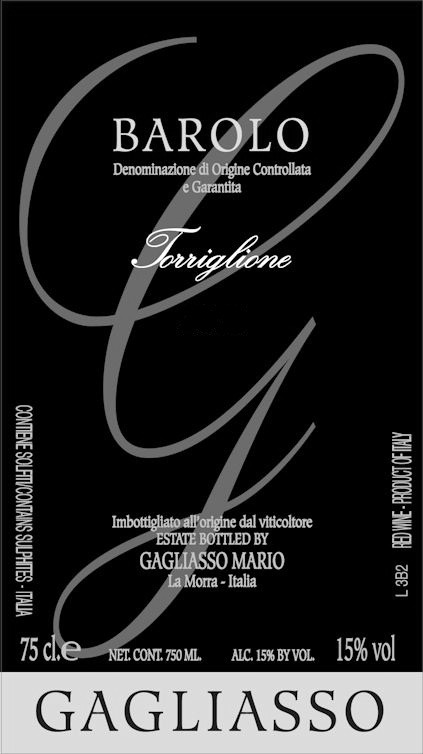
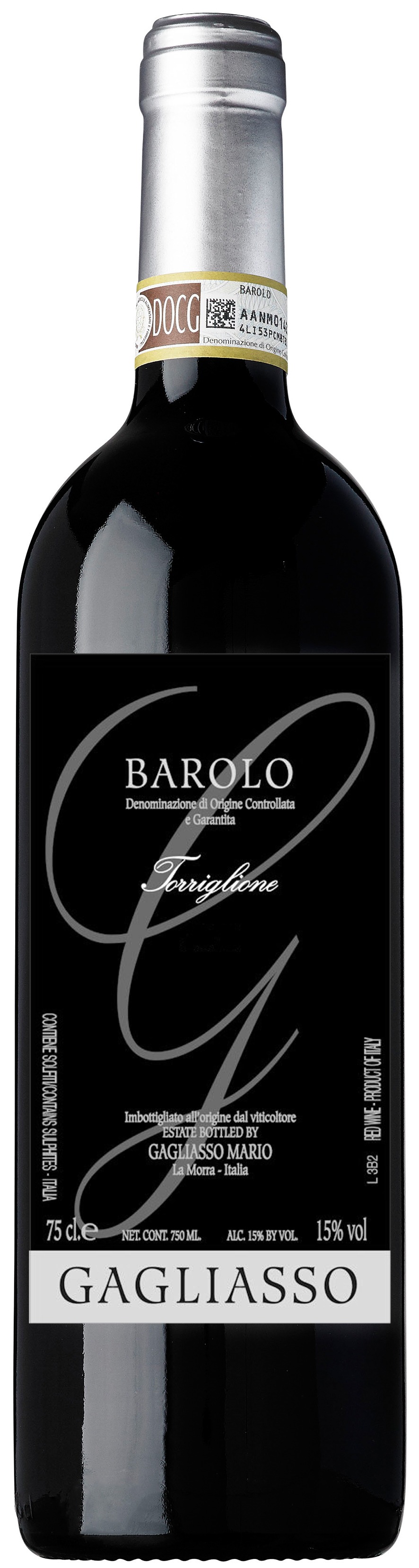
" We don't sell the wine without touching the vine "
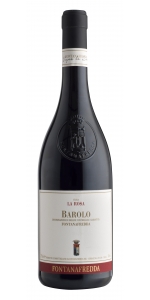
Gagliasso Torriglione Barolo is 100% Nebbiolo
Aged 12 months in French Oak barrels (50% new, 50% second use), then the wine is blended in big 2500 liter foudre for 18 months. And finally, the wine is aged in the bottle for 12 months before release.
The wine offers a free range of blackberry, cassis, tar, leather and tobacco-like aromas. But, in the mouth you'll taste the jamminess and maturity of the fruit. It's a smooth, soft wine with a long strawberry fade.
Average density of vines: 5500 vines per hectare Classical Guyot method with medium-short pruning; vineyard with south exposure with medium slope. Green harvest in two different times with reduction of grapes with a production per hectare around 5500 kg . Torriglione grape are harvested very ripe with a meticulous selection; the fermentation took place in stainless steel vats with temperature controlled. The fermentation is around 33-34°C with 15-17 days of maceration ; malolactic fermentation took place spontaneously in stainless steel vats. After malolattic fermentation the wine stay for 12 months in French barrels, 50% new oak and 50% 2 years; after this period the barrels are blended in big barrels of 2500 liters for 18 months. The wine is bottled and refined for 10-12 months.
Gagliasso Barolo Riserva Oak Box is made from 100% Nebbiolo
Complex and intense aromas of red fruits intermixed with licorice, prune, leather, smoke and notes of toasty oak and vanilla. Full-bodied on the palate with loads of ripe dried and candied fruits, pepper and mocha.
After malolattic fermentation the wine stays for 10 months in French barrels, 10% new oak and 90% different years; after this period all barrels are blended ( 50% Torriglione and 50% Rocche dell’Annunziata) in old barrels for 48 months again. The wine is bottled and refined for 24 months.
There's a gritty, sandy quality to the tannins that would cut through roast pork stuffed with prunes.
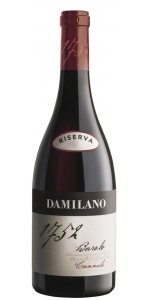
“1752” is the name of the Damilano Barolo Cannubi Riserva, in honor of the year in which the historic bottle was first marked “Cannubi”. It still exists today perfectly conserved by the Manzone family in Bra, close to Barolo. The bottle is clearly marked as being of “1752” vintage, indicating that Cannubi historically precedes Barolo.
About the Vineyard:
The Cannubi Cru is in found within one of the 6 core zones which comprise a UNESCO heritage site in Italy. A mixture of Tortonian and Helvetian calcareous marl gives the grapes intense aromas of cherry, plum and tobacco, rose and violet in sequence. Its low potassium and high calcium/magnesium content offer the wine a fine and polished touch. The vineyard is located at about 270 m. a.s.l. and has a south-east sun exposure. Barolo Riserva Cannubi 1752 It is a small plot of about 2 hectares of Nebbiolo vines, currently between 30 and 50 years of age.
Tasting Notes:
Garnet ruby red in color, the bouquet is intense and balanced, with notes of violet, red fruit, cherry and plum, spices, liquorice, cocoa, leather and tobacco. Dry, robust, full-bodied, very persistent, rich and velvety
Food Pairing:
This wine is excellent with typical piedmontes pasta (tajarin, ravioli); perfect with red meat, braised and roast meat, game and absolutely ideal with all types of cheeses.
Review:
Reviews:
On the savory side, this red opens with freshly mowed grass, hay and eucalyptus aromas before revealing cherry, strawberry, rose and mineral flavors. Fleshy, with a matrix of dense tannins flexing their muscles on the finish. Shows excellent potential. Best from 2023 through 2042.
-Wine Spectator 96 Points
Floral and red fruit nose. Supple attack, very polished and concentrated, with fine-grained tannins and ample acidity. This has a linear drive, precision. and a very long finish. The rewards will be substantial for the patient consumer.
-Decanter 97 Points

All older vintage wines have been purchased from a single collectors cellar. Pictures can be requested before shipment.

No Syrah terroir in Sonoma County compares with Sonoma Mountain’s northwest crown—cool fog-affected mornings, sun-bathed afternoons, cooled by persistent coastal breezes, and temperate evenings. The soils in Steiner’s Syrah blocks — ashy and moondust-like, littered with decomposing sea bed — further contribute to the unique nature of this site. After a 3-vintage hiatus, I am thrilled to be back working with Steiner Vineyard’s Syrah. By its nature, this slow-to-ripen, cool-climate site produces fabulously deep, intense, structured wines. Now, raising a big, brawny Syrah is no rare act of alchemy. It is the wonder of Steiner’s terroir — a magical elegance and beauty, informing the inherent power, depth and intensity — that makes this bottling so special. 2016 produced a classic wine that deftly balances massive flavors and texture, while retaining vital freshness, and a palpable sense of cool. Production was low, so get it while you can. Simply a “WOW” wine, not to be missed.
VINEYARD: Steiner Vineyard. Located at 1,100 ft, on the northwest crown of Sonoma Mountain. CRUSH: Early morning harvest by hand, October 1st, cluster and berry sorted, destemmed and crushed. FERMENT: 5-day cold soaks, followed by 14 day native fermentation in open-top bins. AGING: 20 months, French oak, 100% new, mixture of 300L hogsheads and barrique shapes. Never racked prior to bottling. Bottled unfined, unfiltered.
Review:
"Refined and stylish, featuring a complex core wrapped in multilayered blackberry and blueberry flavors, laced with bitter chocolate, black licorice and smoky meat notes. Drink now through 2030.- Tim FISH"
- Wine Spectator Insider (January 15th 2020), 93 PTS
Gagliasso Torriglione Barolo is 100% Nebbiolo
Aged 12 months in French Oak barrels (50% new, 50% second use), then the wine is blended in big 2500 liter foudre for 18 months. And finally, the wine is aged in the bottle for 12 months before release.
The wine offers a free range of blackberry, cassis, tar, leather and tobacco-like aromas. But, in the mouth you'll taste the jamminess and maturity of the fruit. It's a smooth, soft wine with a long strawberry fade.
Average density of vines: 5500 vines per hectare Classical Guyot method with medium-short pruning; vineyard with south exposure with medium slope. Green harvest in two different times with reduction of grapes with a production per hectare around 5500 kg . Torriglione grape are harvested very ripe with a meticulous selection; the fermentation took place in stainless steel vats with temperature controlled. The fermentation is around 33-34°C with 15-17 days of maceration ; malolactic fermentation took place spontaneously in stainless steel vats. After malolattic fermentation the wine stay for 12 months in French barrels, 50% new oak and 50% 2 years; after this period the barrels are blended in big barrels of 2500 liters for 18 months. The wine is bottled and refined for 10-12 months.
The Gagliasso Estate
The Azienda Agricola Mario Gagliasso is located in the town of La Morra, south of Piedmont, in the province of Cuneo, in the Langhe area.
The winery offers one of the most beautiful views over the Langhe area.
La Morra is located at 513 meters above sea-level, 13 km from Alba, on the top of an imposing hill with the Alps and the Monviso as a background. The hill is planted with vines, for ming huge waves and creating an amphitheatre of rare beauty.
Luca Gagliasso’s family has a long history of winemaking. Luca's grandfather began 50 years ago, at which time he bottled the first Barolo from their historic vineyard, Rocche dell'Annunziata. Around 1987, Lucas's father took over the family tradition of producing wine and brought forth a few changes: he started by using barriques from France, together with large barrels and temperature controlled steel vats. He also purchased a new vineyard. Luca began working with his father during the 2000 vintage, only part time for the first 3 years. He also worked for 3 years with their wine consultant in an analysis laboratory, and worked as a consultant for other wineries.
Luca now works alongside his father, mother, and sister on their 12 hectares of vineyards. On the weekends, Luca's sister and mother work in their restaurant as cooks – only the Gagliasso wines are served. They are currently extending their facility and in the future they plan to incorporate some guest rooms to the restaurant.
The Gagliasso family produces around 60,000 bottles: 40% Barolo, 30% Barbera, 20% Dolcetto and 10% Chardonnay. They have around 250 barriques and 6 large barrels.
Dolcetto is very fruity, aged for a small period in big cask. They produce 3 Barolos and 2 Barberas, one aged 18 months in new oak and the other one only in steel vats. They age the Barolo for 18 months in new barriques, then 12 months in a large cask. Chardonnay is cold macerated, then fermented and aged in French oak for 9 months.
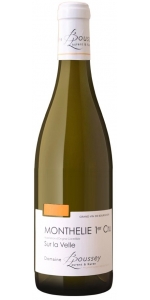
Boussey Monthelie Blanc Premier Cru Sur La Velle is made from 100 percent Chardonnay.
The name Monthelie comes from Mont Lyoei, mountain of Bacchus. The "Sur la Velle" plot is located on the eastern edge of Monthélie. It borders the Volnay Clos des Chênes Premier Cru to the east. The vineyards here lie on broadly southeast facing slopes with just enough gradient to achieve good drainage.
The Monthelie Blanc Premier Cru Sur La Velle has a beautiful pale yellow color with green reflections.
It is complex and rich with delicious aromas of white flowers, fresh almonds, lemon and minerality.
The finish is long with a very good balance between the excellent ripeness and the perfect amount of acidity.
We recommend this wine with white meat, fish and seafood.
Gagliasso Torriglione Barolo is 100% Nebbiolo
Aged 12 months in French Oak barrels (50% new, 50% second use), then the wine is blended in big 2500 liter foudre for 18 months. And finally, the wine is aged in the bottle for 12 months before release.
The wine offers a free range of blackberry, cassis, tar, leather and tobacco-like aromas. But, in the mouth you'll taste the jamminess and maturity of the fruit. It's a smooth, soft wine with a long strawberry fade.
Average density of vines: 5500 vines per hectare Classical Guyot method with medium-short pruning; vineyard with south exposure with medium slope. Green harvest in two different times with reduction of grapes with a production per hectare around 5500 kg . Torriglione grape are harvested very ripe with a meticulous selection; the fermentation took place in stainless steel vats with temperature controlled. The fermentation is around 33-34°C with 15-17 days of maceration ; malolactic fermentation took place spontaneously in stainless steel vats. After malolattic fermentation the wine stay for 12 months in French barrels, 50% new oak and 50% 2 years; after this period the barrels are blended in big barrels of 2500 liters for 18 months. The wine is bottled and refined for 10-12 months.
Peju Winery Legacy Collection Cabernet Sauvignon is made from 88% Cabernet Sauvignon, 6% Petit Verdot, 6% Merlot.
This stunning wine boasts an expressive nose that immediately captivates the senses. On the palate, the wine opens up with complex layers of dried red fruit and hints of cigar box. A subtle hint of wet stone adds a unique touch to the overall experience. The wine's medium to full body creates a beautiful balance between the fruit and tannin structure. The finish is simply divine, with a touch of cocoa dust that lingers on the palate long after the last sip.
Review:
The 2022 Peju Legacy Collection Cabernet Sauvignon is a blend of 88% Cabernet Sauvignon, 6% Petit Verdot, 5% Merlot, and 1% Cabernet Franc, aged for 19 months in 40% new French and American oak, crafted by winemaker Sara Fowler. Fragrant notes of spiced plums, leather, fine cedar, and violets lift from the glass. Full-bodied, it features a framework of elongated, supple tannins, creamy black cherry fruits, dark plum jam, mocha, and a cool wet slate character on the lengthy finish.
-Decanter 94 Points
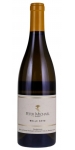
'Belle Côte', French for “Beautiful Slope”, was named by Sir Peter after the famous ski run in Courchevel, France. The oldest of the four Knights Valley Estate Chardonnay vineyards, ‘Belle Côte’ consistently exemplifies the potential of crafting exceptionally high-quality Chardonnay from our mountain vineyards. Planted at 1,700 to 1,800 feet (518 to 549 meters), Belle Côte has a southeastern exposure and a western border of native trees, which shelter the vines from the hot afternoon sun. These unique attributes create a naturally cool microclimate that provides an extended growing period and slow-ripening fruit, resulting in a later picking schedule that often continues into October (two to three weeks longer than most Chardonnay vineyards in Napa and Sonoma Counties).
The combination of a wet winter with significant rains in December through March and cool weather delayed budbreak nearly a month. Flowering and fruit set were also pushed back and the weather during the later flowering was favorable resulting in decent fruit set and slightly above average yields for the Chardonnay vineyards—a marked improvement over the record-low yielding 2022 vintage. The growing season was temperate without major heat spikes allowing the berries to hold onto their acidity which carried through into the wines. Harvest was almost a month later than normal with the last Belle Côte block coming in on November 2nd.
As the oldest of the four Peter Michael Winery estate Chardonnay blocks, 'Belle Côte' exemplifies the consistent quality of Chardonnay these mountain vineyards produce. Due to the naturally cool climate of the site’s high elevation, and mitigated exposure to the hot afternoon sun by its southeastern exposure and a stand of trees on its western border, the vines are allowed to slowly ripen. The growing season for Belle Côte typically extends into October, two to three weeks longer than most Chardonnay vineyards in Napa and Sonoma Counties.
With highly expressive aromatics of orange blossom, jasmine, candied orange peel, and rose petal, the 2023 'Belle Côte' showcases its unique terroir and thirty-three-year-old vines with a rich, creamy entry, dense, broad, juicy mid-palate and a lengthy, refined finish. There is a seamless quality to this wine that matches power, gras, and intensity with structure and weightlessness. The 2023 'Belle Côte' can be enjoyed in its youth or after many years of cellaring.
Review:
This extraordinary estate-grown wine from a great vintage is super vibrant, energized and tangy, with vital acidity supporting luscious ripe pear and apple flavors on a silky texture. Can't think of anything it lacks. Seamless, layered, yet structured and fresh, boding well for longer-term aging. It has a melts-in-the-mouth quality and an extra long finish. Drinkable now and best from 2030.
-James Suckling 100 Points