
" We don't sell the wine without touching the vine "
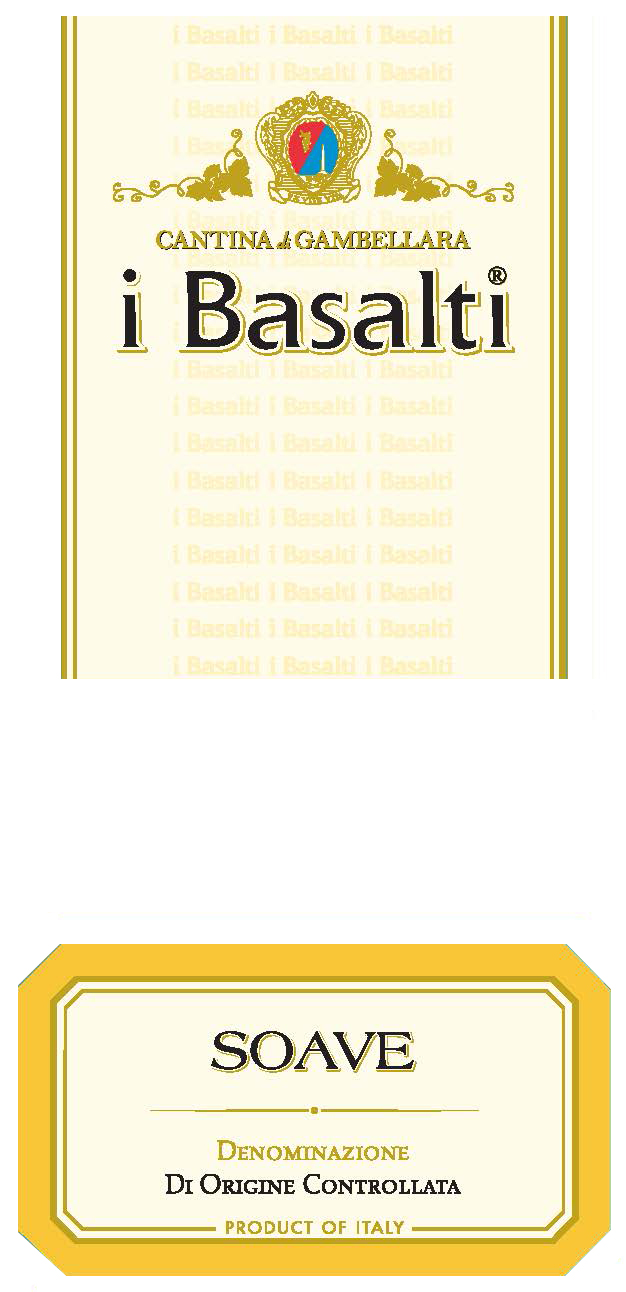
| Country: | Italy |
| Regions: | Veneto Soave |
| Winery: | Cantina di Gambellara |
| Grape Type: | Garganega |
| Vintage: | 2019 |
| Bottle Size: | 750 ml |
Gambellara Lessini Durello Spumante Brute is 100% Durella.
Color: Soft and bright straw yellow
Bouquet: A citrus fresh fruit bouquet
Taste: Slightly acid, fresh, with green apple hints
Perlage: A fine and persistent perlage
The grapes are collected and transported to the winery in small trailers to prevent the grapes from being squashed, then follows immediate separation of the skins from the stalks purifying of the must and long fermentation at 18 °C.
This is a Charmat method (The secondary fermentation didn't take place in the bottle, but in a vat, which makes it slightly different than the Champenoise method used in Champagne).
To serve with seafood starters, soups, egg dishes, shellfish, seafood and white meat. Very good as aperitif. The perfect match is with the "Baccalà alla Vicentina", the traditional dish of our land.
The color is a brilliant straw yellow with a fresh fruit perfumes, especially apple and pear, and floral notes such as elder and bloom. The taste is very fresh and light, with a very interesting acidity. There is an important presence of mineral salts due to the volcanic origin of the soil.
Open pergola Vinification: Destemming, maceration of the grapes in the must for 12 hours, racking and long fermentation at 18 °C
Ideal as aperitif, light main courses such as pasta and risotto, shell fish and fish, soups and vegetables.
Review:
Brilliant emerald straw color. Aromas and flavors of brazil nuts, creme fraiche, and kiwi and starfruit with a silky, lively, dry-yet-fruity light-to-medium body and an effortless, engaging, medium-length watermelon, yellow apple, and clementine finish. A delicious, artfully balanced soave with a great range of fruit flavors. 91 Point Beverage Tasting Institue
The color is a brilliant straw yellow with a fresh fruit perfumes, especially apple and pear, and floral notes such as elder and bloom. The taste is very fresh and light, with a very interesting acidity. There is an important presence of mineral salts due to the volcanic origin of the soil.
Open pergola Vinification: Destemming, maceration of the grapes in the must for 12 hours, racking and long fermentation at 18 °C
Ideal as aperitif, light main courses such as pasta and risotto, shell fish and fish, soups and vegetables.
Review:
Brilliant emerald straw color. Aromas and flavors of brazil nuts, creme fraiche, and kiwi and starfruit with a silky, lively, dry-yet-fruity light-to-medium body and an effortless, engaging, medium-length watermelon, yellow apple, and clementine finish. A delicious, artfully balanced soave with a great range of fruit flavors. 91 Point Beverage Tasting Institue
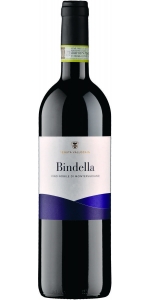
Bindella Vino Nobile di Montepulciano is made from 85% Sangiovese, 15% Colorino del Valdarno, Canaiolo nero and Mammolo.
Elegant, with typical hints of iris, rose and red berries together with balsamic notes after several years of ageing in the bottle. Balanced, pleasantly tannic and well-bodied on the palate.
A wine of great authenticity to accompany pasta with elaborate sauces, red meat, truffles and soft or mature cheeses.
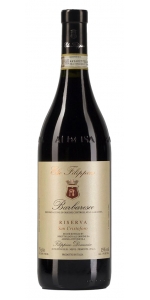
Filippino Elio Barbaresco San Cristoforo Riserva
Made from 100% manual harvest Nebbiolo, the wine comes from the hillsides of San Cristoforo hill in Neive enjoying a south-southwest exposure. The fruity bouquet offers subtle notes of violet and raspberries, combining with spicy hints of cinnamon, cocoa and leather. Full, enchanting and elegant taste, intense with a good body.
The best grapes are delicately pressed and the stalks are removed. The must ferments in stainless steel vats at a controlled temperature of 26°C with a maceration of 20 to 25 days. After racking, the new wine is put into 25 e 30 H Slavonian oak casks for long months. Next, it is bottled and left to age for at least an additional 24 months.
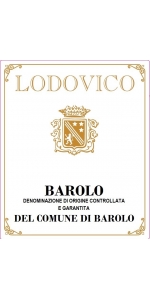
Lodovico Barolo di Barolo is made from 100% Nebbiolo.
Barolo di Barolo is a blend of 2 different vineyards in Barolo: PREDA and SARMASSA, both in the village of Barolo. The somewhat different soils, exposures and microclimates of the Preda and Sarmassa vineyards combine to produce a well-balanced, harmonious wine packed with the fresh, elegant aromas supplied by La Preda, and the full body and structure catered for by Sarmassa.
Loads of blackberry and red berry with vanilla oak character. full and concentrated, displaying seamless tannins and gorgeous fruit. Complex and complete, full-bodied, with lots of fruit and round tannins. It's long and fruity. It will be at its best after 2-3 years stored lying down in cool, dark surroundings. Serving recommended in large glasses at a temperature of 17-18°C.
Gambellara Soave I Basalti is made from 100 percent Garganega
Soave DOC (Denominazione di Origine Controllata)
Production area: Soave hills
Vineyard training system: Open pergola
Vinification: Destemming, maceration of the grapes in the must for 12 hours, racking and long fermentation at 18 °C
The color is a brilliant straw yellow with a fresh fruit perfumes, especially apple and pear, and floral notes such as elder and bloom. The taste is very fresh and light, with a very interesting acidity. There is an important presence of mineral salts due to the volcanic origin of the soil. Ideal as aperitif, light main courses such as pasta and risotto, shell fish and fish, soups and vegetables.
The Cantina di Gambellara Estate
Cantina di Gambellara was founded in 1947 by a group of 26 vine growers and it was the first cooperative winery started in the Vicenza Province.
At the beginning the harvest was made by only a few thousands of grapes but year by year it has increased very quickly thanks to a continuous extension of the vineyards and the rising number of the partners.
For this reason it was necessary to enlarge the winery and the storage capacity.
The Cantina di Gambellara Vineyard
Cantina di Gambellara vineyards are located in the center of the most important areas for the DOC wine production such as Soave, Gambellara, Colli Berici and Lessini Durello and Prosecco.
Cantina di Gambellara has a storage capacity of 160,000 hl of wine and an average harvest of 130,000 quintal of grapes. We have 365 members growing around 650 hectares of vineyards.
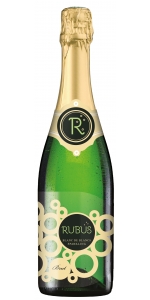
Rubus Brut Blanc de Blanc NV is made from 1/3 Ugni Blanc, 1/3 Airen, 1/3 Muscat .
The Rubus Project was created by Fran Kysela as a way to source & sell incredible wines at value prices. All wines in this international project are hand-selected by Fran Kysela. Rubus wines are fruit driven, true-to-type values that over deliver - a true representation of quality for the consumer at an excellent price.
Elegant pale yellow color with fine bubbles. Floral and fruity on the nose, with aromas of fresh butter and cake. On the palate, the wine is crisp and harmonious - a delightful sparkling wine.
Machine harvest. The base wine is fermented at a low temperature. The second fermentation takes place at 14°C for 2 weeks, followed by dosing.
Thus, the first Édition of Krug Rosé, a singular Champagne achieving an astonishing balancing act between finesse and substance, came to be.
The story of Krug Rosé dates back to 1983. With Joseph’s non-conformist spirit at heart, the 5th generation of the Krug family gave birth to a new composition, a bold rosé inspired by the House’s reputed art of blending, to be re-created each year.
Krug Rosé is an unexpected rosé Champagne combining elegance and boldness – inspired by the dream of the fifth generation of the House of Krug to conceive a rosé Champagne that did not exist, a rosé Champagne that could be re-created every year.
Krug Rosé 27ème Édition is a blend of 38 wines from 9 different years, the youngest of which is from 2015, while the oldest dates back to 2005. ▪ It was completed with 10% traditionally macerated Pinot Noir of the year blended from plots in Aÿ and Mareuil-sur-Aÿ, to add a unique spiciness, colour and structure. Its final composition is 57% Pinot Noir, 23% Chardonnay and 20% Meunier. ▪ A stay of around seven years in Krug’s cellars gives Krug Rosé 27ème Édition its unique expression and elegance.
At first sight, its subtle pale pink colour holds a promise of elegance. On the nose, aromas of rose hips, cured ham, mulberries, redcurrant, peony, pepper and pink grapefruit. On the palate, delicate flavours of honey, citrus and dried fruit with a long finish, enhanced by its fine bubbles complete the experience.
Review:
Thirty-eight wines from nine vintages spanning 2005 to 2015 - 55% of them reserve - went into this blend of 57% Pinot Noir, 23% Chardonnay, and 20% Meunier; a nonpareil of shimmering depth. On the pure, precise nose, raspberries and roses mingle with suggestions of woodsiness, honey-cured ham, and parmesan rind before vibrating with white peach and red currant, honeyed cashew, and a soupcon of tobacco leaf and cucumber on the palate - where the tension between its almost ethereal refinement, thanks not least to the unending mousse, and the luxuriance of its finish is simply (or not so simply) delicious.
-Tasting Panel 99 Points
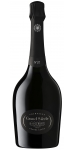
Laurent-Perrier Grand Siecle No. 27 is a blend of 60% Chardonnay, 40% Pinot Noir.
Grand Siècle was born from the vision of Bernard de Nonancourt: to recreate the perfect year, one that nature alone could never deliver. Iteration N°27 embodies this idea, crafted from a masterful blend of three outstanding years – 2015, 2013, and 2012 – with a predominance of Chardonnay complemented by Pinot Noir, sourced from eight Grand Cru vineyards.
After at least 10 years of aging on the lees, the result is a wine of rare aromatic complexity, combining freshness, energy, and timeless elegance. Grand Siècle is never tied to a single vintage but represents a higher concept: the pursuit of absolute balance between intensity, finesse and harmony. Since 1959, it has been revealed only 27 times in bottle and 24 times in magnum, affirming its place among the most exclusive and refined champagnes.
Vintage in Champagne is usually synonymous with excellence for Prestige Cuvées. Contrarily, Laurent‑Perrier believes that only the art of assemblage can offer what nature can never provide, that is, the perfect year.
The expression of the perfect year is that of a great champagne wine that has long ageing potential and over time develops depth, intensity and aromatic complexity yet retains its freshness and vibrancy.
Since 1959, Grand Siècle has been revealed only 26 times in bottle format and 23 times in magnum.
The « Grand Siècle » (Great Century) is the name given to one of the most prosperous periods (17th century) in the history of France known for the capacity of man, through his works, to create what nature cannot. Louis XIVth, known as the « Sun King », by creating the « Château de Versailles » and its gardens, was the architect of this model of harmony, balance and perfection.
The symmetry and perspective of the « Jardins à la française », the capacity to grow Mediterranean fruits (especially Oranges inside the « Orangerie ») in such a Northern climate, creating the Grand Canal, the fountains and ponds with no nearby rivers are many illustrations of this ability of man to sublimate natural elements. The name of Grand Siècle was chosen for Laurent‑Perrier’s Prestige Cuvée based on this common vision to reach a perfection that Nature, on its own, cannot provide.
Review:
Impressively aromatic, showing honeysuckle, violets and lavender with bread dough and just a hint of light caramel as well as dried apples, cooked pears and tarte tatin. Reductive with graphite, stone and iodine. Some chalk too. Full-bodied but not at all heavy, turning almost weightless. Nine years on the lees and 7 g/L dosage give energy, length and form. Goes on for minutes. This will age beautifully but is already fascinating, evolving in the glass. Drink or hold.
James Suckling 99 Points



