" We don't sell the wine without touching the vine "
| Country: | Italy |
| Region: | Friuli |
| Winery: | Zaglia Giorgio |
| Grape Type: | Pinot Gris/Pinot Grigio |
| Organic: | Yes |
| Vintage: | 2020 |
| Bottle Size: | 750 ml |
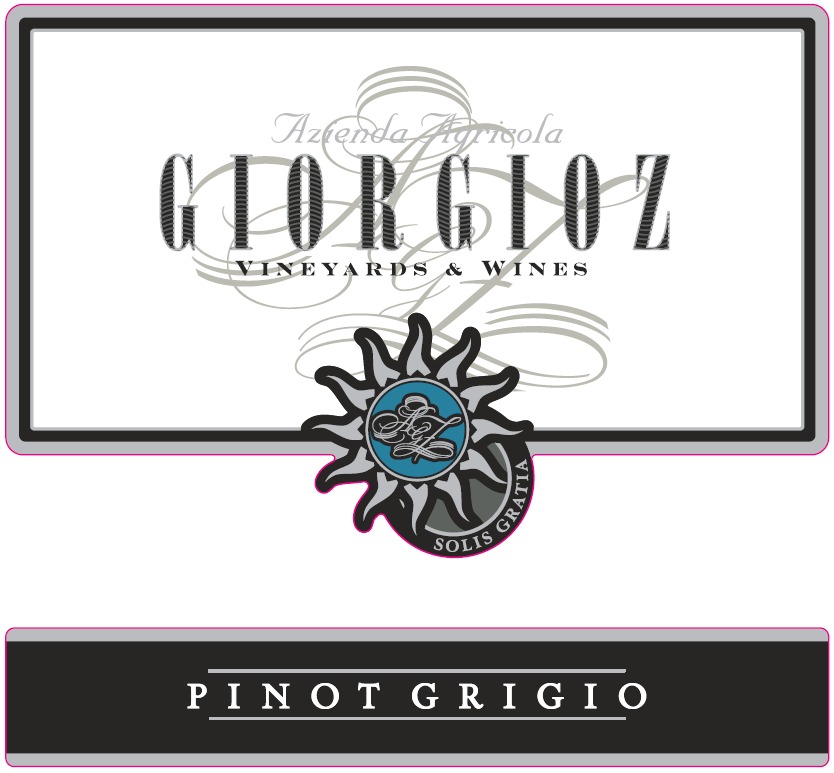
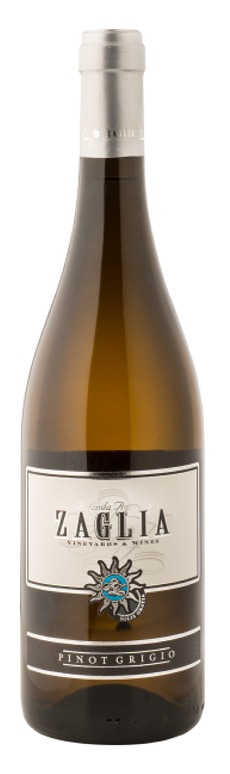
Giorgio Z Pinot Grigio is made from Pinot Grigio.
D.O.C.FRIULI
Straw yellow color with golden tint.
Typical bouquet reminiscent of acacia blossom.
The wine has a very refined taste, it is dry and full bodied with pleasing bitterness.
Soil type is Clay.
Average age of the vines is 15 years old.
100% hand harvested.
Fermentation at 15°C during 15 days.
Aged in stainless steel tank on the fine lees for 6 months.
Slight filtration before bottling
Giorgio Z Pinot Grigio is made from Pinot Grigio.
D.O.C.FRIULI
Straw yellow color with golden tint.
Typical bouquet reminiscent of acacia blossom.
The wine has a very refined taste, it is dry and full bodied with pleasing bitterness.
Soil type is Clay.
Average age of the vines is 15 years old.
100% hand harvested.
Fermentation at 15°C during 15 days.
Aged in stainless steel tank on the fine lees for 6 months.
Slight filtration before bottling
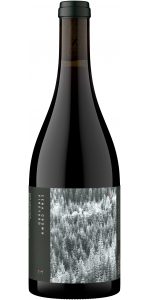
Zena Crown Vineyard The Sum Pinot Noir is made from 100 percent Pinot Noir.
Massed from multiple vineyard blocks and clones, this wine has a timeless beauty that can be inherently understood by innate human nature. Wines of this stature, much like great art, reflect the complex and compelling relationship between humanity and Earth. Expressing Autumn, S (The Sum) leads with Gala
apple, Japanese plum, gun powder, dirt, and garlic power on the nose, with barely ripe cherry on the finish. 60% whole-cluster fermentation bolsters the wine, sustaining the tannic imprint and tension that uncoils like a rattlesnake strike on the finish.
Review:
A jeweled ruby hue, the 2021 Pinot Noir The Sum takes on fantastic crystalline and pure aromas of wild strawberries, raspberries, dark stones, menthol, and cedar spice, but it’s not very oaky. Medium-bodied, it has ripe tannins, with ripe acidity and a bit more modest acidity compared to the other wines from Zena Crown, but it’s long on the palate, with a more autumnal sensibility, and it’s going to show its best over the next 12-15 years.
-Jeb Dunnuck 95 Points
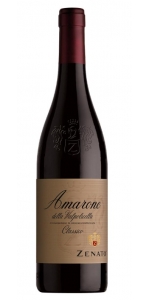
Zenato Amarone is a blend of Corvina and Rondinella, with a touch of Croatina and Oseleta. Corvina is prized not only for its intense marasca cherry flavor, but also its ability to withstand the drying process. Used in small quantities Rondinella also fares well in drying, and contributes dark color and an alluring floral note. Oseleta provides tannic structure and minerality; while Croatina is introduced to add youthful fruitiness. All this attention to detail pays off in a wine that is immediately approachable yet unmistakably ageworthy.
Ruby red in color, intoxicating aromas of dried black cherries, cassis, truffles, and chocolate fudge leap out of the glass. The resulting wine is silky, luscious, and complex, with a lingering finish.
Pair this wine with osso bucco, Bordelaise sauces, wild boar ravioli, or grilled cowboy ribeyes.
Review:
Restrained fruitiness with aromas of raspberries and earth, alongside a complex spicy blend of freshly ground black pepper, milk, mint, bay leaf and cocoa powder. Very youthful. Full-bodied, dense and balanced, with savory flavors of chocolate and cherries, super-tasty style, tight, chalky yet ripe tannins and a fresh, cleansing acidity. Toasty finish. Drinkable now, but best in a year or two.
-James Suckling 96 Points
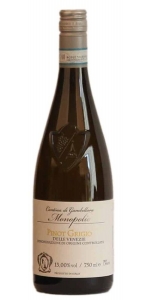
Gambellara Pinot Grigio delle Venezie Monolopio is made from 100% Pinot Gris.
Color: Brilliant pale lemon colored with greenish reflections.
Bouquet: Intense bouquet full of yellow peaches, green apples and delicate white flowers.
Taste: Full, fresh and inviting with great minerality. A wine of excellent acidity and a persistent aftertaste. The overall balance of this wine reflects the care and attention dedicated to the winemaking. It is a Pinot Grigio of distinctive quality.
Seafood dishes, risottos with scampi, spaghetti with clams, sole in white wine, white meats and light cheeses.
RS: 4 grams/Liter
Acidity: 6 grams/Liter
D.O.C.FRIULI
Pale straw yellow color.
The aromas are fine and elegant with apple and acacia flowers scent and a note of bread crust.
The wine is hamonious, smooth and soft.
Soil type is Clay.
Average age of the vines is 15 years old.
100% hand harvested.
Fermentation at 15°C during 15 days.
Aged in stainless steel tank on the fine lees for 6 months.
Slight filtration before bottling
Giorgio Z Pinot Grigio is made from Pinot Grigio.
D.O.C.FRIULI
Straw yellow color with golden tint.
Typical bouquet reminiscent of acacia blossom.
The wine has a very refined taste, it is dry and full bodied with pleasing bitterness.
Soil type is Clay.
Average age of the vines is 15 years old.
100% hand harvested.
Fermentation at 15°C during 15 days.
Aged in stainless steel tank on the fine lees for 6 months.
Slight filtration before bottling
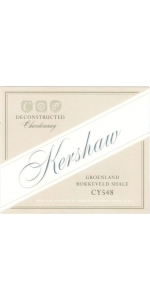
Kershaw Chardonnay Deconstructed Groenland Shale CY548 is made from 100 percent Chardonnay.
The inspiration for this Chardonnay stems from my belief that the Elgin region has both a signature grape as well as particular terroirs within its demarcated boundary that reflect regional credentials. This Chardonnay was selected from a sub-region of Elgin from a specific vineyard and an individual clone (CY548).
Tasting Notes:
Sourced from the foothills of the Groenland Mountain in Northern Elgin this clone has been taken from Corton Charlemagne cuttings. It produces wines that have aromatics oscillating between lemon blossom, white flowers, petrichor and struck stone. Full in body they exude concentration with white stone fruit yet reinforced with an austere texture and robustness that makes for excellent aging potential. The Bokkeveld Shales adds structure and concentration to the flavor.
Vineyards:
Sourced from the foothills of the Groenland Mountain in Northern Elgin this clone has been taken from Corton Charlemagne cuttings.
Winemaking:
Grapes were hand-picked in the early autumnal mornings, placed into small lug baskets and tipped directly into a press before being gently whole-bunch pressed up to a maximum of 0.6 bar or until a low juice recovery of 580 liters per ton was obtained. The juice gravity-flowed directly to barrel (no pumps were used at all) without settling. The unclarified juice had no enzymes or yeast added to it and therefore underwent spontaneous fermentation until dry, with malolactic discouraged. The wine rested in barrel for 4 months prior to judicious sulfuring and a further 7 months’ maturation in barrel before racking and bottling.
Barrel: Selection: A small number of artisanal coopers are selected from mostly Burgundy, with only French oak was chosen. Up to 40% of the oak is new with the remainder split into 2nd and 3rd fill barrels of predominantly 228 litres.
Look at pairing this with textured fish, straightforward chicken dishes, pan-fried or grilled pork dishes, soft-rind cheeses, cream or creamy dishes be it with pasta or the aforementioned fish, chicken or pork, to allow the complexity of the wine to shine through. If using mustard, preferably use Dijon mustard as it uses verjus (soured grape juice) and not vinegar. Also look to delicate herbs (tarragon, dill, basil, parsley) rather than hard stalked herbs (rosemary, thyme, oregano, etc). Avoid smoked meats or fish as well as highly spiced dishes as this can overwhelm the wine and clash with the oak. I would try oysters; Lobster grilled or boiled but not thermidor as it is too rich; turbot, dover sole, sea bass, yellowtail with a shellfish sauce; fish pie; roasted free-range chicken with tarragon; roast loin of pork with garlic and ginger; truffle risotto; pasta in a clam sauce; slice of brie de meaux.
Review:
"Perfume of flowers, minerals and citrus zest. The palate is dense and focused, almost chewy with an opulent mandarin mid palate and long, savory finish. Matured in 50% new oak that is seamlessly integrated with the wine."
- International Wine Review (Richard Kershaw Lifts Elgin To New Heights, February 2019), 94 pts
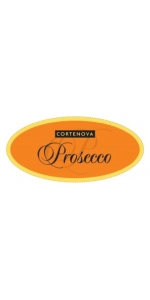
Cortenova Prosecco Spumante NV is 100 percent Prosecco
This Prosecco comes from the highly esteemed area of Valdobbiadene. There are two recognized quality zones for Prosecco, Conegliano and Valdobbiadene. Of the two, Valdobbiaden has always been recognized a having the superior quality due to its naturally higher acidity and its more northern location.
The vineyards lie at 350 meters above sea level. The vines are an average of 25 years old.
The grapes are soft pressed and the free run juice is placed in stainless steel. There is a brief maceration period of 4 hours. Specially selected yeast are added and fermentation is controlled at 20° C. There is no malolactic fermentation and the wine is transferred to autoclaves and a second fermentation is induced following the Charmat tradition. When the desired atmospheric pressure is reached (usually 1 month) the wine is bottled.
Light straw colored with greenish reflections. The perlage is fine and continuous. Fragrant bouquet full of flowers and almonds. In the palate it is fresh and clean with a soft body and a pleasing sparkle. The fruit is subtle and reminiscent of apples and pears with a hint of almond in the background. The finish is inviting.
Can be drunk by itself as an aperitif or with seafood and fish, pastas with cream sauces, chicken and fresh cheeses.
Review:
"Pale straw color. Bright, attractive aromas and flavors of roasted lemons and kiwis, green nectarine, nougat, and grass with a soft, vibrant, spritzy, dry-yet-fruity medium body and a tingling, complex, medium-length spiced clementine and delicate herbal honey finish with silky, crunchy, fruit tannins and no oak. A delicious, nicely layered Prosecco with an elegant style." - Beverage Testing Institute (November 23rd 2015), 91 pts, Best Buy
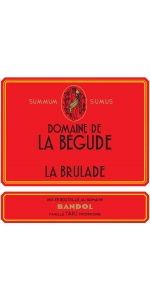
Begude Bandol Rouge La Brulade is made from 95% Mourvedre and 5% Grenache.
"La Brulade" is the name of a select slope located at an altitude of 400 meters overlooking the Mediterranean sea between La Baie d'Amour (the town of La Ciotat) in the South and La Sainte Baume in the North. This is one of the highest parcels in the Bandol appellation.
The wine is only produced in exceptional vintages. This carefully selected blend is made of 95% Mourvedre and 5% Grenache, aged in large French oak barrels for 24 months.
The wine shows a deep purple color. It is fresh and fruity on the nose with intense garrigue aromas. Structured, elegant and well-balanced on the palate with strong tannins. Licorice, ripe black fruits, garrigue flavors and some peppery freshness on the finish.
The 35-year old grapes are grown on clay and limestone soils and are farmed organically. Yield is very low - 15hl/ha. The grapes are harvested manually.
Winemaking: Double selection, destemming, crushing before skin contact fermentation. No filtration. Aging for 24 months in French oak casks (600L).
Grilled meat (lamb, beef, boar), Mediterranean cuisine, spicy dishes.
Review:
"Complex nose with deep black berry fruits, spice and hints of polish. Really lovely texture with layers of creamy red and black fruits, spices and powerful but super fine tannins. Great expression of the appellation; powerfully long."
- Decanter World Wine Award 2020 - 97 pts & Platinum Medal
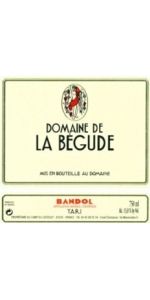
Begude Bandol Rouge is made from 90% Mourvèdre, 10% Grenache.
Eye: dark ruby colored
Nose: Intense, aromatic, fresh and elegant
Mouth: Structured on black fruits flavors, lightly woody , tanins are strong an firm in their early days (<5years) Good acidity give freshness backbone and great fruit/alcoholic balance . Delicate final on spices.
Opening: Decant 4-6 hours before serving
Soil: Clay-limestone Culture: Organic without pesticides nor chemicals additives Yield: 20 hectoliters/hectare Harvest: Manual in small cases Winemaking: Double sorting, 100% destemming, skin contact, with daily sticking in order to optimize color and aromatic extraction Alcoholic fermentation 15 days followed by malo lactic fermentation. Aging: 18 months in oak cask Bottling:
Grilled lamb, meat cooked with sauce, southern French cuisine and tasty dishes (tajines, couscous, paellas).
Review:
"Inviting spicy oak, malt and blackberry cream scents. Powerfully structured tannins, spicy liquorice and clove flavours as well as bramble fruit; very long finish. Its best years are far into the future. Terrific stuff."
- Decanter World Wine Awards 2020, 97 pts & Platinum Medal
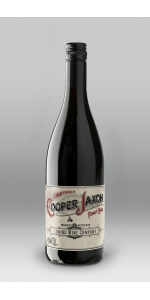
Loring Cooper Jaxon Pinot Noir is made from 100% Pinot Noir
Aged 10 Months in French Oak (15% New)
A special blend in honor of Cooper Jaxon Loring - the next generation of Loring. We don't limit the wine to any
specific AVA, but rather look for a blend that is big, bold, and super tasty!
Juicy and vibrant, with aromas of raspberry puree, blackberry and spring flowers.
Vines are planted on Arroyo Seco Sandy Loam soils on the following vineyard sites: Rancho La Viña, Kessler-Haak, Clos Pepe, John Sebastiano, Aubaine, Rosella's and Sierra Mar.
Vinification is traditionnal with minimal intervention.
Wine went thought Malo-Lactic fermentation and was bottled without filtration.
pH 3.61
Clones: Pisoni, 113, 115, 667, 777, 23
Pairs well with steak and lamb, spicy foods & mild cheeses.
Review:
"This fun and whimsical label from Brian Loring delivers his rich style of Pinot Noir at an affordable price, offering aromas of black cherry, forest herbs, damp sage and crushed slate. The palate is earthy, offering flavors of dark berry, fennel frond, roasted meat and clove. Matt Kettmann"
- Wine Enthusiast (June 2019), 92 pts - Editors' Choice
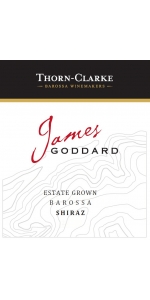
James Goddard was an ancestor of the Clarke family. Born in West Sussex, England in 1823, James spent his 74 years as a sailor, a whaler, a bullock driver, farmer, prospector, miner and hotel keeper. From an illiterate runaway living rough on the streets of London, he became a rich, successful and admired pillar of South Australian society.
James arrived in Adelaide in 1839 as a 16-year-old sailor. Twelve years later, his life changed forever with the news of gold findings. For the next 20 years, James roamed the country learning the geology that improved his chances of prospecting.
James Goddard Shiraz is made from 100 percent Shiraz.
In 1870, he tried his luck near his farm in the Barossa Valley and discovered the region’s first gold deposits, creating the prosperous Lady Alice Mine. The Lady Alice Mine, though it is no longer operational, was & still is the most successful gold mine in South Australia. From these roots, the Thorn-Clarke family has been connected to the region for the last 150 years.
James Goddard Shiraz is a blend Shiraz sourced from the Milton Park vineyard in the north of Eden Valley, and the St Kitts vineyard in the far northern area of the Barossa. Fruit is harvested in the cool of the night to maintain maximum flavour and freshness and it is fermented for 8 days. The ferment is pumped over twice daily to extract the colour and flavour from the fruit. Once finished fermentation the wine was then matured in a blend of French and American oak for a period of 10 to 12 months depending on the vintage.
Deep vibrant red with purple hues to the rim. The nose shows lifted plums, vibrant purple berries and a delicate spice note. The palate has concentrated satsuma plum, blackberry with lovely charry oak in the background. Long, juicy and even with plush fruit on the finish.
Review:
“Blended from two estate vineyards, St. Kitts and Milton Park, this shiraz offers its richness without any aggression or overt perfume. It’s just lush and delicious, a friendly embrace of firm tannins and purple-red fruit. The texture and flavor combine in a saturated meatiness, for Korean barbecue.”
- Wine & Spirits Magazine, 92 points
Chaume Chablis is made from 100% Chardonnay.
Light yellow color. The wine displays aromas of white flowers, honeysuckle, linden, citrus as well as white and dried fruits.
In the mouth, the wine is well balanced with tension and a nice classic minerality found in Chablis.

El Cortijillo Tempranillo La Mancha is made from 100% Tempranillo
Up front aromas of raspberry and cherry fruit, medium to light weight, Rhône wine in character, cherry fruit flavors, followed by bright acidity. Reminds of a mythical cross between a Pinot Noir and a Côtes-du-Rhône. Pleasant and fun, bistro red.
Made from 30 year old vine.
Delicious with Paella, hamburger or pasta. But also great with grilled vegetables. (bell pepper, eggplant, etc)