" We don't sell the wine without touching the vine "
| Country: | France |
| Regions: | Rhone Chateauneuf du Pape |
| Winery: | Grand Veneur |
| Grape Type: | Grenache |
| Organic: | Yes |
| Vintage: | 2018 |
| Bottle Size: | 1500 ml |

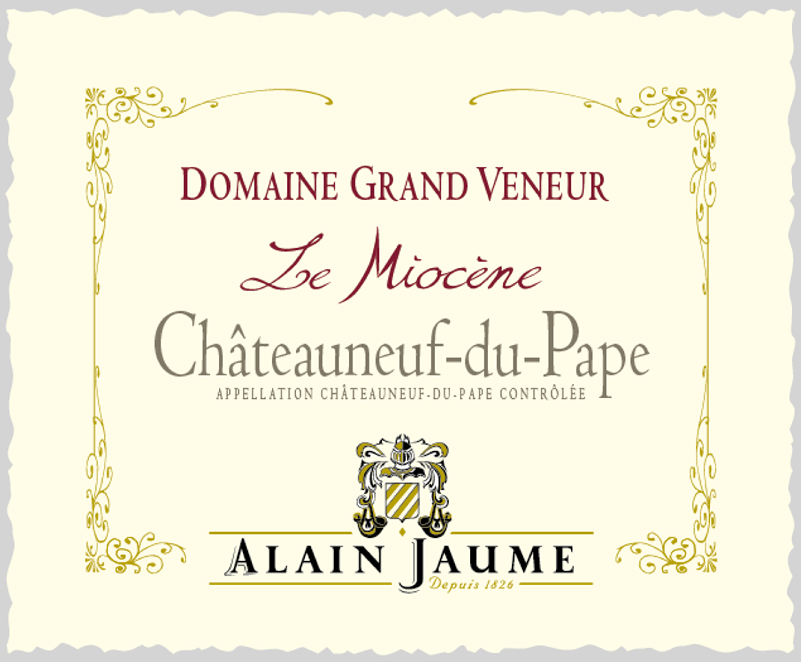
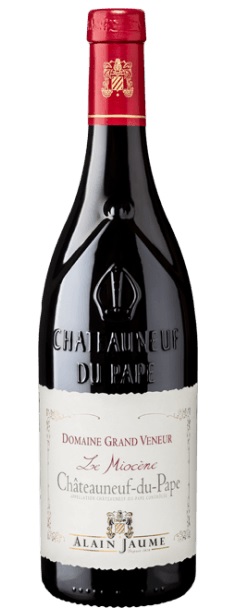
Grand Veneur Chateauneuf du Pape Rouge Le Miocene is made from 70% Grenache, 20% Syrah, 10% Mourvèdre .
An intense dark-ruby color. The nose develop aromas of ripe black fruit (such as blackberry), cherry and spice box. The palate reveals the presence of tannins, in high quantity and elegant. The finish is long and luxurious. This is the Châteauneuf du Pape expression, displaying all the characteristics of the terroir.
Soil type: Plots are located northern part of Châteauneuf du Pape and the vines are grown under organic process.The soil is marked by the violence wrought by the Rhone river. It consists of a layer of marine molasses of the Miocene period covered by alpine alluvium. The presence of a great number of rounded stones known as "galets" in the earth is evidence of the time when the Rhone, then a torrent, tore fragments of rock from the Alps and deposited them on the plain. The GRAND VENEUR cuvee will express year after year a great power and aromatic complexity.
Winemaking & ageing: Harvest is sorted by hand, destemmed and crushed. Fermentation temperature is controlled at 30°C. Vatting period of 18 to 20 days. Matured in vats and oak casks.
Review:
A classic nose of deep red and black cherries is embraced by captivating violet perfume and saffron-cardamom spice. The palate is concentrated, supported by youthful tannins and a generous wave of acidity that refreshes the palate and provides lift to its intense dark-fruit finish. This expression will be exciting to revisit even after a few years of cellaring.
- Wine Enthusiast (December 2023, Best of Year issue), 94 pts

Grand Veneur Chateauneuf du Pape Rouge Le Miocene is made from 70% Grenache, 20% Syrah, 10% Mourvèdre .
An intense dark-ruby color. The nose develop aromas of ripe black fruit (such as blackberry), cherry and spice box. The palate reveals the presence of tannins, in high quantity and elegant. The finish is long and luxurious. This is the Châteauneuf du Pape expression, displaying all the characteristics of the terroir.
Soil type: Plots are located northern part of Châteauneuf du Pape and the vines are grown under organic process.The soil is marked by the violence wrought by the Rhone river. It consists of a layer of marine molasses of the Miocene period covered by alpine alluvium. The presence of a great number of rounded stones known as "galets" in the earth is evidence of the time when the Rhone, then a torrent, tore fragments of rock from the Alps and deposited them on the plain. The GRAND VENEUR cuvee will express year after year a great power and aromatic complexity.
Winemaking & ageing: Harvest is sorted by hand, destemmed and crushed. Fermentation temperature is controlled at 30°C. Vatting period of 18 to 20 days. Matured in vats and oak casks.
Grand Veneur Chateauneuf du Pape Rouge Le Miocene is made from 70% Grenache, 20% Syrah, 10% Mourvèdre .
An intense dark-ruby color. The nose develop aromas of ripe black fruit (such as blackberry), cherry and spice box. The palate reveals the presence of tannins, in high quantity and elegant. The finish is long and luxurious. This is the Châteauneuf du Pape expression, displaying all the characteristics of the terroir.
Soil type: Plots are located northern part of Châteauneuf du Pape and the vines are grown under organic process.The soil is marked by the violence wrought by the Rhone river. It consists of a layer of marine molasses of the Miocene period covered by alpine alluvium. The presence of a great number of rounded stones known as "galets" in the earth is evidence of the time when the Rhone, then a torrent, tore fragments of rock from the Alps and deposited them on the plain. The GRAND VENEUR cuvee will express year after year a great power and aromatic complexity.
Winemaking & ageing: Harvest is sorted by hand, destemmed and crushed. Fermentation temperature is controlled at 30°C. Vatting period of 18 to 20 days. Matured in vats and oak casks.

Grand Veneur Chateauneuf-du-Pape Rouge Les Origines is made from 50% Grenache, 30% Mourvedre and 20% Syrah
Matured in vats (grenache) and in oak casks (syrah and mourvèdre).
Deep and brilliant, purple-red colour. An exciting nose with aromas of black fruit (blackcurrant, cherry) spices and vanilla. This great aromatic complexity is found on the palate : the spices and ripe fruit appear with an elegant woodiness and harmonious tannins. The finish has good aromatic length and introduces a touch of liquorice and pepper.
A terrific Châteauneuf du Pape with great concentration and finesse.
Best between 2 and 20 years. Best to decant if young (less than 5 years old).
Soil type Extreme north of Châteauneuf du Pape. This plateau is made with a high quantity of red clay mixed with rocks. This area is considerated to be one of the best to produce rich and powerful red wines. By definition, LES ORIGINES will always deliver a great complexity and ageing potential. Winemaking & ageing Harvest is sorted by hand, destemmed and crushed. Fermentation temperature is controlled at 30°C. Vatting period of 18 to 20 days. Matured in vats (grenache) and in oak casks (syrah and mourvèdre).
Review:
"The huge nose of violet pastilles, mulberries, smoked bacon and a touch of hot asphalt pulls you into this expansive but beautifully balanced Chateauneuf that’s packed with fine, powdery tannin. So much bitter-chocolate character, but this exactly matches the deep fruit and, at the long crescendo finish, there are fascinating balsamic and hot dry-earth touches. Drinkable now, but best from 2025."
- James Suckling (March 2022), 94 pts

Grand Veneur Chateauneuf Du Pape Vieilles Vignes is made from 50% Grenache, 40% Mourvedre, 10% Syrah
Matured in concrete vats (40%) and oak casks (60%)
It boasts an inky/purple color in addition to a gorgeous perfume of crushed rocks, jammy black fruits, charcoal and graphite. Blackberry aroma with an air of dates pressed in alongside – this is sweet-noted. It is easy to appreciate, a sleek and stylish start. The palate holds excellent fruit that runs well and has kick. Its tannins move round freely and a minted finale comes forward. Its dark fruit is tasty, darkens on the finish, where tar and char from its oak enter. It is all very much together, a bundle of harmony, and will gain local attributes as it ages.
An outstanding Chateauneuf du Pape which display the best of its terroir.
The vines are 50 to 100+ year old. They are planted on red clay soils covered with pebble stones.
Harvest is destemmed and crushed. Fermentation temperature is controlled at 30°C. Vatting period of 18 to 20 days. Matured in concrete vats (40%) and oak casks (60%).
The vineyards are located in the north of Châteauneuf du Pape. GRAND VENEUR «Vieilles Vignes» cuvee is produced from the older vines. Thanks to time and an organic growing, roots go very deep in the soil. Yields are naturally low and grapes highly concentrated.
The vines are 50 to 100+ year old. They are planted on red clay soils covered with pebble stones.
Winemaking and aging
Harvest is destemmed and crushed. Fermentation temperature is controlled at 30°C. Vatting period of 18 to 20 days. Matured in concrete vats (40%) and oak casks (60%).
Pair with venisson, duck, braised lamb or strong cheese.
Review:
"Up with the crème de la crème of the vintage, the 2018 Châteauneuf Du Pape Vieilles Vignes is a bigger, richer wine than the Les Origines cuvée and has a beautiful core of smoked black fruits, candied violets, peppery garrigue, and scorched earth-like aromas and flavors. Playing in the medium to full-bodied end of the spectrum, it’s flawlessly balanced and has terrific tannins, a stacked mid-palate, and a great finish. It certainly shows the more front end-loaded, fleshy, mildly concentrated style of the 2018 vintage, yet the balance is top-notch, and it’s just a thrill to drink today. It should evolve nicely for 10-15 years."
- Jeb Dunnuck (October 2020),96 pts
Grand Veneur Chateauneuf Du Pape Vieilles Vignes is made from 50% Grenache, 40% Mourvedre, 10% Syrah
Matured in concrete vats (40%) and oak casks (60%)
It boasts an inky/purple color in addition to a gorgeous perfume of crushed rocks, jammy black fruits, charcoal and graphite. Blackberry aroma with an air of dates pressed in alongside – this is sweet-noted. It is easy to appreciate, a sleek and stylish start. The palate holds excellent fruit that runs well and has kick. Its tannins move round freely and a minted finale comes forward. Its dark fruit is tasty, darkens on the finish, where tar and char from its oak enter. It is all very much together, a bundle of harmony, and will gain local attributes as it ages.
An outstanding Chateauneuf du Pape which display the best of its terroir.
The vines are 50 to 100+ year old. They are planted on red clay soils covered with pebble stones.
Harvest is destemmed and crushed. Fermentation temperature is controlled at 30°C. Vatting period of 18 to 20 days. Matured in concrete vats (40%) and oak casks (60%).
The vineyards are located in the north of Châteauneuf du Pape. GRAND VENEUR «Vieilles Vignes» cuvee is produced from the older vines. Thanks to time and an organic growing, roots go very deep in the soil. Yields are naturally low and grapes highly concentrated.
The vines are 50 to 100+ year old. They are planted on red clay soils covered with pebble stones.
Winemaking and aging
Harvest is destemmed and crushed. Fermentation temperature is controlled at 30°C. Vatting period of 18 to 20 days. Matured in concrete vats (40%) and oak casks (60%).
Pair with venisson, duck, braised lamb or strong cheese.
Review:
he 2021 Châteauneuf Du Pape Vieilles Vignes is even more powerful, with a dense purple color as well as serious notes of blackberries, currants, ground pepper, graphite, chocolate, and violets. I love its mid-palate density, it's medium to full-bodied, has building tannins, and a great finish. It's going to need short-term cellaring, but it’s one heck of an impressive 2021."
- Jeb Dunnuck (November 2021),94-96 pts
Grand Veneur Chateauneuf du Pape Rouge Le Miocene is made from 65% Grenache noir, 25% Syrah, 10% Mourvèdre.
An intense dark-ruby color. The nose develop aromas of ripe black fruit (such as blackberry), cherry and spice box. The palate reveals the presence of tannins, in high quantity and elegant. The finish is long and luxurious. This is the Châteauneuf du Pape expression, displaying all the characteristics of the terroir.
Soil type: Plots are located northern part of Châteauneuf du Pape and the vines are grown under organic process.The soil is marked by the violence wrought by the Rhone river. It consists of a layer of marine molasses of the Miocene period covered by alpine alluvium. The presence of a great number of rounded stones known as "galets" in the earth is evidence of the time when the Rhone, then a torrent, tore fragments of rock from the Alps and deposited them on the plain. The GRAND VENEUR cuvee will express year after year a great power and aromatic complexity.
Winemaking & ageing: Harvest is sorted by hand, destemmed and crushed. Fermentation temperature is controlled at 30°C. Vatting period of 18 to 20 days. Matured in vats and oak casks.
Review:
"The 2018 Châteauneuf Du Pape Le Miocène can be thought of as the entry-level Châteauneuf from this estate and is a blend of 70% Grenache, 20% Syrah, and 10% Mourvèdre brought up in a mix of tank and neutral, older barrels. Impressive notes of mulled black cherries, darker currants, chocolaty herbs, and pepper all emerge from the glass and this medium to full-bodied 2018 has a great mid-palate, ample depth and richness, and sweet tannins. It’s beautifully done and just about seamless on the palate, with the forward, already delicious style of the vintage front and center. enjoy bottles anytime over the coming decade."
- Jeb Dunnuck (October 2020), 92 pts
Tangs of granite and firm, gripping tannins lend angularity to concentrated black cherry and plum in this wine. A blend of Grenache (70%), Syrah (20%) and Mourvédre (10%), it's weighty on the palate but sharply cut by zingy red-cassis acidity. At peak now through 2028, the wine should hold further still.
- Wine Enthusiast (May 2021), 93 pts
The Grand Veneur Estate
In 1320 Pope Jean XXII planted the first vines of Chateauneuf-du-Pape, but it was only in 1360 that the wines of the region first gained fame. Oddly, the wine that gave Chateauneuf-du-Pape its original reputation was the Blanc and not the Rouge. The white wine was a favorite of Pope Innocent VI. The Domaine dates back to 1826, having been founded at that time by Mathieu Jaume. Since 1979, Alain Jaume has run the Domaine and now has the help of his two sons: Sebastien and Christophe.
"Popes throughout history have liked their juice, and when the papal see moved to Avignon in the 13th century, that juice was Chateauneuf-du-Pape ("the pope's new castle") made from grapes grown nearby in the Southern Rhone. The castle is a ruin now, the papal court long gone back to Rome, but the wines that bear the pope's coat of arms emblazoned on the bottle are still produced more or less according to the long-standing recipe. Not every winemaker uses all 13 of the grapes in the proscribed blend, though. At Domaine Grand Veneur, an estate that dates to 1826, Alain Jaume and his sons Sebastien and Christophe emphasize Grenache blended with Syrah and Mourvedre."
- Los Angeles Times
"Improved Chateauneuf with very accomplished, stylish reds since the late 1990s; also very good Vacqueyras and Cotes-du-Rhone Villages." - Anthony Dias Blue's pocket guide to wine 2006
"Grand Veneur is one of the most brilliant estates in Chateauneuf du Pape as well as the force behind the negociant wines sold under the Alain Jaume label. Virtually everything they produce has merit. Some of this estate’s 2009 red wines are just hitting the market as they are bottled early to preserve their fruit and freshness. I can’t say enough about the job Alain Jaume’s two sons, Sebastian and Christophe, have done with this estate. The impeccable attention to detail in the vineyards, the meticulous vinification, and the careful bottling benefit every consumer." - Wine Advocate (#190, August 2010)
"Great bargains continue to emerge from Domaine Grand Veneur as well as from their negociant arm of the business, labeled Alain Jaume" - Wine Advocate (#195, June 2011)
"Don't miss the following "Best Buys" reviewed in several previous issues: Alain Jaume 2010 Cotes du Rhone Haut de Brune (87), Grand Veneur 2010 Cotes du Rhone Blanc (88), Grand Veneur 2009 Cotes du Rhone Les Champauvins (89), Grand Veneur 2009 Cotes du Rhone Reserve Blanc (89), Grand Veneur 2010 Cotes du Rhone Blanc (91), Grand Veneur 2010 Cotes du Rhone Rose (86), Grand Veneur 2009 Lirac Clos de Sixte (91), and Grand Veneur 2010 Cotes du Rhone Blanc de Viognier (89). Credit Christophe and Sebastian Jaume for making this one of the most impeccably run estates in the Rhone Valley. To reiterate, this is an estate at the top of its game and the wines remain fairly priced as well. The 2010 Grand Veneur Chateauneuf du Papes reveal youthful, crisper, more focused styles than their 2009 counterparts. I suspect their pHs are lower, the total acids slightly higher, and the alcohols perhaps .5 to 1% lower across the board." - Wine Advocate (issue197, October 2011)"
The Grand Veneur Vineyard
The estate is located in the commune of Orange and consists of 50 hectares (123 acres). It covers four different appellations: Chateauneuf-du-Pape, Cotes-du-Rhone Villages, Cotes-du-Rhone and Lirac.
The family produces wines under two labels:
- Domaine Grand Veneur – Estate
- Alain Jaume – Negociant
Some wine by Grand Veneur:
Annual production:
- Cotes du Rhone Villages CHAMPAUVINS : +/- 9,000 cases
- Lirac Rouge CLOS DE SIXTE : +/- 5,000 cases
- Chateauneuf du Pape Rouge Grand veneur : 3,300 cases
- Chateauneuf du Pape Blanc Grand veneur : 400 cases
- Chateauneuf du Pape LES ORIGINES red : 1,700 cases
- Chateauneuf du Pape LA FONTAINE white : 300 cases
- Chateauneuf du Pape VIEILLES VIGNES : 530 cases

Long Shadows Pirouette Meritage is made from 68% Cabernet Sauvignon 15% Merlot 8% Petit Verdot 6% Cabernet Franc 3% Malbec
Philippe Melka, named one of the top nine winemakers in the world by Robert Parker, used small lots from Washington State's finest vineyards to craft this enticing red blend.
Like the last several growing seasons, 2016 was another hot year that required extra care in the vineyards. Building on the success of our canopy managment program over the last few vintages, we worked with growers throughout the season to encourage growth of the canes and outside foliage to protect against the sun while opening up the fruit zone for even maturation. Warm temperatures in the fall hastened ripening, but the Columbia Valley's cool autumn nights protected the grapes' acidity, yielding bright, vibrant wines that will drink well in their youth but also promise to bring enjoyement to those who cellar.
A variety of fermentation methods were used to enhance complexity and richness in this classic Bordeaux blend. Hand-harvested Cabernet was fermented in 400L French oak barrels that were gently rolled throughout fermentation to integrate the oak with refined, dark fruit flavors and give the wine its silky mouthfeel. All other varieties were fermented in traditional stainless steel tanks, with select lots enjoying longer skin contact to enhance the wine's dark color and mid-palate. The finished wine was aged 22 months in French oak barrels (75% new) before bottling unfiltered and unfined.
Review:
"The 2016 Pirouette is made by Philippe Melka and it's a total blockbuster based on 68% Cabernet Sauvignon, 15% Merlot, and the palate Petit Verdot, Cabernet Franc, and Malbec that was fermented in barrel and aged 22 months in 75% new oak. Crème de cassis, blackberries, toasted spices, cedar, and forest floor notes all emerge from this deep, rich, opulent red that has sweet tannins, a thrilling texture, no hard edges, and a monster finish. This is another best-to-date from this estate and it's an awesome wine." -Jeb Dunnuck 97 Points

Michel Rolland, Pomerol vintner and consultant to many of the world's top wineries, teamed with Washington State wine visionary Allen Shoup to produce this limited release wine.
With its intense color and inviting aromas of dark berries, licorice, baking spice and a hint of smoke, the Pedestal is a bold wine that leaves a lasting impression. Dark fruit flavors integrated with sweetness from the barrel and richness from the tannins come together seamlessly, lingering across a structured mid-palate and lengthy finish.
Winemaking: Hand-harvested grapes were double-sorted to remove green material that might impart harsh tannins, then most of the lots were cold soaked to build richness and flavor before undergoing whole-berry fermentation in 55L upright French wood tanks. This, combined with gentle pump-overs throughout fermentation, enhanced the wine’s color, texture and mouthfeel. The finished wine was aged 22 months in 85% new French oak barrels.
Review:
"I loved the 2014 Pedestal Merlot and it’s 81% Merlot, 15% Cabernet Sauvignon, 2% Malbec and 2% Petit Verdot. It offers a downright voluptuous and incredibly sexy style in its ripe black currants, toasted spice, chocolate and licorice aromas and flavors. Broad, expansive, layered and pleasure bent, with ripe tannin, it's a knockout Merlot that's going to have 10-15 years of drinkability. - Jeb Dunnuck"
- Robert Parker's Wine Advocate (Issue #231, June 2017), 95 pts
Grand Veneur Chateauneuf-du-Pape Rouge Les Origines is made from 50% Grenache, 30% Mourvedre and 20% Syrah
Matured in vats (grenache) and in oak casks (syrah and mourvèdre).
Deep and brilliant, purple-red colour. An exciting nose with aromas of black fruit (blackcurrant, cherry) spices and vanilla. This great aromatic complexity is found on the palate : the spices and ripe fruit appear with an elegant woodiness and harmonious tannins. The finish has good aromatic length and introduces a touch of liquorice and pepper.
A terrific Châteauneuf du Pape with great concentration and finesse.
Best between 2 and 20 years. Best to decant if young (less than 5 years old).
Soil type Extreme north of Châteauneuf du Pape. This plateau is made with a high quantity of red clay mixed with rocks. This area is considerated to be one of the best to produce rich and powerful red wines. By definition, LES ORIGINES will always deliver a great complexity and ageing potential. Winemaking & ageing Harvest is sorted by hand, destemmed and crushed. Fermentation temperature is controlled at 30°C. Vatting period of 18 to 20 days. Matured in vats (grenache) and in oak casks (syrah and mourvèdre).
Review:
"The 2019 Châteauneuf Du Pape Les Origines is also deep purple-hued and has a classic bouquet of crème de cassis and blackberry fruits intermixed with notions of graphite, chocolate, and spicy wood. Rich, full-bodied, and concentrated, this is beautifully done and despite its more modern elevage, it has plenty of Provençal character and charm."
- Jeb Dunnuck (October 2020), 94-96+ pts
"Warm in feel, with a gush of plum puree and blackberry paste flavors, liberally laced with black licorice and roasted alder notes. A solidly built, modern version, with a nice tug of warm earth on the back end. Best from 2022 through 2034. —J.M."
- Wine Spectator's Insider (June 9th 2021), 93 pts

All older vintage wines have been purchased from a single collectors cellar. Pictures can be requested before shipment.

Argot Sauvignon Blanc Sonoma County is made out of 100 percent Sauvignon Blanc.
Massive aromatics, and a bold, intensely, full-flavored palate define the personality of this wine. Juicy stone fruits, laser-focused lemon Jolly Rancher and a full-blown tropical fruit character explode on the palate. This bright and inviting wine is perfectly suited to sunny afternoons or paired with classic summer fare.
This bright and inviting wine is perfectly suited to sunny afternoons, or paired with classic summer fare.