" We don't sell the wine without touching the vine "
| Country: | France |
| Region: | Rhone |
| Winery: | Grand Veneur |
| Grape Type: | Viognier |
| Organic: | Yes |
| Vintage: | 2021 |
| Bottle Size: | 750 ml |
Grand Veneur Cotes Du Rhone Blanc is made from 50% Viognier, 30% Clairette, 20% Roussanne.
Pale yellow colour, brilliant with a gold tinge. Primary aroma of flowers and stone fruit. On the palate, the fruit is immediately present with touches of almond and white peach. A slight liveliness appears in the finish, which creates a perfect balance for the natural generosity of this wine.
To consume young in order to preserve the fruitness typicity. Could age 2-3 years
Direct press, fermentation in temperature controlled stainless-steel vats. Early bottling 6 months after harvest.
Excellent with fish, seafood.
Grand Veneur Cotes Du Rhone Les Champauvins Blanc is made 100% Viognier. Located in the area known as "Les Champauvins", close to Domaine Grand Veneur. The soils are clay-sand and limestone. They enable the white grape varieties to ripen slowly, thus preserving their excellent aromatic finesse.
A great Viognier, conceived and produced with finesse and freshness in mind. Bright, limpid pale yellow color. Intense, delicate nose of floral and white-fleshed fruit aromas. Fresh, mineral and airy on the palate. White peach and pear aromas are the most expressive. The fruity characters are long-lasting, evolving into notes of apricot after a few hours' aeration.
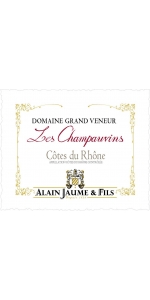
Intense, brilliant garnet-red colour. It reveals lovely fruit, loads of body and a heady bouquet of ground peppers, raspberries cherry liqueur, currants, and spice box. Full-bodied and dense, it tastes more like a "baby Châteauneuf" than a Côtes du Rhône.
A complete wine, rich and elegant, thanks to the harmony of all the elements which make it up.
Drink between 1 and 6 years.
Soil type DOMAINE GRAND VENEUR “Les Champauvins” stretches on 34 ha classified in Côtes du Rhône. The plots are located in the northern border of Châteauneuf du Pape, exactly from 3 meters outside the appellation. A small lane of rocks going through the rocky plateaux has been decided to be the AOC limit in 1936. Here, soils are made of red clay and rocks (pebbled stones of quartz). The quantity of rocks can be amazing as they can completely cover the soil (see picture). In summer and during the day, the rocks temperature will increase to 55°C. This accumulated heat will be get back to the vines during nights . Day after day, this unique phenomenon allow the grapes to reach a perfect maturity and produce a unique wine. Winemaking & Ageing Traditional, in stainless steel vats. Harvest crushed and destemmed. Fermentation in temperature controlled vats at 28°C. Eighteen-day vating period with “pigeage”. Grenache is aged in concrete vats, Syrah and mourvèdre in 4 year old barrels. Intense, brilliant garnet-red colour. It reveals lovely fruit, loads of body and a heady bouquet of ground peppers, raspberries cherry liqueur, currants, and spice box. Full-bodied and dense, it tastes more like a “baby Châteauneuf” than a Côtes du Rhône. A complete wine, rich and elegant, thanks to the harmony of all the elements which make it up.
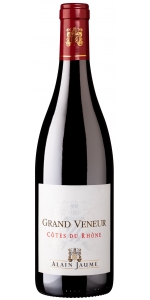
Grand Veneur Cotes du Rhone Rouge Reserve is made from 60% Grenache Noir, 35% Syrah and 5% Cinsault.
The colour is purple-tinged garnet.The aromatic range of the nose goes from fresh berries (wild raspberry, blackcurrant, blackberry) to spices.The palate is big and full-flavoured, with silky-smooth tannins and aromas of the fruit already mentioned. The finish introduces touches of liquorice and pepper. A Côtes du Rhône with great complexity for an every day drinking.
A classic Rhône to drink between 1 and 4 years.
SALE
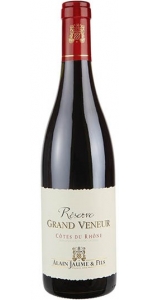
Grand Veneur Cotes du Rhone Rouge Reserve is made from 60% Grenache Noir, 35% Syrah and 5% Cinsault.
The colour is purple-tinged garnet.The aromatic range of the nose goes from fresh berries (wild raspberry, blackcurrant, blackberry) to spices.The palate is big and full-flavoured, with silky-smooth tannins and aromas of the fruit already mentioned. The finish introduces touches of liquorice and pepper. A Côtes du Rhône with great complexity for an every day drinking.
A classic Rhône to drink between 1 and 4 years.

All older vintage wines have been purchased from a single collectors cellar. Pictures can be requested before shipment.
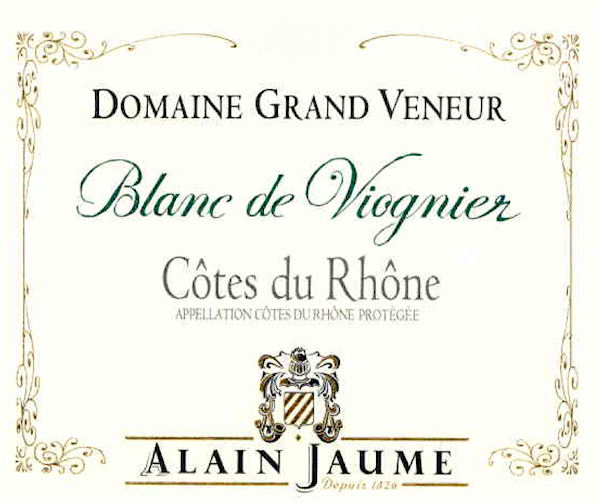
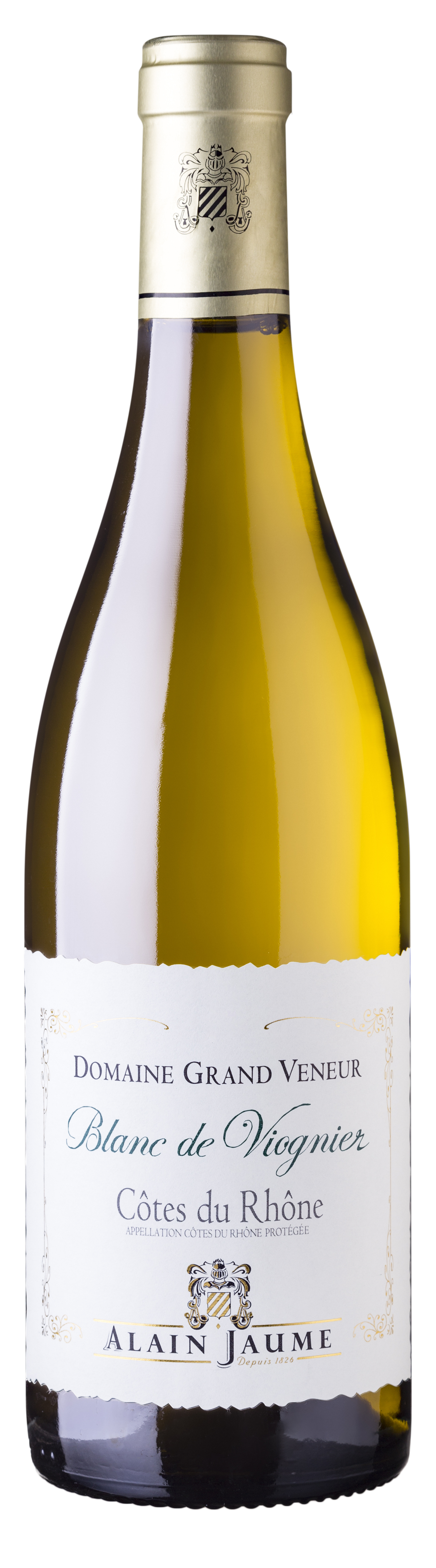
Grand Veneur Cotes Du Rhone Viognier Blanc is made from 100% Viognier.
Soil: clay/sand with limestone.
Yield: 38 Hl / hectare
Hand-picked harvest. Vinification in stainless steel vats at a controlled temperature of 18°C.
Bottled early, 6 months after the harvest.
The color is clear and brilliant. A very intense nose of flowers, white peach and pear. On the palate, aromas are expressed with balance and an amazing freshness. A great example of Rhone white, single grape "Viognier".
To be enjoyed young, but can age for 3-5 years.
Soil types
Located next to the single vineyard “Les Champauvins”, nearby the Domaine Grand Veneur. Soils are made of clay and sand with limestone.
Winemaking & aging
Hand-picked harvest. Fermentation in temperature-controled vats. Early bottling, 6 months after harvest.
The Grand Veneur Estate
In 1320 Pope Jean XXII planted the first vines of Chateauneuf-du-Pape, but it was only in 1360 that the wines of the region first gained fame. Oddly, the wine that gave Chateauneuf-du-Pape its original reputation was the Blanc and not the Rouge. The white wine was a favorite of Pope Innocent VI. The Domaine dates back to 1826, having been founded at that time by Mathieu Jaume. Since 1979, Alain Jaume has run the Domaine and now has the help of his two sons: Sebastien and Christophe.
"Popes throughout history have liked their juice, and when the papal see moved to Avignon in the 13th century, that juice was Chateauneuf-du-Pape ("the pope's new castle") made from grapes grown nearby in the Southern Rhone. The castle is a ruin now, the papal court long gone back to Rome, but the wines that bear the pope's coat of arms emblazoned on the bottle are still produced more or less according to the long-standing recipe. Not every winemaker uses all 13 of the grapes in the proscribed blend, though. At Domaine Grand Veneur, an estate that dates to 1826, Alain Jaume and his sons Sebastien and Christophe emphasize Grenache blended with Syrah and Mourvedre."
- Los Angeles Times
"Improved Chateauneuf with very accomplished, stylish reds since the late 1990s; also very good Vacqueyras and Cotes-du-Rhone Villages." - Anthony Dias Blue's pocket guide to wine 2006
"Grand Veneur is one of the most brilliant estates in Chateauneuf du Pape as well as the force behind the negociant wines sold under the Alain Jaume label. Virtually everything they produce has merit. Some of this estate’s 2009 red wines are just hitting the market as they are bottled early to preserve their fruit and freshness. I can’t say enough about the job Alain Jaume’s two sons, Sebastian and Christophe, have done with this estate. The impeccable attention to detail in the vineyards, the meticulous vinification, and the careful bottling benefit every consumer." - Wine Advocate (#190, August 2010)
"Great bargains continue to emerge from Domaine Grand Veneur as well as from their negociant arm of the business, labeled Alain Jaume" - Wine Advocate (#195, June 2011)
"Don't miss the following "Best Buys" reviewed in several previous issues: Alain Jaume 2010 Cotes du Rhone Haut de Brune (87), Grand Veneur 2010 Cotes du Rhone Blanc (88), Grand Veneur 2009 Cotes du Rhone Les Champauvins (89), Grand Veneur 2009 Cotes du Rhone Reserve Blanc (89), Grand Veneur 2010 Cotes du Rhone Blanc (91), Grand Veneur 2010 Cotes du Rhone Rose (86), Grand Veneur 2009 Lirac Clos de Sixte (91), and Grand Veneur 2010 Cotes du Rhone Blanc de Viognier (89). Credit Christophe and Sebastian Jaume for making this one of the most impeccably run estates in the Rhone Valley. To reiterate, this is an estate at the top of its game and the wines remain fairly priced as well. The 2010 Grand Veneur Chateauneuf du Papes reveal youthful, crisper, more focused styles than their 2009 counterparts. I suspect their pHs are lower, the total acids slightly higher, and the alcohols perhaps .5 to 1% lower across the board." - Wine Advocate (issue197, October 2011)"
The Grand Veneur Vineyard
The estate is located in the commune of Orange and consists of 50 hectares (123 acres). It covers four different appellations: Chateauneuf-du-Pape, Cotes-du-Rhone Villages, Cotes-du-Rhone and Lirac.
The family produces wines under two labels:
- Domaine Grand Veneur – Estate
- Alain Jaume – Negociant
Some wine by Grand Veneur:
Annual production:
- Cotes du Rhone Villages CHAMPAUVINS : +/- 9,000 cases
- Lirac Rouge CLOS DE SIXTE : +/- 5,000 cases
- Chateauneuf du Pape Rouge Grand veneur : 3,300 cases
- Chateauneuf du Pape Blanc Grand veneur : 400 cases
- Chateauneuf du Pape LES ORIGINES red : 1,700 cases
- Chateauneuf du Pape LA FONTAINE white : 300 cases
- Chateauneuf du Pape VIEILLES VIGNES : 530 cases
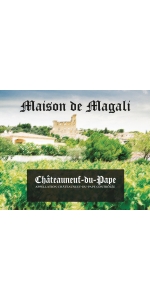
Maison de Magali Chateauneuf-du-Pape Rouge is made from 84% Grenache, 11% Syrah and 5% Mourvèdre.
Maison de Magali Chateauneuf-du-Pape is designed to be a very fruity and fresh CDP with structure. Different flavors of red and black fruits with a hint of pepper and spice notes.
Pair with grilled meat and vegetables. Also excellent with cheese and dark chocolate dessert.
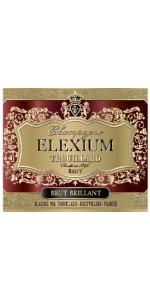
Trouillard Elexium Brut NV is a blend of 50% Chardonnay, 30% Pinot Noir and 20% Pinot Meunier
Aged 2 years on the lees.
This “cuvee” combines pinot noir’s power, pinot meunier ‘s suppleness and chardonnay’s elegance to give to Elexium all its radiance and its lightness. Its ageing provides beautiful citrus fruits notes, whites fruits and a lightly gold color.
Color: Green pale gold, beautiful intensive and persistent sparkle.
Nose: Notes of citrus fruits, white fruits and white flowers.
Mouth: Sophisticated, light, fresh, silky, elegant with a good persistence. Airy character almost feminine.
Terroirs: AOC Champagne - France, 20 selected vineyards located mainly in Petite and Grande Montagne de Reims, in Grande and Haute Vallée and in Côte des blancs.
This cuvee can be served from the aperitif to the dessert. We recommend that you enjoy with poultry, smoked salmon, whites fruits or sorbet.
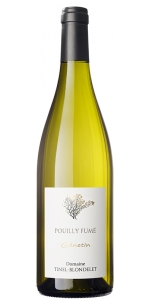
Tinel Blondelet Pouilly-Fume Genetin is made from 100 percent Sauvignon Blanc.
The soil is made of "caillottes" (limestone stones).
"Genetin" is a name given in homage to the original name for Sauvignon Blanc: Muscat Genetin. The Genetin bottling is normally reserved for the most powerful Cuvées in the winery. No oak.
Produced from 25 year-old vines coming from the Villiers limestone terroir, situated in Bouchot.
Traditional vinification in thermo-regulated stainless steel tanks. Following a gentle pressing the juice is then fermented at controlled temperatures before being left to mature on its fine lees to gain extra depth and concentration before bottling in the next spring.
Matured on fine lees bringing finesse to the wine and bottled late in order to let all its roundness evolve.
Yield: 55 hl/ha
A golden colored and mineral wine with elegance and finesse. Can be cellared for 2-3 years.
A mineral-laced smoky accent and citrus aromas. Elegant and powerful on the palate.
Food pairing: shellfish, goat cheese such as “Crottin de Chavignol”. Perfect also as an aperitif.
Review:
- Wine & Spirits (Regional Tasting Report, Spring 2022), 91 pts
K Vitners The Hidden Syrah is made from 100 percent Syrah.
It is not a secret the magnitude this wine can reach. In this vintage, femininity reigns supreme. Perfume, flowers, cassis. All anchored to sense of place with stone, ancient soil and chanterelles that make this wine a wine of the earth.
Review:
Kirsch, ripe black cherries, roasted herbs, violets, and orange blossom notes all emerge from the 2018 The Hidden Syrah Northridge Vineyard, which is all Syrah brought up in neutral oak. Rich, full-bodied, and beautifully polished, it packs loads of fruit yet stays light on its feet, with no sensation of heaviness. As with all of these Syrahs from Smith, it's going to benefit from 2-4 years of bottle age.
-Jeb Dunnuck 96 Points

Cattail Creek Pinot Noir Sonoma Coast is made from 100 percent Pinot Noir.
The cool maritime influence of the Sonoma Coast appellation is on full display in this elegant Pinot Noir. Aromas of fresh cherry, raspberry, and violet give way to a silky, medium-bodied palate with layers of red fruit, subtle earthy notes, and gentle spice. The wine's bright natural acidity and fine-grained tannins create a beautifully balanced structure, making it a versatile companion at the table. Enjoy now or cellar for 3-5 years.