
" We don't sell the wine without touching the vine "
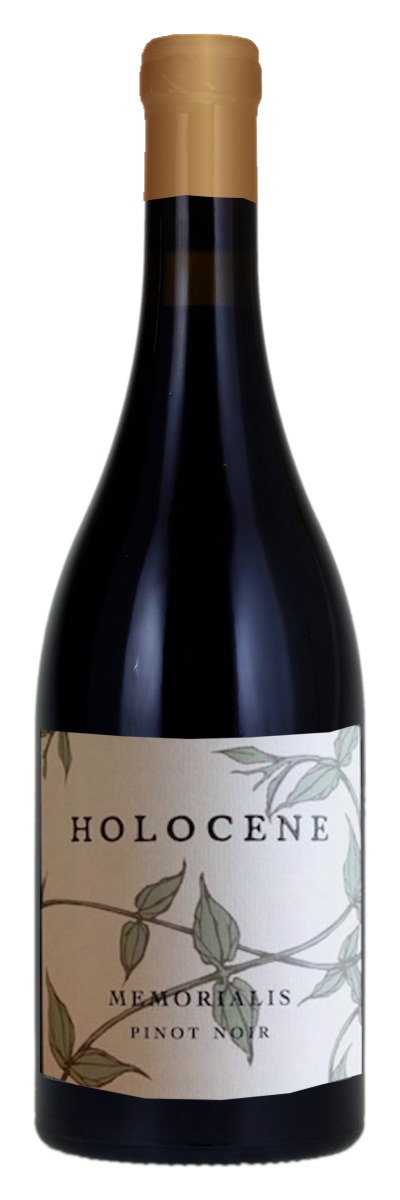
| Country: | United States |
| Region: | Oregon |
| Winery: | Holocene Wines |
| Grape Type: | Pinot Noir |
| Vintage: | 2018 |
| Bottle Size: | 750 ml |
Holocene Memorialis Pinot Noir is made from 100 percent Pinot Noir.
Holocene Pinot Noir Memorialis is a blend of 777, Pommard and 115 clones from MonksGate vineyard in the Yamhill-Carlton AVA, and it saw about 20% new French oak for 16 months prior to bottling. It is always the lighter and more feminine of the two Holocene wines, with red fruits, white flowers, dried herbs, mushroom and forest floor aromatics, bright acidity and a lithe texture, long finish.
By now, everyone knows that the Willamette Valley is an amazing place to grow Pinot Noir. When I relocated from Napa Valley to partner up with Force Majeure Vineyards, I knew I also wanted to start a project where I could focus attention on a varietal and growing region that I loved. Part of the excitement of being in the Pacific Northwest is the ability to have access to so many amazing vineyards and so much diversity, along with the opportunity to push boundaries and try new things – something that is becoming increasingly difficult in other growing regions.
We partner up with a few very small, diverse and amazing vineyards in the Willamette Valley, sourcing fruit from these dry-farmed sites that emphasize low yields, sustainable practices and produce outstanding fruit.
The wines are crafted in the same way I have been making wine since I was carrying it out at Bryant Family Vineyard in the Napa Valley — utilizing very low-impact, non-industrial techniques, native yeasts, little extraction and little new oak, and never filtering or fining. This allows a real sense of place to show through in the wines that is often dimmed when too much manipulation is undertaken.
Our first vintage was 2015, and was released in early 2017. As production is currently extremely small, the best way to get the wines into your hands is to join our mailing list at the “Mailing List” link above to receive an allocation when we have a release. We release wines once per year, and they will be sold on a first come, first served basis, shipped straight to your door.
Review:
The 2021 Pinot Noir Memorialis is more complete and layered, with beautiful ripe cherry and redcurrant fruit as well as spice box, dried, smoky herbs, and savory flower-like aromas and flavors. Textured, medium to full-bodied, and balanced, it has the fruit and texture to shine even today yet the density and structure to evolve for 10-12 years as well.
- Jeb Dunnuck 95 Points
Holocene Memorialis Pinot Noir is made from 100 percent Pinot Noir.
Holocene Pinot Noir Memorialis is a blend of 777, Pommard and 115 clones from MonksGate vineyard in the Yamhill-Carlton AVA, and it saw about 20% new French oak for 16 months prior to bottling. It is always the lighter and more feminine of the two Holocene wines, with red fruits, white flowers, dried herbs, mushroom and forest floor aromatics, bright acidity and a lithe texture, long finish.
By now, everyone knows that the Willamette Valley is an amazing place to grow Pinot Noir. When I relocated from Napa Valley to partner up with Force Majeure Vineyards, I knew I also wanted to start a project where I could focus attention on a varietal and growing region that I loved. Part of the excitement of being in the Pacific Northwest is the ability to have access to so many amazing vineyards and so much diversity, along with the opportunity to push boundaries and try new things – something that is becoming increasingly difficult in other growing regions.
We partner up with a few very small, diverse and amazing vineyards in the Willamette Valley, sourcing fruit from these dry-farmed sites that emphasize low yields, sustainable practices and produce outstanding fruit.
The wines are crafted in the same way I have been making wine since I was carrying it out at Bryant Family Vineyard in the Napa Valley — utilizing very low-impact, non-industrial techniques, native yeasts, little extraction and little new oak, and never filtering or fining. This allows a real sense of place to show through in the wines that is often dimmed when too much manipulation is undertaken.
Our first vintage was 2015, and was released in early 2017. As production is currently extremely small, the best way to get the wines into your hands is to join our mailing list at the “Mailing List” link above to receive an allocation when we have a release. We release wines once per year, and they will be sold on a first come, first served basis, shipped straight to your door.
Review:
"A Bing cherry aroma slinks its way up from the glass, followed by spicy whispers of cardamom and cinnamon. Straw and chalkboard dust scents seal the deal. After a tannic black tea note materializes on the palate, the wine's cranberry and raspberry flavors punch the tart button. You can feel the tannins, but they aren't grippy. The acidity, however, lets you know it is ready for juicy business. Memorialis is quietly becoming one of Oregon's best Pinot Noirs. — Michael ALBERTYS"
- - Wine Enthusiast (October 1st 2025), 98 pts & Editor's Choice
Holocene Apocrypha Pinot Noir is made from 100 percent Pinot Noir.
Apocrypha Pinot Noir tends to showcase the blue and black end of the fruit spectrum, along with a brambly, floral, dried sage and thyme profile, higher acid than the Memorialis and more power.
We tend to enjoy this wine with lamb merguez sausage and saffron rice.
Holocene Apocrypha Pinot Noir is made from 100 percent Pinot Noir.
Apocrypha Pinot Noir tends to showcase the blue and black end of the fruit spectrum, along with a brambly, floral, dried sage and thyme profile, higher acid than the Memorialis and more power.
We tend to enjoy this wine with lamb merguez sausage and saffron rice.
Review:
The outstanding 2023 ‘Apocrypha’ was aged for 9 months in 25% new French oak and saw100% whole cluster fermentation. This is lush, round and rich on the mouth with serious texture, tannin and mouthfeel. Dense red and dark fruits collide with salty minerals and volcanic stony accents on the palate. A stunning wine that is already drinking well, enjoy over the next fifteen plus years to come.
Owen Bargreen 94 Points
Holocene Sidereal Pinot Noir is made from 100 percent Pinot Noir.
The word sidereal means relating to the stars, particularly when measuring time or astronomical events. Which is weird for an earthly delight of a wine that makes time stand still while you attempt to decipher a vast array of aromas ranging from blackcap raspberries and cherry blossoms to wet slate and moon dust. Blackberries rule on the palate, with Assam tea, bay leaf and black pepper flavors easing along a lithe and nimble mouthfeel. Sidereal is also balance personified
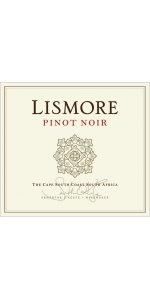
Lismore Pinot Noir is made from 100 percent Pinot Noir
Complex bouquet of crushed rose petals, wild jasmine and fresh French herbs followed by a palate full of cranberry, raspberry and a long savory finish.
The grapes were picked at optimal ripeness. 30% whole bunch fermented in large 5000 liter vats with gentle pump-overs twice a day. The process allowed for a long extraction period which lends to the fruit expression and structure of this wine. The free run wine was drained off and the fermented grapes were then pressed in a traditional wooden basket press. The wine was racked into 225, 300 and 500 liter barrels where malolactic fermentation took place and the wine was aged for 10 months. 35% new French oak was used.
Review:
"The 2018 Pinot Noir comes from Walker Bay and Kaaimansgat and includes 30% whole-bunch fruit, aged for 11 months in 25% new oak. The bouquet sports vivid red cherry and raspberry fruit that is exceptionally well defined and beautifully integrated with the oak. The palate is medium-bodied with supple tannins, well-judged acidity and a slightly fleshy texture. There is just the right amount of salinity here, and the finish is kept on a tight leash, allowing the detail and precision to be fully expressed. A slight sour edge on the finish keeps you coming back for another sip. Excellent and reassuringly classy. - Neal Martin" - Antonio Galloni's Vinous (November 2019), 92 pts
"Walker Bay and Elandskloof are the twin sources of 30% whole bunch-fermented Pinot from Sam O'Keefe. Juicy, floral and charming, it's a graceful, fruit forward style with some clove and tobacco spice and refreshing acidity. The finish is a little firmer than I remember. 2020-24"- Tim Atkin (South Africa 2020 Special Report), 92 pts
Holocene Memorialis Pinot Noir is made from 100 percent Pinot Noir.
Holocene Pinot Noir Memorialis is a blend of 777, Pommard and 115 clones from MonksGate vineyard in the Yamhill-Carlton AVA, and it saw about 20% new French oak for 16 months prior to bottling. It is always the lighter and more feminine of the two Holocene wines, with red fruits, white flowers, dried herbs, mushroom and forest floor aromatics, bright acidity and a lithe texture, long finish.
Review:
"Showing beautifully, with a Côte de Nuit-like nose of darker cherries, strawberries, sappy herbs, baking spices, and flowers, the 2018 Pinot Noir Memorialis is medium to full-bodied and has a gorgeously textured, layered mouthfeel, present tannins, and a solid spine of acidity. It would give many a Grand Cru Red Burgundy a run for its money in a blind tasting."
- Jeb Dunnuck (May 2021), 95 pts
By now, everyone knows that the Willamette Valley is an amazing place to grow Pinot Noir. When Todd Alexander relocated from Napa Valley to partner up with Force Majeure Vineyards, he knew he also wanted to start a project where he could focus attention on a varietal and growing region that he loved. Part of the excitement of being in the Pacific Northwest is the ability to have access to so many amazing vineyards and so much diversity, along with the opportunity to push boundaries and try new things – something that is becoming increasingly difficult in other growing regions.
He partners up with a few very small, diverse and amazing vineyards in the Willamette Valley, sourcing fruit from these dry-farmed sites that emphasize low yields, sustainable practices and produce outstanding fruit.
The wines are crafted in the same way Todd has been making wine since he was carrying it out at Bryant Family Vineyard in the Napa Valley — utilizing very low-impact, non-industrial techniques, native yeasts, little extraction and little new oak, and never filtering or fining. This allows a real sense of place to show through in the wines that is often dimmed when too much manipulation is undertaken.
The first vintage was 2015, and was released in early 2017.
Review:
"I continue to love these Pinot Noirs under Todd Alexander’s Holocene label. While they’re not from Washington State, I was able to taste these during my visit with Force Majeure (which are also made by Todd) and I’m thrilled to be able to include them here." - Jeb Dunnuck (April 2020)
Long Shadows Pirouette Meritage is made from 68% Cabernet Sauvignon 15% Merlot 8% Petit Verdot 6% Cabernet Franc 3% Malbec
Philippe Melka, named one of the top nine winemakers in the world by Robert Parker, used small lots from Washington State's finest vineyards to craft this enticing red blend.
Like the last several growing seasons, 2016 was another hot year that required extra care in the vineyards. Building on the success of our canopy managment program over the last few vintages, we worked with growers throughout the season to encourage growth of the canes and outside foliage to protect against the sun while opening up the fruit zone for even maturation. Warm temperatures in the fall hastened ripening, but the Columbia Valley's cool autumn nights protected the grapes' acidity, yielding bright, vibrant wines that will drink well in their youth but also promise to bring enjoyement to those who cellar.
A variety of fermentation methods were used to enhance complexity and richness in this classic Bordeaux blend. Hand-harvested Cabernet was fermented in 400L French oak barrels that were gently rolled throughout fermentation to integrate the oak with refined, dark fruit flavors and give the wine its silky mouthfeel. All other varieties were fermented in traditional stainless steel tanks, with select lots enjoying longer skin contact to enhance the wine's dark color and mid-palate. The finished wine was aged 22 months in French oak barrels (75% new) before bottling unfiltered and unfined.
Review:
"The 2016 Pirouette is made by Philippe Melka and it's a total blockbuster based on 68% Cabernet Sauvignon, 15% Merlot, and the palate Petit Verdot, Cabernet Franc, and Malbec that was fermented in barrel and aged 22 months in 75% new oak. Crème de cassis, blackberries, toasted spices, cedar, and forest floor notes all emerge from this deep, rich, opulent red that has sweet tannins, a thrilling texture, no hard edges, and a monster finish. This is another best-to-date from this estate and it's an awesome wine." -Jeb Dunnuck 97 Points

Sainte-Marie Bourgogne Blanc Vieilles Vignes is made from 100 percent Chardonnay.
The wine has a perfect light yellow color with green hues. Nose of white flower, sweet spice and bitter orange. Fresh and delicious attack. It shows roundness and a slight buttery note with a very saline finish that makes you slightly salivate.
Excellent with Seafood, grilled fish, clams and oysters of course. Also great with goat cheese or Comté cheese.
Aged on lees for 6 months in stainless steel vats. Adjustment of sulphites at the end of MLF and before bottling. Filtration on earth then on 1.2µ cartridge after bonding with bentonite.Machine harvest, and direct pressing with a pneumatic horizontal press. Static settling. Alcoholic and malolactic fermentation in stainless steel vats with native yeast and bacteria.
This wine is declassified Chablis, due to exceeding the volume limit per hectare it could not be labeled Chablis. They call it “over-production” Burgundy, but we call it an outstanding value. This exact same juice is selling for three times as much under the Chablis AOC label!



