" We don't sell the wine without touching the vine "
| Country: | South Africa |
| Region: | Franschhoek |
| Winery: | La Motte |
| Grape Type: | Sauvignon Blanc |
| Vintage: | 2021 |
| Bottle Size: | 750 ml |
La Motte Merlot is made from 100 percent Merlot.
La Motte Merlot offers a bouquet of red currants, cherries and spicy oakiness. It is an elegant, well-balanced and juicy wine with an underlying, refreshing quality.
Excellent with lamb, roasts or casseroles.
Review:
"Medium garnet color. Aromas and flavors of smoked meat, toast, leather, grilled plum, baked cherry tart, cracked black pepper, and myrrh with a round, lively, dry medium body and a smooth, interesting, medium-long finish with notes of chocolate-covered pecans with well-integrated, fine, firm tannins and light oak flavor. A savory and juicy Merlot with a strong sense of place; try with most meat dishes."
- Beverage Testing Institute (April 2021), 90 pts
Laird Sauvignon Blanc Napa Valley is made from 100 percent Sauvignon Blanc
Vineyard: 100% Big Ranch Road
Appellation: Oak Knoll District of Napa Valley and Rutherford
Varietal: 100% Sauvignon Blanc
15% of Big Ranch fermented in Neutral Oak barrels + 2% of Smith Ranch fermented in Neutral Oak Barrels.
This lively and prolific varietal thrives in alluvial deposits composed of gravelly sand and gravelly loam, with good water retention and moderate fertility. Our Napa Valley Sauvignon Blanc is crafted in an approachable, fruit-forward style that is typical of the varietal and expressive of its terroir.
Tasting Notes: Translucent gold color leads to notes of juicy ripe pineapple, jasmine, Kaffir lime and Juicy Fruit gum entice the nose. Balanced, yet vibrant body of acidity tantalizes the palate with pineapple, passion fruit and Charentais Melon; a refreshing layer of minerality hits your mid-palate. The elegant, floral finish opens into a complex balance of white peaches, nectarines.
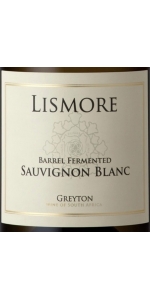
Lismore Barrel Fermented Sauvignon Blanc is made from 100 percent Sauvignon Blanc.
As with all Lismore wines, balance is the key. The bracing acidity that is customary in new world Sauvignons has been brought into balance with a carefully chosen pick date and the barrel and egg fermentation and maturation. A full bodied, balanced wine was the goal.
Barrel fermentation and extended lees contact contribute to this full bodied, elegant and well balanced wine. Floral notes of passion flower and fynbos, granadilla, guava, gooseberry and pear on the palate along with an underlying minerality which gives this unique terroir driven wine its signature.
Wine Made in the Soil
The grapes come from 50% Lismore’s Greyton vineyards which are planted on East/Southeast facing slopes at 320 meters in the foothills of the Sonderend Mountain Range. The soils are deep decomposed shale. The other 50% comes from a vineyard in Stanford which overlooks Walker Bay on sandstone soils.
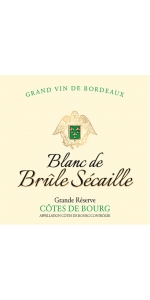
Brulesecaille Blanc Grande Reserve is made from 75% Sauvignon Blanc, 25% Sauvignon Gris.
Average age of the vines is 25 years.
Manual harvest from September 19th-20th 2016.
Direct press at low pressure (whole cluster) with low amount of SO2, settling at 10°C.
Addition of yeast and alcoholic fermentation in casks 400 liters.
Raised on the lees for 6 months with regular batonnage (stirring of the lees).
Bottling in april 2017.
Fish, seafood, white meats, fine goat cheeses.
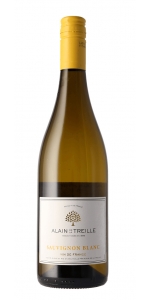
Alain de la Treille Sauvignon Blanc is made from 100 percent Sauvignon Blanc.
This Sauvignon Blanc has a slight amber color with a fresh aromatic nose. Grassy and mineral flavored with a refreshingly crisp mouthfeel. Vines are located outside the Loire Valley AOC boundaries, hence the Vin de France classification.
Best friend as an aperitif, with all your fish meals and seafood, but as well with charcuteries, Don't hesitate to try it with goat cheese.
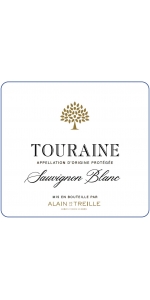
Our Touraine Sauvignon blanc is crisp and refreshing, with rich, ripe lime and grapefruit aromas. Great elegance with mineral style and despite everything some kind of roundness.
Average age of the vines is 20 years old.
We produce a part of this cuvee with 12 hours skin maceration and another part from directly pressed grapes
Wine was slightly filtered before bottling to ensure wine will remain stable.
Ideal for the Aperitif , any cooked fish such as smoked and grilled salmon but also obviously with a Goat Cheese.
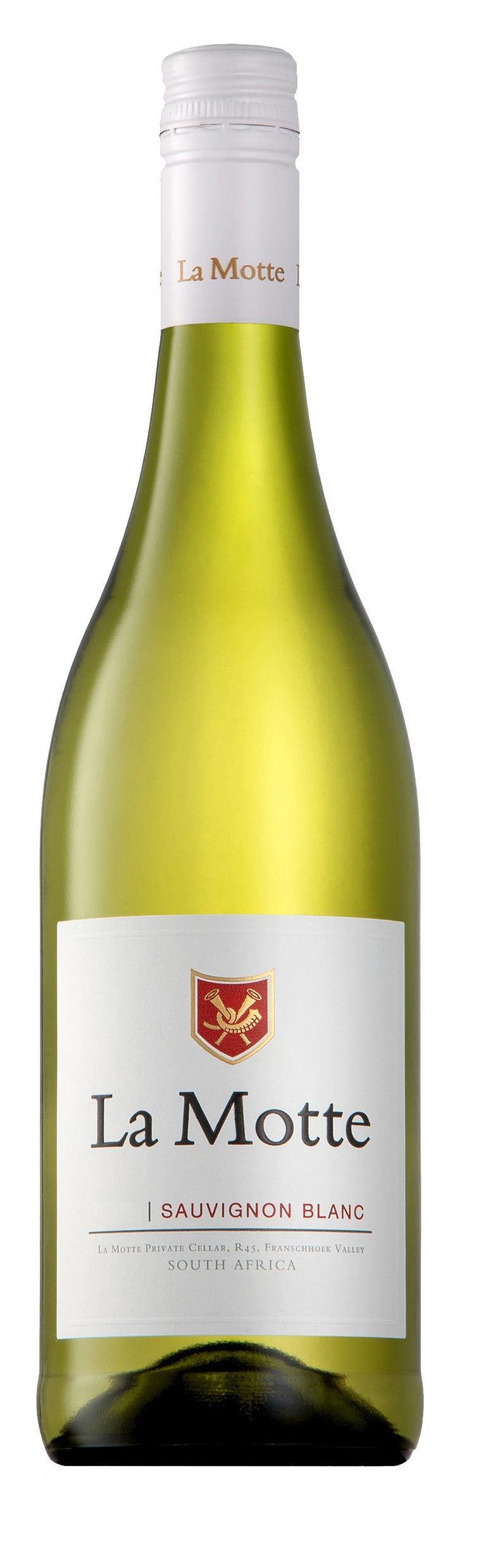
La Motte Sauvignon Blanc is made from 100% Sauvignon Blanc.
This wine was made from grapes originating from vineyards in several areas of the Cape Winelands — Franschhoek (25%), Stellenbosch (50%) and the Cape South Coast (25%).
Light straw in color with hint of green. Lots of fresh winter melon and gooseberry with distinctive lime aromas very typical to La Motte Sauvignon Blanc. Silky and soft on the pallet with a fruity green apple aftertaste. Lower acidity than the average year but well in balance with a lower residual sugar.
With its natural acidity and acute texture, the La Motte Sauvignon Blanc pairs beautifully with seafood, light pastas and spicy Chinese and Thai dishes. This white wine also goes extremely well with acute seasonings, and salty eats such as pre-dinner canapés. A natural partner to goat’s cheese. On its own, a refreshing aperitif white wine.
The La Motte Estate
Situated in the beautiful Franschhoek Valley in South Africa’s Cape winelands, La Motte is home to some of South Africa’s finest wines, recognized internationally for their exceptional quality. In harmony with the production of wines, La Motte has also ventured into flower cultivation and the production of ethereal oils. True to its philosophy of a culture of excellence, La Motte maintains a programme of consistent quality improvement, reaching beyond wine production. The estate has a strong commitment to historic and cultural preservation, as well as the active socio-economic upliftment of its workers and their families. With its picturesque setting, historic buildings and rural atmosphere, La Motte is an enchanting destination for visitors to the winelands of the Cape.
La Motte is synonymous with the highest quality in wines. To carry the La Motte label, each wine has to reflect the greatest expertise in viticulture, combined with experience, passion and a creative flair in wine-making.
Annually a total of 1 000 tons of grapes are processed in La Motte's modern cellars, where old-world wine-making methods are combined with state-of-the-art technology.
History:
In 1695 a piece of land in the Franschhoek Valley was granted to German immigrant Hans Hattingh. In 1709 French Huguenot Pierre Joubert purchased the land and named it after the village of his birth in Provence, La Motte d’Aigues. With the planting of 4 000 vines in 1752, viticulture was established on La Motte by Huguenot descendant Gabriel du Toit. The farm passed through several owners before being acquired by the Rupert family in 1970.
Today, La Motte owner Hanneli Rupert-Koegelenberg and her husband Hein Koegelenberg, CEO of La Motte, oversee La Motte’s making of exceptional wines as well as diversifying La Motte's operations into flower and ethereal oil farming.
The La Motte Vineyards
The unique charm of La Motte’s wines can be attributed to particular soil types, a moderate climate as well as a team of dedicated experts who keep abreast of international viticultural and vinicultural practices.
Viticulturist Pietie le Roux, who majored in viticulture, viniculture and pomology at South Africa’s leading agricultural training institution, has been in charge of La Motte’s vineyards since 1986, assisted by a highly motivated workforce.
“Fine grapes make fine wines”, says Pietie, “therefore we constantly try to improve our harvest results and apply findings obtained from ongoing research and developments in viticulture”.
The most modern practices are employed in the selection of vineyard sites, rootstock and clones, grape varieties planted, vineyard facings and vine spacing. Through extra high trellis poles, a bigger canopy of leaves is created, allowing more leaves to absorb the sunshine, enhancing early ripening and the formation of prominent aromas. The bigger canopy also protects the grapes against direct sunshine. Vine growth is restricted, to limit grape size and promote a high-quality extract, ideal for the production of elegant, complex wines.
These practices are further refined by the precision of science. The latest technology is applied, including GIS (Geographical Information Systems), by which the farm is scanned by satellite, monitoring and controlling the effects of slopes, radiation, micro and macro climates and soil classification.
Through infrared scanning, vine conditions such as stress and irrigation demands can be pinpointed by vineyard block in order to be addressed accurately. In specified vineyards on the La Motte Nabot farm in the Walker Bay region – from where grapes for La Motte wines are obtained – SGS-certified organic farming is practised, totally eliminating the use of chemicals and insecticides, thus promoting health benefits.
Furthermore, La Motte is equipped with a weather station and temperature monitoring system – loggers in vineyards determine humidity, moist conditions and temperatures in zones where grape bunches are formed.
Conscious of the effects of agriculture on the natural habitat, La Motte is accredited to the Biodiversity & Wine Initiative (BWI), a partnership between the South African wine industry and the conservation sector. The objective is to help keep biodiversity intact so that species and ecosystems are able to adapt to changes in the environment and to recover more readily from disturbances in their natural growth system.
Grapes are sourced from the Elgin (34%), Franschhoek (20%), Walker Bay (20%), Nieuwoudtville (9%), Darling and West Coast (8%), Durbanville (5%) and Elim (4%).
Grapes from Franschhoek and Walker Bay are organically grown.
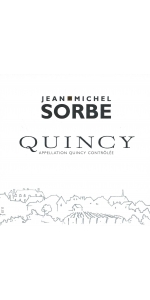
Jean-Michel Sorbe Quincy Blanc is made from 100 percent Sauvignon Blanc.
The first nose is expressive and opens up to notes of acacia, citrus (lemon, grapefruit). Full on the palate with lovely freshness. This wine boasts nice balance and good length.
The vines are 15 to 20 years old and are located on the left bank of the Cher River, southwest of Quincy. This vineyard enjoys good exposure to the sun and overlies hillocks composed of sandy alluvial deposits and gravel dating back to the Quaternary Period. Each terroir is managed with minimal intervention in an environmentally friendly approach. Vinification: Slow pressing. Fermentation took place under controlled temperatures (18°C).The wine was aged on fine lees for a minimum of 4 months. It was filtered only once before being bottled.
Pair with crustaceans, asparagus, or goat's cheeses.
After pouring, allow the wine to breathe for a few moments in the glass before enjoying so that it may fully release all of its aromas.
Xavier Vignon Beaumes de Venise Rouge is made from 60% Grenache Noir, 15% Syrah , 15% Mourvèdre and 10% Cinsault.
Thanks to the altitude all the grape varieties have been vinified together. The altitude vines have brought enough acidity to proceed with a burgundy style ageing with 50% in barrels of 3 to 5 years and 50% in stainless steel tanks.
It's full-bodied and lush, with waves of black cherries, hints of stone fruit and nuances of allspice, pepper and licorice on the long finish.
Pairs with roasted pigeon with wild basil - Rack of lamb with thyme - Pork ribs with a barbecue sauce - Peking duck - Wild boar braised in beer
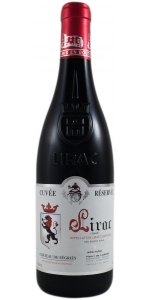
Segries Lirac Rouge Cuvee Reservee is made from 50% Grenache, 30% Syrah, 10% Cinsault, 10% Mourvèdre
Dark garnet in color. Expressive Red fruits and spicy. Sweet tannins and good length
Ageing up to 10 years
Vineyards Clay and limestone Area: 24 hectares Age of Vines: 80 years Yeild: 24 Hl/Ha Production: 570 Hl Harvest and VInification Harvest by hand and 100% destemmed. Maceration for 21 days in cement tank - Fermentation with controlled temperature at Château de Ségriès.
Pairs well with Stews, Grilled meats, Game, Various cheeses
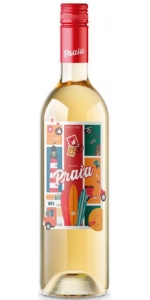
Praia Aveleda Vinho Verde NV is made from 40% Loureiro, 20% Trajadura, 20% Arinto, 20% Azal.
Praia, which means "beach" in Portuguese, is a smooth and fresh wine with delicate and lovely fruity flavors. Slightly spritzy, it is well balanced and very refreshing.
The region is typical for its unique wines that are fresh and light, combined with a very well balanced acidity. These characteristics result from the region's unique soil and climate, with a strong Atlantic influence that you will identify when you taste it.
The wine is ideal as an aperitif or throughout a meal, especially with fish, seafood, white meat and salads. Due to it freshness, it is particularly pleasant in a relaxed and informal ambiance.
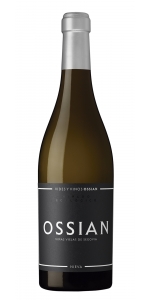
A barrel fermented, old vines Verdejo made in a style different from what we typically see in this white varietal. It has a remarkable complexity, resulting in the smoothness and depth of a high-end white. Very suitable for cellaring.
Golden yellow color with greenish reflections. Complex, toasty aromas of nuts & dried fruit. Large, creamy, spicy, balanced and voluminous.
Rice with fish, cooked seafood, grilled seafood, baked white fish.
"The eponymous 2020 Ossian was produced with Verdejo grapes from old, organically farmed vines around the village of Nieva (Segovia), a zone where phylloxera didn't reach. They consider 2020 their finest vintage to date, with a big change from 2018 and when they have achieved a much better understanding of their vineyards. It has notes of pit fruit and sweet spices, with good weight on the palate, moderate alcohol (13.5%) and ripeness and good freshness and balance. It's serious and with potential to develop in bottle. 80,000 bottles produced. - Luis GUTIERREZ"
- Robert Parker's Wine Advocate (January 31st 2023), 94 pts
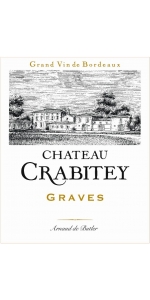
Crabitey Graves Rouge is made from 47% Cabernet Sauvignon, 47% Merlot and 6% Petit Verdot.
Château Crabitey Graves Rouge presents a dark cherry color with nice ruby glints. The nose is fresh, revealing a wide range of red fruits flavors, along with a mellow and elegant oak presence. The mouth is powerful and round, supported by smooth and subtle tannins. The wine reveals a good length on the palate, with fruity and slightly oaky notes.
Pairs well is grilled lamb, beef stroganoff and hard cheeses.
Review:
"The 2019 Crabitey is impressive, just as it was en primeur. Bright redtoned fruit, white chocolate, flowers, gravel and mint give the 2019 quite a bit of freshness and energy that builds over time. This mid-weight, wonderfully expressive Graves is a winner.- Antonio Galloni"
- Antonio Galloni's Vinous (January 2022) 91 pts
Paul Hobbs Edward James Estate Chardonnay Russian River Valley is made from 100 percent Chardonnay.
This small five-acre estate named after Paul's great-grandfather, Edward James, rewards us with a chardonnay that is pale straw in color with inviting aromas of lemon zest, red apple skin, gardenia, and honeysuckle. A creamy mouthfeel on the palate evolves into poached pear, ginger spice, and brioche that come together with a crunchy acidity and lively finish.
Review:
The 2022 Chardonnay Edward James Estate was named after Paul’s grandparents on his father’s side and originates in a vineyard planted entirely to Hyde Wente clone of Chardonnay. It was raised in French oak for 18 months on the lees. In the glass, it’s highly expressive and layered with aromas of toasted spice, incense, honeysuckle, quince, and preserved citrus. Medium to full-bodied, it has a fantastic, long, supple texture with a linear, crystalline feel, great, evenly fresh acidity, and a salty, mouthwatering finish. This is my favorite of the white wines at this tasting. Drink 2025-2037.
-Jeb Dunnuck 97 Points
Palacio de Fefinanes Albarino "III Ano" is made from 100 percent Albarino
The III Año shows all the expressiveness of the Albariño grape, with full nose of mature fruit and a mineral character. Complex and meaty with firm structure in the mouth, it promises a splendid evolution which will favor a long life for this elegant wine with personality.
Aged for 3 years on the lees in stainless steel tanks.
Wine is aged for a total of 6 months: 4 months in French and American Oak barrels. No new oak, only 1, 2 and 3 year old barriques. During these 4 months, wine is aged on the fine lees with frequent Batonnage (stirring of the lees) in order to get the most expressive notes from the Albarino varietal. Then, it is transfered into a stainless steel tank, which allows the oak aromas to be assimilated and integrated.
1583 is the birth date of the Viscount of Fefinanes, Gonzalo Sarmiento Valladares, builder of the Castle of Fefinanes, in Cambados. They wanted to pay tribute to their ancestor with this wine that managed to reach a perfect harmony between the fruitiness of the Albarino grape and the complexity brought by the oak aging.
Excellent with shellfish, grilled or stewed fish, white meats, poultry