
" We don't sell the wine without touching the vine "
.jpg)
| Country: | Italy |
| Region: | Emilia-Romagna |
| Winery: | Bruscus (Vini San Valentino) |
| Grape Type: | Lambrusco |
| Vintage: | 2013 |
| Bottle Size: | 750 ml |
-150x300.jpg "Lambrusco Amabile Bruscus San Valentino Red 2018")
Lambrusco Amabile Bruscus San Valentino Red is 100% Lambrusco from grapes grown in the province of Modena and Reggio Emilia.
Traditional vinification methods combined with modern technology to produce wines of guaranteed quality. After the grapes are pressed, they are transferred to fermentation tanks where the must is racked off in an average of 70 hours. The wine then completes its first rapid fermentation process and passes to the slower fermentation phase, during which time it is racked off several times to improve its clarity. The wine is placed in an autoclave at strictly controlled temperatures wherein it undergoes a second fermentation. This is known as the Charmat Method. The temperature is controlled for full development of the bouquet and for the lively and natural sparkle so characteristic of this wine.
Deep ruby red with violet reflections and a fine perlage.
Intense vinous bouquet with hints of ripe red fruits.
Lively, fresh, sweet and inviting with bright fruit and a delightful sparkle.
Excellent by itself or with desserts of dark chocolate, gorgonzola, cheesecakes.
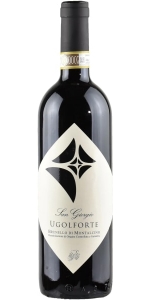
San Giorgio Ugolforte presents a dark core of red and black berry fruit layered with earth, leather, smoke, and herbs. Complex and elegant, the wine is full on the palate and firm in tannin structure. Refreshing acidity frames a graceful finish. Classic Brunello di Montalcino.
This red is marked by cherry, plum, thyme, sage and loam aromas and flavors. Lively and firmly structured, featuring a saline undercurrent. An open-knit version, with nice equilibrium, fine energy and a long, resonant finish.
-Jeb Dunnuck 94 Points
-Wine Spectator 94 Points
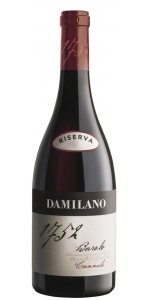
“1752” is the name of the Damilano Barolo Cannubi Riserva, in honor of the year in which the historic bottle was first marked “Cannubi”. It still exists today perfectly conserved by the Manzone family in Bra, close to Barolo. The bottle is clearly marked as being of “1752” vintage, indicating that Cannubi historically precedes Barolo.
About the Vineyard:
The Cannubi Cru is in found within one of the 6 core zones which comprise a UNESCO heritage site in Italy. A mixture of Tortonian and Helvetian calcareous marl gives the grapes intense aromas of cherry, plum and tobacco, rose and violet in sequence. Its low potassium and high calcium/magnesium content offer the wine a fine and polished touch. The vineyard is located at about 270 m. a.s.l. and has a south-east sun exposure. Barolo Riserva Cannubi 1752 It is a small plot of about 2 hectares of Nebbiolo vines, currently between 30 and 50 years of age.
Tasting Notes:
Garnet ruby red in color, the bouquet is intense and balanced, with notes of violet, red fruit, cherry and plum, spices, liquorice, cocoa, leather and tobacco. Dry, robust, full-bodied, very persistent, rich and velvety
Food Pairing:
This wine is excellent with typical piedmontes pasta (tajarin, ravioli); perfect with red meat, braised and roast meat, game and absolutely ideal with all types of cheeses.
Review:
The purity of this wine is pretty phenomenal with blackberries, strawberries, fresh flowers and licorice. Hints of tar. It’s full-bodied, yet composed and compact with ultra fine tannins and a long, flavorful finish. Very structured. Try after 2024.
-James Suckling 97 Points
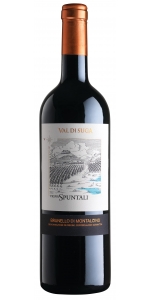
This is a 6 pack with 2 bottles each from vintages from 2013, 2015, and 2016.
***Tenimenti Angelini Val di Suga Vigna Spuntali Brunello di Montalcino 2016:
The 2016 Vigna Spuntali Brunello di Montalcino is the most brooding of the lineup from Val di Suga and is sourced from the southwest of the region on sandy soils. There are aromatics of black raspberry, licorice, menthol, sage, cinnamon, and iron-rich earth. Its Mediterranean influence is felt on the palate with ripe black cherry, dried herbs, and sun-baked earth. This is the fullest bodied and most savory of the Val di Suga lineup, with more roundness and grip. Its structure will benefit from cellaring for several years and will be great drinking over the next 20 years or more. 2026-2040.
-Jeb Dunnuck 96 Points
***Tenimenti Angelini Val di Suga Vigna Spuntali Brunello di Montalcino 2015:
The 2015 Vigna Spuntali Brunello di Montalcino is more introverted on first opening, with notes of black plum, licorice, dried Mediterranean herb, and sun-baked earth. On the palate, it offers a tart dried fruit character, with a building tannin structure that finishes with tomato leaf, and bitter herbs. The most rustic and burly of the wines in the lineup of the 2015 Val di Suga vintage, it will benefit from allowing some time in cellar to see how this matures and its tarriness develops. Drink 2026-2036
-Jeb Dunnuck 94 Points
***Tenimenti Angelini Val di Suga Vigna Spuntali Brunello di Montalcino 2013:
Plenty of spices and fresh herbs on the nose, such as dried rosemary and nutmeg, to match the underlying dried redcurrants and cranberries. Full-bodied with plenty of concentration, but still shows a very sturdy, tannin backbone and punchy acidity, to drive this through to a long finish. Drink in 2021.
-James Suckling 94 Points
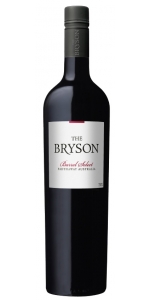
This limited release wine is created from the fusion of two exceptional parcels of 70% Shiraz and 30% Cabernet Sauvignon. This classic blend is matured in the finest oak crafting an intriguing unison that captures the essence of the vineyard and highlights its unique varietal expression.
Vintage Overview
2013 was a very good season with predominantly mild, dry days. Yields were generally low and this did result in some excellent parcels of fruit being harvested. Vine-balance was carefully monitored, resulting in fruit that demonstrates the vibrancy and fruit-derived characters that we strive for in our wines. By all accounts it was a textbook vintage.
Tasting Notes
Deep inky purple in color. Aromas of blackberry, mocha, mint and spices. Lush, ripe palate dominated by black fruits, cherry and chocolate. An expansive palate with black fruits and nicely balanced by oak.
Made with the greatest dedication and care, select parcels were matured in new and seasoned French and American oak for up to 20 months prior to being selected for this blend. Individual barrels from our family estate that best demonstrate the intensity of our fruit, balanced by integrated oak were selected for the final blend, which was then bottled with minimal filtration.
Pairs well with venison, ribeye steak, lamb.
Review:
70% Shiraz and 30% Cabernet Sauvignon. Fruit and oak combine here to produce a powerful, full-bodied red with coffee, toast, blackberry and rick plum flavours pouring through the palate. Tannin taps gently at the brakes: peppercorn and pine notes add lift: creaminess to the texture keeps everything running smoothly. Screwcap. 14.5% alc.
Halliday Wine Companion 2020 94 Points
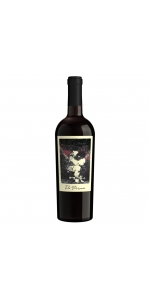
The Prisoner Wine Company The Prisoner Red Blend is made from a blend of Zinfandel, Cabernet Sauvignon, Petite Sirah, Syrah, and Charbono.
Bright aromas of ripe raspberry, vanilla, and coconut give way to flavors of fresh and dried blackberry, pomegranate, and vanilla, which linger harmoniously for a smooth and luscious finish.The Prisoner Red Blend was inspired by the wines first made by the Italian immigrants who originally settled in Napa Valley. The Prisoner is now the most recognized red blend, leading the resurgence of interesting blends by incorporating Zinfandel with the unlikely mix of Cabernet Sauvignon, Petite Sirah, Syrah, and Charbono.
On the nose, dried blackberry, dried açai berries, and hints of cedar and tobacco leaf are accented by sweet spices of clove, cinnamon, and nutmeg. Flavors of ripe dark cherry, blackberry coulis, and hints of anise linger harmoniously for a soft, vibrant finish balanced by ripe tannins.
Chef Brett recommends pairing The Prisoner Red Blend with Kalbi Short Ribs or Chicken Mole Tostada.
Vineyards: When you outgrow winemaking tradition, you must forge your own path. And we did. The Prisoner exists because of the collaboration with our growers, many of which have been with us since the very beginning—from the Solari Family Vineyard in Calistoga, where old school sensibilities meet new techniques, to the Korte Ranch in St. Helena, a vineyard whose diligence outlasted the Prohibition and has sustained four generations.
Lambrusco Amabile Bruscus San Valentino Red 2013 is 100% Lambrusco from grapes grown in the province of Modena and Reggio Emilia.
Traditional vinification methods combined with modern technology to produce wines of guaranteed quality. After the grapes are pressed, they are transferred to fermentation tanks where the must is racked off in an average of 70 hours. The wine then completes its first rapid fermentation process and passes to the slower fermentation phase, during which time it is racked off several times to improve its clarity. The wine is placed in an autoclave at strictly controlled temperatures wherein it undergoes a second fermentation. This is known as the Charmat Method. The temperature is controlled for full development of the bouquet and for the lively and natural sparkle so characteristic of this wine.
Deep ruby red with violet reflections and a fine perlage.
Intense vinous bouquet with hints of ripe red fruits.
Lively, fresh, sweet and inviting with bright fruit and a delightful sparkle.
Excellent by itself or with desserts of dark chocolate, gorgonzola, cheesecakes.
The Vini San Valentino Bruscus Estate
The farm, located between Reggio Emilia and Parma, is an old family property that can trace back its viticultural origin to the 900's. Its philosphy is to combine the use of technology, constant innovation and tradition to obtain the best result and produce top quality wines. Today Lambrusco is enjoying a rebirth.
This is a small winery but is certainly big on quality, the kind of quality that only the natural fermentation of wines can guarantee.
The Vini San Valentino Bruscus Vineyard
Lambrusco is primarily produced in the Val Padana which lies between Piacenza and Bologna. Rich in sand and gravel, the vineyards are on a south to south east exposure and lie at about 200 meters above sea level in the Val Padana. The vines are an average of 25 years old.

All older vintage wines have been purchased from a single collectors cellar. Pictures can be requested before shipment.
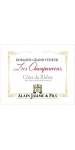
Intense, brilliant garnet-red colour. It reveals lovely fruit, loads of body and a heady bouquet of ground peppers, raspberries cherry liqueur, currants, and spice box. Full-bodied and dense, it tastes more like a "baby Châteauneuf" than a Côtes du Rhône.
A complete wine, rich and elegant, thanks to the harmony of all the elements which make it up.
Drink between 1 and 6 years.
Soil type DOMAINE GRAND VENEUR “Les Champauvins” stretches on 34 ha classified in Côtes du Rhône. The plots are located in the northern border of Châteauneuf du Pape, exactly from 3 meters outside the appellation. A small lane of rocks going through the rocky plateaux has been decided to be the AOC limit in 1936. Here, soils are made of red clay and rocks (pebbled stones of quartz). The quantity of rocks can be amazing as they can completely cover the soil (see picture). In summer and during the day, the rocks temperature will increase to 55°C. This accumulated heat will be get back to the vines during nights . Day after day, this unique phenomenon allow the grapes to reach a perfect maturity and produce a unique wine. Winemaking & Ageing Traditional, in stainless steel vats. Harvest crushed and destemmed. Fermentation in temperature controlled vats at 28°C. Eighteen-day vating period with “pigeage”. Grenache is aged in concrete vats, Syrah and mourvèdre in 4 year old barrels. Intense, brilliant garnet-red colour. It reveals lovely fruit, loads of body and a heady bouquet of ground peppers, raspberries cherry liqueur, currants, and spice box. Full-bodied and dense, it tastes more like a “baby Châteauneuf” than a Côtes du Rhône. A complete wine, rich and elegant, thanks to the harmony of all the elements which make it up.



