" We don't sell the wine without touching the vine "
| Country: | France |
| Region: | Bordeaux |
| Winery: | Chateau des Landes |
| Grape Types: | Cabernet Sauvignon Merlot |
| Organic: | Yes |
| Vintage: | 2020 |
| Bottle Size: | 750 ml |

Landes Cuvee Prestige Lussac Saint Emilion is made from 80% Merlot, 15% Cabernet Sauvignon and 5% Cabernet Franc
Color: deep dark ruby intense color
Aroma: racy and aromatic nose with aromas of ripe red fruit, floral notes, wood and spice with a touch of vanilla.
Taste: this wine has a good structure and some powerful aromas of raspberries, blackcurrant, vanilla and it is powerful with a complex finish. The oak is present but not dominant. The tannins are quite well integrated already.
Average age of the Vines: 60 years Yield : 50 hectoliters / hectare. Grape picking: harvest by machine. Vats: Stainless steel thermoregulated and computerized. Fermentation: 45 to 50 days with a final 35°C warm steeping. Winemaking: Malolactic fermentation in new oak barrel. Ageing: 16 months in new French Oak barrels from Allier and Limousin. Annual production: 10,000 bottles. (833 cases)
Review:
"This shows aromas of ripe blackcurrants and blackberries with walnuts, spices and cocoa. Medium-bodied with firm tannins and a bright, succulent character. Racy finish. Drink or hold."
- James Suckling (December 2022), 92 pts

Landes Cuvee Tradition Lussac Saint Emilion is made from 80% Merlot, 15% Cabernet Sauvignon and 5% Cabernet Franc
Color: deep ruby intense color.
Aroma: racy and aromatic nose with aromas of ripe red fruit.
Taste: this wine is silky, round and smooth first taste, with aromas of raspberries, and blackcurrant, powerful and complex finish.

Landes Grand Heritage Lussac Saint Emilion is made from 100 percent Merlot.
First vintage of this wine was 2010 to pay tribute to the founding father of Chateau des Landes - Paul Lassagne. He gave the family a great legacy of terroir, passion and know-how to craft this great cuvee produced from a selection of the finest grapes that are vinified and aged in 600 liter French oak foudres, just like it was done in the old days. The resulting wine is complex and aromatic offering bold aromas and flavors of dark berries, floral tones, spice, oak and vanilla. The palate is onctuous and powerful, well structured with ripe tannins. Well balanced and a complex finish.
Average age of the Vines: 60 years Yield : 50 hectoliters / hectare. Grape picking: harvest by machine. Vats: Stainless steel thermoregulated and computerized. Fermentation: 45 to 50 days with a final 35°C warm steeping. Winemaking: Malolactic fermentation in new oak barrel. Ageing: 16 months in new French Oak barrels from Allier and Limousin. Annual production: 10,000 bottles. (833 cases)

Despite its relative youth, Zweigelt is actually an Austrian classic. This variety was created in 1922, when Dr. Fritz Zweigelt crossed two grapes - St Laurent and Blaufränkisch. Originally, it was intended for the new variety to be called Rotburger, referring to the place where it was born, Klosterneuburg. But this name never took hold, and instead, Zweigelt was named after the man who was the key in its development.
Today, Zweigelt is the most widely planted red variety in Austria, growing in nearly 9% of this country's vineyards. It is a robust grape, highly resistant to dryness, frost and various diseases.
The wine boasts a pale rosé color, it has plenty of fruity aromas, with red cherry and wild strawberry flavors. It is medium-bodied, but it still have a nice long and pleasant finish with a light cinnamon type of spice to it.
Only the best grapes are harvested with a lot of experience and know-how and further processed. The grapes are fermented directly gently pressed and cooled. The fermentation takes place exclusively in stainless steel tanks.
Perfectly at home on any picnic, delicious with fried chicken, and tames the heat when paired with spicy dishes. There is also a slight watermelon note that makes it perfect for spring and summer. A great pairing with barbecued shrimp.

Patton Valley Rose is made from 100 percent Pinot Noir.
Its beautiful salmon-pink color hints at the enjoyment that awaits you. Alluring aromatics spill out of the glass, with scents of fresh-cut ripe strawberry, candied rose petal, cotton candy and bubble gum harmonizing together and inviting deeper inspection. In the mouth, the first sensation is one of volume and a cacophony of lush ripe fruit flavors, followed by a zingy, green apple acidity and a slight mouth-watering frizzante, the trademark of Patton Valley Rosé. One glass is never enough.

This pale rosé colored spumante boasts a rich mousse and persistent bubbles. The intense and fruity bouquet of raspberry, wild strawberry, pink grapefruit is intertwined with almond, rose petals and balsamic notes. The palate is fresh, well balanced and harmonious with full flavors of strawberry fruit and a long finish.
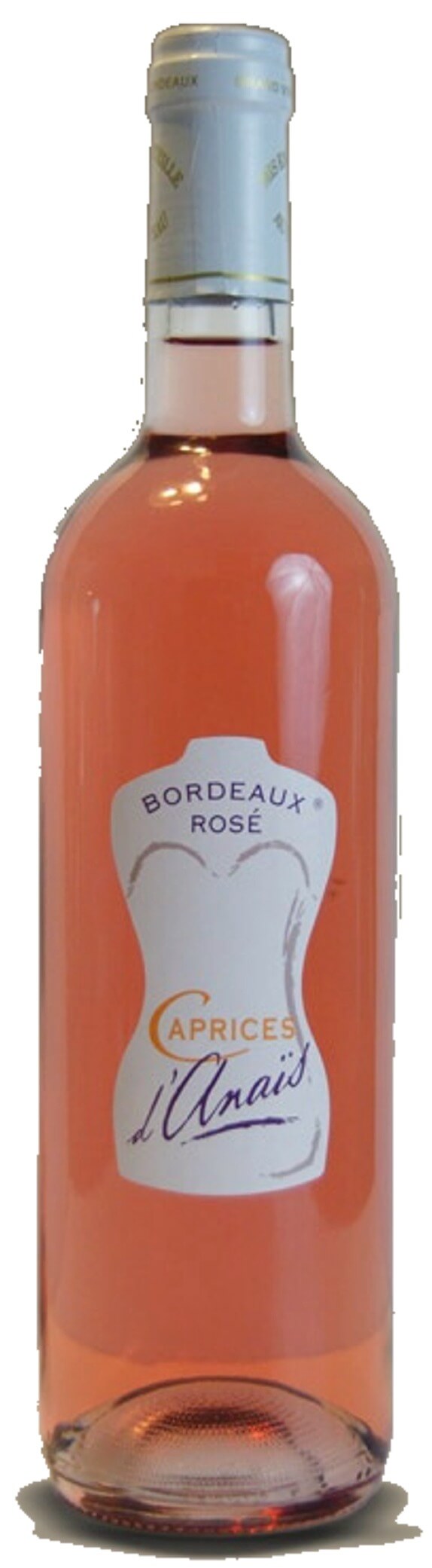
Landes Caprices d'Anais Rose is made from 50% Merlot + 50% Cabernet Sauvignon
This cuvée was created in 2005 to honor Nicolas's first daughter Anais. Caprice d'Anais means "Anais' Whim".
Color: Pale pink with salmon hues.
Aromas: quite aromatic nose dominated with floral (linden and elderberry) and fruity (cherry, strawberry and raspberry) notes.
Flavors: Quite similar to the aromas, with red fruit and floral flavors. The wine is easy to drink with a good fresh and zesty finish.
Great on its own during summer time, it will also pair very well with grilled salmon, salads, roasted chicken or any white meat dish.
Chateau des Lande Estate
Château des Landes was created in 1952 by Paul Lassagne, Nicolas' grandfather. He started with only 2 hectares and grew to 7 hectares in 1979.
His son, Daniel, came along and bought more vineyards surrounding the cellar and he managed to grow to 27 hectares in almost 20 years.
In 2001, Nicolas, came aboard and decided to continue on the family tradition bringing his expertise and his knowledge.
Nicolas is now in charge of the Estate and he manage 27.2 hecatres of vineyards (68 hectares).
27.2 hectares (68 acres) of vineyard with a density of 5,500 vineplants per hecatres ( 2,217 vineplants per acre).
The average age of the vine is 30 years.
The soil is mostly a mix of Clay and limestone, while the subsoil is white clay.

Laurent-Perrier Cuvee Rose Petal Jacket NV is made Pinot Noir from 10 crus in the Montagne de Reims
After the “Signature”, “Constellation”, “Safari”, “Butterfly” and “Bamboo” robes, Laurent‑Perrier unveils “Petals”. A robe of light where Dalhia or Strelitzia petals are subtly woven in iridescent Pop colours. A harmony of colours in shades of red and pink with highlights of orange or blue, recalling all of the fresh, crisp nuances of the red and black fruit palette of this great rosé champagne.
Laurent‑Perrier has been designing a reusable metal case with its clasp since 2017, to enhance the quality of the wine, matching the generously shaped Cuvée Rosé bottle.
The Cuvée Rosé from Laurent-Perrier is the most recognized rosé champagne in the world. The house uses its proprietary maceration technique and the wine is crafted for a fragrance and not mixed for a color. Held in an elegant bottle inspired by King Henri IV, it has been widely acknowledged for its consistent high quality for more than 40 years, and it is the benchmark for rosé champagne around the world.
Laurent-Perrier Cuvée Rosé is truly remarkable for its highly expressive bouquet, stemming from very careful preservation of fresh fruit aromas during the wine making. Made with 100% Pinot Noir from 10 different "crus " (or villages), from the North and South areas of the Montagne de Reims, as well as the famous village of Bouzy. Grapes from carefully selected plots are meticulously sorted and de-stemmed before going into the vats, and the controlled maceration helps with the color extraction and the development of the full aromatic richness of the Pinot Noir.
Intensely fruity flavors, clean and slightly sharp, the wine opens to the sensation of freshly picked red berries: strawberries, Morello cherries, black currants and raspberries. The finish is supple and rounded.
Its aromatic depth makes it ideal for pairing with marinated raw fish, grilled prawns, exotic dishes, Parma ham and red fruit desserts. Those who are more daring will try it with Asian or Indian cuisine.
Review:
Generosity no less than grace defines this 100% Pinot Noir from ten different crus primarily in the Montagne de Reims. Slightly coppery salmon-pink in the glass, it displays a radiant nose of ripe red berries that pop against glimmers of spiced biscotti and roasted cashew. On a broad palate of pure silk, raspberry and black cherry are underlined by blood-orange rind and crushed rock before a long, almost voluptuous finish that's slightly savory with dried mint.
-Tasting Panel 97 Points

Thorn Clarke William Randell Shiraz is made from 100 percent Shiraz
The William Randell range of wines were created in honor of our family ancestor - the esteemed pioneer William Richard Randell (1824 - 1911). The wines are sourced solely from grapes grown on our estate vineyards. Wines in this range are only made in exceptional vintages.
Deep red with inky purple hues. This classic Barossa style shows rich blackberry, licorice, spice plum and smoky oak on the nose. The palate is dense with ripe mulberry and berry compote and generous supporting oak. The tannins are savory and long with spicy refined finish
Following harvest the fruit was crushed into a variety of small fermenters (4 to 6T in capacity). Fermentation was carried out at a warm temperature (25-28 degrees ). The ferments were manually pumped over to provide good control of tannin extraction. Each fermenter was treated as a separate parcel of wine and once dry was filled to American oak (40% new). Following malolactic fermentation the wines were racked and returned to the same oak. Parcels remained in barrel for an average of 18 months prior to blending. Only the best barrels from the multiple parcels were used to make the final blend. Once blended the wine was prepared for bottling.