
" We don't sell the wine without touching the vine "
| Country: | France |
| Region: | Burgundy |
| Winery: | Louis Jadot |
| Grape Type: | Pinot Noir |
| Vintage: | 2017 |
| Bottle Size: | 750 ml |

Domaine du Colombier Hermitage Rouge is made from 100 percent Syrah.
Perfect with beef ribs, grilled meats and cheese.
Manually harvested with destemmed grapes and fermented for about 2 to 3 weeks in temperature controlled vats, with an ageing period of 12 months, 65% in oak barrels and 35% in concrete tanks.
Review:
-Joe Czerwinski (Robert Parker) 96 Points
-Jeb Dunnuck 96 Points
-Wine Enthusiast 95 Points
-Josh Raynolds 94 Points

Thierry Mortet Gevrey Chambertin Vigne Belle is made from 100 percent Pinot Noir.
The wine is produced from 20 different parcels (3 hectares total). The soils are a mix of clay and silt.
The age of wines varies between 15 to 60 years.
Yield: 45 hl/ha
Production: 15,000 bottles on average.
Manual harvest with a selection of the grapes; sorting table; 100% destemming; maceration for 15 days, cold stabilization for 4-5 days; M-L.; racking twice a day. Fermentation in stainless steel tanks for 4 months. Aging in oak barrels for 12 months (new and 1 or 2 year old barrels). Kieselguhr filtration before bottling.
The wine offers a subtle and complex nose. It displays a sweet and delicate mouthfeel. Very nice wine with black fruit aromas. Dense, good concentration. Good length and well integrated oak.

Thierry Mortet Gevrey-Chambertin is made from 100 percent Pinot Noir.
The wine is produced from 20 different parcels (3 hectares total). The soils are a mix of clay and silt.
The age of wines varies between 15 to 60 years.
Yield: 45 hl/ha
Production: 15,000 bottles on average.
Manual harvest with a selection of the grapes; sorting table; 100% destemming; maceration for 15 days, cold stabilization for 4-5 days; M-L.; racking twice a day. Fermentation in stainless steel tanks for 4 months. Aging in oak barrels for 12 months (new and 1 or 2 year old barrels). Kieselguhr filtration before bottling.
Liquorice, blackberry, red fruits flavors.
Excellent with meat, game and cheeses.

Begude Bandol Rouge La Brulade is made from 95% Mourvedre and 5% Grenache.
"La Brulade" is the name of a select slope located at an altitude of 400 meters overlooking the Mediterranean sea between La Baie d'Amour (the town of La Ciotat) in the South and La Sainte Baume in the North. This is one of the highest parcels in the Bandol appellation.
The wine is only produced in exceptional vintages. This carefully selected blend is made of 95% Mourvedre and 5% Grenache, aged in large French oak barrels for 24 months.
The wine shows a deep purple color. It is fresh and fruity on the nose with intense garrigue aromas. Structured, elegant and well-balanced on the palate with strong tannins. Licorice, ripe black fruits, garrigue flavors and some peppery freshness on the finish.
The 35-year old grapes are grown on clay and limestone soils and are farmed organically. Yield is very low - 15hl/ha. The grapes are harvested manually.
Winemaking: Double selection, destemming, crushing before skin contact fermentation. No filtration. Aging for 24 months in French oak casks (600L).
Grilled meat (lamb, beef, boar), Mediterranean cuisine, spicy dishes.
Review:
-Wine Enthusiast 95 Points

Mortet Bourgogne Cote d'Or Rouge is made from 100 percent Pinot Noir.
A parcel of 90 ares, one part is 20 years old and the other part is 55 years old. Its is called Les Pressonniers, in Gevrey-Chambertin.
Bourgogne Rouge Côte d’Or comes from a plot of Gevrey-Chambertin vines, giving delicate fruit and body, as well as the character and complexity of the Gevrey-Chambertin terro
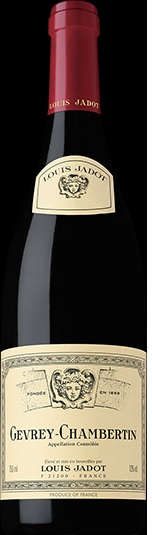
Louis Jadot Gevrey Chambertin Rouge is made from Pinot Noir.
Jadot Gevrey Chambertin wines are produced from vineyards lying on the extension of the slope on which the Grands and Premiers Crus are situated. These vineyards vary considerable in quality, and the name of the producer is thus more important here than elsewhere. Maison Louis Jadot vinifies the production of growers with whom it holds purchase agreements based on the quality of the harvest each year.
Review:
"The bright cherry core of this red is framed by smoke, vanilla and saline mineral notes. Vibrant and balanced, backed by dense tannins. The finish evokes dark cherry, plum and spice elements, extended by the lively acidity. Best from 2022 through 2042. 900 cases imported."
-Wine Spectator 93 Points
Frédéric Barnier joined Maison Louis Jadot in 2010 as Technical Director, working under the guidance of Jacques Lardière. For 42 years, the legendary Lardière was responsible for the winemaking and bottling of all Maison Louis Jadot wines, and he is considered to be one of Burgundy’s finest winemakers. He briefly retired, then came out of retirement to launch Resonance Wines, Jadot’s new brand from Oregon. Frédéric now leads the winemaking team with the Maison Louis Jadot philosophy: no compromise on quality.
Maison Louis Jadot was founded in 1859 by the man whose name it bears, Louis Henry Denis Jadot. The first of his family arrived in Beaune from Belgium in 1794 and soon began purchasing Premier and Grand Cru vineyards. With grape growing a part of his heritage, Louis Henry set about gaining experience first in the cellars, in the evaluation of wines, and then in the vineyards, in the study of viticulture.
Jadot invests in Burgundy, only purchasing grapes from the highest quality producers where they have a relationship and vinifying the wine on-site rather than buying ready-made wines.
For its Beaujolais and Mâconnais wines, Jadot practices a further, though expensive, practice called réplis, in which wines of a higher appellation are incorporated into a wine bearing the appellation below them. Thus, for example, Jadot’s Beaujolais-Villages will customarily contain a percentage of wines from Beaujolais crus.
Maison Louis Jadot’s principles of vinification balance tradition and technology, and focus on the purest expression of each wine’s terroir, taking the lightest possible hand in winemaking and a restrained use of oak maturation. For its village level Côte d’Or wines, Jadot practices a further, though expensive, practice called réplis, in which wines of a higher appellation are incorporated into a wine bearing the appellation below them.
Jadot’s cellar practices, including long macerations, the choice of wild yeast when possible for fermentation, fermentation temperature and other winemaking methods are also designed to preserve the character of the fruit in the wines. For both red and white wines, Maison Louis Jadot places great importance on the restrained use of new oak in the aging process. Time in cask and percentage of new oak is dictated differently by each vintage. In keeping with its non-interventionist philosophy, Jadot considers that very great vintages, complete and harmonious by themselves, require minimum contact with new oak.
In 1970, aware that Maison Louis Jadot’s future growth lay in its increasing role as owner-producer, Gagey engaged Jacques Lardière, a brilliant young enologist, as his assistant and eventual technical director. Lardière, now retired, is today acknowledged as one of Burgundy’s finest winemakers, an artist with the reins of nature in one hand and those of technology in the other. In 1984, André Gagey’s son, Pierre-Henry Gagey, joined the firm. He had a strong background in business administration and management, and an inherited knowledge of wines. In February of 1985, the négociant firm of Maison Louis Jadot was purchased by the owners of Kobrand Corporation, sole United States importer of Jadot Burgundies since 1945. In 1991, Pierre-Henry Gagey assumed the position of President, and in 2012 upon Lardière’s retirement, promoted Frederic Barnier to succeed him.
As Louis Henry traveled he acquired a faithful clientele, and in 1859 purchased the respected négociant firm of Lemaire-Fouleux and gave the firm his name. After his death, his son, Louis Baptiste Jadot, enthusiastically carried on the work his father had begun. He expanded his export markets as well as his clientele in France, reinvesting his profits in the acquisition of vineyards in some of the finest and most famous Grands Crus and Premiers Crus of the Côte d’Or.
In 1939, Louis Baptiste Jadot died and left control of the firm to his eldest son, Louis Auguste Jadot, who had assisted in the direction of the business under his father since 1931. He opened and greatly developed the new export market of the United States, as well as those of Great Britain, Holland, South America and New Zealand.
In 1954, André Gagey joined Maison Louis Jadot as assistant to Louis Auguste Jadot. When Louis Auguste Jadot died in 1962, survived only by his wife, André Gagey was appointed managing director of the firm. He had full responsibility for its operations, under Mme. Jadot’s ownership and direction. As managing director, Gagey was for nearly three decades responsible for the final decisions over selection and purchase of all grapes and wines bottled under the Jadot label, as well as the care and maintenance of the vineyards within the Jadot estate.

Kinsella Estates Jersey Boys Cabernet Sauvignon is made from 100 percent Cabernet Sauvignon.
Winemaker: Thomas Rivers Brown
Pure 100% cabernet Sauvignon, this vineyard continually astonishes. Loads of loamy soil notes followed by blue and black fruits give this cabernet massive depth and beautiful integrated tannins. Milk chocolate, crème de cassis and tobacco give this massive wine the depth you come to expect with Napa cabs, but it is all Sonoma County, all from our magnificent little private valley which sees sun all day! We buy no fruit; we sell no fruit.
Jersey Boys Vineyard (Kevin Kinsella is the largest individual investor in the hit Broadway show "Jersey Boys")
Jersey Boys is a six-acre vineyard that was replanted in 2008 with four different clones of Cabernet Sauvignon, handpicked by winemaker Thomas Rivers Brown.
Wow…just Wow!! This wine has it all. Not as “big” as past vintages this wine is gangbusters right out of the gate. Ripe blackberry, juicy and rich with a wonderful chocolate core. Has a dusky quality that we have seen in this vineyard in the past that tricks your brain into thinking the wine is older than it is. It’s pure. It’s rich. It’s delicious! Winemaker Thomas Rivers Brown
Any vegetable or meat in the grill. Delicious with Chocolate as well.

Inglenook Rubicon is made from 88% Cabernet Sauvignon, 8% Merlot, 3% Cabernet Franc, 1% Petit Verdot
Since its inaugural vintage in 1978, Rubicon has been the Estate's premier red wine, reflecting the soul of the property and expressing Francis Coppola's wish to create a Bordeaux-styled grand wine, that is, "a wine that can please contemporary taste, but with a historical aspect [that defines] our vineyards at their zenith."
Rubicon was named after the small river crossed by Julius Caesar in 49 B.C., declaring his intention to gain control of Rome, thereby launching a civil war among opposing factions. Over time the phrase "crossing the Rubicon" has come to signify any irreversible action with revolutionary intent or the outcome of which holds great risk. True to its uncommon depth, Inglenook's Rubicon continues to be a testament to the finely tuned rendering of a risk well-taken.
Strikingly rich in color and extract, the 2018 Rubicon is unquestionably a precocious, hedonistic wine. The exotic, well-knit aromas and flavors include ripe cassis, allspice, star anise, vanilla and black licorice. Upon entry, this full-bodied wine envelops the palate with its luxurious concentration and supple, silky tannins, supported by vibrant freshness from the balanced acidity, and perfectly-integrated French oak. Very long and expansive in the finish, the 2018 Rubicon will be memorable for decades to come.
Review:
Subtle and complex red with blackberry, black truffle, sweet tobacco and mahogany. Highlights of lavender and violets. Full-bodied and very tight with finesse and tension. Very polished, fine tannins. Long finish. Delicious already, but best after 2022.
-James Suckling 97 Points

Reynvaan Foothills Reserve Estate Syrah 2021 is made from 100% Syrah.
Reynvaan Family Vineyards was founded in 2004 by Mike and Gale Reynvaan in Washington’s Walla Walla Valley, with son Matt Reynvaan as winemaker, and has become one of the most sought-after names in the state for its Rhône-inspired, estate-grown reds. The Foothills Reserve is a barrel selection from the family’s high-elevation Foothills in the Sun Vineyard, planted in 2008 on loess soils over deep basalt in the foothills of the Blue Mountains.
Walla Walla Valley Syrah is prized for two very different terroirs: the basalt-cobblestone Rocks District, known for savory, meaty, olive-and-mineral character, and the wind-swept loess hillsides that lend structure, freshness and lift. The Foothills site sits among the latter, giving a Syrah of both power and energy.
Review:
A total masterclass, the 2021 ‘Foothills Reserve’ is a barrel selection wine that comes from the Reynvaan’s high elevation estate Foothills In The Sun Vineyard. The site is set on Loess soils with deep basalt deposits and I have been writing about the potential of this site for more than a decade. Today, wines from this high-elevation location are every bit as good as those from their Rocks District vineyard. Hoisin sauce, beef drippings, menthol, and shades of wild blackberry all combine on the nose. The palate is utterly seamless with serious tension, weight and mouth-watering acidity. It offers La Landonne levels of flavor complexity, yielding blood orange zest notes alongside red cherry candy, cigar ash, wet stone and pipe tobacco that all brilliantly meld together on the palate. Showing seriously good flavor and aromatic range, enjoy this simply stunning Syrah now and over the next ten plus years to come. Drink 2023-2037.
Owen Bargreen, 99 points
Review:
-Jeb Dunnuck 98 Points
-Wine Enthusiast 97 Points
-Eric Guido (Vinous) 96 Points
-James Suckling 95 Points



