
" We don't sell the wine without touching the vine "

| Country: | France |
| Region: | Burgundy |
| Winery: | Louis Jadot |
| Grape Type: | Chardonnay |
| Vintage: | 1983 |
| Bottle Size: | 750 ml |
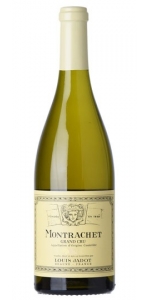
Louis Jadot Montrachet Grand Cru is made from 100 percent Chardonnay.
Le Montrachet is situated to the south of the Côte de Beaune, on both villages of Puligny Montrachet and Chassagne Montrachet (like the Batard Montrachet Grand Cru).
The terroir is extremely chalky with a lot of stones, perfectly drained and easy to overheat with south-south-eastern exposition.
The Montrachet is produced with Chardonnay
Grapes are harvested by hand and put in small cases in order not to damage the fruits. Grapes are pressed softly, they ferment in oak barrels produced by our cooperage. 1/3 are new barrels. Aging usually lasts 15 months on fine lies before bottling.
Review:
Aromas of buttered toast, honeyed peaches, white flowers and mint introduce the 2019 Montrachet Grand Cru (Maison Louis Jadot), a full-bodied, layered and enveloping wine that's satiny and sumptuous, with lively acids and fine depth at the core. While I'd give the nod to the stunning Demoiselles as Jadot's best white wine this year, this Montrachet—purchased from the Chassagne-Montrachet side, from the house's usual source—is undeniably promising.
-Wine Advocate 94-96 Points

All older vintage wines have been purchased from a single collectors cellar. Pictures can be requested before shipment.
All older vintage wines have been purchased from a single collectors cellar. Pictures can be requested before shipment.
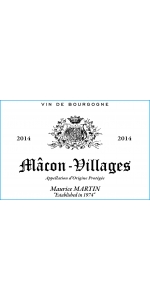
Maurice Martin Pouilly-Fuisse is made from 100 percent Chardonnay.
Fruity and floral aromas intertwined with vanilla and toasty notes. Harmonious, well balanced and elegant wine.
The grapes for this wine is coming from 2 famous part of the Maconnais' region: Vergisson and Solutré, famous for their Rocks. Hence, the minerality is coming from these rocky soils.
The wine went through malolactic fermentation.
It has been gently filtered before bottling.
Excellent with white meats and fish.
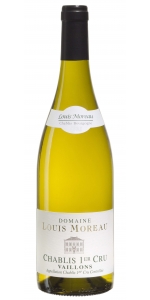
Domaine Louis Moreau Chablis Vaillons Premier Cru is made from 100 percent Chardonnay.
Chablis achieves its highly distinctive mineral character due to its cool northerly climate and its highly calcareous soil. The Domaine Louis Moreau Chablis Vaillons Premier Cru is a generous, fleshy and lively wine that displays a beautiful balance of minerality, fruitiness and elegance.
Chablis, with its steely character and fresh citrus flavor, pairs well with white fish and shellfish and its naturally high acidity can counterbalance cream-based sauces. Unoaked Chablis lends itself well to vegetables, starches, Comté, or fresh goat cheese.
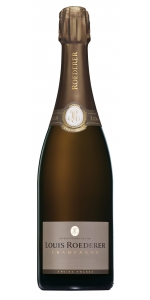
Intense, fresh and fruity bouquet, reminiscent of a tangy red fruit tart (wild strawberry, blueberry), slightly sweet yet underpinned by more concentrated, jammy and citrus notes. The aromatic complexity comes through after a few swirls in the glass giving us a medley of spice, warm cinnamon and peppers. Fleshy attack dominated by ripe, crunchy, plump red fruit that brings depth and creaminess. The fruity structure is gradually elongated by a chalky, mineral freshness that creates a lingering sensation of lightness and harmony on the finish.
Review:
Roederer's 2014 Brut Vintage is beautiful, offering up aromas of pear, mirabelle plum, red berries, warm biscuits and smoke. Full-bodied, layered and elegantly muscular, it's seamless and complete, with terrific mid-palate depth and amplitude. Framed by bright acids and enlivened by a pinpoint mousse, it concludes with a penetrating finish. The blend is 70% Pinot Noir, emphasizing Verzy, and pressure is a touch higher than in its more ethereal Blanc de Blancs counterpart. As I wrote of its 2013 predecessor, this is a wine that puts many prestige cuvées to shame.
95 Points Robert Parker's Wine Advocate
All older vintage wines have been purchased from a single collectors cellar. Pictures can be requested before shipment.
Frédéric Barnier joined Maison Louis Jadot in 2010 as Technical Director, working under the guidance of Jacques Lardière. For 42 years, the legendary Lardière was responsible for the winemaking and bottling of all Maison Louis Jadot wines, and he is considered to be one of Burgundy’s finest winemakers. He briefly retired, then came out of retirement to launch Resonance Wines, Jadot’s new brand from Oregon. Frédéric now leads the winemaking team with the Maison Louis Jadot philosophy: no compromise on quality.
Maison Louis Jadot was founded in 1859 by the man whose name it bears, Louis Henry Denis Jadot. The first of his family arrived in Beaune from Belgium in 1794 and soon began purchasing Premier and Grand Cru vineyards. With grape growing a part of his heritage, Louis Henry set about gaining experience first in the cellars, in the evaluation of wines, and then in the vineyards, in the study of viticulture.
Jadot invests in Burgundy, only purchasing grapes from the highest quality producers where they have a relationship and vinifying the wine on-site rather than buying ready-made wines.
For its Beaujolais and Mâconnais wines, Jadot practices a further, though expensive, practice called réplis, in which wines of a higher appellation are incorporated into a wine bearing the appellation below them. Thus, for example, Jadot’s Beaujolais-Villages will customarily contain a percentage of wines from Beaujolais crus.
Maison Louis Jadot’s principles of vinification balance tradition and technology, and focus on the purest expression of each wine’s terroir, taking the lightest possible hand in winemaking and a restrained use of oak maturation. For its village level Côte d’Or wines, Jadot practices a further, though expensive, practice called réplis, in which wines of a higher appellation are incorporated into a wine bearing the appellation below them.
Jadot’s cellar practices, including long macerations, the choice of wild yeast when possible for fermentation, fermentation temperature and other winemaking methods are also designed to preserve the character of the fruit in the wines. For both red and white wines, Maison Louis Jadot places great importance on the restrained use of new oak in the aging process. Time in cask and percentage of new oak is dictated differently by each vintage. In keeping with its non-interventionist philosophy, Jadot considers that very great vintages, complete and harmonious by themselves, require minimum contact with new oak.
In 1970, aware that Maison Louis Jadot’s future growth lay in its increasing role as owner-producer, Gagey engaged Jacques Lardière, a brilliant young enologist, as his assistant and eventual technical director. Lardière, now retired, is today acknowledged as one of Burgundy’s finest winemakers, an artist with the reins of nature in one hand and those of technology in the other. In 1984, André Gagey’s son, Pierre-Henry Gagey, joined the firm. He had a strong background in business administration and management, and an inherited knowledge of wines. In February of 1985, the négociant firm of Maison Louis Jadot was purchased by the owners of Kobrand Corporation, sole United States importer of Jadot Burgundies since 1945. In 1991, Pierre-Henry Gagey assumed the position of President, and in 2012 upon Lardière’s retirement, promoted Frederic Barnier to succeed him.
As Louis Henry traveled he acquired a faithful clientele, and in 1859 purchased the respected négociant firm of Lemaire-Fouleux and gave the firm his name. After his death, his son, Louis Baptiste Jadot, enthusiastically carried on the work his father had begun. He expanded his export markets as well as his clientele in France, reinvesting his profits in the acquisition of vineyards in some of the finest and most famous Grands Crus and Premiers Crus of the Côte d’Or.
In 1939, Louis Baptiste Jadot died and left control of the firm to his eldest son, Louis Auguste Jadot, who had assisted in the direction of the business under his father since 1931. He opened and greatly developed the new export market of the United States, as well as those of Great Britain, Holland, South America and New Zealand.
In 1954, André Gagey joined Maison Louis Jadot as assistant to Louis Auguste Jadot. When Louis Auguste Jadot died in 1962, survived only by his wife, André Gagey was appointed managing director of the firm. He had full responsibility for its operations, under Mme. Jadot’s ownership and direction. As managing director, Gagey was for nearly three decades responsible for the final decisions over selection and purchase of all grapes and wines bottled under the Jadot label, as well as the care and maintenance of the vineyards within the Jadot estate.
All older vintage wines have been purchased from a single collectors cellar. Pictures can be requested before shipment.
All older vintage wines have been purchased from a single collectors cellar. Pictures can be requested before shipment.
All older vintage wines have been purchased from a single collectors cellar. Pictures can be requested before shipment.
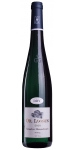
A heavenly, full-bodied dry Riesling with forceful minerality from 100-year-old vines grown in the blue slate soil of Graach.
Graach is a small village in the Mosel valley. It’s steep slate slopes produce wines that combine elegance with rustic strength. Grosses Gewächs (GG) is the designation for an estate’s best dry wine from a Grosse Lage (grand cru) vineyard. This limited-production wine was fermented with indigenous yeasts and kept in the barrel, on the full lees, for a year before bottling. The extended maturation time allows the wine to develop greater texture and a deeper natural harmony. This is a fully ripe wine, with vibrant aromatics and a pronounced acidity that gives it a brilliant structural precision.
Review:
Convincing proof that 2020 is an excellent vintage for dry GG on the Mosel! Cool and stony with delicate white-peach and white-currant aromas. Really takes off at the intensely slatey and racy finish.
-James Suckling 95-96 Points
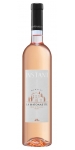
Domaine La Maionnette Rose Cotes de Provence is made from 60% Syrah, 20% Cinsault and 20% Grenache.
The plots of Domaine de la Maïonnette benefit from a clay-limestone soil and are located on a plateau surrounded by hundred-year-old oaks. Bordered by the Provencal scrubland, the vineyard enjoys a dry climate typical of the region.
An emblematic cuvée of the estate, this Cotes de Provence rosé reveals concentrated aromas of citrus fruits and white flowers, and a beautiful structure. The fresh palate brings out sweet candy notes, gooseberry and litchi, and delivers bright acidity and ample length on the finish.



