
" We don't sell the wine without touching the vine "
| BUY MORE! SAVE MORE! | ||||||||||||||||||||
|
| Country: | Italy |
| Regions: | Piemonte Barolo |
| Winery: | Luigi Baudana |
| Grape Type: | Nebbiolo |
| Organic: | Yes |
| Vintage: | 2018 |
| Bottle Size: | 750 ml |
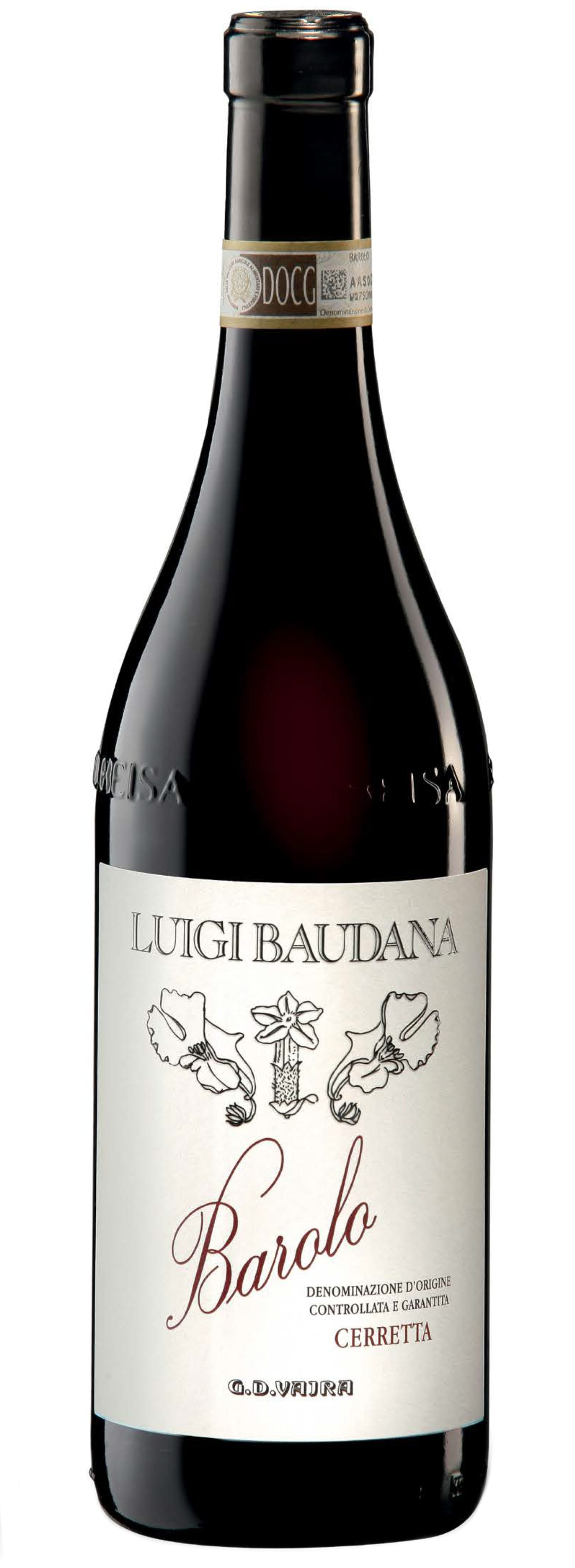
Luigi Baudana Barolo Cerretta is made from 100 percent Nebbiolo.
Austere and very mineral expression of Barolo. Aromas of dark cherries and raspberries jump out vividly from the glass. Hints of iron, menthol, new leather add to the depth and intrigue of this wine. Refined and polished, Cerretta has an extra layer of tannins, important structure and a lively acidity which are nearly buried by its exquisitely lush fruit.
-Wine Independent 95 Points
Luigi Baudana is one of the smallest active wineries in Serralunga d’Alba and the entire Barolo region. With only 2,6 hectares (6.4 acres) farmed in some of the prime crus of the village, this can rightly be considered a true garagiste producer.
For over 30 years, Luigi and his wife Fiorina carried on the family’s heritage in Serralunga d’Alba.
They cared their vineyards with the same tenderness of their own love.
In January 2009, Luigi and Fiorina entrusted the Vajra family with a unique mission:
being the guardian of their family name, story and vineyards.
Perpetuating Luigi’s legacy, learning from his wealth of experience and seeking for authenticity is
all what matters here.
The history of our cantina is lost in time. Worth saying that ‘Baudana’ is the name of the family, the vineyard and even the tiny hamlet on top of the hill. The Baudanas have belonged to this place so long that Luigi and Fiorina don’t have records of when the family first settled, nor any knowledge of how the name passed on to the cru.

Pio Cesare Ornato Barolo is made from 100 percent Nebbiolo.
Vineyards
The very first Single Vineyard Barolo produced by the Pio Family, for the first time in 1985. Great structure, power, concentration, with a very long life. Produced in small quantities.
Vinification
In stainless steel tanks at high temperatures. Maceration for 30 days. Ageing In large oak “botti” for about 30 months; a small amount in French oak barriques for the first 12 months.
Review:
Complex on the nose, offering a blend of ripe red berries, nutty minerals, orange-peel and spice. Some savory, almost meaty notes, too. Full, compact and intense, yet there’s a graceful feel to the palate, thanks to the really fine web of tannin. Super polish and promise here. Classy. Needs some time.
-James Suckling 96 Points

Luigi Baudana Barolo Baudana is made from 100 percent Nebbiolo.
A deep red in the glass introduces aromas of pure cherries and plums accented with spice, graphite, eucalyptus and licorice. Warm and dry character with firm tannins balanced by a fresh and gentle acidity. A unique soil composition with blue clay translates in a wine with a powerful elegance.
Review:
New leather, forest floor and woodland berry aromas come to the forefront along with a whiff of blue flower. It's opens smooth and savory but its true structure shows up midpalate, delivering juicy Morello cherry, licorice and hazelnut framed against a backbone of fresh acidity and tightly-wound, fine-grained tannins. Drink 2026–2036. Kerin O’Keefe
-Wine Enthusiast 95 Points
Rich, exuding cherry, raspberry, plum and floral notes, with iron, tobacco and tar accents lending complexity. Shows terrific balance and depth, with a tightly wound structure that bodes well for future development.
- Wine Spectator 94 Points

G.D. Vajra Barolo Ravera is made from 100 percent Nebbiolo.
The Barolo Ravera shows a striking balance of all tones. Red and dark fruits on the nose are interlaced with mineral hints and the iron tones which are such a signature of Ravera. The wine has brilliant drinkability, with a layered, ample mid palate and a racy finish.
Review:
Seamlessly stitched together, the G.D. Vajra 2018 Barolo Ravera reveals tight layering and smooth texture. Fruit comes from an amphitheater of vines with Tortoniana epoch sandstone clay that is typical of parts of Barolo and Novello. What stands out here is the mineral character of the wine. It frames a dark core of plum, dark cherry and soft spice.
- Robert Parker's Wine Advocate 94 Points

Elvio Cogno Cascina Nuova Barolo 2017
Born to satisfy the curiosity of consumers keen to have a more immediate understanding of Barolo, the wine is bright garnet red in color with orange tints. Pleasing and immediate, it offers scents of flowers and light, delicate spices. The mouth is agreeably rounded, juicy and fresh, with just the right balance between pleasantness and elegance. The aftertaste is very harmonious with a mineral, aromatic finish.
Review:
Attractive dried strawberry with cherry and tar on the nose. Full-bodied with powerful tannins that are dusty and intense. Very flavorful and long. Solid as a rock. Needs at least three or four years to soften and come together.
-James Suckling 95 Points
Luigi Baudana Barolo Baudana is made from 100 percent Nebbiolo.
A deep red in the glass introduces aromas of pure cherries and plums accented with spice, graphite, eucalyptus and licorice. Warm and dry character with firm tannins balanced by a fresh and gentle acidity. A unique soil composition with blue clay translates in a wine with a powerful elegance.
Review:
New leather, forest floor and woodland berry aromas come to the forefront along with a whiff of blue flower. It's opens smooth and savory but its true structure shows up midpalate, delivering juicy Morello cherry, licorice and hazelnut framed against a backbone of fresh acidity and tightly-wound, fine-grained tannins. Drink 2026–2036. Kerin O’Keefe
-Wine Enthusiast 95 Points
Rich, exuding cherry, raspberry, plum and floral notes, with iron, tobacco and tar accents lending complexity. Shows terrific balance and depth, with a tightly wound structure that bodes well for future development.
- Wine Spectator 94 Points

Falletto di Bruno Giacosa Barolo is made from 100 percent Nebbiolo
The 2018 vintage was well received after the turbulent 2017 growing year. A longer winter heralded in heavy rains in May and June, which gave the vines much needed water after the previous year's drought. Throughout the summer, conditions were generally ideal with warm days and cool nights, making harvest an overall success. Early samples of Barbaresco and Barolo are indicating a soft, balanced vintage.
Red garnet in color. Intense and fine aromas of fresh red fruit. The palate presents good freshness, excellent structure and fine, velvety tannins.
Review:
The 2018 Bruno Giacosa Barolo is very rich and hedonistic, with ripe strawberries and rose hip and notes of incense, lilies and violets. It is a lovely nose, persistent, intense and enticing and on the palate it is like falling into a soft velvety bed of rose petals. It already has such beautiful harmony and poise. It has a lush, sensual texture of crushed velvet, and is full-bodied without feeling heavy. There are plenty of dense, savory tannins extending the very long finish, creating a combination of seductive charm and power. This is something special, a great achievement in this vintage. Wait 2-3 years at least but I would not want to miss that young fragrance. (SH)
-Wine Independent 98 Points
G.D. Vajra Barolo Ravera is made from 100 percent Nebbiolo.
The Barolo Ravera shows a striking balance of all tones. Red and dark fruits on the nose are interlaced with mineral hints and the iron tones which are such a signature of Ravera. The wine has brilliant drinkability, with a layered, ample mid palate and a racy finish.
Review:
Seamlessly stitched together, the G.D. Vajra 2018 Barolo Ravera reveals tight layering and smooth texture. Fruit comes from an amphitheater of vines with Tortoniana epoch sandstone clay that is typical of parts of Barolo and Novello. What stands out here is the mineral character of the wine. It frames a dark core of plum, dark cherry and soft spice.
- Robert Parker's Wine Advocate 94 Points

G.D. Vajra Bricco Delle Viole Barolo is made from 100 percent Nebbiolo.
The Barolo Bricco delle Viole shows the signature verticality of its vineyard. The wine is beautifully layered and - while restrained as it’s always the case in the youth of Bricco delle Viole - it also shows a complexity of layers with purple flowers, sweet spices and mineral tones. The palate is noble, with a refined acid spine and profound tannins that promise a long aging potential.
Among the historical vineyards of Barolo, Bricco delle Viole is the highest and the closest to the Alps. It rises from 400 to 480 meters above sea level, on the Western ridge of the village. Its name, “Hill of Violets”, originates from the flowers that blossom early here due to the perfect south exposure. Up above the fogs, Bricco delle Viole enjoys the earliest sunrise and the last sunset every day. Thanks to its vines dating back to 1949 and -now- 1931, a dramatic diuturnal temperature range and this pure light, Bricco delle Viole generates a sophisticated and profound Barolo DOCG of bright aromatics, chiseled tannins and subtle minerality. 2018 is a vintage that shows many nuances of Bricco delle Viole: beyond the signature verticality of this site, the wine offers high tones laced with mineral nuances and plenty of energy and youth.
Review:
The 2018 Barolo Bricco delle Viole is not super intense, but it is balanced in its own way. The wine is subdued but complete with softly yielding tannins to support an elegantly streamlined mouthfeel. Bricco delle Viole is a high and cool growing site in Barolo at 400 to 480 meters in elevation with characteristic Sant'Agata marl soils with fossils. The wine represents a selection of fruit from over seven hectares. With fermentation in steel tank and aging in large Slavonian oak, you are invited to a silky, lifted and beautifully delicate experience with an accessible personality.
-Wine Advocate 95 Points
An elegant version, this red features rose, black currant, cherry, mineral and a hint of eucalyptus aromas and flavors. Linear in profile, this is solidly built on a graceful frame, with finely woven tannins and vibrant acidity.
- Wine Spectator 95 Points

Fenocchio DOCG Bussia Barolo is made from 100 percent Nebbiolo
The color is deep garnet red and the bouquet is fine and pleasing, with intense scents of spiced rose and licorice. The flavor is dry, warm, full bodied and balanced with pronounced tannins and a persistent aftertaste. A wine particularly adapted for aging.
Traditional method of long maceration: natural fermentation without added yeasts for 30 days in stainless steel tanks.
The Barolo Bussia, with its structure and body characteristics, pairs well with dishes of meat, game and aged cheeses, typical dishes of the local cuisine, as well as with many rich international dishes.
Review:
" Pleasant dried-cherry aromas, colored with nutty spice and dried leaves. Full-to medium-bodied with fine, firm and velvety tannins and a long finish of candied-cherry and chocolate. Give it a few years to meld together better. Best from 2025."
- James Suckling (January 2022), 93 pts

Filippino Elio Barolo Riserva is made from 100 percent Nebbiolo.
This 100% Nebbiolo offers a fruity, floral and spicy bouquet of red roses, raspberry, cinnamon and cocoa. It is generous, enveloping and elegant in the mouth, yet intense and full-bodied.
The grapes undergo a soft crushing and destemming leading to a clear must. This must ferments in steel tanks at a controlled temperature of 26°C and macerates for 20-25 days. After racking, the wine undergoes a lengthy maturation in oak barrels, which is continued with a lengthy bottle-ageing. Bottle-ageing confers the wine’s final character, at which time the wine is sent to market and from there to consumer tables.

This wine is floral, exuberant, with lengthy smooth tannins, and metallic notes.
This cuvée takes its name from a small parcel of the Adrianna Vineyard that is completely covered with oval white stones and was the site of an ancient riverbed. The abundant stones provide optimal drainage and extreme temperatures. They absorb heat and moderate the nights, but also function like ice cubes after a very cold night. Stony soil Malbecs tend to be extremely aromatic, rich and luxurious, just like the River Malbec from Adrianna. This wine can be enjoyed young or aged for decades.
Pair with grilled meats.
Review:
There is an usual stony austerity in the 2021 Adrianna Vineyard River, cropped from a cold year when the full clusters fermented in concrete with a slightly shorter maceration and an élevage in a 2,000-liter oak foudre and the rest in stainless steel. It has a moderate 13.4% alcohol with very high acidity (8.2!) and a low pH (3.37), incredible parameters of freshness. The wine was closed and took time to take off in the glass, revealing a very elegant and subtle personality, with the silky texture of the very fine tannins, pristine aromas and flavors and a sense of harmony that was moving. It's powerful but extremely elegant in that rare combination of clout and energy, a wine of light, aerial, with some ethereal qualities, delicate and refined. This combines the cool place and high altitude, the cool year and the stony soils, to deliver a stunning Malbec that goes well beyond the variety. Bravo!
-Wine Advocate 100 Points

La Parcelle 8 Cabernet Sauvignon presents bold and complex aromas of black fruits, chocolate, and toast alongside earthy, herbal, and floral notes. On the palate, it displays a full body, ripe tannins, and a lasting finish.
La Parcelle 8 Cabernet Sauvignon pairs well with roasted lamb, braised short ribs, mushrooms, or fine cheeses.
Review:
Complex and intense with a rare mineral quality for the hot 2020 vintage. Fresh blueberries, wild herbs, hot stones and graphite. A hint of violet. Tannins are quite chalky and tense on the medium- to full-bodied palate. Extremely long with an ethereal finish. It goes on and on, lasting for two minutes. Effortless intensity and concentration, but almost weightless. This delivers exceptional freshness for this vintage. Harvested from 18th March. Already drinkable now, but it will last. 100% century-old, ungrafted cabernet sauvignon.
-James Suckling 99 Points



