" We don't sell the wine without touching the vine "
| BUY MORE! SAVE MORE! | ||||||||||||||||||||
|
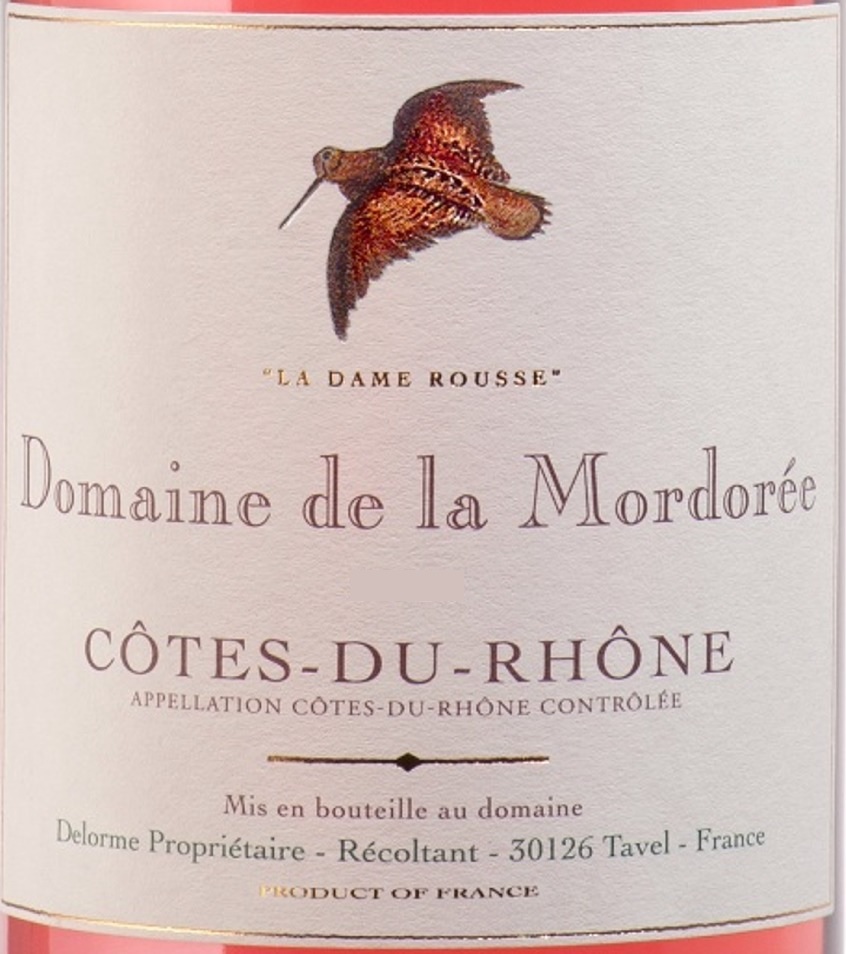
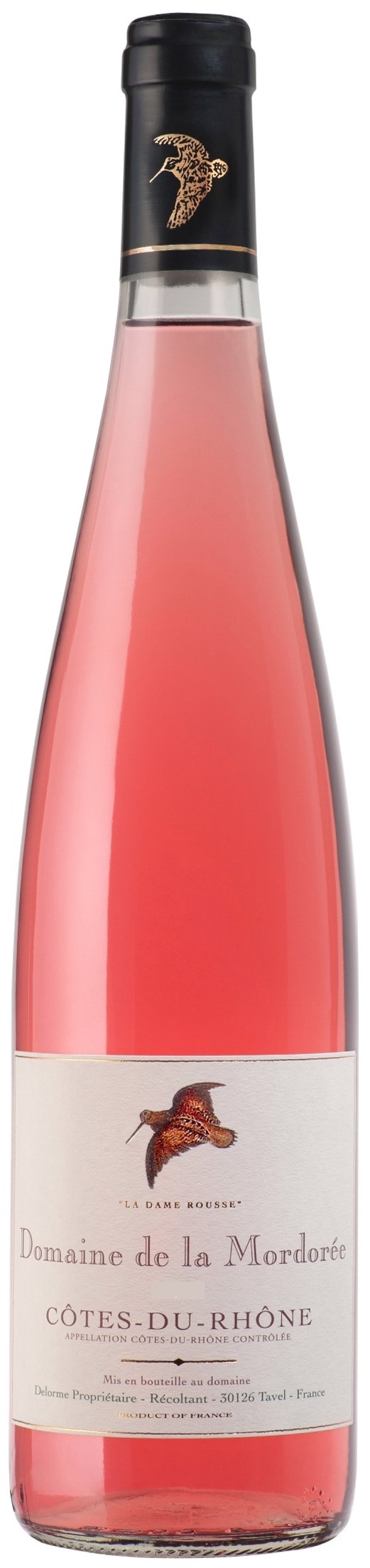
Mordoree Cotes du Rhone Dame Rousse Rose is made from 40% Grenache, 35% Syrah, 15% Cinsault, 5% Carignan, 5% Mourvèdre
Color : rosé, slightly orange (mordorée colour).
Aromas : crystallized oranges and cherries, slightly aniseed.
Palate : very rounded, fresh and long finish.
Ageing potential : 2 to 3 years
Surface : 14 Ha. Yield : 45 Hl./Ha. Vineyard age : 20 years Terroir : clay / chalk,clay / limestone and sandy with pebble stones. Harvest : by hand. Vinification : vat bleeding, temperature control. Estate bottled.
Food pairing: cold meats and delicatessen, fowl, white meats, grilled lamb with Provence herbs, fish soup, fried fish, pastas, pizzas and all Asian dishes.
Review:
"Based on 40% Grenache, 30% Syrah, 15% Cinsault, and the rest Carignan and Mourvèdre, awesome notes of framboise, wild strawberries, exotic spices, and a kiss of pressed flowers all emerge from the 2023 Côtes du Rhône Rosé, a beautifully balanced, medium-bodied rosé that has ample richness and depth. This stunning rosé is up with the best of them."
- Jeb Dunnuck (Importer Highlight: Fran Kysela ; July 2024), 92 pts
The Mordoree Estate
This is arguably the top estate in our Portfolio. Domaine de la Mordoree (woodcock), located in the town of Tavel, in the Southern Rhone Valley, is the most consistent producer of top quality wine in my entire selection. In 1986, the brothers Christophe and Fabrice Delorme decided to dedicate themselves to their passion for wine. They started their own estate with the objective to produce the best wines in each appellation while preserving the environment
The Mordoree Vineyard
The vineyard consists of 55 hectares (135 acres), on 38 different parcels, which provide with a rich, wide range of soils and climates. The soil is a mix of clay, chalk and sand with pebble stones. The improvements at the Domaine have been incredible: new pneumatic presses, new stainless steel vats, new destemmer, new vinification and aging plant, and aging in oak barrels for the top wines. All the grapes are raised by culture raisonnée which is very close to organic viticulture (intervention in the vineyard only when necessary). The yield is reduced in the vineyard by ébourgeonnage (de budding in spring) and vendanges vertes in summer (green harvesting). Oak aging for the top wines in special barrels like “jupille” for 10 months. No expense is spared at this Domaine to achieve quality.

Jean Reverdy Sancerre Blanc is 100% Sauvignon Blanc
Single vineyard. Vinification: cold fermentation in stainless steel tank, no oak, no malolactic fermentation.
Sweet, fruity and clean. White flowers (acacia, jasmine) and citrus fruits aromas. Perfectly balanced.
A delicious wine, perfect with fish dishes, especially salmon, and a local goat cheese Crottin de Chavignol.

Michel Thomas Sancerre Blanc Silex is 100 percent Sauvignon Blanc.
Intensely aromatic and concentrated Sauvignon from the Silex soils, this is a wine of great concentration and excellent balance. Aromas of fresh herbs, with flavors of citrus, ripe gooseberry, apple and a hint of gunflint. A delicious apéritif and the classic match for goat cheese or asparagus.
The special bottling "Silex" is limited each year to between 400-500 cases. They grow grapes on three soil types: 40% Terre Blanche-Argilo-Calcaire, 40% Caillottes-calcaire, 20% Le Roc-Silex. This wine come from the hardest stone soil on the vineyard giving it pleasant notes of fruit and a very dry flavor: This wine is bottled using traditional methods without filtration, allowing for a authentic and natural taste to the wine.
A delicious apéritif and the classic match for goat cheese or asparagus.

Sainte-Marie Bourgogne Blanc Vieilles Vignes is made from 100 percent Chardonnay.
The wine has a perfect light yellow color with green hues. Nose of white flower, sweet spice and bitter orange. Fresh and delicious attack. It shows roundness and a slight buttery note with a very saline finish that makes you slightly salivate.
Excellent with Seafood, grilled fish, clams and oysters of course. Also great with goat cheese or Comté cheese.
Aged on lees for 6 months in stainless steel vats. Adjustment of sulphites at the end of MLF and before bottling. Filtration on earth then on 1.2µ cartridge after bonding with bentonite.Machine harvest, and direct pressing with a pneumatic horizontal press. Static settling. Alcoholic and malolactic fermentation in stainless steel vats with native yeast and bacteria.

James Goddard was an ancestor of the Clarke family. Born in West Sussex, England in 1823, James spent his 74 years as a sailor, a whaler, a bullock driver, farmer, prospector, miner and hotel keeper. From an illiterate runaway living rough on the streets of London, he became a rich, successful and admired pillar of South Australian society.
James arrived in Adelaide in 1839 as a 16-year-old sailor. Twelve years later, his life changed forever with the news of gold findings. For the next 20 years, James roamed the country learning the geology that improved his chances of prospecting.
James Goddard Shiraz is made from 100 percent Shiraz.
In 1870, he tried his luck near his farm in the Barossa Valley and discovered the region’s first gold deposits, creating the prosperous Lady Alice Mine. The Lady Alice Mine, though it is no longer operational, was & still is the most successful gold mine in South Australia. From these roots, the Thorn-Clarke family has been connected to the region for the last 150 years.
James Goddard Shiraz is a blend Shiraz sourced from the Milton Park vineyard in the north of Eden Valley, and the St Kitts vineyard in the far northern area of the Barossa. Fruit is harvested in the cool of the night to maintain maximum flavour and freshness and it is fermented for 8 days. The ferment is pumped over twice daily to extract the colour and flavour from the fruit. Once finished fermentation the wine was then matured in a blend of French and American oak for a period of 10 to 12 months depending on the vintage.
Deep vibrant red with purple hues to the rim. The nose shows lifted plums, vibrant purple berries and a delicate spice note. The palate has concentrated satsuma plum, blackberry with lovely charry oak in the background. Long, juicy and even with plush fruit on the finish.
Review:
“Blended from two estate vineyards, St. Kitts and Milton Park, this shiraz offers its richness without any aggression or overt perfume. It’s just lush and delicious, a friendly embrace of firm tannins and purple-red fruit. The texture and flavor combine in a saturated meatiness, for Korean barbecue.”
- Wine & Spirits Magazine, 92 points

Segries Tavel Rose is made from 50% Grenache, 30% Cinsault, 15% Clairette, 5% Syrah. The age of the vines is 30 years. Traditional vinification at low temperature, "vin de saignée" with a maceration during one night in cement vat.
This is large for a Rose...structured and focused, with the color of dark ruby. The nose is loaded up with fresh fruit. Strawberry, blackcurrant, and raspberry beam from the glass. On the palate, the mouth-feel is ripe and succulent. It has strength, but maintains its fresh and crisp expression. The finish is filled with Asian spice and slight hints of smoke. Drink this juice now or over the next year or two.

Post & Beam by Far Niente Chardonnay is made from 100 percent Chardonnay.
Vibrant, refreshing and stunningly perfumed, the Post & Beam Chardonnay opens with aromas of fresh melon and wild honeysuckle. The palate is lush and round, with silky layers of melon and baked apple spice framed by soft, toasted oak and lifted acidity.

Mordoree Cotes du Rhone Dame Rousse Rose is made from 40% Grenache, 35% Syrah, 15% Cinsault, 5% Carignan, 5% Mourvèdre
Color : rosé, slightly orange (mordorée colour).
Aromas : crystallized oranges and cherries, slightly aniseed.
Palate : very rounded, fresh and long finish.
Ageing potential : 2 to 3 years
Surface : 14 Ha. Yield : 45 Hl./Ha. Vineyard age : 20 years Terroir : clay / chalk,clay / limestone and sandy with pebble stones. Harvest : by hand. Vinification : vat bleeding, temperature control. Estate bottled.
Food pairing: cold meats and delicatessen, fowl, white meats, grilled lamb with Provence herbs, fish soup, fried fish, pastas, pizzas and all Asian dishes.
Review:
"This rosé appears so pretty in the glass with its watermelon hue and presents a refreshing summery nose. Find notes of watermelon slices and yellow peaches sprinkled with sea salt. Think of pairings similar to prosciutto-wrapped melon. This is a solid rosé to enjoy all summer long."
- Wine Enthusiast (May 2023), 91 pts

Mordoree Cotes du Rhone Rouge La Dame Rousse is made from 40% Grenache, 35 % Syrah, 15% Cinsault, 5% Carignan, 5% Counoise.
100 % destemming, 15 day maceration with a maximum of 30° C temperature
Deep red color. Blackcurrant and violet aromas. Melted and fine tannins, good finish.
Food pairing: cold meats and delicatessen, grilled meats, semi-mature cheeses.
Mordoree Cotes du Rhone Rouge La Dame Rousse is made from 40% Grenache, 30% Syrah, 15% Cinsault, 10% Carignan, 5% Counoise.
20 year old vines.
100 % destemming, 15 day maceration with a maximum of 30° C temperature
Deep red color. Blackcurrant and violet aromas. Melted and fine tannins, good finish.
Food pairing: cold meats and delicatessen, grilled meats, semi-mature cheeses.
Mordoree Cotes du Rhone Rouge La Dame Rousse is made from 40% Grenache, 35 % Syrah, 15% Cinsault, 5% Carignan, 5% Counoise.
100 % destemming, 15 day maceration with a maximum of 30° C temperature
Deep red color. Blackcurrant and violet aromas. Melted and fine tannins, good finish.
Food pairing: cold meats and delicatessen, grilled meats, semi-mature cheeses.
Mordoree Cotes du Rhone Rouge La Dame Rousse is made from 40% Grenache, 35 % Syrah, 15% Cinsault, 5% Carignan, 5% Counoise.
100 % destemming, 15 day maceration with a maximum of 30° C temperature
Deep red color. Blackcurrant and violet aromas. Melted and fine tannins, good finish.
Food pairing: cold meats and delicatessen, grilled meats, semi-mature cheeses.
Review:
"A very satisfying red Cotes-du-Rhone with plenty of black-cherry fruit and rather fine-grained tannins filling out the expansive palate. Lively acidity lifts the finish nicely. A blend of grenache and syrah with a touch of cinsault. From biodynamically grown grapes with Demeter certification. Drink now."
- James Suckling (February 2022), 90 pts
Mordoree Cotes du Rhone Rouge La Dame Rousse is made from 40% Grenache, 35 % Syrah, 15% Cinsault, 5% Carignan, 5% Counoise.
100 % destemming, 15 day maceration with a maximum of 30° C temperature
Deep red color. Blackcurrant and violet aromas. Melted and fine tannins, good finish.
Food pairing: cold meats and delicatessen, grilled meats, semi-mature cheeses.

Pulled from a Gentleman's cellar, all wines from this cellar have been purchased by the owner either from the importer or direct from winery. They stayed in his cellar until being moved to the Timeless Wines warehouse.

Murray Cabernet Sauvignon Red Mountain is made from 78% Cabernet Sauvignon, 10%, Merlot , 6% Malbec, 6%, Petit Verdot.
A beautiful ruby color, this wine is very fruity with lots of plum and just a hint of characteristic Red Mountain minerality. It is very smooth with a slight texture of tannin on the back. This wine is a real Cab crowd pleaser.
As much as possible, winemakers Tim and Kelly Hightower take a non-interventionist approach to winemaking. They place great emphasis on vineyard selection, picking, pressing, and blending so that Hightower wines are naturally beautiful and free from pretense. They let the powerful and concentrated fruit from Red Mountain speak for itself. The result is a collection of well-balanced, nuanced wines that reveal something new and interesting each time you open a bottle.
They age in the oak barrels until they are ready to bottle.Neutral Oak 52%, New Oak 48% (American 57%, Hungarian 15%, French 14%, European 14%).
After primary fermentation, all wines are pressed directly into 59 gallon oak barrels. Aging for 19 months.
Estate Vineyard 75%, Shaw Vineyard 21%, Red Willow 4%
Red Mountain AVA 100%