" We don't sell the wine without touching the vine "
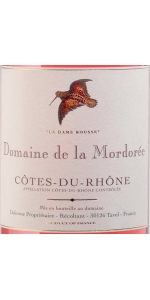
Mordoree Cotes du Rhone Dame Rousse Rose is made from 40% Grenache, 35% Syrah, 15% Cinsault, 5% Carignan, 5% Mourvèdre
Color : rosé, slightly orange (mordorée colour).
Aromas : crystallized oranges and cherries, slightly aniseed.
Palate : very rounded, fresh and long finish.
Ageing potential : 2 to 3 years
Surface : 14 Ha. Yield : 45 Hl./Ha. Vineyard age : 20 years Terroir : clay / chalk,clay / limestone and sandy with pebble stones. Harvest : by hand. Vinification : vat bleeding, temperature control. Estate bottled.
Food pairing: cold meats and delicatessen, fowl, white meats, grilled lamb with Provence herbs, fish soup, fried fish, pastas, pizzas and all Asian dishes.
Review:
"This rosé appears so pretty in the glass with its watermelon hue and presents a refreshing summery nose. Find notes of watermelon slices and yellow peaches sprinkled with sea salt. Think of pairings similar to prosciutto-wrapped melon. This is a solid rosé to enjoy all summer long."
- Wine Enthusiast (May 2023), 91 pts
SALE
Grand Veneur Cotes du Rhone Rouge Reserve is made from 60% Grenache Noir, 35% Syrah and 5% Cinsault.
The colour is purple-tinged garnet.The aromatic range of the nose goes from fresh berries (wild raspberry, blackcurrant, blackberry) to spices.The palate is big and full-flavoured, with silky-smooth tannins and aromas of the fruit already mentioned. The finish introduces touches of liquorice and pepper. A Côtes du Rhône with great complexity for an every day drinking.
A classic Rhône to drink between 1 and 4 years.
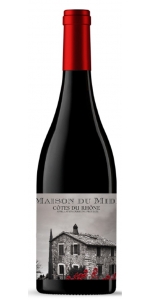
Maison du Midi Cotes-du-Rhone Rouge Vielles Vignes is 80% Grenache, 10% Syrah and 10% Mourvedre.
This ruby red colored wine with purple glints develops red fruits aromas and spicy overtones. In the mouth, this wine is smooth and its supple structure emphasizes aromas. Fruitforward and easy drinking wine showing light spices and silky tannins. A perfect everyday wine.
This delicious juicy wine can be enjoyed now with steak frites, any Mediterranean dishes, pizzas, grilled chicken and cheese.
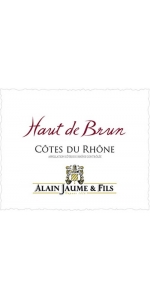
Alain Jaume Cotes Du Rhone Rouge Haut de Brun is made from 60% Grenache, 30% Syrah, 10% Cinsault
The colour is purple-tinged garnet.The aromatic range of the nose goes from fresh berries (wild raspberry, blackcurrant, blackberry) to spices.The palate is big and full-flavoured, with silky-smooth tannins and aromas of the fruit already mentioned. The finish introduces touches of liquorice and pepper. A Côtes du Rhône with great complexity for an every day drinking.
A classic Rhône to drink between 1 and 4 years. Best poured at 17°C.
Traditional wine making and ageing is performed in vats only. Bottling after 10-12 months.
Ideal throughout the meal, but particularly with poultry and other white meats, as well as mild cheeses.
Alain Jaume Cotes Du Rhone Rouge Haut de Brun is made from 60% Grenache, 30% Syrah, 10% Cinsault
The colour is purple-tinged garnet.The aromatic range of the nose goes from fresh berries (wild raspberry, blackcurrant, blackberry) to spices.The palate is big and full-flavoured, with silky-smooth tannins and aromas of the fruit already mentioned. The finish introduces touches of liquorice and pepper. A Côtes du Rhône with great complexity for an every day drinking.
A classic Rhône to drink between 1 and 4 years. Best poured at 17°C.
Traditional wine making and ageing is performed in vats only. Bottling after 10-12 months.
Ideal throughout the meal, but particularly with poultry and other white meats, as well as mild cheeses.
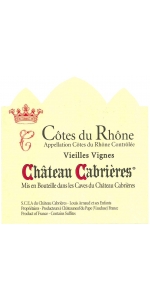
Chateau Cabrieres Cotes du Rhone Rouge Vieilles Vignes is made from 50% Grenache and 50% Syrah.
Château Cabrières’ Côtes du Rhône vineyard is located south of Orange, on the edge of Châteauneuf-du-Pape. The area of the vineyard is 1.53 hectares. The soil is comprised of clay-limestone mixed with pebbles.
Bright cherry red color with an expressive red fruit nose (strawberry and raspberry). Soft tannins in mouth, with freshness and spices. This CDR tastes like a baby Châteauneuf-du-Pape!
Pairs with charcuterie, pizza, pasta and mild cheeses.
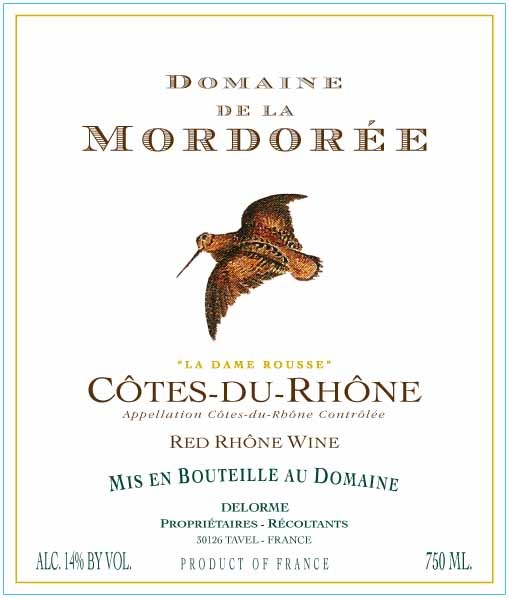
Mordoree Cotes du Rhone Rouge La Dame Rousse is made from 40% Grenache, 30% Syrah, 15% Cinsault, 10% Carignan, 5% Counoise.
20 year old vines.
100 % destemming, 15 day maceration with a maximum of 30° C temperature
Deep red color. Blackcurrant and violet aromas. Melted and fine tannins, good finish.
Food pairing: cold meats and delicatessen, grilled meats, semi-mature cheeses.
The Mordoree Estate
This is arguably the top estate in our Portfolio. Domaine de la Mordoree (woodcock), located in the town of Tavel, in the Southern Rhone Valley, is the most consistent producer of top quality wine in my entire selection. In 1986, the brothers Christophe and Fabrice Delorme decided to dedicate themselves to their passion for wine. They started their own estate with the objective to produce the best wines in each appellation while preserving the environment
The Mordoree Vineyard
The vineyard consists of 55 hectares (135 acres), on 38 different parcels, which provide with a rich, wide range of soils and climates. The soil is a mix of clay, chalk and sand with pebble stones. The improvements at the Domaine have been incredible: new pneumatic presses, new stainless steel vats, new destemmer, new vinification and aging plant, and aging in oak barrels for the top wines. All the grapes are raised by culture raisonnée which is very close to organic viticulture (intervention in the vineyard only when necessary). The yield is reduced in the vineyard by ébourgeonnage (de budding in spring) and vendanges vertes in summer (green harvesting). Oak aging for the top wines in special barrels like “jupille” for 10 months. No expense is spared at this Domaine to achieve quality.
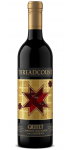
The Grade Napa Cabernet Sauvignon Winfield Vineyard is made from Napa Valley Cabernet Sauvignon.
“This wine expresses a focused balancing act of dark, rich black fruit, and a fine tannin structure, illuminated through the core with a laser-like acidity. The wine displays a deep purple-red hue with a cranberry halo. Aromas of cassis, cinnamon, citrus oil, roasted meat, and lilac swell from the glass.
“The palate is marked by a wave of jet-black brambly fruit up front, followed by an exotic spice mid-palate and a long, complex finish that lasts and lasts expressing notes of flowering jasmine, and oolong tea. The silky tannins hold everything together and will certainly allow this wine to evolve in the cellar for at least 7-10 years.” - Thomas River Brown
Review:
The 2019 Cabernet Sauvignon Winfield Vineyard is a blend taken from three blocks in the vineyard. A potent, layered Cabernet, the Winfield is super-expressive today. Dark red cherry, licorice, incense and savory herbs all flesh out in a potent, resonant Calistoga Cabernet that hits all the right notes. This is impressive, to say the least.
-- Antonio Galloni 95 Points
THREADCOUNT A BOLD QUILT CABERNET SAUVIGNON
California is a winemaker's playground, home to an incredible range of vineyard sites—from fog-kissed coastal hills to sun-drenched valleys. But as prestige regions have risen to fame, so have their price tags, leaving wine lovers to choose between splurging or settling. With THREADCOUNT, we believe world-class Cabernet should be an everyday luxury.
That's why we created THREADCOUNT California Cabernet—a wine that captures the richness, diversity, and spirit of California at a price that over delivers. Sourced from a curated blend of the state's most renowned AVAs, this Cabernet unites coastal freshness with inland ripeness for a balanced, fruit-forward, and deeply satisfying expression.
As a cornerstone of our portfolio, THREADCOUNT California Cabernet stands on its own while also serving as a gateway to our Napa Valley Quilt collection. Whether you're new to Cabernet or a longtime fan, this wine delivers bold flavor, smooth structure, and the unmistakable character of California in every glass.
This inaugural Cabernet is meticulously handcrafted by Joe Wagner, a fifth-generation Napa Valley winemaker with an unwavering passion for farming grapes and producing luxury wines. Joe embarked on his wine journey in 2001 at the age of nineteen. His enthusiasm and innate winemaking talent became evident swiftly when he established his acclaimed single vineyard Pinot Noir label, Belle Glos. Joe later introduced Napa Valley Quilt, which rapidly ascended to the ranks of top 10 luxury wines in just five vintages. THREADCOUNT serves as an extension of the Quilt winemaking style, adapted for more laid-back occasions.
WINEMAKER NOTES
We produce Cabernet from a myriad of California's most renowned regions to make this one-of-a-kind, highly versatile and prestigious varietal. After de-stemming the berries, the grapes are cryo-extracted, followed by a brief cold soak to soften the skins and finally led into a chilled fermentation to maximize extraction over a long period, often 60 days on skins. During fermentation, punch-downs and pump-over techniques were performed in a combination of closed and open-top stainless-steel fermenters in order to extract every bit of color and tannin mother nature gave us. The wines are aged in 50% new French oak for between 12-16 months. After the wine underwent malolactic fermentation, it was racked every 6 months before the final blend was complete. This Cabernet is intended to be a full-force expression on the palate, with abundant forward fruit, spice, and breadth —making it a perfect match for hearty meals or a quiet evening by the fire.
TASTING NOTES
COLOR: Dark ruby red. AROMA: Complex aromas of black cherry, wild raspberry, plum and toasty oak. PALATE: Rich and full-bodied, with dark berry fruit, toasty oak, smooth tannins, and a finish that lingers just long enough to make you want another sip. Beautifully rounded with an elegantly smooth finish accompanied by smooth tannins. Crafted for immediate enjoyment, but structured enough to age gracefully over a few years.
FOOD PAIRING: Pepper crusted pork chop and fingerling potatoes, lamb skewers or a pan seared chicken.