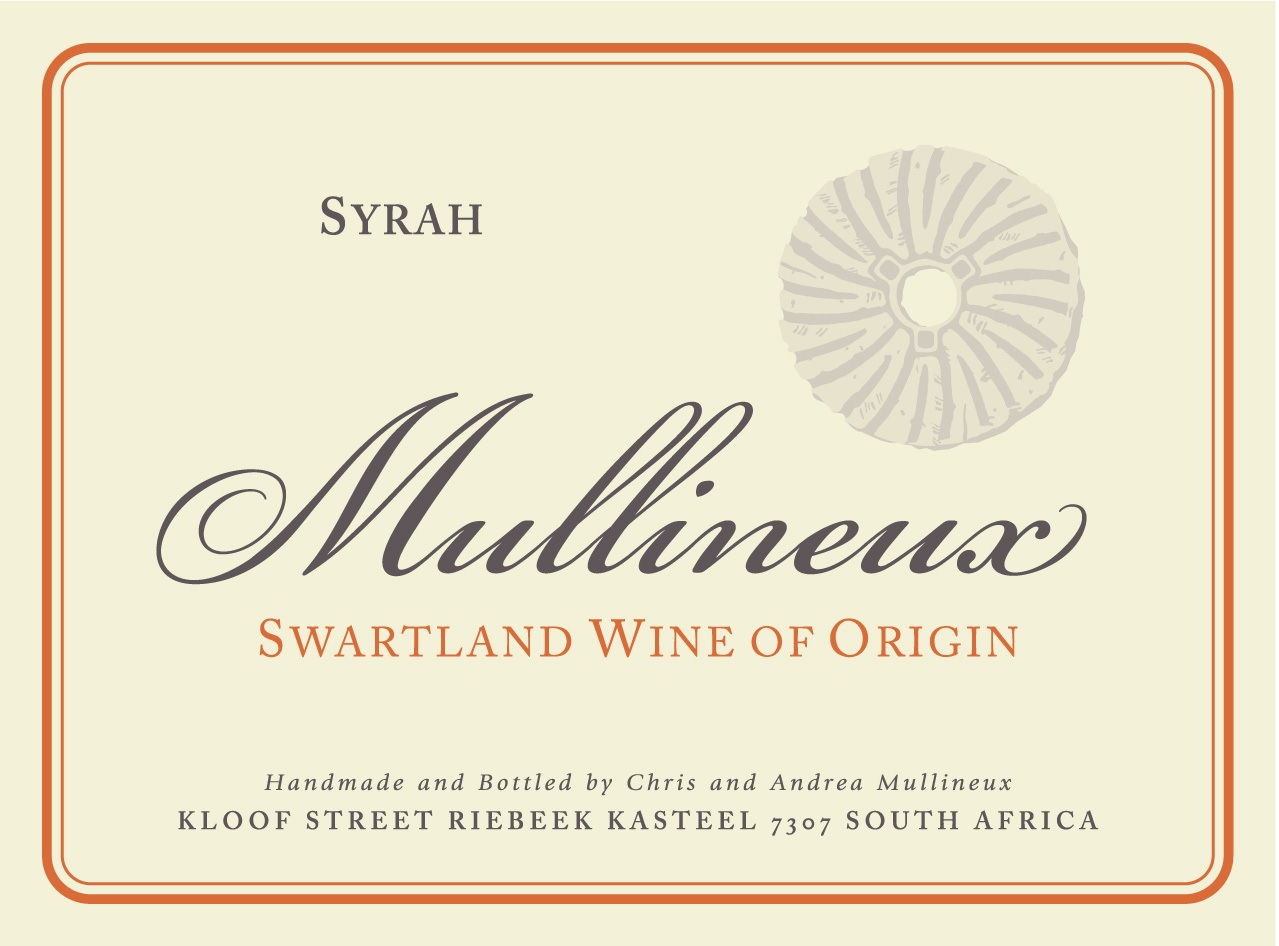
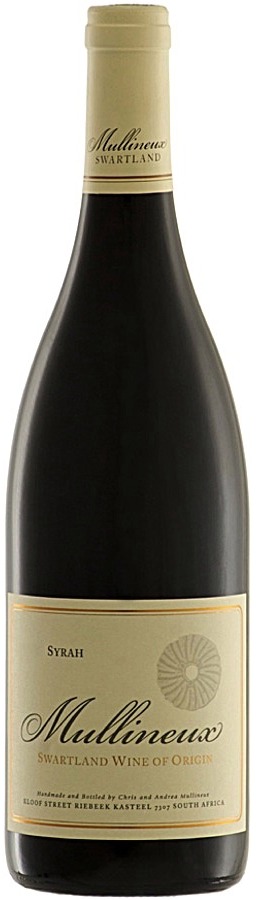
" We don't sell the wine without touching the vine "
| Country: | South Africa |
| Region: | Swartland Region |
| Winery: | Mullineux Family Wines |
| Grape Type: | Syrah |
| Organic: | Yes |
| Vintage: | 2013 |
| Bottle Size: | 750 ml |

“1752” is the name of the Damilano Barolo Cannubi Riserva, in honor of the year in which the historic bottle was first marked “Cannubi”. It still exists today perfectly conserved by the Manzone family in Bra, close to Barolo. The bottle is clearly marked as being of “1752” vintage, indicating that Cannubi historically precedes Barolo.
About the Vineyard:
The Cannubi Cru is in found within one of the 6 core zones which comprise a UNESCO heritage site in Italy. A mixture of Tortonian and Helvetian calcareous marl gives the grapes intense aromas of cherry, plum and tobacco, rose and violet in sequence. Its low potassium and high calcium/magnesium content offer the wine a fine and polished touch. The vineyard is located at about 270 m. a.s.l. and has a south-east sun exposure. Barolo Riserva Cannubi 1752 It is a small plot of about 2 hectares of Nebbiolo vines, currently between 30 and 50 years of age.
Tasting Notes:
Garnet ruby red in color, the bouquet is intense and balanced, with notes of violet, red fruit, cherry and plum, spices, liquorice, cocoa, leather and tobacco. Dry, robust, full-bodied, very persistent, rich and velvety
Food Pairing:
This wine is excellent with typical piedmontes pasta (tajarin, ravioli); perfect with red meat, braised and roast meat, game and absolutely ideal with all types of cheeses.
Review:
The purity of this wine is pretty phenomenal with blackberries, strawberries, fresh flowers and licorice. Hints of tar. It’s full-bodied, yet composed and compact with ultra fine tannins and a long, flavorful finish. Very structured. Try after 2024.
-James Suckling 97 Points

No Syrah terroir in Sonoma County compares with Sonoma Mountain’s northwest crown—cool fog-affected mornings, sun-bathed afternoons, cooled by persistent coastal breezes, and temperate evenings. The soils in Steiner’s Syrah blocks — ashy and moondust-like, littered with decomposing sea bed — further contribute to the unique nature of this site. After a 3-vintage hiatus, I am thrilled to be back working with Steiner Vineyard’s Syrah. By its nature, this slow-to-ripen, cool-climate site produces fabulously deep, intense, structured wines. Now, raising a big, brawny Syrah is no rare act of alchemy. It is the wonder of Steiner’s terroir — a magical elegance and beauty, informing the inherent power, depth and intensity — that makes this bottling so special. 2016 produced a classic wine that deftly balances massive flavors and texture, while retaining vital freshness, and a palpable sense of cool. Production was low, so get it while you can. Simply a “WOW” wine, not to be missed.
VINEYARD: Steiner Vineyard. Located at 1,100 ft, on the northwest crown of Sonoma Mountain. CRUSH: Early morning harvest by hand, October 1st, cluster and berry sorted, destemmed and crushed. FERMENT: 5-day cold soaks, followed by 14 day native fermentation in open-top bins. AGING: 20 months, French oak, 100% new, mixture of 300L hogsheads and barrique shapes. Never racked prior to bottling. Bottled unfined, unfiltered.
Review:
"Refined and stylish, featuring a complex core wrapped in multilayered blackberry and blueberry flavors, laced with bitter chocolate, black licorice and smoky meat notes. Drink now through 2030.- Tim FISH"
- Wine Spectator Insider (January 15th 2020), 93 PTS

Avennia Arnaut Syrah is made of 100% Syrah
For our taste, no one grows finer Syrah in the state than Dick Boushey. We named this wine after the Provencal Troubadour Arnaut Daniel, who invented the Sestina poem form, thus creating a connection between our two flagship efforts.
"Deep, dark Syrah notes on the nose, with dark blackberry, blueberry reduction, grilled meat, crushed olive, black licorice, camphor, pen ink, and cracked black pepper. The palate is super concentrated and dense, tightly focused, and deeply complex. Savory blueberry, pan drippings, a hint of orange essence, and hand-rubbed sage come through on the extremely long and nuanced finish. A compelling wine that will age for a couple decades at least." - Chris Peterson, Winemaker
We make this wine with minimal manipulation, using native yeasts and bottling unfined and unfiltered, to allow the "place" to shine through.
AVA: Yakima Valley
Blend: 100% Boushey Vineyard Syrah
Winemaking: 15% whole cluster, native yeast, 15% new French oak, aged 16 months, bottled unfined & unfiltered.
Review:
"Boushey Vineyard is holy ground for Syrah in Washington. This is yet another wine that will inspire a vinous pilgrimage. Dried herb, smoked meat, iron, and dark fruit aromas lead to full-bodied, saturated, palate-staining dark fruit flavors. The intensity is off the charts – earthshaking, with wave upon wave of dark fruit flavors. There’s plenty of structure around it all. It sticks around for a long, slightly warm finish. Best enjoyed at a cool 62 degrees. Give it a long decant if drinking in the near term." - Sean P. Sullivan
95 points & Critic's Choice, Northwest Wine Report
All varietal from a great vineyard in the Yakima Valley, the 2020 Syrah Arnaut Boushey Vineyard offers a perfumed, complex nose of mulled red and black berries, peppery, savory herbs, and some meaty, iron-like nuances. This complex, medium to full-bodied beauty has fine tannins, a layered, elegant mouthfeel, and a gorgeous finish.
- Jeb Dunnuck, 94 pts.

Named after the French word for Crow, or Raven, this Syrah is certainly as dark as the name implies. Hailing from Discovery Vineyard, perched high above the Columbia River in the heart of the Horse Heaven Hills, these grapes were grown in a very unique terroir. Avennia's approach of old-world style, minimalist winemaking allows for full expression of the fruit, showcasing the elegant and savory side of Syrah.
"Leads with a nice balance of dark fruits—blackberry and blueberry—with more savory elements, including blackberry leaf, olive, charcuterie, and a hint of shiitake. The palate features snappy fresh black fruits, a hint of smoked meat, and a lively finish with plenty of savory elements that make this wine quite interesting. Give it a year in the cellar and enjoy over the next eight years or so." - Chris Peterson, Winemaker
Reviews:
"Aromas of blackberry and violet accented by a note of stems. Sweet, supple wine with dark fruit flavors lifted by a black-peppery topnote and accented by cinnamony Red Hots. For all its high notes, this is essentially a creamy wine with no edges. I suspect it will tighten up in bottle and eventually display a more savory aspect. Incidentally, this will be the last vintage for this bottling because, beginning with vintage 2018, Chris Peterson will introduce some new single-vineyard Syrahs from the exciting new WeatherEye vineyard on top of Red Mountain. This steep site, owned by Cameron Myhrvold and farmed by Ryan Johnson, extends over the ridgeline and onto the northern flank of Red Mountain. The project is called Red Mountain Elevated, and Peterson is making the wines. (14.5% alcohol; done mostly in puncheons; vinified with 10% stems) - Stephen Tanzer”
- Antonio Galloni's Vinous (December 2019), 92 pts
"The last vintage for this cuvée, the 2017 Syrah Le Corbeau Discovery Vineyard is similar in style to the Arnaut yet offers slightly more floral notes in its blue fruits, wild strawberry, violets, rose petal, and sappy, forest floor aromas and flavors. Medium-bodied, with bright acidity and good balance, it’s a beautiful Syrah that leans heavily toward the fresh, elegant end of the spectrum while still offering tons of character and pleasure.”
- Jeb Dunnuck (April 2019), 92-94 pts

Betz Family Domaine de Pierres Syrah is made from 100% Syrah.
With our long history of making single site syrah's in Washington, it made sense for us to venture into the Rocks District of Milton Freewater in the Walla Walla Valley to bring you our newest syrah, "Domaine de Pierres."
The Rocks AVA produces syrah that shows a distinct character, separating it from any other site in Washington State. One thing in particular that has drawn people here is the gallet stones present throughout the valley. They are very similar to the pudding stones that are found in Châteauneuf-du-Pape, and can be anywhere from golf ball size, to softball size or larger. Since we purchased the vineyard in 2014 we have been tilling the earth multiple times every season to expose these rocks. The gallet stones act like a heat sink, giving a little extra push to help ripen syrah in an area with marginal heat accumulation.
In the glass, Domaine de Pierres stands out from our other syrah's because of its incredibly savory profile. Notes of roasted meat, fresh herbs, olive tapenade, tobacco and graphite are supported by dark fruit, espresso, and lavendar. The wine has a lower acidity and higher PH than our other wines, which contributes to a velvety, full bodied mouthfeel. Even in the cellar, we immediately noticed a difference in the color, aromatics and flavor that these syrah grapes were able to express.
The other big reason that we are so excited about the wine from this particular AVA, is that the history of the Rocks is happening right now! Our vineyard, “Ancient Stones,” has only been planted there since 2007, and the beginning of the Rocks as a wine growing region only really started in the 1990's. There is a lot of energy and exploration going on, and it has been a fun experience for our team to be a part of it. We still have so much to learn about this region and it is very exciting to feel like we are on the upward swing!
Review:
"This red offers a steely core of crushed rock and vibrant acidity framed by handsome blackberry, cherry, green olive and licorice flavors that build tension toward medium-grained tannins. The name of this wine—French for "Field of Stones"—is apt. Drink now through 2032. - Tim FISH."
- Wine Spectator's Insider (July 6th 2022), 94 pts

Betz Family La Serenne Syrah is 100% Syrah
La Serenne is the most reflective of the site/vintage dynamic of our three single-site 2012 Syrahs. Lovers of this wine know that its source, the Boushey Vineyard, is the highest altitude of the three vineyards and is typically the latest harvested. This cool site was accentuated by the cooler season and the results reflect the seriousness of this vineyard and its care.
An extraordinary, nearly impenetrable black purple color leads to a concentrated, inky aromatic impression: smoky black cherry and wild blackberry dominate, but a litany of supporting aromas is already emerging: smoke, violet, mushroom, roasted meat, Chinese 5 spice and minerals. It has a full attack on entry and a big, rich mouthfeel that goes on and on.
Review:
Aromas of blackberries, black raspberries, violets, black and white peppercorns and stones. It’s medium-bodied with fine, tightly knit tannins. Seamless and transparent with a silky texture. Very bright and pure with layers of wild berries and minerals. Tar and dark tobacco, too. Drink or hold.
-James Suckling 95 Points
Mullineux Swartland Syrah is 100 percent Syrah
Winemaking:
Hand picked grapes are cooled in our cold room, where after they are crushed and destemmed to tank, and between 20 to 50% whole bunches are added. 25ppm SO2 is added, and as with all our wines, no other additions are made. The must is initially pigeaged once a day. After about 4 days, fermentation begins with indigenous yeasts, and the wine is pigeaged once or twice a day, depending on extract and tannin development. Temperatures are not allowed to exceed 30 degrees centigrade. Fermentation lasts from 7 to 10 days, and after fermentation, two to four weeks (also depending on tannin development) skin contact is given. The wine is then drained and pressed to barrel for malolactic fermentation and maturation. The different parcels are racked in Spring to blend the wine, which is then returned to barrel and bottled unfiltered and unfined after 11 months in barrel. Please decant (or give time!) when drunk young.
Maturation:
11 months, French oak 225L & 500L barrels, and 2000L Foudre. 15% new wood in total.
Tasting Note:
Black pepper, crushed ripe berry, and tobacco aromas linger on the nose. This juice is every bit of full-bodied on the palate. Well integrated tannin gives the wine a silky texture. Flavors of blackberry, herb, and spice layer throughout and into the long silky finish. This is a big wine that can take on another 10+ years of age and will need some serious decanting if consumed early. 30 minutes of decanting will allow the wine to open beautifully.
Review:
"Mullineux's 2013 Syrah includes about 80% whole bunch fruit as it was a cool year from seven different vineyards (five schist, one granite and one on ferrous soils). It has a blackberry and cranberry leaf-scented bouquet, and a pleasant herbal note with rose petals coming through. The palate is medium-bodied with a cool exterior and it is full of tension, and quite linear with blackberry, a touch of mint and cedar with a structured, almost Cornas-like finish. I think the whole-bunch works really well here, although it will benefit from 3-5 years in bottle. Readers should note that in 2013 this bottling includes the Granite Syrah that the Mullineux's felt would benefit the overall blend. - Neal Martin"
- The Wine Advocate (erobertparker.com, November 2015), 94 pts
"Revealing an explosively perfumed nose of violets and dark red berries, the wine is fresh and flavorful with a chewy texture and firm structure.A blend of fruit from seven different Swartland vineyards of granite, schist, and iron soils. Mostly (about 90% in 2013) whole bunch fermented."
- iwinereview.com (January 2016), 93 pts
The Mullineux Family Winery Estate
This is a small, highly focused family winery producing a select family of hand-crafted wines from the granite and shale based terroirs of the Swartland Region of South Africa.
Chris was born in Cape Town, raised in Johannesburg, and introduced to the world of wine while studying accountancy at the University of Stellenbosch. After braving his way through accounting, he enrolled into winemaking for a second degree, and on graduating took a position starting up a boutique organic winery in Tulbagh, where he was in charge of the vineyards and cellar for 5 very enjoyable years. In addition to stints at de Trafford and Rustenberg wineries in South Africa, Chris has also worked harvests at top wineries in Cote Rotie, Bandol, the Languedoc, Roussillon, and California. Over the years Chris has had good exposure to the people, vineyards and wines of the Swartland. This has lead to a growing love for, and firm belief in the region, and he looks forward to many creative and hard working vintages in this region with his family.
Andrea developed her passion for wine at the family dinner table, growing up in San Francisco. After studying Viticulture and Oenology at UC Davis and completing a handful of harvests in the Napa Valley, Andrea decided to broaden her winemaking knowledge overseas. After a harvest in Stellenbosch, she went on to work in Chateauneuf and, on the same trip, met Chris at a wine festival in Champagne! Andrea's love for South African wine (and Chris) brought her back to South Africa where they learnt that their compatibility extended into the vineyards and cellar. When Andrea is not hard at work in the cellar, her creative energies flow into the kitchen where she loves cooking up a storm, glass of wine in hand.
The Mullineux Family Winery Vineyards
Very low summer rainfall coupled with afternoon and evening breezes off the Atlantic Ocean result in low disease pressure. Vineyards are often planted in amongst the natural rhenoster veldt and fynbos, which provide refuge for predators of vineyard pests, and help reduce the spread of disease. Weeds struggle to establish themselves and spread, making it easier to control them without the need of herbicides.
Chris and Andrea have put together a group vineyards in the most interesting parts of the Swartland, which are mostly found around the shale and schist based Riebeek Kasteel Mountain, and the granite based Paardeberg mountain.
Lammershoek - The deep white, granitic soils on Lammershoek produce wines that are exceptionally pure, with a granitic perfume that shines through in red and white varieties.
Kasteelsig - The soils, found on the rolling hills north of Malmesbury, are a deep combination of red gravel and iron, and produce dark, concentrated wines that are the flesh of our blends.
Kloovenburg - The highly varied row directions and aspects bring much complexity to wines, and the high shale content of the soils gives serious structure, and brings an earthy spicy character to syrah planted in them.
Mountain View - The soils are shale based, which drain easily, reducing vigor and providing grapes of perfume, freshness and structure.
The vineyards are planted with grape varieties (which are mostly Mediterranean in origin) that are ideally suited to the environment, and are farmed sustainably and in harmony with their surroundings: Syrah, Chenin Blanc, Grenache Blanc, Clairette, Viognier.

Elvio Cogno Pre-Phylloxera Barbera d'Alba is made from 100 percent Barbera.
Produced from one of the last archaic vines of the Langhe area, an open air museum of viticulture from a time gone by, the plants are over one hundred years old. The vines are not grafted but propagated through cuttings, thus maintaining, over the decades, the original Barbera characteristics.
The vineyard has an excellent exposure and sandy-chalky terrain, situated in Berri near La Morra, which guaranteed the vines a natural protection from Phylloxera and imparts unique and exclusive characteristics to the vines. The intriguing simplicity of the vines and their typical, traditional charm that derives from the microclimate and favorable altitude make a one of-a-kind wine.
The low production per hectare guarantees an intensely rare and rich organoleptic concentration. The wine is refined in oak casks that slowly develop the primary aromas. Pleasant and refined, complex even as a young wine but able to withstand bottle aging, it expresses its solid uniqueness even over the years.
A bright, rich ruby color with intense purplish highlights. The aroma is enveloping, aromatic and deep with noticeable spices on first impression and raspberry, strawberry and ripe cherry notes in background. Finish with pleasant harmonies of wild flowers. On the palate it is well structured, fresh and the acidity is excellently balanced, the tannins texture is embracing and flavors remind you of sour cherries, blackberries and prunes.
Review:
Planted in almost entirely sand, this own-rooted vineyard with some vines over 120 years old is a singular expression of Barbera. Elegant aromas of wild rose and fresh bay leaf mixed with cranberry, sour cherry and underbrush are just some of the notes you will discover in this complex wine. The palate is refined and well-balanced with fresh youthful red fruits, fresh flowers and fine tannins driving the wine home. Drink Now–2035.
-Wine Enthusiast 95 Points

Fayolle Crozes-Hermitage Rouge La Rochette is made from 25-year-old vines planted on loess and red granitic soils. 100% Syrah.
Deep ruby red color.
The wine has plenty to offer with red and black fruit aromas, as well as a good minerality.
The finish is long, clean and juicy and offers some white pepper spiciness typical of the best Crozes-Hermitage.
Soil type is red brittle granite and white soil.
Hand harvested in small crates. The grapes are then pumped into tanks (full cluster, not destemmed).
It will stay in this tank for 15 days for the skin contact maceration and the Alcoholic fermentation.
They will also use the "rack and return" technique (delestage).
Then the wine is transfered into neutral French Oak barrels where the wine will complete the Malo-Lactic fermentation.