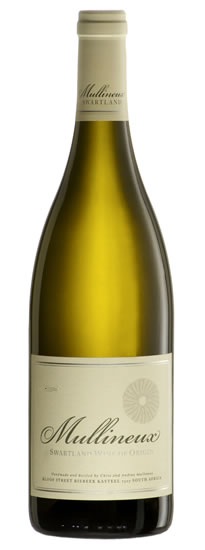
" We don't sell the wine without touching the vine "
| Country: | South Africa |
| Region: | Swartland Region |
| Winery: | Mullineux Family Wines |
| Grape Type: | Chenin Blanc |
| Organic: | Yes |
| Vintage: | 2014 |
| Bottle Size: | 750 ml |

Pazo de Senorans Seleccion de Anada Albarino is made from 100 percent Albarino.
Straw yellow with greenish tints, vivid and brilliant. High intensity and very expressive. Profusion of aromas with traces of mineral. Great volume and ample body leaving a lasting impression from beginning to end.
Reviews:
I think the 2014 Albariño Selección de Añada could be the finest vintage of this characterful long-aging Albariño, from a year with a more moderate 13% alcohol and very high acidity (and low pH) that make the wine fresher and more vibrant. It is developing very slowly and showing quite young after it spent over 30 months with lees in 1,500- and 3,000-liter stainless steel tanks. It has a pale color and an elegant nose with notes of freshly cut grass, white flowers and wet granite. The palate is vibrant with effervescent acidity, and it has a long, dry and tasty finish with an austere sensation, far away from the tropical notes of some past vintages. This is superb and should continue developing nicely in bottle. Bravo! It wasn't bottled until April 2023, and 14,000 bottles were produced.
-Wine Advocate 96 Points
Tech:

Siegel Ketran Red Blend is made from 35% Syrah, 30% Petit Verdot, 25% Carmenere, 10% Cabernet Franc
Ketran is coming from the Mapuche Language and it means "plowed earth". In fact, Earth was plowed by fire from the volcanic acitivity. Ketran is a tribute to the volcanic soils that gave birth to the fantastic terroir of Los Lingues, located at the foothills of the “Cordillera de los Andes".
The wine is clean and bright in color.
The wine displays a very aromatic and elegant nose of ripe black fruit, prune and dried fig.
The mouthfeel is smooth and the length to the finish is quite exceptionnal, with sweet and fleshy tannins, balanced by a perfectly integrated acidity which gives the wine some freshness and emphasizes the presence of fruit and its ability to age.
Coming from the volcanic soils of Los Lingues, at the foothills of the Andes mountain.
The wine went through ML fermentation, it was then aged 24 months in French Oak barrels.
The wine has been slightly filtered before bottling.
Review:
"2014 is the second release of Siegel's top red wine, made from a four-way cuvée of Syrah, Petit Verdot, Carmenère and Cabernet Franc. Plush, spicy and smoothly oaked, with some tannic backbone and a glossy finish. Needs time. 2021-30"
- Tim Atkin MW (Chile 2019 Special Report), 94 pts
Ketran is Siegel’s most ambitious wine. Debuting with the 2013 vintage, it’s a selection of the best barrel lots from Los Lingues in the Andean zone of Colchagua. The blend works very well, especially if you let the wine breathe for a few hours beforehand. The oak steps aside, and the aromas of fruit and herbs take over in a red with firm, sharp tannic structure that leaves room for the acidity—not very prominent in a warm year, but still present—to achieve balance. This blend is for the cellar.
-Patricio Tapia - Descorchados 94 Points

La Despensa Boutique Pool Blend 75% Cinsault, 15% Pais, 5% Marsanne and 5% Roussanne.
A genuinely unique wine - La Despensa is the only producer of Cinsault in Colchagua and Pais from this valley is also extremely rare! The Cinsault and the 2 whites come from a new vineyard planted in 2017 and the Pais from a 150 year old, dry-farmed vineyard in Pumanque about 20 minutes from the winery that they run themselves organically. The Cinsault and Pais give notes of raspberry and strawberry and the white Roussanne and Marsanne a little mouthfeel and a hint of tropical fruit.
Organically grown grapes (not certified) from our own vineyard in Santa Ana, and Pumanque in the Colchagua Valley. Irrigated as sparingly as possible via drip irrigation (dry-farming for the 150 year old Pais). Hand harvested and sorted personally by me in the vineyard (I personally check every single bunch), then destemmed with the crusher removed from the destemmer. Grapes are fermented in open top bins and concrete tank and blended immediately after pressing. MLF occurs with the wine already blended. Wines are racked in November and again in January before being bottled after about 10 months ageing in 50% neutral oak barrels and 50% Flextank.
Versatile, goes well with beef, chicken, pasta, great for Summer BBQs
Review:
"The red blend 2021 Wines Pool Blend was produced with an unusual blend, especially for a wine from Colchagua, of 75% Cinsault, 15% País and 5% each Marsanne and Roussanne. It has kept a moderate 13.5% alcohol and retained good freshness (pH 3.44) after maturing exclusively in Flextank and being bottled unoaked. This is fruit-driven and straightforward, with a medium-bodied palate and fine tannins. 2,400 bottles produced. It was bottled in March 2022. - Luis Gutiérrez"
- Robert Parker's Wine Advocate (April 2023), 90 pts

This new California white wine blend is infused with Butterfly Pea Flower, giving it its bold color.
6% alcohol!
Bright acidity cuts through a light sweetness reminiscent of a mixed berry pie. Subtle notes of juicy boysenberry and blackberry balance with an acidity that leaves you wanting to take another sip.
The first California white wine infused with Butterfly Pea Flower!

Robert Mondavi Winery Napa Red Blend is made from 74% Cabernet Sauvignon, 13% Cabernet Franc, 9% Merlot, 4% Petit Verdot.
Robert Mondavi’s vision was to elevate Napa to the world stage. In celebration of his achievement, our Napa Tier wines are sourced from distinctive vineyards throughout the Napa Valley and truly emulate a classic Napa Valley style.
Nearly half of this year’s blend is sourced from the deep, well-drained soils of Oakville, which provides gorgeously dark, supple wines with fine tannins. Stags Leap District, Oak Knoll, Yountville, and Rutherford also find their place in the bottle, with the varying mesoclimates and soils of these vineyards integrating seamlessly into a 100% Napa Valley blend.
Review:
"Dominated by 80% Cabernet Sauvignon with smaller percentages of the other Bordeaux red grapes, this wine speaks of heritage and prestige. Broad, silky, and powerful, the graceful liquid is enhanced by dark chocolate, white pepper, black plum, violets, and sweet earth."
-Meridith May, Tasting Panel, January/February 2023 Pts. Tasting Panel

Sale price good on website only and wine must be shipped to your home.
Siegel Reserve Red Blend 1234 is made from 50% Syrah, 30% Carmenère, 10% Cabernet Franc and 10% Petit Verdot.
Deep ruby color. Intense aromas of black fruits, white pepper, spices and a hint of clove. The blend of four varieties gives a complex, deep wine with juicy tannins, good volume and very balanced.
Pre-fermenting cold maceration for five days, alcoholic fermentation at 26-28 C to obtain color and structure. Post fermentation maceration of two to three weeks according wine tasting and then the wine is separated from the skins. The wine ends its malolactic fermentation in tank. Harvest: by hand (30 day harvest window)
Paella, Confit de Canard (duck confit) and pastas.
Mullineux White Blend is made from 73% Chenin Blanc, 13% Clairette Blanche, 7% Viognier , 7% Semillon Gris.
Lemon-straw in color, this wine has a nose of crushed rocks, green citrus, cloves and a floral perfume. The palate is full, rich and has a mineral core, with a fresh, clove-like finish. Best served at 10 to 12 C, this wine will show optimally when decanted in the first 3 years after bottling.
Hand-picked grapes are cooled in our cold room, where after the Viognier is destemmed directly to tank, and macerated on the skins for 4 to 5 days before pressing. The Chenin, and Clairette, are pressed whole-bunch, and the juice is allowed to settle overnight. 20ppm SO2 is added, and as with all our wines, no other additions are made. The juice is then racked to barrel for fermentation.
Fermentation is with indigenous yeasts, and lasts up to 6 weeks. The barrels are left without sulphur on its lees until spring. In this time the wine finished malolactic fermentation. The barrels are racked and blended just before the following vintage and bottled unfiltered.
"Lovely, with white peach, chamomile and verbena notes giving this elegance up front, while creamed yellow apple and fresh butter notes impart opulence through the finish. Chenin Blanc, Clairette Blanche and Viognier. Drink now through 2017. - JM"
- Wine Spectator (January 2016), 91 pts
"Including Semillon Gris for the first time (alongside mostly Chenin with Clairette Blanche and Viognier), this old vine blend is complex and flavoursome. Citrus, pear and nectarine notes are complemented by saline acidity and beautifully judged oak. Typically accomplished. Drink: 2016-20"
- Tim Atkin (September 2016), 95 pts
The Mullineux Family Winery Estate
This is a small, highly focused family winery producing a select family of hand-crafted wines from the granite and shale based terroirs of the Swartland Region of South Africa.
Chris was born in Cape Town, raised in Johannesburg, and introduced to the world of wine while studying accountancy at the University of Stellenbosch. After braving his way through accounting, he enrolled into winemaking for a second degree, and on graduating took a position starting up a boutique organic winery in Tulbagh, where he was in charge of the vineyards and cellar for 5 very enjoyable years. In addition to stints at de Trafford and Rustenberg wineries in South Africa, Chris has also worked harvests at top wineries in Cote Rotie, Bandol, the Languedoc, Roussillon, and California. Over the years Chris has had good exposure to the people, vineyards and wines of the Swartland. This has lead to a growing love for, and firm belief in the region, and he looks forward to many creative and hard working vintages in this region with his family.
Andrea developed her passion for wine at the family dinner table, growing up in San Francisco. After studying Viticulture and Oenology at UC Davis and completing a handful of harvests in the Napa Valley, Andrea decided to broaden her winemaking knowledge overseas. After a harvest in Stellenbosch, she went on to work in Chateauneuf and, on the same trip, met Chris at a wine festival in Champagne! Andrea's love for South African wine (and Chris) brought her back to South Africa where they learnt that their compatibility extended into the vineyards and cellar. When Andrea is not hard at work in the cellar, her creative energies flow into the kitchen where she loves cooking up a storm, glass of wine in hand.
The Mullineux Family Winery Vineyards
Very low summer rainfall coupled with afternoon and evening breezes off the Atlantic Ocean result in low disease pressure. Vineyards are often planted in amongst the natural rhenoster veldt and fynbos, which provide refuge for predators of vineyard pests, and help reduce the spread of disease. Weeds struggle to establish themselves and spread, making it easier to control them without the need of herbicides.
Chris and Andrea have put together a group vineyards in the most interesting parts of the Swartland, which are mostly found around the shale and schist based Riebeek Kasteel Mountain, and the granite based Paardeberg mountain.
Lammershoek - The deep white, granitic soils on Lammershoek produce wines that are exceptionally pure, with a granitic perfume that shines through in red and white varieties.
Kasteelsig - The soils, found on the rolling hills north of Malmesbury, are a deep combination of red gravel and iron, and produce dark, concentrated wines that are the flesh of our blends.
Kloovenburg - The highly varied row directions and aspects bring much complexity to wines, and the high shale content of the soils gives serious structure, and brings an earthy spicy character to syrah planted in them.
Mountain View - The soils are shale based, which drain easily, reducing vigor and providing grapes of perfume, freshness and structure.
The vineyards are planted with grape varieties (which are mostly Mediterranean in origin) that are ideally suited to the environment, and are farmed sustainably and in harmony with their surroundings: Syrah, Chenin Blanc, Grenache Blanc, Clairette, Viognier.

Rebuli Prosecco is a noble wine with a bright straw color, made from a selection of Prosecco grapes, which highlights the flavors and perfumes of the area. It is ideal for important occasions and as an aperitif. It is also excellent with risotto and noble meat.
"Pretty silvery straw color. Orange, juicy lemon, peach aromas with a crisp, lightly effervescent, fruity-yet-dry medium body and a long, tangy mineral, starfruit and spice accented finish. Exceptional flavorful, balanced and stylish. A perfect aperitif."
World Wine Championship Award: GOLD MEDAL
Beverage Testing Institute - May 9th 2011 - 91 points (Exceptional)
"Toasty, which makes this a little more champagnelike and perhaps more familiar to consumers. Nice balance; quite refreshing."
- Washington Post (Dec 08) - VERY GOOD
"This wine is so much fun that it seems vaguely illegal. Lightly floral in aroma, it shows fresh but restrained fruit flavors. The effervescence is abundant but soft, yet the wine remains structural and refreshing thanks to crisp acidity. Clearly the top pop for parties." - Washington Post (2006)
"Very pale straw. Very fine mousse. Nice elegant bead. Aromas of fresh bread dough, pear, touch of marzipan. Light attack. Semi-dry. Licorice note on palate. Soft, light. Simple, light pear flavors."
- International Wine Review (Dec 08)
This large Spumante estate with just over 100 acres of vines produces high-quality Prosecco. The non-vintage Rebuli Prosecco di Valdobbiadene Extra Dry is light-bodied and flowery with plenty of white peach, orange and pineapple notes in its exotic aromatics and flavors. It is off-dry, but most consumers would consider it to be a dry sparkling wine. Drink it over the next 12-18 months.-Robert Parker 90 Points

Walt Bob's Ranch Pinot Noir is made from 100 percent Pinot Noir.
Bob’s Ranch Estate Vineyard
Characterized by its proximity to the Pacific Ocean; Coastal breezes along with low rolling hills and morning fog define this cool climate site
Sonoma Coast Appellation
Heavy fog and strong winds tempered by bright afternoon sunshine
Petaluma Wind Gap
Creates a unique micro-climate within the appellation, producing distinctive Pinot Noir
Sandy, Well-draining Soils
Stresses vines into producing grapes of full varietal intensity
43 Vineyard Blocks on 72 Acres
With an array of clones and field selections, this ranch produces complex and delicious wines
Review:
"The stunning 2021 WALT ‘Bob’s Ranch’ Pinot Noir is a masterclass by this winemaking team. This Sonoma Coast AVA property has a wide range of Pinot Noir selections and is in close proximity to the Pacific Ocean. Stored in roughly 30% new French oak, this shows off dense blackberry and black cherry notes on the nose with shades of cola. Very seamless on the mouth, this effortlessly glides throughout the drinking experience. The salty and savory aspects, as well as the length, all add to the enjoyment."
Owen Bargreen 95 Points

Segla Rauzan Margaux is made from 54% Cabernet Sauvignon, 41% Merlot, 4% Petit Verdot, 1% Cabernet Franc.
Deep ruby in appearance, Segla delivers aromas of blueberry and vanilla on the nose. On the palate it is medium bodied with silky tannins.
Review:
Takes a very fresh approach, with an open-knit feel to the mulled raspberry and red currant fruit. Pretty lilac, incense and singed apple wood notes underscore the fruit, while silky but persistent tannins carry the finish. Shows latent depth and precise balance, so don't let this early charm fool you, as this should unfurl beautifully in the cellar. Best from 2022 through 2040. 10,000 cases made.
-Wine Spectator 95 Points