" We don't sell the wine without touching the vine "
| Country: | Argentina |
| Region: | Mendoza |
| Winery: | Otaviano Bodega & Vinedos |
| Grape Type: | Cabernet Franc |
| Vintage: | 2018 |
| Bottle Size: | 750 ml |

Penedo Borges Icono Malbec is made from 85% Malbec, 10% Cabernet Sauvignon and 5% Petit Verdot
Dark purple color.
Complex aromas of predominent ripe red fruit such as plum, cherry and raspberry with spicy notes.
Chocolate and vanilla flavors from barrel ageing which provide complexity and elegance.
Wine of great lenght.
Red meats, lamb, beef stew, strong cheese.
Review:
-Descorchados 94 Points
-Wine Enthusiast 93 Points
Penedo Borges Icono Malbec is made from 85% Malbec, 10% Cabernet Sauvignon and 5% Petit Verdot
Dark purple color.
Complex aromas of predominent ripe red fruit such as plum, cherry and raspberry with spicy notes.
Chocolate and vanilla flavors from barrel ageing which provide complexity and elegance.
Wine of great lenght.
Red meats, lamb, beef stew, strong cheese.
Review:
-Joaquín Hidalgo (Vinous) 94 Points

Alejandro Bulgheroni Lithology Beckstoffer Las Piedras Cabernet Sauvignon is made from 100 percent Cabernet Sauvignon.
From a St. Helena vineyard planted by early Napa settler Edward Bale more than 150 years ago, and later serving as the estate vineyard for the area’s first winery built by Henry Pellet in 1860, the Las Piedras site always gives us our prettiest wine. When placed next to Dr. Crane and To-Kalon wines, the Las Piedras show a certain elegance, with a very graceful entry and finely detailed complexity. We produce it with at least 75% new French oak, so there is a floral, spicy, and vanilla accent to the intense red and black fruits, cassis, and black cherry liqueur. What distinguishes this bottling is the beautifully fine tannins, delicate texture, and stunning purity. (Less than 100 cases made.)
Fermentation 70% Oak, 24% Concrete, 6% Puncheon
Review:
-Jeb Dunnuck 98 Points

Argot Chardonnay Sonoma County is made from 100 percent Chardonnay.
Pouring a green-tinted gold, our Sonoma County Chardonnay is a beautiful wine from word go. Radiating from within, a blast of apple/pear fruit informs this wine both aromatically, and on the palate. As flavors unfurl, a progression of orange blossom, pineapple, white peach, and hazlenut are followed by a finish dominated by ginger, baked apple, with a trailing kiss of mint’s freshness. A stunning wine — wholly informed by the perfection of 2018’s growing season — defined by its dichotomy of massively intense flavors, and superb acidity and freshness.
Raised by minimalistic methods, often associated with the classic Chardonnay winemaking techniques of Meursault. With a focus on the coolest Chardonnay region in Sonoma County, 2018’s long, even growing season favored our vineyards’ moderate climate, old vines and deep volcanic soils. These grapes were allowed an extended ripening period on the vine, resulting in perfect balance and concentrated flavors.
Review:
-Jeb Dunnuck 91 Points

Avennia Red Willow Cabernet Sauvignon is made from 100% Cabernet Sauvignon.
The Red Willow Cabernet is a true blockbuster.
Coming from one specific block of 30 year old vines at this iconic vineyard, then strictly barrel selected, this is the essence of powerful, old vine Washington Cabernet. After all of our efforts promoting the idea of the Bordeaux blend, it would take a pretty compelling argument to suspend that idea and make a 100% varietal Cabernet. In 2016 Red Willow provided us with just that. Each time we tasted it in the barrel, the belief grew that this was something special. Something we can't make every year. In the end we were won over, and decided to make a limited amount of this wine. But don't be fooled, as this too is a blend and a selection. Each year as we are tasting the grapes as harvest approaches, we notice that the vines near the bottom of this long, steep west-facing slope, are a little different. The vines at the bottom are in a little richer soil, and get a little more water, so we pick them separately, sometimes even a week or ten days apart, and keep them separate in barrel.
This wine is all from the top of the vineyard, with its lower yield and poorer soils giving more concentration and interest. Then further, nearly every combination of new and used French oak barrels were trialed to find the best blend. It's not enough just to use the four best barrels, but to trial each combination to see how they complement each other. For a wine with this much mass, 100% new French oak was used for the first time at Avennia. It is a wine that needs a little cellaring to start, but should last a very long time.
Review:
-Jeb Dunnuck 96 Points

Enemigo El Enemigo Gran Enemigo is made from 100% Cabernet Franc.
In the spectrum of people who pay attention to detail, winemakers are often incredibly detail-oriented. This can sometimes spill over to become an internal battled, and, as Alejandro Vigil and Adrianna Catena state, "We are our own worst enemy." El Enemigo pays homage to this internal struggle.
The nose presents sweet aromas of black ripen fruits with hints of vanilla and chocolate, which appear after the oak ageing. The mouthfeel is sweet with structured, persistent tannins due to the natural acidity of this wine, leading into an excellent long finish.
Review:
-Wine Advocate 97 Points
-Decanter 97 Points
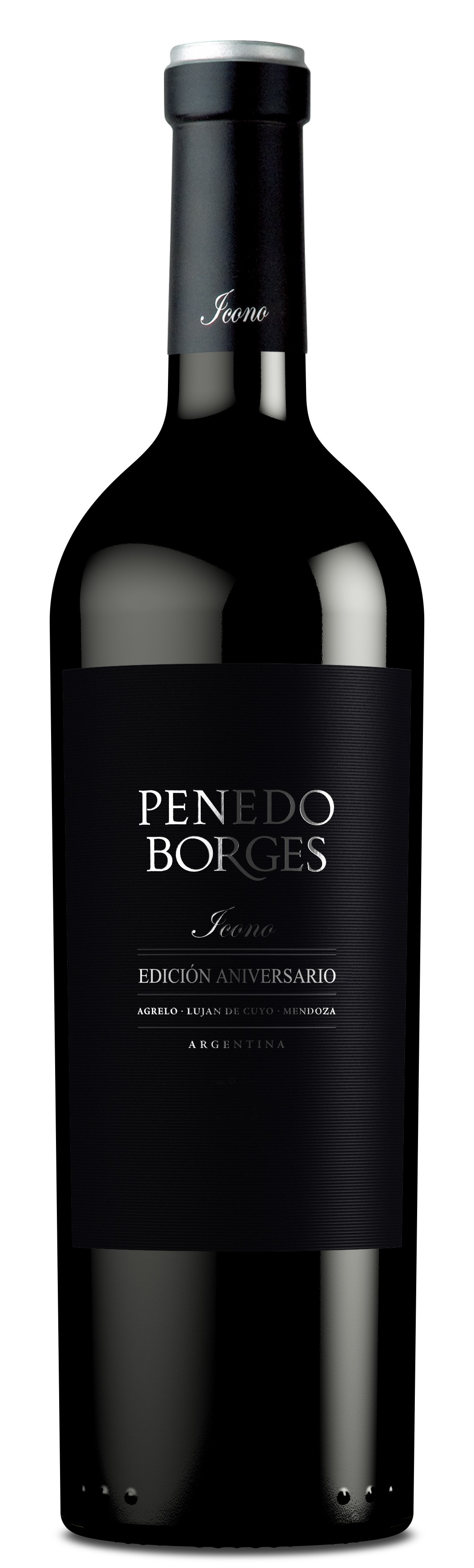
Penedo Borges Icono Edicion Aniversario is made from 31% Cabernet Franc, 27% Petit Verdot, 18% Malbec, 15% Cabernet Sauvignon and 9% Syrah.
This red blend is made to celebrate the 10th Anniversary of the launch of Penedo Borges Icono. It is a tribute to 10 years of learning, effort, dedication and passion for what they do. For this reason, they have chosen a blend of Cabernet Franc, Petit verdot, Cabernet Sauvignon and Syrah as a faithful representation of teamwork, where each team member highlights with their best version. Penedo Borges Icono Anniversary Edition is a complex and elegant wine, with great structure and volume and a long finish, thus making the trajectory of the winery and their History.
Deep red color with violet hues. On the nose, it presents balanced notes of ripe fruit, with spices and herbal aromas that give great complexity. Its aging in oak finishes harmonizing aromatically the wine with notes of vanilla and chocolate. In the mouth, the sweetness of its tannins give a complex and long finish.
Review:
-James Suckling 92 Points
The winery was born in 2004, when 4 friends, passionate about wine and Argentina, decided to enter the wine world by choosing one of the most elegant and distinguished terroirs for red wine in the province Lujan de Cuyo, best known as the land of Malbec.
Winery Acreage: 48 hectares (119 acres)
OTAVIANO WINERY:
The winery has a very modern design and was built with material from the region. It is surrounded by the vineyards and overlooks the Andes Range.
Traditional and cutting-edge techniques are mixed in our production in order to obtain high quality wines.
The winery has stainless steel fermentation and conservation tanks with temperature control, an underground cellar perfectly conditioned for wine aging in oak barrels and a storage room where bottles finish their maturation process.
LOCATION:
Otaviano Winery and Vineyards is located in the highest part of Alto Agrelo, Luján de Cuyo, 300 meters south of the International Route 7 (Km 8)
The estate has 48 hectares of vineyards with the winery in its centre. The place has an incredible view of the Andes Mountain Range and it is ideal to enjoy our sunsets.
ELABORATION:
Our Wines are designed from the vine. There is a thorough work carried out through the different varietal sectors. The vine load is carefully regulated to obtain the perfect balance of the plant and in so doing, get wines that express the maximum potential of our terroir.
In the winery, the grapes are carefully selected with traditional and cutting-edge techniques. By keeping strict control of all the process variables, we are able to preserve and enhance the quality of our wines. These are characterized for being honest, expressive wines with a perfect balance between the fruit of each variety and the ageing in oak.
Our vineyards are located at 1,050 mts above sea level, at the foot of the Andes, where the thermal amplitude and the perfect sunlight give way to a well balanced and high quality harvest. Different grape varieties are selected from the native land, which has deep ground and sandy characteristics. The crops are carefully handled with accurate viticulture techniques and the environment is well taken care of with low impact agrochemicals. The grapes are harvested in 18 kg cases when the vines express their maximum potential.
MALBEC (24 HECTARES)
This variety from the Southwest of France is the one that has experienced the best adaptation to the Argentinean soil, providing exceptional wines of intense aroma, very concentrated purple color and pleasant taste. Without any doubt Argentina produces the best Malbec specimens in the world. Malbec is made as a light young red wine with fresh fruity aromas or as a wine with good body and storage capacity with highlighted ripe berry aromas. It is grown in every viticulture region in the country and provides the best samples in Mendoza, in the regions of Lujan de Cuyo and Maipú. Because Malbec is an emblematic and standard variety, the wineries in Argentina experience an interesting growth in the international market and it is very well positioned among the best wines in the world.
CABERNET SAUVIGNON (12 HECTARES)
Historically associated with the Grand Bordeaux region, it is the most widely recognized red variety in the world. This is due to the particular adaptation of this vine in different winemaking regions, without losing its essence. It produces a wine rich in tannins and color that blends with other less tannic varieties, such as Merlot or Cabernet Franc. These young wines are rough and hard and this is the reason why they are better aged in oak or in the bottle to tame their consistent structure. They are powerful wines, with pleasant aromas and notes that remind us of berries, green peppers and spices.
SYRAH (6 HECTARES)
Of French origin, it is mainly found in the Rodano Valley and is part of great blends, such as L’Hermitage, Chateauneuf du Pape or Cote Rotie. This grape provides very vigorous, solid wines which are rich in tannins and have long conservation. Aging in wooden casks and bottles suits them really well. These wines have intense aromas which remind us of berries, spices and leather. Just like Malbec, Syrah or Shyraz has adapted quite well to the Argentinean soil, giving excellent varietal and blended wines.
PETIT VERDOT (1.5 HECTARES)
It is a high quality red Wine grape, whose origin is unknown. It was first planted in France, mainly in Bordeaux as a complement to the wines of the region. Its late ripeness did not call the attention of the winemakers at first and was eventually left unnoticed by the middle of the XX century. The name comes from the French and means “small green”, referring to its size and the problem this grape endures when the berries fail to develop properly. Not long ago this grape had a comeback and has become more and more popular, especially in Australia, Chile, Argentina, USA and the original region of Bordeaux. These grapes provide very good color and aromas of berries, spices, chocolate and figs. On the palate, the wine is characterized by strong tannins, good volume and acidity.
CABERNET FRANC (1.5 HECTARES)
Cabernet Franc is a red grape From Bordeaux. Its origin goes back to the XVII century where it was mostly grown for blending with Cabernet Sauvignon and Merlot to obtain wines in the Bordeaux style. Genetically speaking, it is the father of Cabernet Sauvignon and this makes them perfectly compatible in winemaking terms.
Cabernet Franc produces intense red wines with more aromatic, herbaceous and complex notes than Cabernet Sauvignon. On the palate, it is also lighter, softer and less acid.
CHARDONNAY (3 HECTARES)
Chardonnay takes its name from the small French town in the Burgundy area, and is certainly one of the most appreciated varietal wines in the world. It is an easy to grow grape because of its remarkable ability to adapt to different climatic conditions. The grape from cool climates provides predominant fruity notes, such as apple and pineapple whereas the grape from warmer climates in characterized by tropical fruit notes. It takes part in the elaboration of the best sparkling wines in the world. Chardonnay wines take good level of fermentation and aging in oak and therefore provide aromas such as vanilla, butter and honey. Due to the versatility of the grape, it can be found in Argentina in many possible ways, being either fresh and light or very complex.
SAUVIGNON BLANC (3 HECTARES)
It is the main white grape from Burdeaux and the Loira Valley in France and the world. It has adapted very well to different viticulture regions in the world, such as the Northeast of Italy, Chile, Argentina, and the coast valleys of California and Australia. However, it is the Sauvignon Blanc from New Zealand which outstands in the world. It offers herbal and citric aromas, sometimes with smoked or wild notes. In Argentina, this grape has gained an important place among the fine white wines and has a very promising future

Prager Smaragd Klaus Riesling is made from 100 percent Riesling.
Franz Prager, co-founder of the Vinea Wachau, had already earned a reputation for his wines when Toni Bodenstein married into the family. Bodenstein’s passion for biodiversity and old terraces, coupled with brilliant winemaking, places Prager in the highest echelon of Austrian producers.
Smaragd is a designation of ripeness for dry wines used exclusively by members of the Vinea Wachau. The wines must have minimum alcohol of 12.5%. The grapes are hand-harvested, typically in October and November, and are sent directly to press where they spontaneously ferment in stainless-steel tanks.
Klaus sits adjacent to Achleiten and is one of the Wachau’s most famous vineyards for Riesling. The vineyard is incredibly steep with a gradient of 77% at its steepest point. The southeast-facing terraced vineyard of dark migmatite-amphibolite and paragneiss produces a tightly wound and powerful wine. The parcel belonging to Toni Bodenstein was planted in 1952.
Tasting Notes:
Austrian Riesling is often defined by elevated levels of dry extract thanks to a lengthy ripening period and freshness due to dramatic temperature swings between day and night. “Klaus is not a charming Riesling,” says Toni Bodenstein with a wink. Klaus is Prager’s most assertive and robust Riesling.
Food Pairing
Riesling’s high acidity makes it one of the most versatile wines at the table. Riesling can be used to cut the fattiness of foods such as pork or sausages and can tame some saltiness. Conversely, it can highlight foods such as fish or vegetables in the same way a squeeze of lemon or a vinaigrette might.
Review:
What a stunning example of cool climate riesling. It’s full-bodied and deep, but so cool and delicate, packing in sleek layers of honeysuckle, apricots, lemons and grapefruit married to thyme and crushed rock. So long and seamless, with tension and focus that just keeps going. Sustainable. Try from 2025.
-James Suckling 98 Points

Chateau Hallet Sauternes is made from 100% Sémillon.
Golden in the glass, it offers delicate aromas of honey, citrus, candied fruit and acacia blossom. Lusciously sweet yet beautifully balanced, it is a natural match for foie gras, roasted meats and blue cheeses — and makes a gorgeous aperitif served well chilled.