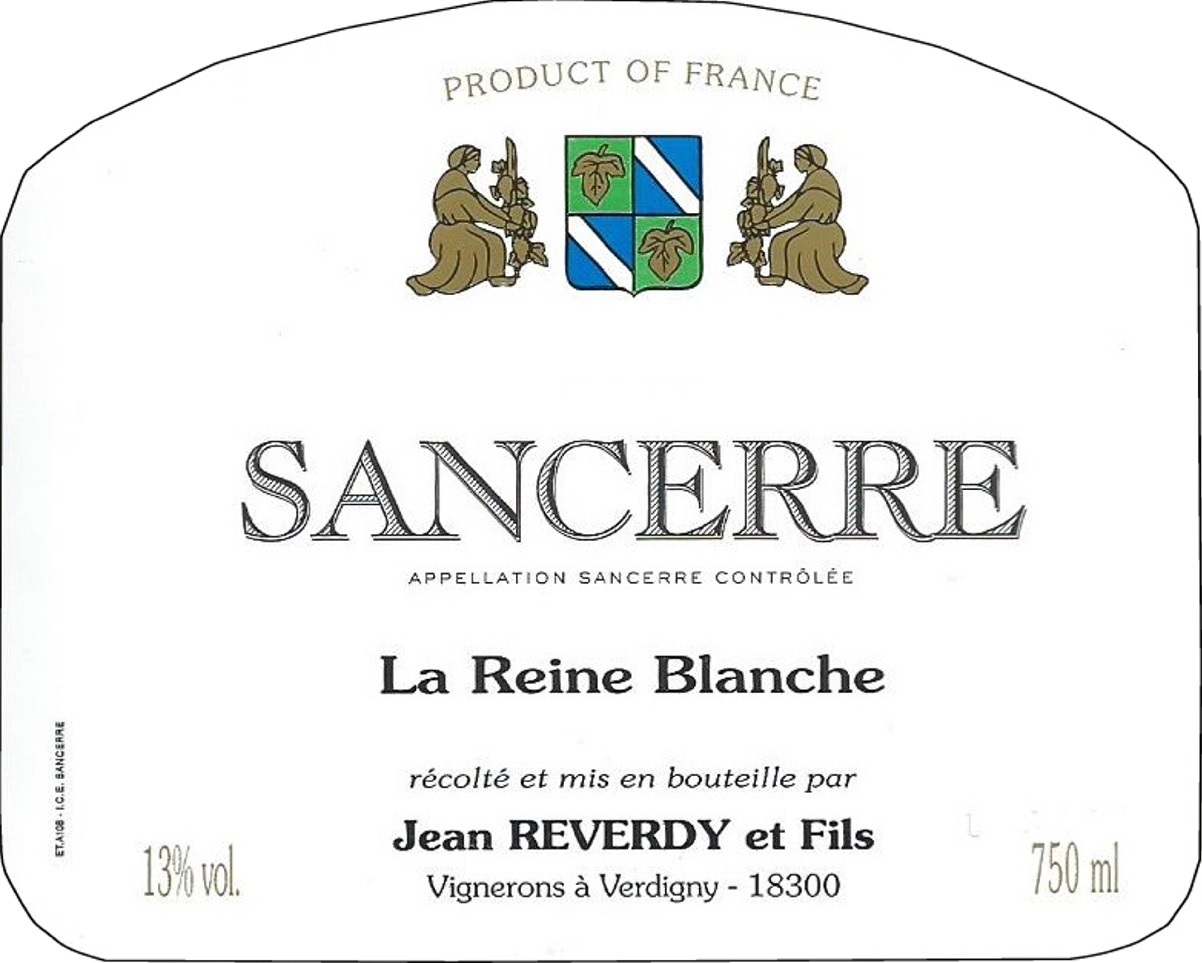
" We don't sell the wine without touching the vine "
| Country: | France |
| Regions: | Loire Sancerre |
| Winery: | Jean Reverdy |
| Grape Type: | Sauvignon Blanc |
| Vintage: | 2017 |
| Bottle Size: | 750 ml |
Reverdy Jean Sancerre Rouge is mader from 100% Pinot Noir
The wine is spicy and juicy with cherry aromas, and proves the point that power is not necessary for a fine wine.
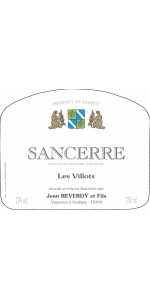
Reverdy Jean Sancerre Rouge Les Villots is made from 100% Pinot Noir
The wine is spicy and juicy with cherry aromas, and proves the point that power is not necessary for a fine wine.
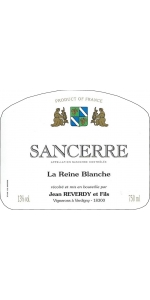
Jean Reverdy Sancerre Blanc is 100% Sauvignon Blanc
Single vineyard. Vinification: cold fermentation in stainless steel tank, no oak, no malolactic fermentation.
Sweet, fruity and clean. White flowers (acacia, jasmine) and citrus fruits aromas. Perfectly balanced.
A delicious wine, perfect with fish dishes, especially salmon, and a local goat cheese Crottin de Chavignol.
Reverdy Jean Sancerre Rose is made from 100 percent Pinot Noir.
Color: Pale salmon pink color
Nose: delicate aromas of roses and orange blossom that will transform into gooseberry and peach blossoms as the temperature in the glass rises.
Mouth: The palate is crisp, lean and elegant, but the flavors are quite persistent with cherry, blackcurrant,apricot and red currant aromas.
According to the Sancerre AOC regulation, maximum yield authorized for the rosé is 55 hl/ha.
Pairs well with poultry and spicy food.
Reverdy Jean Sancerre Rouge is mader from 100% Pinot Noir
The wine is spicy and juicy with cherry aromas, and proves the point that power is not necessary for a fine wine.
Reverdy Jean Sancerre Rouge Les Villots is made from 100% Pinot Noir
The wine is spicy and juicy with cherry aromas, and proves the point that power is not necessary for a fine wine.
Jean Reverdy Sancerre Blanc is 100% Sauvignon Blanc
Single vineyard. Vinification: cold fermentation in stainless steel tank, no oak, no malolactic fermentation.
Sweet, fruity and clean. White flowers (acacia, jasmine) and citrus fruits aromas. Perfectly balanced.
A delicious wine, perfect with fish dishes, especially salmon, and a local goat cheese Crottin de Chavignol.
Review:
"The 2017 Sancerre Blanc (all Sauvignon) offers a terrific sense of flinty minerality as well as outstanding notes of lime and orchard fruits. It’s medium-bodied, has yet integrated acidity, flawless balance, and a great finish. It’s an incredibly satisfying Sancerre that has both freshness and richness."
- Jeb Dunnuck (March 27th 2019), 91 pts
The Domaine Jean Reverdy Estate
This Domaine is located in Verdigny, one of the top villages in Sancerre. It dates back to 1650 and has been in the family for about 10 generations. Originally the family was growing vines and diverse polycultures, but since the 1950’s they have been focusing on producing wine only. Christophe Reverdy, son of the late Jean Reverdy, now produces around 100,000 bottles per year on average and exports 70% of the total production to UK, Germany, Sweden, Japan and the USA.
The Domaine Jean Reverdy Vineyard
The Domaine spreads over 12 hectares (29.64 acres): 9 hectares Sauvignon, 3 hectares Pinot Noir, and produces red, rose and white wine. The age of the vines is 25 years and older. The vineyard is divided into 15 parcels located on the hills of Verdigny, Saint Satur, Sancerre and Thauvenay.
The vineyards are planted on three different types of soil:
- silicious-clay soils, "Terres a Silex" (east of the hills) - 55%
- pebbly limestone soils, known as the "Caillottes" - 35%
- clay and limestone white soils, the "Terres Blanches" (west of the hills) - 10%
The vineyard of Sancerre measures 2,500 hectares (6,175 acres) total and spreads over 14 communes: Bannay, Bué, Crezancy, Menetou-Ratel, Menetreol, Montigny, St-Satur, Ste-Gemme, Sancerre, Sury-en-Vaux, Thauvenay, Veaugues, Verdigny and Vinon.
The Sancerre A.O.C. was created in 1936 for the white wines and in 1959 for the reds.
Prager Smaragd Klaus Riesling is made from 100 percent Riesling.
Franz Prager, co-founder of the Vinea Wachau, had already earned a reputation for his wines when Toni Bodenstein married into the family. Bodenstein’s passion for biodiversity and old terraces, coupled with brilliant winemaking, places Prager in the highest echelon of Austrian producers.
Smaragd is a designation of ripeness for dry wines used exclusively by members of the Vinea Wachau. The wines must have minimum alcohol of 12.5%. The grapes are hand-harvested, typically in October and November, and are sent directly to press where they spontaneously ferment in stainless-steel tanks.
Klaus sits adjacent to Achleiten and is one of the Wachau’s most famous vineyards for Riesling. The vineyard is incredibly steep with a gradient of 77% at its steepest point. The southeast-facing terraced vineyard of dark migmatite-amphibolite and paragneiss produces a tightly wound and powerful wine. The parcel belonging to Toni Bodenstein was planted in 1952.
Tasting Notes:
Austrian Riesling is often defined by elevated levels of dry extract thanks to a lengthy ripening period and freshness due to dramatic temperature swings between day and night. “Klaus is not a charming Riesling,” says Toni Bodenstein with a wink. Klaus is Prager’s most assertive and robust Riesling.
Food Pairing
Riesling’s high acidity makes it one of the most versatile wines at the table. Riesling can be used to cut the fattiness of foods such as pork or sausages and can tame some saltiness. Conversely, it can highlight foods such as fish or vegetables in the same way a squeeze of lemon or a vinaigrette might.
Review:
What a stunning example of cool climate riesling. It’s full-bodied and deep, but so cool and delicate, packing in sleek layers of honeysuckle, apricots, lemons and grapefruit married to thyme and crushed rock. So long and seamless, with tension and focus that just keeps going. Sustainable. Try from 2025.
-James Suckling 98 Points
Floral notes leap out of the glass of the 100% Estate-grown Chardonnay 2022, with notes of jasmine, gardenia and lemon blossom. The contribution of low-yielding CH548 blocks seem to impress their character on the late vintage. The palate is round and fresh, entering with green apple and creamy lemon, which develop into chamomile and sea salt, with a round-textured, long finish of floral and saline notes.
The Estate Chardonnay will be an excellent accompaniment to rich and subtle dishes such as halibut with chanterelle sauce, plank smoked copper river xalmon with dill mayonnaise, Lobster Newberg, Quenelles de Brochet avec sauce a l’Armoricain, black cod with shellfish sauce. It is equally delightful with more casual dining options featuring béchamel sauces or cheese-rich dishes, such as a fondue, pasticcio or even lasagna.
Revieww:
The medium yellow/straw-colored 2022 Chardonnay Estate has a forward feel in the glass, with a great nose offering notes of bright flinty reduction, green apples, lime zest, and white flowers. Medium-bodied and long on the palate, it has persistent drive, with a pure savory feel and a graceful saline finish with a note of lime pith. It will drink well over the next 10 years.
-Jeb Dunnuck 94 Points