
" We don't sell the wine without touching the vine "
| Country: | Germany |
| Region: | Mosel |
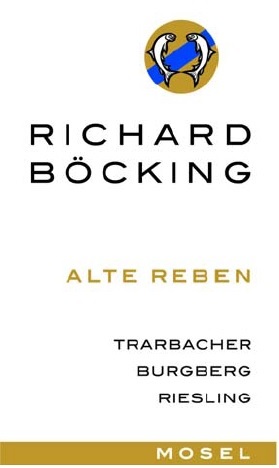
| Winery: | Richard Bocking |
| Grape Type: | Riesling |
| Organic: | Yes |
| Vintage: | 2014 |
| Bottle Size: | 750 ml |

Dr. Loosen Wehlener Sonnenuhr Alte Reben Riesling Grosses Gewachs is made from 100 percent Riesling.
This is one of the greatest vineyards in the Middle Mosel. This precipitously steep, rocky vineyard consistently yields some of the most elegant and sophisticated white wines in the world. Citrus and white peach flavors predominate when the wines are young, turning to a pure expression of the mineral soil as they age.

Gessinger Zeltinger Sonnenuhr Riesling Auslese Alte Reben Caldo Infernale made from 100 percent Riesling.
The Zeltinger Sonnenuhr Riesling Auslese Caldo Infernale was produced from over 100-year-old ungrafted vines in the Gewann “im Kalk,” the original part of the vineyard. This is a typical Devonian slate Riesling with fruity elegance and great durability.
Although riper elements of yellow peach, coconut, Victoria pineapple, and almond cream directly capture the attention, the nose maintains a fresh character with minty and zesty notes. The wine shows ripe and sweet elements on the palate, and has quite some creamy and juicy elements such as canned yellow peach and pineapple. The finish brings the right amount of zest to lift up the aromatics and adds focus and tension, while there is an almost Eiswein-type of acidity in the aftertaste. This is a gorgeous Auslese.
Gessinger Zeltinger Sonnenuhr Riesling Auslese Alte Reben Caldo Infernale made from 100 percent Riesling.
The Zeltinger Sonnenuhr Riesling Auslese Caldo Infernale was produced from over 100-year-old ungrafted vines in the Gewann “im Kalk,” the original part of the vineyard. This is a typical Devonian slate Riesling with fruity elegance and great durability.
Although riper elements of yellow peach, coconut, Victoria pineapple, and almond cream directly capture the attention, the nose maintains a fresh character with minty and zesty notes. The wine shows ripe and sweet elements on the palate, and has quite some creamy and juicy elements such as canned yellow peach and pineapple. The finish brings the right amount of zest to lift up the aromatics and adds focus and tension, while there is an almost Eiswein-type of acidity in the aftertaste. This is a gorgeous Auslese.

A heavenly, full-bodied dry Riesling with forceful minerality from 100-year-old vines grown in the blue slate soil of Graach.
Graach is a small village in the Mosel valley. It’s steep slate slopes produce wines that combine elegance with rustic strength. Grosses Gewächs (GG) is the designation for an estate’s best dry wine from a Grosse Lage (grand cru) vineyard. This limited-production wine was fermented with indigenous yeasts and kept in the barrel, on the full lees, for a year before bottling. The extended maturation time allows the wine to develop greater texture and a deeper natural harmony. This is a fully ripe wine, with vibrant aromatics and a pronounced acidity that gives it a brilliant structural precision.
Review:
Convincing proof that 2020 is an excellent vintage for dry GG on the Mosel! Cool and stony with delicate white-peach and white-currant aromas. Really takes off at the intensely slatey and racy finish.
-James Suckling 95-96 Points

Gessinger Zeltinger Sonnenuhr Riesling Beerenauslese is made from 100 percent Riesling.
This deep yellow-colored wine offers a quite aromatic nose made of mirabelle, ripe apple, almond cream, date, ether oil, and earthy spices. It proves nicely complex and delicately oily on the otherwise focused and delicately racy palate, and leaves a subtly unctuous and still quite sweet feel of honeyed dried fruits, starfruit, kumquat, and almond cream in the precise and persistent finish. Some fresher elements of citrusy fruits and grapefruit already lighten up the aftertaste and hint at the greatness to come. This beautiful dessert wine is still really in its infancy but will develop into quite a beauty at maturity, once the candy floss driven sweetness will have receded into the background.
The Riesling Beerenauslese remains on the lees for several months to add a creamy texture to the mineral notes and to enhance the mouth-feel and drinkability.Zeltinger Sonnenuhr Riesling Beerenauslese Alte Reben was made from botrytized fruit hand-picked at a whopping 150° Oechsle from old ungrafted vines, spontaneously fermented and vegan. Fermentation with preferably wild yeasts gives this wine a unique and authentic taste, reflecting the extreme vineyard sites of the Mosel Valley. A cool temperature allows a slow fermentation which can continue for as long as the wine and the vintage requires.
Perfect match to sweet-and-sour dishes as well as spicy food.

Pazo de Senorans Seleccion de Anada Albarino is made from 100 percent Albarino.
Straw yellow with greenish tints, vivid and brilliant. High intensity and very expressive. Profusion of aromas with traces of mineral. Great volume and ample body leaving a lasting impression from beginning to end.
Reviews:
I think the 2014 Albariño Selección de Añada could be the finest vintage of this characterful long-aging Albariño, from a year with a more moderate 13% alcohol and very high acidity (and low pH) that make the wine fresher and more vibrant. It is developing very slowly and showing quite young after it spent over 30 months with lees in 1,500- and 3,000-liter stainless steel tanks. It has a pale color and an elegant nose with notes of freshly cut grass, white flowers and wet granite. The palate is vibrant with effervescent acidity, and it has a long, dry and tasty finish with an austere sensation, far away from the tropical notes of some past vintages. This is superb and should continue developing nicely in bottle. Bravo! It wasn't bottled until April 2023, and 14,000 bottles were produced.
-Wine Advocate 96 Points
Tech:
Richard Bocking Alte Reben Ungsberg is 100 percent Riesling.
This close-to-dry wine displays the perfect balance between pure, rich fresh fruit (pineapple, lemon and peach) and mineral flavors. Noticeable is a round and rich texture supported by focused slate. This wine can be enjoyed now and through 2015.
Alcohol 12% vol
Residual sugar 10.8 grams / liter,
Acidity: 7.0 grams / liter TA
High bearing potential
Fruit: 100% Riesling Appellation: Traben Trarbach, Germany Vineyard: The fruit for this wine comes from our sustainably farmed vineyards covered in blue and brown slate and quartz. The Ungsberg is known for the extreme pitch of the slopes high above the Mosel River. This wine comes exclusively from old vines (40-60 years old) and from a single vineyard. Vines have been grown on this spot since the 16th Century.
The fruit for this wine is deep, rich and intense, produced only from the best and oldest vines in this vineyard (40-60 years old). It is carefully hand picked later in the season to allow for ideal ripeness. All fruit is painstakingly hand sorted to allow only the best grapes to be crushed for the Single Cru. The juice is fermented by natural occurring yeast only- no added cultures- slowly at cold temperatures until the perfect balance of acidity and fruit is reached. The wine was aged sur lies for 10 months, then aged 100% German in oak barrels.
Review:
From 75-year-old vines in a site adjacent to the estate’s share of Schlossberg that faces west into the village of Trarbach and away from the Mosel, this bottling finished much drier than the estate’s other 2014s, but at 11 percent alcohol it still evinces a nice sense of levity. Clearer and brighter than the corresponding Schlossberg, its influences of malo and old barrique are in no way problematic, although along with lees influence they make for a subtle impression of creaminess. Apple, white peach and lime deliver generous, tangy juiciness, while stoniness and salinity add interest and saliva-inducement on the persistent finish. Vinous 90 Points
The Weingut Richard Bocking Winery
Our story embraces Classic Viticulture on the steep slopes of the Mosel River Valley with a 15-generation family tradition.
The extremely steep, slate-laced hillsides in the central region of the Mosel River offer optimal conditions for producing great Riesling wines. Since 1624 the Böcking Family has been devoted to producing wines of the highest quality – crisp, fruity wines that are the finest a Riesling enthusiast could desire.
The roots of the Böcking family can be traced to the early 17th Century, when the family was appointed regional treasurer under Prince Pfälz-Zweibrücken. Soon thereafter, the family became active in the budding wine production and trading business in Trarbach, purchasing what may be the oldest Riesling vineyard on the Mosel, the Trabacher Ungsberg. The Trarbacher Schlossberg vineyard was acquired soon thereafter.
The Böcking family has lived, loved and passed down the tradition of winemaking, along with portions of four steep-slope vineyards, to successive generations. It is their experience and dedication, combined with decades-old vines growing on rich, mineral soils, that allow the family to continue to produce the finest Mosel Riesling wines.
Recently, Denman Zirkle and daughter Sigrid Carroll, a direct descendant of Richard Böcking purchased the Estate from a cousin, Wolf von Marschall. Denman, along with his daughter, Sigrid Carroll, Wolf’s sister, Leweke von Marschall, and the winegrower, Simon Trös, combined tradition and history with confidence and entrepreneurial vision to lead the family enterprise into the future and reestablish its international following. Their focus is on natural viticulture and production, developing mostly drier Riesling wines to suit contemporary tastes in Germany and abroad.
In 2013, after almost 400 years, Böcking wines were introduced to the U.S. market for the first time. Importation into the United Kingdom began the following year.
In Germany, Böcking wines are being distributed by several large merchants, including Weinkontor Freund ( http://www.weinkontor-freund.de ), one of the largest in Germany. Freund serves over 2,000 restaurants and retail clients, many high end. Until 2014, Freund specialized in wines from Italy, France, Spain and Portugal. When he added Germany in 2014, Richard Böcking is the only winery on the Mosel he chose to represent."
In the United States, Böcking is represented by importer Kysela Pere et Fils, named Importer of the Year in 2013 by Wine Enthusiast magazine. The wines are currently being distributed in the Mid-Atlantic states, District of Columbia, and Montana. Please click here see where to purchase our wines.
The Weingut Richard Bocking Vineyards
The character of the wines is shaped by the distinctive Grand Cru, steep slope vineyards of which Richard Böcking has 15 acres under cultivation. The plantings are 95% Riesling and 5% Spätburgunder (Pinot Noir). Of the five vineyards: Ungsberg, Burgberg, Schlossberg, Huenerberg and Taubenhaus, four are classified as Grand Cru with vintage vines up to 80 years old. The age of the vines force the roots of these grape vines deep into the ground for water and nutrition. Thus, the vines are constantly absorbing their nutrition, even during unseasonably dry periods. The constant nourishment provides vines that are strong, disease resistant, and produce small, compact grapes with an unusual concentration of fruit.
Richard Böcking develops their wines by hand, from the vineyard to the bottle. Unadulterated; with an originality that can be produced only in a natural vineyard environment. From this tenet springs Böcking's fundamental philosophy—a philosophy of allowing a wine to develop naturally. In the steep-slope vineyards, this philosophy means the small vineyard parcels are cultivated individually and by hand. All wines are developed as bio-dynamically as possible, using naturally occurring yeast and introducing only the sparest amount of sulfur. This meticulous attention to natural agriculture and production creates beautifully finished wines while sustaining the vineyards for the future.

All older vintage wines have been purchased from a single collectors cellar. Pictures can be requested before shipment.

This California Cabernet Sauvignon has rich flavors with a hint of black currant and cherry. The tannins are soft, leading to a smooth finish with a hint of oaked vanilla and a touch of eucalyptus/mint freshness.
100% California AVA Cabernet Sauvignon.
Average age of the vines: 15 years.
Picked at premium ripeness. Fermented in static tanks with pump-overs three times per day.
Aged five months French oak Barrels.
Alcohol: 13.5%
RS 0.5 g/l
TA 5.7 g/l
Serve this deep purple hued beauty with a variety of hearty dishes ranging from Osso Bucco to grilled red meats and cheeses.



