" We don't sell the wine without touching the vine "
| BUY MORE! SAVE MORE! | ||||||||||||||||
|
| Country: | South Africa |
| Region: | Riebeek Kasteel |
| Winery: | Riebeek Cellars |
| Grape Type: | Chardonnay |
| Vintage: | 2025 |
| Bottle Size: | 750 ml |
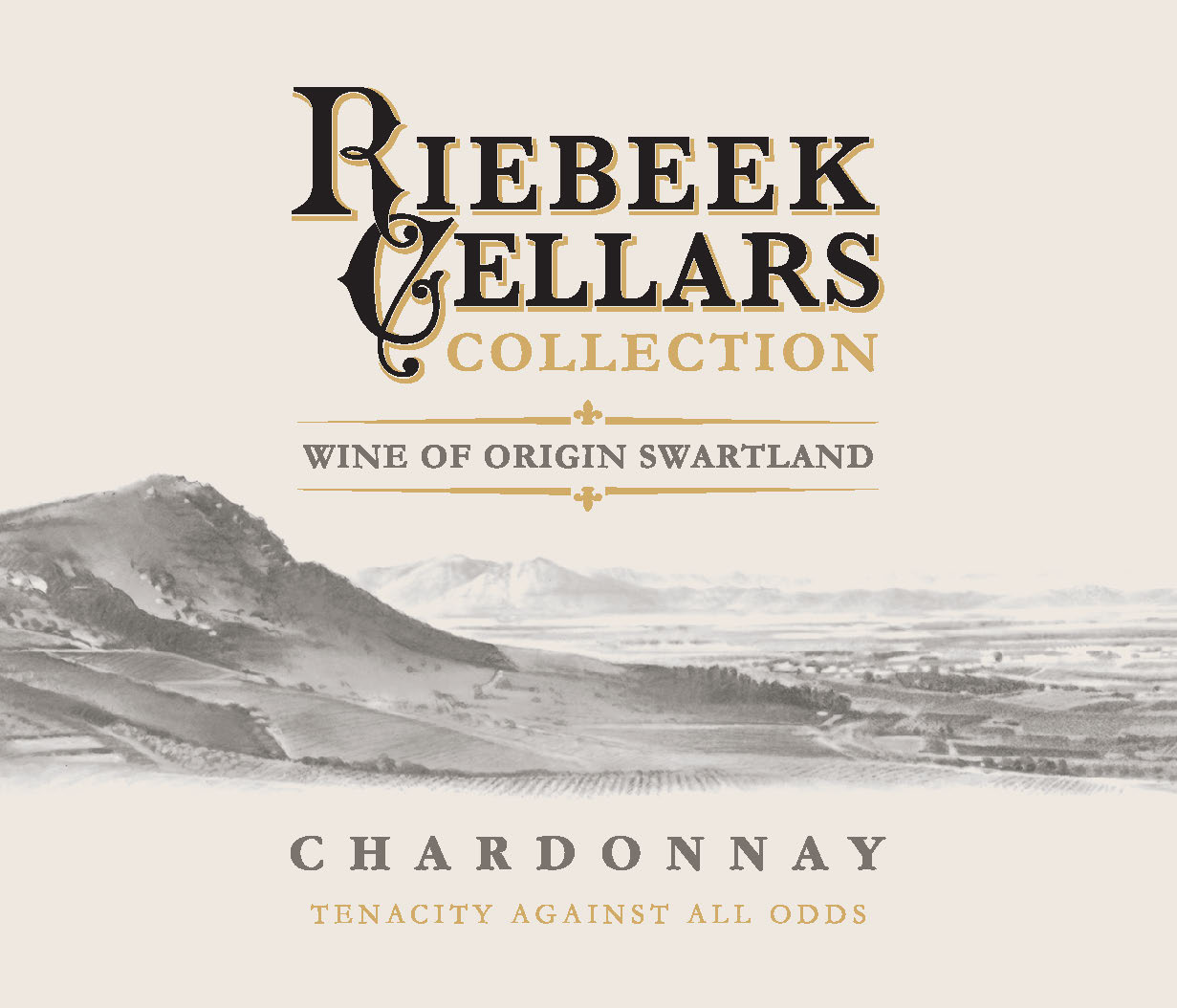
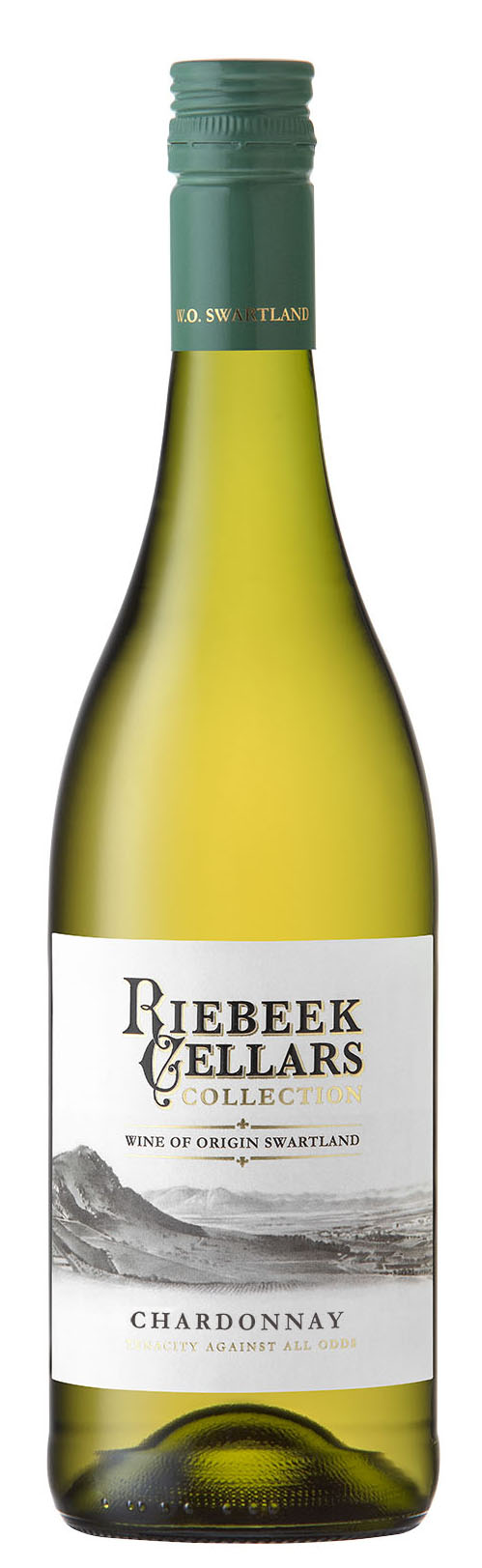
Riebeek Chardonnay is made from 100 percent Chardonnay.
This unoaked Riebeek Chardonnay displays a brilliant green-gold color. The style is dry but fruity. The nose offers exceptional tropical aromas that follow through in the palate with a well-rounded finish of lingering citrus fruits. It is lovely with most entrees from crisp salads to creamy soups and chicken, whether served grilled or in a creamy sauce.
Free run juice was used. After settling and acid adjustment, juice was inoculated with selected yeast. Fermentation temperature remained between 13-14 degrees Celsius. Wine was left on lees for a few months prior to bottling to enhance the flavour.
It is lovely with most entrees, from crisp salads to creamy soups and chicken, whether served grilled or in a creamy sauce.
The Riebeek Cellars Estate
Riebeek Cellars was established in 1941 and is situated in Riebeek Kasteel at the foot of Bothma's Kloof Pass. This medium-sized winery on the western coast of the Cape Province of South Africa sources its grapes from the fertile Riebeek Valley and the slopes of the mountain where the climate is very similar to the Mediterranean. Through the years as vineyard practices developed, cultivars were planted in soil and at slopes best suited to them. These well-tended vineyards enable the production of high quality wines which makes Riebeek Cellars the choice of wine buyers internationally. Well-known both in South Africa and abroad, Riebeek Cellars manages a variety of brands for various countries.
Heritage
Corporal Pieter Cruythoff, a scout of Jan van Riebeeck, founded the Riebeek Valley in 1661. Impressed by the single standing mountain, he called it Kasteelberg (“Castle Mountain”) commemorating the Castle of Good Hope in Cape Town, the fortress of Commander Jan van Riebeeck. The twin towns, Riebeek Kasteel and Riebeek West, established at the foot of Kasteelberg, are therefore also suitably named after Van Riebeeck.
The Riebeek Valley is a mecca of wonderful wines, exceptional food and exquisite art where tourists and locals alike are forever tempted into spending more time than allowed. The serene valley falls in the bigger Swartland region which is called the 'bread basket' of South Africa for its grain production, while it is further internationally acclaimed for its high quality olive products. With various hotels and fine-dining restaurants as well as true country hospitality, the Riebeek Valley has become a very popular tourist destination. The ultimate charm of Riebeek is however in its people and their commitment and passion for wine.
"Located in the Western Cape region of South Africa, this winery was established in 1941, which makes it relatively old compared to all the new wineries that have sprung up in this area. Among the first Pinotages I can recommend, it’s also a good value. Pinotage, which is, of course, ubiquitous in South Africa, was first made in 1941, when the Cinsault grape (primarily grown in southern France and the Rhone Valley) was crossed with Pinot Noir." - Robert Parker's Wine Advocate (Issue 201, June 2012).
This unoaked style of Viognier offers an accessible wine with enough body but without wood flavors.
The color is a brilliant green-gold and the style is dry but fruity. The perfume of a floral bouquet greets the nose and follows through with lovely tropical flavors in a light but lingering palate.
Free run juice was used. After settling and acid adjustment, it was inoculated with selected yeast. Fermentation temperature stayed between 13-14 degree Celsius. Wine was left on lees for few months prior to bottling to enhance the flavor. Alcohol: 13.82% Residual Sugar: 3.4 Total Acidity: 5.3 pH: 3.5
Slightly chilled. Lovely with most entrees - from crisp salads to creamy soups. Beautiful with chicken and fish - whether served grilled or in a creamy sauce.
Riebeek Chardonnay is made from 100 percent Chardonnay.
This unoaked Riebeek Chardonnay displays a brilliant green-gold color. The style is dry but fruity. The nose offers exceptional tropical aromas that follow through in the palate with a well-rounded finish of lingering citrus fruits. It is lovely with most entrees from crisp salads to creamy soups and chicken, whether served grilled or in a creamy sauce.
Free run juice was used. After settling and acid adjustment, juice was inoculated with selected yeast. Fermentation temperature remained between 13-14 degrees Celsius. Wine was left on lees for a few months prior to bottling to enhance the flavour.
It is lovely with most entrees, from crisp salads to creamy soups and chicken, whether served grilled or in a creamy sauce.
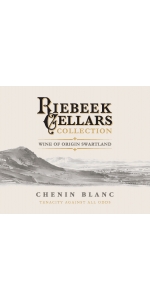
Riebeek Chenin Blanc is made from 100 percent Chenin Blanc.
As the unofficial drink of the Riebeek Valley, the Riebeek Chenin Blanc is the perfect every day wine that offers uncomplicated quality for the novice and connoisseur alike.
Packed with upfront tropical fruit, the nose charms with an abundance of guava and gooseberries. The pallets follows through with fruit flavors, balanced by a crisp acid to ensure a fresh and fruity style of wine.
Grapes came from both bosstok and trellised vines with some of the vineyards as old as 46 years. Fermentation was done at lower than usual temperatures to capture the fresh fruit flavors.
Very accessible and suited to almost every occasion, the Riebeek Chenin Blanc never disappoints.
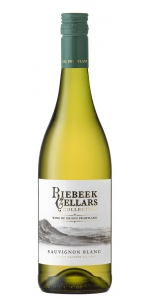
Riebeek Sauvignon Blanc is 100 percent Sauvignon Blanc.
Made in a definite herbaceous style, this Sauvignon Blanc also offers tropical undertones of gooseberries that add fruit to the palate. Well-balanced with zesty acidity; fresh & crisp.
Treated as reductively as possible. Juice settled for 2 weeks at -4 Celsius to give green lees contact. Blocks fermented separately to ensure a complex flavor profile after blending. After fermentation was completed, various wines were blended to obtain the best characteristics of each wine.
Very refreshing on its own and lovely with crisp salads, light seafood dishes, tapas, steamed green asparagus and aioli.
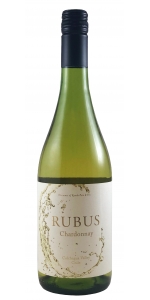
Rubus Chardonnay Colchagua Valley is made from 100 percent Chardonnay.
Attractive yellow color with some green tones. Its intense varietal character reminds one ripe fruits like pineapple, with notes of melon and honey well harmonized with oak. In the mouth it is full, rich and buttery.
Grapes are harvested in the morning in order to avoid high temperatures.
At the winery, the grapes are gently pressed.
Alcoholic fermentation is held between 15º and 16º Celsius.
Then, 25% of the wine goes into American Oak barrels for 3 months.
After this, the blend is made, clarified, cold stabilized and filtered. Right before bottling, the wine goes through an on-line filtration system (plate and sterile membrane) to ensure microbiological stability
As far as the food pairing, it is delicious with pasta, fish, seafood and mild cheeses. It is also delicious on its own as an aperitif.
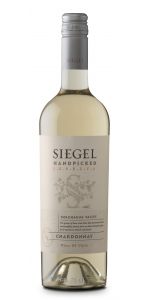
Siegel Hand-picked Selection Chardonnay is made from 100 percent Chardonnay.
The handpicked selection Reserva wines are born out of a strong desire to offer the very best expressions of terroir from El Crucero vineyard, located at 360 meters above sea level. These carefully handpicked grapes deliver superb varietal characteristics and exceptionally well-balanced fruit concentration. The manual harvest behind the handpicked Reserva Wines, a stage prior to a second triage, highlights Siegel's commitment to delivering uniquely hancrafted wines from Chile.
This handpicked Chardonnay shows a pale yellow color. On the nose, it presents notes of tropical fruits like mango. On the palate, it is well-balanced, with a pleasant acidity and a persistent finish.
Pairs best with white meats and fish, especially salmon.
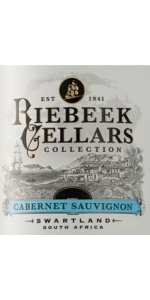
Riebeek Cabernet Sauvignon is made from 85% Cabernet Sauvignon,15 % Shiraz.
An exciting new world style wine with upfront blackcurrant flavors. The black fruit is well-balanced with subtle French oak for a complex nose and an elegant and lingering follow-through. An exceptional example of a lighter style Cabernet Sauvignon that can be enjoyed young. Excellent with red meat dishes or veal.
Morlet Family Vineyards Ma Douce Chardonnay is made from 100 percent Chardonnay.
The cool maritime breeze and mild and sunny mountain climate create ideal conditions for this hillside vineyard located on the second ridge from the Pacific Ocean. Handcrafted using classical Burgundian winemaking techniques, this wine is dedicated to Jodie Morlet. It is ‘My Sweet’ or ‘Ma Douce.’
Full yellow color. Aromas of lemon drop, Crème Brulée and orange zest intermixed with strong notes of minerality (wet stones) and fresh hazelnut. Full-bodied, mineral driven, this wine displays a creamy texture and very long mineral finish. Built to age gracefully for a decade, this wine is already very approachable.
Propietary Name Ma Douce
Name Meaning My Sweet “Douce brize” from the Ocean
Varietal composition Chardonnay
Type of wine Vineyard designated
Appellation Fort Ross-Seaview
Vineyard singularity On the second ridge off Ocean High elevation Goldridge soil
Typical harvest date End of October
Picking Manual, small lugs, refer truck
Sorting Cluster by cluster
Fermentation In barrel through native yeast 100% Malolactic
Upbringing Sur lies with bâtonnage
French oak from selected coopers
Bottling Unfiltered
Cellaring time 5-10 years
Serving Slightly below room temperature Decanted when served young
Review:
"Lots of white peach, quince, white flower, and green almond notes emerge from the 2020 Chardonnay Ma Douce, a full-bodied barrel sample with beautiful depth as well as freshness."96 Points Jeb Dunnuck:
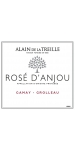
Alain de la Treille Rose d'Anjou is made from 50% Gamay, 50% Grolleau
The Rosé d'Anjou AOC, also known as Anjou Rosé AOC, produces medium-sweet rosés. Wines are made predominantly from Grolleau, with percentages of Cabernet Franc, Cabernet Sauvignon, Gamay, Malbec and Pineau d'Aunis permitted. Anjou soils reflect the geological identity of its border position between Armorican and Parisian basins. The terroirs consist of metamorphic and crystalline rocks (schist, sandstone) known as Anjou Noir, and ‘Terres Blanches’ (white earth) limestone known as Anjou Blanc. The AOC covers 1,890 hectares (4,668 acres).
The Grolleau grape derives its name from the French word ‘grolle’, meaning crow – a reflection of the dark black color of the grapes.
Crisp and refreshing with vibrant aromas of strawberry and raspberry. Juicy and well-balanced with a long finish.
Selective juice extraction to preserve color & aromas. Temperature controlled fermentation is followed by aging on the fine lees. No malolactic fermentation; no oak.
To be served chilled (10°C/50°F) with barbecued meats, salads, any spicy food, poultry dishes and of course appetizers.