
" We don't sell the wine without touching the vine "
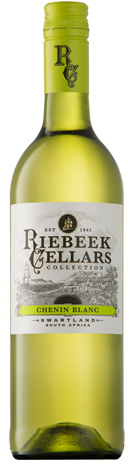
| Country: | South Africa |
| Region: | Riebeek Kasteel |
| Winery: | Riebeek Cellars |
| Grape Type: | Chenin Blanc |
| Vintage: | 2016 |
| Bottle Size: | 750 ml |

Riebeek Chenin Blanc is made from 100 percent Chenin Blanc.
As the unofficial drink of the Riebeek Valley, the Riebeek Chenin Blanc is the perfect every day wine that offers uncomplicated quality for the novice and connoisseur alike.
Packed with upfront tropical fruit, the nose charms with an abundance of guava and gooseberries. The pallets follows through with fruit flavors, balanced by a crisp acid to ensure a fresh and fruity style of wine.
Grapes came from both bosstok and trellised vines with some of the vineyards as old as 46 years. Fermentation was done at lower than usual temperatures to capture the fresh fruit flavors.
Very accessible and suited to almost every occasion, the Riebeek Chenin Blanc never disappoints.

Kasteelberg Chenin Blanc is made from 100 percent Chenin Blanc.
The Kasteelberg range of wines celebrates the discovery of the Riebeek Valley and the Kasteelberg mountains in 1661. Kasteelberg stands sentinel over the fertile valley below. From the slopes of the mountains, hand-selected grapes are expertly crafted with care to produce rare and expressive wines.
Limited release, single-vineyard Chenin Blanc from hand-selected grapes from the foothills of the majestic Kasteelberg Mountain, Kasteelberg Chenin Blanc embodies excellent craftsmanship that transforms the harsh Swartland terroir into the pinnacle of our winemakers’ art.
Together with the age-old tradition of Dry Land viticulture, it resulted in an elegant, aromatic and richly textured wine, with characteristics typical to Chenin Blanc grown under these conditions. Citrus, lemon zest, ripe apple and tropical flavors are only some of the flavors that charm the nose. The palate follows through with flavors of melon, a touch of spice and well-integrated wood for exceptional balance and a luxurious, lingering finish.
Once harvested, the grapes are hand-sorted, de-stemmed & crushed into temperature-controlled gravitational drainers. Only the free-run juice is chilled and settled overnight. The juice is then racked off into new, 300 L, oak barrels (50% French oak, 50% Hungarian oak) and wild yeast fermented in the barrels. Fermentation is temperature controlled and lasted around 22 days. The wine is then matured in the oak barrel on the gross lees for 12 months before being racked off, filtered and bottled. After bottling the wine is further bottle-matured for at least 6 months before release.

The Royal Chenin Blanc Old Vines Steen is 100 percent Chenin Blanc.
As the unofficial drink of the Riebeek Valley, Chenin Blanc is the perfect every day wine that offers uncomplicated quality for the novice and connoisseur alike. Packed with upfront melon fruit, the nose charms with an abundance of guava and gooseberries as well as the signature hint of honey. The palate follows through with fruit flavors balanced by a crisp acid to ensure a fresh and fruity style of wine.
Enjoy well-chilled as a lovely crisp glass on its own but ideal for al fresco dining and with light summer fare. Beautiful with salads, anti pasti and seafood.

Babylons Peak Chenin Blanc is made from 100 percent Chenin Blanc.
Babylon's Peak winery, situated on the highest weathered granite slopes of the Paardeberg Mountain, is privately owned by the Basson family who has passed down the tradition, passion and art of winemaking over four generations. Predominantly low-yield dryland bushvines are selected to produce these excellent wines with distinctive character.
The Chenin Blanc grapes were picked from very old dryland bushvine vineyards. The vineyard grows on weathered granite soils, contributing to the flavor of the grapes and mineral character of the wine. Production is limited to 5 tons/ha.
The grapes were harvest by hand at 22.1°B. The grapes were destalked and lightly crushed. Only the first 450 litres free-run juice per ton were fermented in stainless steel tanks at a cold temperature (10-12°C) for 21 days. The wines was left on the fermentation lees until bottling.
A crisp, fresh and fruity Chenin Blanc from low-yield dryland bushvines.
Pairs with salads, seafood, chicken and other light dishes. The perfect wine for every occasion.

Brulesecaille Blanc Grande Reserve is made from 75% Sauvignon Blanc, 25% Sauvignon Gris.
Average age of the vines is 25 years.
Manual harvest from September 19th-20th 2016.
Direct press at low pressure (whole cluster) with low amount of SO2, settling at 10°C.
Addition of yeast and alcoholic fermentation in casks 400 liters.
Raised on the lees for 6 months with regular batonnage (stirring of the lees).
Bottling in april 2017.
Fish, seafood, white meats, fine goat cheeses.

Roland Champion Champagne Blanc de Blancs Grand Cru Vintage Brut Grand Eclat is 100% Grand Cru Chardonnay from the chalky soils of Chouilly.
This Champagne is full of elegance and finesse. Very complex nose, with a bouquet of aromas dominated by honey, brioche and notes of dried fruits, hazelnuts and sweets. Perfectly matured.
As the unofficial drink of the Riebeek Valley, the Riebeek Chenin Blanc is the perfect every day wine that offers uncomplicated quality for the novice and connoisseur alike.
Packed with upfront tropical fruit, the nose charms with an abundance of guava and gooseberries. The pallets follows through with fruit flavors, balanced by a crisp acid to ensure a fresh and fruity style of wine.
Grapes came from both bosstok and trellised vines with some of the vineyards as old as 46 years. Fermentation was done at lower than usual temperatures to capture the fresh fruit flavors.
Very accessible and suited to almost every occasion, the Riebeek Chenin Blanc never disappoints.
The Riebeek Cellars Estate
Riebeek Cellars was established in 1941 and is situated in Riebeek Kasteel at the foot of Bothma's Kloof Pass. This medium-sized winery on the western coast of the Cape Province of South Africa sources its grapes from the fertile Riebeek Valley and the slopes of the mountain where the climate is very similar to the Mediterranean. Through the years as vineyard practices developed, cultivars were planted in soil and at slopes best suited to them. These well-tended vineyards enable the production of high quality wines which makes Riebeek Cellars the choice of wine buyers internationally. Well-known both in South Africa and abroad, Riebeek Cellars manages a variety of brands for various countries.
Heritage
Corporal Pieter Cruythoff, a scout of Jan van Riebeeck, founded the Riebeek Valley in 1661. Impressed by the single standing mountain, he called it Kasteelberg (“Castle Mountain”) commemorating the Castle of Good Hope in Cape Town, the fortress of Commander Jan van Riebeeck. The twin towns, Riebeek Kasteel and Riebeek West, established at the foot of Kasteelberg, are therefore also suitably named after Van Riebeeck.
The Riebeek Valley is a mecca of wonderful wines, exceptional food and exquisite art where tourists and locals alike are forever tempted into spending more time than allowed. The serene valley falls in the bigger Swartland region which is called the 'bread basket' of South Africa for its grain production, while it is further internationally acclaimed for its high quality olive products. With various hotels and fine-dining restaurants as well as true country hospitality, the Riebeek Valley has become a very popular tourist destination. The ultimate charm of Riebeek is however in its people and their commitment and passion for wine.
"Located in the Western Cape region of South Africa, this winery was established in 1941, which makes it relatively old compared to all the new wineries that have sprung up in this area. Among the first Pinotages I can recommend, it’s also a good value. Pinotage, which is, of course, ubiquitous in South Africa, was first made in 1941, when the Cinsault grape (primarily grown in southern France and the Rhone Valley) was crossed with Pinot Noir." - Robert Parker's Wine Advocate (Issue 201, June 2012).

Wine produced from grapes coming from the best vineyards from Sierra de Montilla and Moriles Alto (top quality area)
Aged in American Oak for 8 years
Color: Amber color with some topaz reflections.
An intense and elegant expression from the oxidative ageing process, with some dry fruits characters. The aromas are reminiscent of its ancestor - Fino. Velvety, warm, round and well-structured on the palate with almond flavors. A well-balanced wine.
Wonderful as an aperitif and to accompany soups and consommés. Extremely good where its distinctive taste adds unique character to a wide range of dishes. Try also with marinated meats and selfish as aperitif.

SALE!
Amber, clean and bright mahogany. Intense bouquet with slightly oaky and nutty notes. Dry, full and warm on the palate.
It is a very pleasant aperitif and can accompany meat and game dishes, or to serve with mature cheese.

All older vintage wines have been purchased from a single collectors cellar. Pictures can be requested before shipment.

Sequentis is a limited-edition Reserve Merlot that advances our devotion to Bordeaux varieties. The remarkable 2021 vintage opens with heady aromas of rose petal, plum, blackberry jam, cooked strawberry, ripe black cherry and baking spice. A medium-bodied mouthfeel floods the senses with extraordinary complexity, including layered flavors of pomegranate, raspberry, blackberry, coconut, tobacco and vanilla. Balanced acidity and fine tannins converge on a smooth, velvety finish.
Review:
The Daou hallmark of toasted pecan and walnut aromas show on the nose of this Merlot, which also offers ripe berry and toasted herb touches. The palate carries the savory, nutty tone as well, with dark cherry providing fruit and firm tannins holding strong. Drink now-2035.
-Wine Enthusiast 93 Points



