" We don't sell the wine without touching the vine "
| Country: | South Africa |
| Region: | Riebeek Kasteel |
| Winery: | Riebeek Cellars |
| Grape Type: | Chenin Blanc |
| Vintage: | 2022 |
| Bottle Size: | 750 ml |

Babylons Peak Chenin Blanc is made from 100 percent Chenin Blanc.
Babylon's Peak winery, situated on the highest weathered granite slopes of the Paardeberg Mountain, is privately owned by the Basson family who has passed down the tradition, passion and art of winemaking over four generations. Predominantly low-yield dryland bushvines are selected to produce these excellent wines with distinctive character.
The Chenin Blanc grapes were picked from very old dryland bushvine vineyards. The vineyard grows on weathered granite soils, contributing to the flavor of the grapes and mineral character of the wine. Production is limited to 5 tons/ha.
The grapes were harvest by hand at 22.1°B. The grapes were destalked and lightly crushed. Only the first 450 litres free-run juice per ton were fermented in stainless steel tanks at a cold temperature (10-12°C) for 21 days. The wines was left on the fermentation lees until bottling.
A crisp, fresh and fruity Chenin Blanc from low-yield dryland bushvines.
Pairs with salads, seafood, chicken and other light dishes. The perfect wine for every occasion.
Babylons Peak Chenin Blanc is made from 100 percent Chenin Blanc.
Babylon's Peak winery, situated on the highest weathered granite slopes of the Paardeberg Mountain, is privately owned by the Basson family who has passed down the tradition, passion and art of winemaking over four generations. Predominantly low-yield dryland bushvines are selected to produce these excellent wines with distinctive character.
The Chenin Blanc grapes were picked from very old dryland bushvine vineyards. The vineyard grows on weathered granite soils, contributing to the flavor of the grapes and mineral character of the wine. Production is limited to 5 tons/ha.
The grapes were harvest by hand at 22.1°B. The grapes were destalked and lightly crushed. Only the first 450 litres free-run juice per ton were fermented in stainless steel tanks at a cold temperature (10-12°C) for 21 days. The wines was left on the fermentation lees until bottling.
A crisp, fresh and fruity Chenin Blanc from low-yield dryland bushvines.
Pairs with salads, seafood, chicken and other light dishes. The perfect wine for every occasion.

Riebeek Chenin Blanc is made from 100 percent Chenin Blanc.
As the unofficial drink of the Riebeek Valley, the Riebeek Chenin Blanc is the perfect every day wine that offers uncomplicated quality for the novice and connoisseur alike.
Packed with upfront tropical fruit, the nose charms with an abundance of guava and gooseberries. The pallets follows through with fruit flavors, balanced by a crisp acid to ensure a fresh and fruity style of wine.
Grapes came from both bosstok and trellised vines with some of the vineyards as old as 46 years. Fermentation was done at lower than usual temperatures to capture the fresh fruit flavors.
Very accessible and suited to almost every occasion, the Riebeek Chenin Blanc never disappoints.

The Royal Chenin Blanc Old Vines Steen is 100 percent Chenin Blanc.
As the unofficial drink of the Riebeek Valley, Chenin Blanc is the perfect every day wine that offers uncomplicated quality for the novice and connoisseur alike. Packed with upfront melon fruit, the nose charms with an abundance of guava and gooseberries as well as the signature hint of honey. The palate follows through with fruit flavors balanced by a crisp acid to ensure a fresh and fruity style of wine.
Enjoy well-chilled as a lovely crisp glass on its own but ideal for al fresco dining and with light summer fare. Beautiful with salads, anti pasti and seafood.

The Royal Chenin Blanc Old Vines Steen is 100 percent Chenin Blanc.
As the unofficial drink of the Riebeek Valley, Chenin Blanc is the perfect every day wine that offers uncomplicated quality for the novice and connoisseur alike. Packed with upfront melon fruit, the nose charms with an abundance of guava and gooseberries as well as the signature hint of honey. The palate follows through with fruit flavors balanced by a crisp acid to ensure a fresh and fruity style of wine.
Enjoy well-chilled as a lovely crisp glass on its own but ideal for al fresco dining and with light summer fare. Beautiful with salads, anti pasti and seafood.

Ferme Blanche Cassis Blanc Excellence is made from 50% Marsanne and 50% Clairette.
On the nose, white fruits, citrus zest, hint of vanilla. Velvety well balanced mouth of ripe fruits and minerality.
Pair with trout, Scallop, or better yet lobster would complement this wine perfectly.
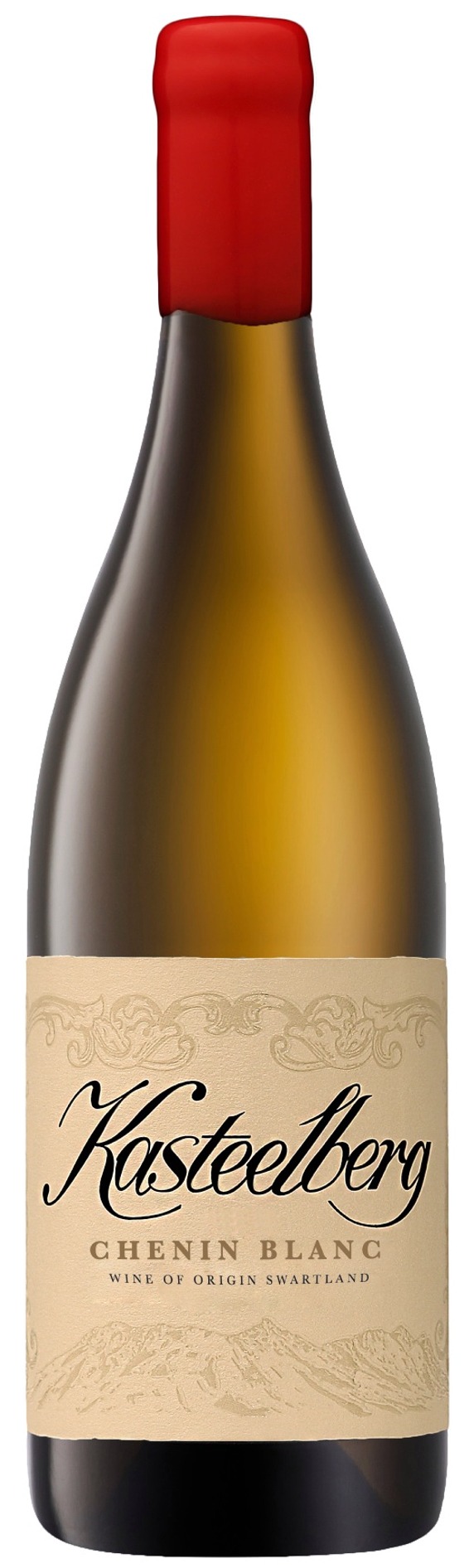
Kasteelberg Chenin Blanc is made from 100 percent Chenin Blanc.
The Kasteelberg range of wines celebrates the discovery of the Riebeek Valley and the Kasteelberg mountains in 1661. Kasteelberg stands sentinel over the fertile valley below. From the slopes of the mountains, hand-selected grapes are expertly crafted with care to produce rare and expressive wines.
Limited release, single-vineyard Chenin Blanc from hand-selected grapes from the foothills of the majestic Kasteelberg Mountain, Kasteelberg Chenin Blanc embodies excellent craftsmanship that transforms the harsh Swartland terroir into the pinnacle of our winemakers’ art.
Together with the age-old tradition of Dry Land viticulture, it resulted in an elegant, aromatic and richly textured wine, with characteristics typical to Chenin Blanc grown under these conditions. Citrus, lemon zest, ripe apple and tropical flavors are only some of the flavors that charm the nose. The palate follows through with flavors of melon, a touch of spice and well-integrated wood for exceptional balance and a luxurious, lingering finish.
Once harvested, the grapes are hand-sorted, de-stemmed & crushed into temperature-controlled gravitational drainers. Only the free-run juice is chilled and settled overnight. The juice is then racked off into new, 300 L, oak barrels (50% French oak, 50% Hungarian oak) and wild yeast fermented in the barrels. Fermentation is temperature controlled and lasted around 22 days. The wine is then matured in the oak barrel on the gross lees for 12 months before being racked off, filtered and bottled. After bottling the wine is further bottle-matured for at least 6 months before release.
The Riebeek Cellars Estate
Riebeek Cellars was established in 1941 and is situated in Riebeek Kasteel at the foot of Bothma's Kloof Pass. This medium-sized winery on the western coast of the Cape Province of South Africa sources its grapes from the fertile Riebeek Valley and the slopes of the mountain where the climate is very similar to the Mediterranean. Through the years as vineyard practices developed, cultivars were planted in soil and at slopes best suited to them. These well-tended vineyards enable the production of high quality wines which makes Riebeek Cellars the choice of wine buyers internationally. Well-known both in South Africa and abroad, Riebeek Cellars manages a variety of brands for various countries.
Heritage
Corporal Pieter Cruythoff, a scout of Jan van Riebeeck, founded the Riebeek Valley in 1661. Impressed by the single standing mountain, he called it Kasteelberg (“Castle Mountain”) commemorating the Castle of Good Hope in Cape Town, the fortress of Commander Jan van Riebeeck. The twin towns, Riebeek Kasteel and Riebeek West, established at the foot of Kasteelberg, are therefore also suitably named after Van Riebeeck.
The Riebeek Valley is a mecca of wonderful wines, exceptional food and exquisite art where tourists and locals alike are forever tempted into spending more time than allowed. The serene valley falls in the bigger Swartland region which is called the 'bread basket' of South Africa for its grain production, while it is further internationally acclaimed for its high quality olive products. With various hotels and fine-dining restaurants as well as true country hospitality, the Riebeek Valley has become a very popular tourist destination. The ultimate charm of Riebeek is however in its people and their commitment and passion for wine.
"Located in the Western Cape region of South Africa, this winery was established in 1941, which makes it relatively old compared to all the new wineries that have sprung up in this area. Among the first Pinotages I can recommend, it’s also a good value. Pinotage, which is, of course, ubiquitous in South Africa, was first made in 1941, when the Cinsault grape (primarily grown in southern France and the Rhone Valley) was crossed with Pinot Noir." - Robert Parker's Wine Advocate (Issue 201, June 2012).

I feel this wine expresses the greatness of California and its hidden pockets where Cabernet can excel. The cold Pacific Ocean running the entire length of the state presents maritime influences – and with each small distance eastward the climate warms. Stony soils, south facing slopes and moderately warm conditions are the keys to producing dark, rich and good tasting Cabernet.
A small release from Caymus Vineyards, this wine is a California-appellation Cabernet Sauvignon – supple, dark and rich, bearing the signature hallmarks of Caymus. It is sourced from sites throughout the state which feature climatic conditions, soils and topography that are ideally suited to Cabernet. This project stems from excitement over California's diverse vineyard land, often in lesser-known areas, with the potential to produce exceptional Cabernet.

This classy and poised Pinot Noir displays an array of dark berry notes, including raspberry, blackberry, blueberry, and ripe cherry, along with a hint of baking spices. Balanced tension and refined tannins on the palate make the wine both elegant and effortlessly delicious, with subtle flavors of cedar and cassis lingering on the finish.
Review:
Bright and perfumed aromas of raspberries, potpourri and orange peel. The palate is medium-bodied with fine tannins and bright acidity, giving notes of blackberry bush, dried herbs and earth. Balanced and fresh.
- James Suckling 93 Points

Paysan Sauvignon Blanc Zabala Vineyard is made from 100% Sauvignon Blanc.
Paysan Sauvignon Blanc comes from Zabala Vineyard - located on a large holding on the Arroyo Seco floodplains that was part of land granted to the Zabala family before California’s statehood. It was first planted in the 1970s and has grown to encompass over 1000 acres. Zabala Vineyard is one of the rockiest vineyard I Brand works with, full of what is locally known as ‘Greenfield Potatoes’, which are the rather inedible round river stones that dominate the soil and have been collected into piles and walls at every property in the basin. This vineyard is located directly in the path of the daily Salinas Valley winds, which control sugar development and retain natural acidity. Certified organic grapes.
Tasting Notes: Light-bodied. Aromatic explosion on the nose. Lime, gooseberry, green melon, grapefruit, white peach, passion fruit. Crisp, tart, clean with bright acidity on the palate. Neutral oak ageing provides subtle creaminess, while still exhibiting trademark green notes.

Bernardins Dry Muscat Dore des Bernardins is made from 100% white Muscat petit grains.
Doré des Bernardins is a dry white wine that is only produced in years when the Muscat à petit grains crop is large enough. Grapes are picked at the same ripeness level as for the Vin Doux Naturel. In contrast to Muscat de Beaumes de Venise, the fermentation isn’t stopped, giving a fruity dry wine with intense Muscat aromas.
Dry Muscat with a fruity, nice perfume, honeysuckle and melon aromas, lively rounded mouth-feel. Elegant, fresh and medium-bodied.
Situation
Spreads out over the south-east side of the Dentelles de Montmirail hills, in Beaumes de Venise in the southern part of the Rhone valley.
Terroir
On a poor sandy, hungry and arid soil consisting of tender limestone and gritty zones of sandy mollasse.
In the vineyard
The vineyards and their terroir are the essence of our wines. This is where everything starts and where we focus our efforts throughout the year. You can’t make great wine without great grapes.
The viticulture is essentially done by hand. Five people work full-time in the vineyards. They are supplemented by seasonal employees who work during bunch thinning and the harvest in order to bring out the very best in our vines. Working by hand and the attention each vine gets are fundamental. Pruning, de-budding, trellising, leaf removal and picking are thus carried out by hand with the utmost care.
We prepare the soil by using good old-fashioned ploughing. Organic compost is made from grape marc (the discarded stalks and skins).
As a way of protecting the plants, we only use phytosanitary products when necessary and within strict guidelines by staggering the treatments appropriately, to minimise the amount of chemicals used. We prefer to use as much as possible manual and organic techniques. Leaving natural grass cover, removing buds and leaves from the vines, preserving biodiversity around the vineyard: olive, almond and cypress trees, wild rosemary and capers.
Winemaking
Our Doré des Bernardins is a dry white wine that we only produce in years when the Muscat à petits grains crop is large enough. We pick the grapes at the same ripeness level as for the Vin Doux Naturel. In contrast to Muscat de Beaumes, the fermentation isn’t stopped, giving a fruity dry wine with intense Muscat aromas.
Nicely chilled, this dry white wine is great as an aperitif or with asparagus, seafood, king prawns, fish.

Cazaux Gigondas Tour Sarrasine is made from 75% Grenache, 15% Syrah, 10% Mourvèdre. 45 year old vines on average.
This strong, warm wine comes from a selection of grapes planted on exceptional soils. The vineyards in Gigondas are situated on the arid hills of the Dentelles de Montmirail. The Mistral blows regularly on these slopes which limits the amount of treatment needed to the vines. The vines grow on stony soils and produce wine that can be kept easily for 10 yrs.
Intense, persistent red and dark fruit aromas. Raspberry, pepper and spice flavors. Silky tannins.

Segries Lirac Rouge Cuvee Reservee is made from 50% Grenache, 30% Syrah, 10% Cinsault, 10% Mourvèdre
Dark garnet in color. Expressive Red fruits and spicy. Sweet tannins and good length
Ageing up to 10 years
Vineyards Clay and limestone Area: 24 hectares Age of Vines: 80 years Yeild: 24 Hl/Ha Production: 570 Hl Harvest and VInification Harvest by hand and 100% destemmed. Maceration for 21 days in cement tank - Fermentation with controlled temperature at Château de Ségriès.
Pairs well with Stews, Grilled meats, Game, Various cheeses

Paul Hobbs Chardonnay Russian River Valley is made from 100 percent Chardonnay.
Crafted with precision from six pedigreed sites comes a wine that beams with pale straw hue. The newest vintage brings wonderful aromatic intensity: candied lemon peel, white florals followed by crisp green apple. A creamy and viscous texture on the palate is buoyed by white nectarine and dried apricot that’s balanced with a vibrant acidity, bringing focus to the wine’s finish that lingers with hints of flinty mineral notes.
Review:
-Wine Enthusiast 95 Points

Marco Capra Langhe Nascetta is made from 100% Nascetta - 15 years old - 1.73 acres
Aged 6 months in stainless steel vats
The name "CONNA" is a sweet nickname after his wife Monica.
Bright straw yellow with greenish hues, with an intense and interesting perfume of grapefruit, apple and aromatic herbs. Floral, fresh, focused, good acidity. Refreshing and bright, full bodied with an aromatic persistence, it is savory and tasty on the palate with a smoothness that enhances the rich character of the wine
Altitude: 400 m above sea level.
Soil composition: lime and sand.
Plant density: 5000 vines / hectare.
Cultivation system: traditional Guyot.
Yield per hectare: 6 tons.
After a short period of maceration on skins, the grapes are soft pressed. The clear must obtained ferments slowly in stainless steel vats at a controlled temperature of 16-17°C. The wine spends a long period of time on the fine lees, with frequent “batonnage”
Ideal with apetizers, shellfish and other fish dishes.