
" We don't sell the wine without touching the vine "

Rinaldi Moscato d'Asti Bug Juice is made from 100 percent Moscato.
Straw-yellow color. The bouquet is delicate and intense with aromas of fruit (apple, peach) and spices (sage). The palate is sweet and smooth with lingering aromatic persistence. A refreshing and pleasant wine, perfect for brunch, picnics or poolside.
The training system used is Guyot with a density of 2500-3000 vines per hectare Manual harvest into crates. Soft pressing. Settling in steel vats to allow natural clearing of musts. Racking, increase in temperature. Temperature and pressure controlled fermentation until bottling.
Dessert, ideal with hazelnut cake. Original with "strong" cheese such as Robiola of Roccaverano and Gorgonzola.
Rinaldi Moscato d'Asti Bug Juice is made from 100 percent Moscato.
Straw-yellow color. The bouquet is delicate and intense with aromas of fruit (apple, peach) and spices (sage). The palate is sweet and smooth with lingering aromatic persistence. A refreshing and pleasant wine, perfect for brunch, picnics or poolside.
The training system used is Guyot with a density of 2500-3000 vines per hectare Manual harvest into crates. Soft pressing. Settling in steel vats to allow natural clearing of musts. Racking, increase in temperature. Temperature and pressure controlled fermentation until bottling.
Dessert, ideal with hazelnut cake. Original with "strong" cheese such as Robiola of Roccaverano and Gorgonzola.
Rinaldi Moscato d'Asti Bug Juice is made from 100 percent Moscato.
Straw-yellow color. The bouquet is delicate and intense with aromas of fruit (apple, peach) and spices (sage). The palate is sweet and smooth with lingering aromatic persistence. A refreshing and pleasant wine, perfect for brunch, picnics or poolside.
The training system used is Guyot with a density of 2500-3000 vines per hectare Manual harvest into crates. Soft pressing. Settling in steel vats to allow natural clearing of musts. Racking, increase in temperature. Temperature and pressure controlled fermentation until bottling.
Dessert, ideal with hazelnut cake. Original with "strong" cheese such as Robiola of Roccaverano and Gorgonzola.
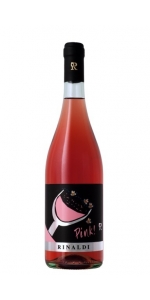
Rinaldi Rose Moscato Pink Bug Juice NV is made from Moscato d'Asti 90%, Brachetto d’Acqui 10%
Alcohol by Volume: 7%
Zone de Production: Ricaldone’s territory on the hills called ‘Bricco Rioglio’ and ‘Valmorana’,and Celle. Average altitude 280 m above sea level, calcareous soil with tufa layers.
Training System: guyot with a cultivation density of about 3000 vines per hectare.
Vinification: manual harvest into crates, usually at the first week of September. Temperature controlled maceration for about 24 hours with mechanic plunging of the cap and pumping over to extract a slight rosé color from the skins. Soft pressing. Settling in steel vats to have a natural clearing of musts. Further temperature and pressure controlled fermentation.
Sensorial Description: this wine, with light rosé color, strikes for its scent of spices and fruits. Its acid freshness suits its sweetness and offers a well balanced wine.
Serving Suggestions: aperitif wine, fruit cakes, fruit salad.Wine for brunch or poolside. To best appreciate this wine serve it fresh.
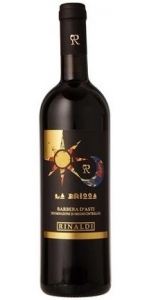
Rinaldi Barbera d' Asti La Bricca is made from 100% Barbera d'Asti.
"Bricca" means the top part of the hill. (see picture of the vineyards)
La Bricca is a deep, ruby-red colored wine with violet hues. The bouquet is vinous and intense with ethereal aromas (typical of the Barbera grape) and scents of ripe fruit and spices. The wine is full-bodied with very pleasant silky tannins. Long and harmonious with a good aging potential.
Enjoy it with meat dishes, rich pasta, risotto and well-aged cheeses. To appreciate the wine at its best, the bottle should be left at least 24 hours at room temperature and opened 1 hour before serving.
SALE!
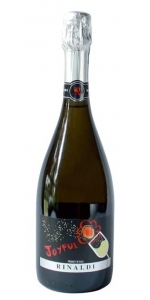
Rinaldi Joyful NV is made from 85 % Barbera, 10 % Cortese and 5 % Moscato
Straw yellow color, fruity with hints of apple and mint.
Joyful is a modern sparkling wine made using the method charmat process with the secondary fermentation made in a stainless steel tank.
Zone of production: Ricaldone’s territory on the hills called "Bricco Rioglio" and "Valmorana" and Celle.
Average altitude: 280 m above sea level, calcareous soil with tufa layers.
Training system: guyot with a cultivation density of about 3500 vines per hectare.
Vinification: manual harvest into crates, usually in September. Soft pressing. Settling in steel vats to have a natural clearing of musts. Further temperature and pressure controlled fermentation.
Joyful is great as an aperitif but also pairs very well with seafood.
Review:
"Golden yellow color. Aromas and flavors of hazelnut, cocoa, and vanilla, dried cherry multi grain bread, valencia orange, and over ripe melon with a satiny, bright, effervescent, dry light-to-medium body and a stimulating, medium-length finish with notes of fruit and nut multigrain biscuit with dried red fruits, toasted hazelnut, watermelon rind, and lime zest. Citrus forward and bright with a subtle hint of salinity makes this sparkling completely crushable yet sophisticated enough to bring to dinner."
- Beverage Testing Institute 93 pts - Gold Medal
Rinaldi Moscato d Asti is made from 100% moscato d Asti, produced in the zone of production of Ricaldone, on the hills called Bricco Cardogno, Celle and Vallarenzo.
The training system used is Guyot with a density of 2500-3000 vines per hectare
Vinification:: manual harvest into crates. Soft pressing. Settling in steel vats to allow natural clearing of musts. Racking, increase in temperature. Temperature and pressure controlled fermentation until bottling. Straw-yellow color. The bouquet is delicate and intense with aromas of fruit (apple, peach) and spices (sage). The palate is sweet and smooth with lingering aromatic persistence. A refreshing and pleasant wine, perfect for brunch, picnics or poolside.
Serving suggestions: dessert, ideal with hazelnut cake. Original with "strong" cheese such as Robiola of Roccaverano and Gorgonzola.
The Rinaldi Estate
The winery is located on the hills of Alto Monferrato, close to Acqui Terme, in the heart of one of the most precious areas of south Piedmont. The family business was founded in 1961 by Oreste Rinaldi. It is run today by his son Andrea and his daughter Paola. The family has been producing wine for 40 years from their vineyards located on a particularly privileged area with a favorable microclimate and a perfect southwestern exposure
The Rinaldi Vineyard
Currently Rinaldi has 20 hectares of vines (49.6 acres), 19hectares owned, 1 hectares rented. Their single vineyard Bricco Cardogno, planted to Moscato, is a vineyard that measures 2.5 hectares (6.75 acres) and was planted 40 years ago by Andrea Rinaldi’s grandfather. It is located 240- 300 m above sea level. The soil type in this vineyard is limestone (tufa). All grapes are hands harvested with extreme care. Quality starts in the vineyard. The single vineyard Bricco Rioglio is planted with Brachetto grapes, limestone based with 15-year-old vines. (Bricco is a tea cup in local dialect).
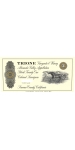
Winemaking: This wine is a classic Bordeaux blend of 78% Cabernet Sauvignon, 10% Malbec, 8% Merlot, 2% Cabernet Franc, 2% Petit Verdot.
. The 2010 growing season was moderate, thus promoting slow ripening and full flavor development. We hand-harvested and fermented each variety separately, then moved the wines to barrel, where they aged twelve months. Once we determined our blend, we returned the wine to barrel for an additional twelve months, to 'marry' the varietals. We used tight-grained French oak barrels (45% new) from coopers Taransaud, Vicard and Bossuet.
Winemaker Notes:
Complex, rich aromas foretell rich flavors of black currants, allspice and a hint of clove. The wine is full bodied, with velvety texture, smooth tannins and an extensive finish. Beautifully balanced, this Cabernet will age for ten more years.
Alcohol: 14.25 percent by volume
Review:
"Savory, dried red capsicum with cedar, cocoa powder and dried mushrooms on top of black cherries. Juicy and layered with some currants and savory earthy spices on the palate. Not quite deep, but a very elegant and savory expression of cabernet with a very long, subtle finish. A little sweet-sour, but quite refined and approachable, too. Drink now."
- James Suckling (June 2022), 93 pts
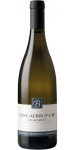
Bachelet Bertrand Saint-Aubin Premier Cru En Remilly is made from 100 percent Chardonnay.
Saint-Aubin is situated in the heart of the Côte des Blancs, between Chassagne-Montrachet and Puligny-Montrachet; both white and red wines are produced here but Chardonnay remains predominant. The Saint-Aubin appellation covers a wide area, with an altitude ranging from 300 to 450 meters, and with very varied expositions and soils, which makes each climat unique.
Saint-Aubin En Remilly is located in the south-east of Gamay, a hamlet near the village of Saint Aubin and next to the Puligny-Montrachet and Chassagne-Montrachet appellations. This area benefits from a south-western exposition.
The wine offers a pale yellow color, with gold nuances; a mineral nose, a dense texture on the palate, bringing together substance and tension.
Perfect as an aperitif, pairs very well with firm-textured fish or with shellfish.



