" We don't sell the wine without touching the vine "
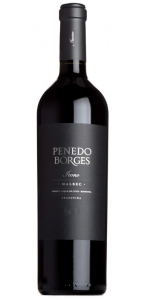
Penedo Borges Icono Malbec is made from 85% Malbec, 10% Cabernet Sauvignon and 5% Petit Verdot
Dark purple color.
Complex aromas of predominent ripe red fruit such as plum, cherry and raspberry with spicy notes.
Chocolate and vanilla flavors from barrel ageing which provide complexity and elegance.
Wine of great lenght.
Red meats, lamb, beef stew, strong cheese.
Review:
Icon is a selection from the winery, that is, of the best barrels of the year, basically with Malbec that occupies 85% of the final blend. The selection is made after a year of aging in barrels. The fruit of this selection is a wine of great depth of flavors, with spicy and herbal touches and with firm, sharp and penetrating tannins. In addition, there are earthy notes that project throughout the palate. An old school wine with an austere structure. One for the Cellar.
-Descorchados 94 Points
"Ripe berry and cassis aromas come with a blast of potent oak, but overall the nose on this Malbec is appealing in a bold manner. Airing is vital to smoothing out the tartaric bite this brings, while flavors of blackberry, dark plum, vanilla and mocha finish long and smoother than the palate. Drink this fully oaked and powerfully built Malbec through 2027. - MICHAEL SCHACHNER"
- Wine Enthusiast (July 2021), 93 pts
Penedo Borges Icono Malbec is made from 85% Malbec, 10% Cabernet Sauvignon and 5% Petit Verdot
Dark purple color.
Complex aromas of predominent ripe red fruit such as plum, cherry and raspberry with spicy notes.
Chocolate and vanilla flavors from barrel ageing which provide complexity and elegance.
Wine of great lenght.
Red meats, lamb, beef stew, strong cheese.
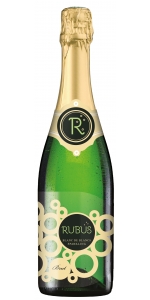
Rubus Brut Blanc de Blanc NV is made from 1/3 Ugni Blanc, 1/3 Airen, 1/3 Muscat .
The Rubus Project was created by Fran Kysela as a way to source & sell incredible wines at value prices. All wines in this international project are hand-selected by Fran Kysela. Rubus wines are fruit driven, true-to-type values that over deliver - a true representation of quality for the consumer at an excellent price.
Elegant pale yellow color with fine bubbles. Floral and fruity on the nose, with aromas of fresh butter and cake. On the palate, the wine is crisp and harmonious - a delightful sparkling wine.
Machine harvest. The base wine is fermented at a low temperature. The second fermentation takes place at 14°C for 2 weeks, followed by dosing.
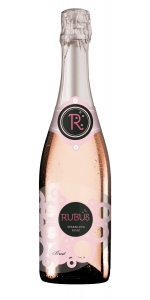
Rubus Brut Rose is made from 60% Tempranillo, 40% Bobal.
The Rubus Project was created by Fran Kysela as a way to source & sell incredible wines at value prices. All wines in this international project are hand-selected by Fran Kysela. Rubus wines are fruit driven, true-to-type values that over deliver - a true representation of quality for the consumer at an excellent price.
Stunning salmon-pink hues. The nose is intense and fine, dominated by notes of red berries. On the palate, the combination of fine bubbles and delicate aromas produces a delightfully light and silky rosé.
Machine harvest. The base wine is fermented at a low temperature. The second fermentation takes place at 14°C for 2 weeks, followed by dosing.
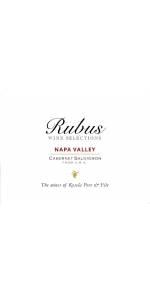
Rubus Cabernet Sauvignon Napa Valley is made from 100 percent Napa Valley Cabernet
Its long finish displays full mature flavors of blackberry, currant and chocolate with just a hint of toasty oak and black cherry. The tannins are refined and polished, allowing the fruit to be the focus.
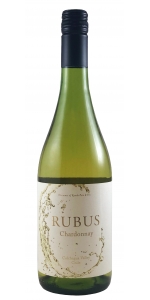
Rubus Chardonnay Colchagua Valley is made from 100 percent Chardonnay.
Attractive yellow color with some green tones. Its intense varietal character reminds one ripe fruits like pineapple, with notes of melon and honey well harmonized with oak. In the mouth it is full, rich and buttery.
Grapes are harvested in the morning in order to avoid high temperatures.
At the winery, the grapes are gently pressed.
Alcoholic fermentation is held between 15º and 16º Celsius.
Then, 25% of the wine goes into American Oak barrels for 3 months.
After this, the blend is made, clarified, cold stabilized and filtered. Right before bottling, the wine goes through an on-line filtration system (plate and sterile membrane) to ensure microbiological stability
As far as the food pairing, it is delicious with pasta, fish, seafood and mild cheeses. It is also delicious on its own as an aperitif.
The Rubus Project was created by Fran Kysela as a way to source & sell incredible wines at value prices. All wines in this international project are hand-selected by Fran Kysela. Rubus wines are fruit driven, true-to-type values that over deliver - a true representation of quality for the consumer at an excellent price.
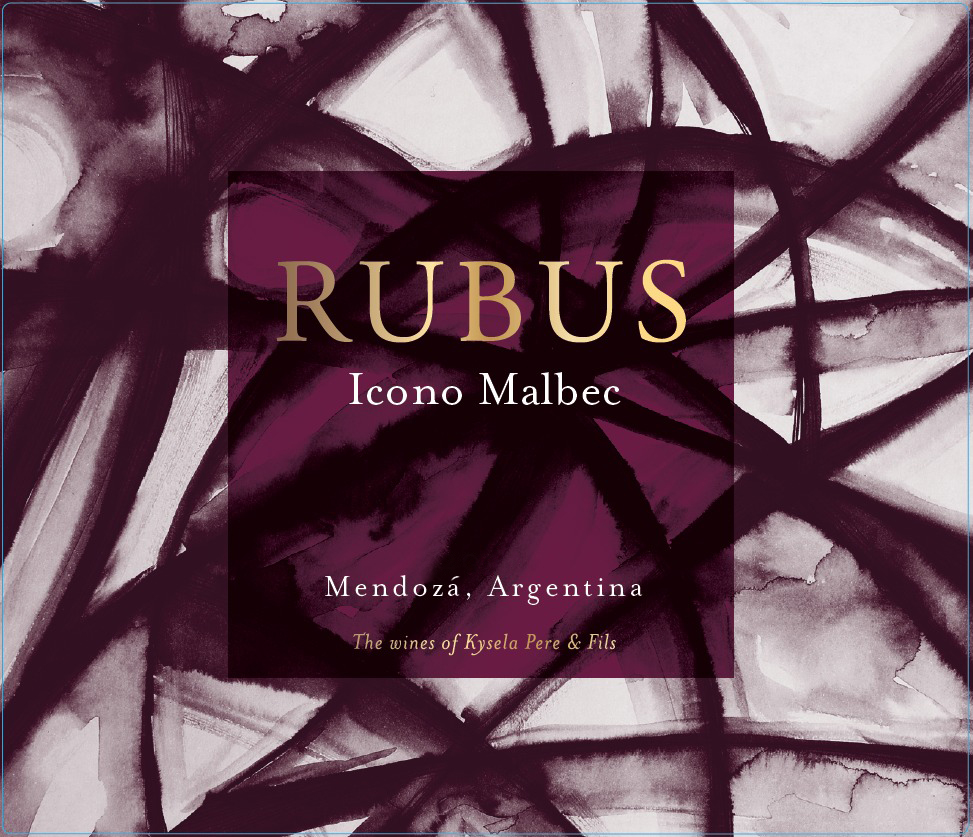
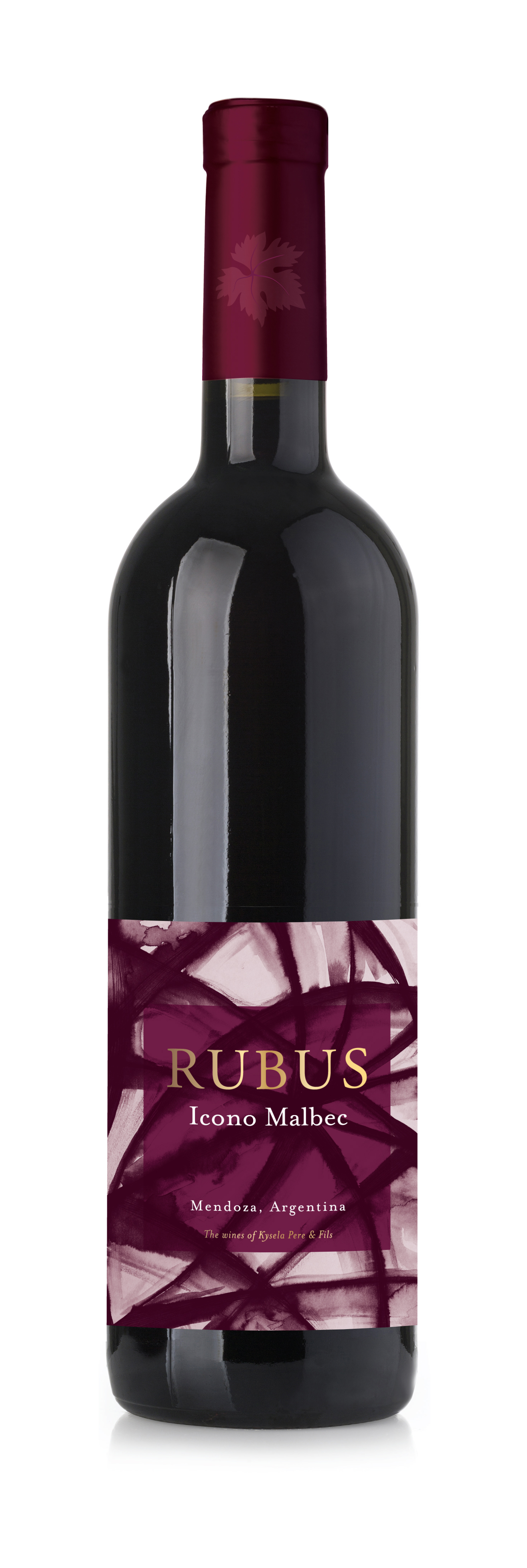
Sourced from ten-year-old vines in Paraje Altamira.
This Icon Malbec is suave and rich, offering loads of dark plum, currant and dried blackberry flavors supported by notes of soft spices. Molten chocolate notes emerge on the mid-palate, with Asian spice accents. The finish is long and ripe with a loamy character.
Pairs with grilled red meats, roast lamb, marinated chicken, pizza and pasta dishes, Asian cuisine.
Review:
- Wine & Spirits (October 2021), 92 pts
The Rubus Concept
Rubus wines are a private label created and used by Kysela Pere et Fils, LTD in order to buy, bottle and market wine found at incredible quality/price ratio. All Rubus wines are selected by Fran Kysela MS.
It was first used for a superb batch of 1,200 cases of Amador county Zinfandel back in 1997. The wine sold in a few days and the Rubus brand was not used since then.
During a trip in California in 2009, when Fran Kysela tasted some incredible wines (available in bottle but without label), he decided to help resurrect the brand creating an outstanding Cabernet Sauvignon from Stag's Leaps district in Napa Valley (California) , followed by an excellent Chardonnay from Russian River Valley (California)
We then developed the Rubus Zinfandel from Lodi (California).
In 2011, we added a Shiraz/Viognier blend from the Barossa in Australia.
For 2012, the newest addition to the Rubus line is a Chardonnay from Colchagua Valley in Chile.
Rubus is now its own brand representing quality for the consumer and an incredible price along the way.
Rubus Meaning
The name RUBUS means "raspberry" in Latin and it is the name given to the genus of flowering plants in the rose family. For instance, here are some famous fruit from the Rubus family with their latin names:
Rubus fruticosus agg. – Blackberry
Rubus idaeus – European Red Raspberry
Rubus occidentalis – Black Raspberry
Rubus pensilvanicus – Pennsylvania Blackberry
Rubus strigosus – American Red Raspberry
Rubus Cabernet Sauvignon Napa Valley is made from 100 percent Napa Valley Cabernet
Its long finish displays full mature flavors of blackberry, currant and chocolate with just a hint of toasty oak and black cherry. The tannins are refined and polished, allowing the fruit to be the focus.
SALE!
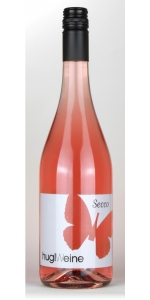
Hugl Zweigelt Secco Rose is made from 100% Zweigelt
Despite its relative youth, Zweigelt is actually an Austrian classic. This variety was created in 1922, when Dr. Fritz Zweigelt crossed two grapes - St Laurent and Blaufränkisch. Originally, it was intended for the new variety to be called Rotburger, referring to the place where it was born, Klosterneuburg. But this name never took hold, and instead, Zweigelt was named after the man who was the key in its development.
Today, Zweigelt is the most widely planted red variety in Austria, growing in nearly 9% of this country's vineyards. It is a robust grape, highly resistant to dryness, frost and various diseases.
Lively, fruity bouquet of strawberry, cherry and floral aromas. Refreshing and beautifully balanced, this is a great wine to enjoy as an aperitif. This is a Secco for the whole day and the whole night
The wine is made of 100% Zweigelt grapes of 15-35 years old (25 years old in avarage).
The soil is mainly loam and loess.
It is made using the Charmat method and the wine is aged for 3 months on the lees in stainless steel tanks.
The wine is slightly filtered before bottling.
Drink by itself as an aperitif, it is also a great picnic or brunch wine and will be a good pick to celebrate any occasion.
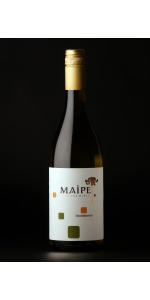
Maipe Chardonnay 2013 is made from 85% Chardonnay, 15% Viognier.
Manual harvest.
5 hour maceration on skins in temperature controlled steel vats; fermentation with selected yeasts at 14°-16°C; 30% malolactic fermentation.
30% was aged in French oak barrels.
Brilliant yellow golden color with green hints.
The wine is crisp and filled with white peach, pear, green apples flavors, toasty vanilla. Elegant and luscious wine, well balanced. Crisp and long finish.
Pairs well with creamy soups, pork, veal, vegetables.
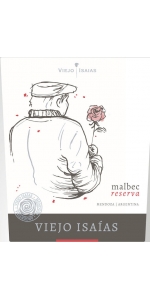
Viejo Isaias Malbec Reserva is made from 100 percent Malbec.
Story Of The Rose:
Viejo Isaias, meaning "old Isaac" is the grandfather of the winemaker, Rodrigo. When Rodrigo was a boy, Isaac would take him on long walks throughout their vineyard in Mendoza. On these walks Isaac would keep a watch over the health of the vines, but more importantly he would keep a watch for the first rose of the year. Every year for 40 years, he would find the first flowered rose and bring it back to his wife, Juana. The rose on the label is a symbol of their love for each other and for the culture of Argentine wine.
Don Isaías Hernández - a man with calloused hands and tanned by the work effort. With his example he taught me that nothing is achieved without sacrifice, that is why I want to keep his spirit alive in this reserva wine. This Malbec is the fruit of a dedicated winemaking, carefully crafted from the harvest to the palate of every single wine lover.
Intense touch of blueberries and plums, highlighted with vanilla and white chocolate from the oak aging. A nice wine with a good body, full of sweet tannins with good concentration and long persistence.
100% Malolactic fermentation Viejo Isaias is 100% oak aged, with 10 months American oak, 6 months in the bottle.
Vineyard site : Perdriel, Luján de Cuyo, upper area of Mendoza River.
Altitude: 950 meters above sea level
Soil: sandy loam
Vineyard planted in 2000.
Density per hectare: 3,500.
Production per vine plant: 2 x750 ml bottles on average.
Review:
Very clear aromas of black cherries and fresh flowers follow through to a medium body with fine tannins and a fresh finish. Very polished texture. Drink or hold."
- James Suckling (March 2022), 91 pts
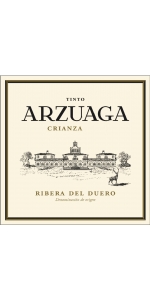
Arzuaga Ribera del Duero Crianza 95% Tempranillo and 5% Cabernet Sauvignon.
Dark cherry color with purple highlights. Powerful nose and high aromatic diversity of ripe red and black fruits, spicy and balsamic notes, and a roasted finish. Soft and mellow in the mouth with a great fruitiness and length.
Review:
This is a big wine with alluring aromas of cedary oak and black fruit. Ripe palate of black berries, some dark chocolate and integrated, polished oak. Long spicy finish. Classy Ribera. -Decanter 95 Points
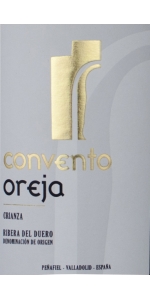
Convento Oreja Ribera del Duero Crianza is made from 100 percent Tempranillo.
Bright cherry color. On the nose you will find plenty of fruit aromas, well balanced as well as some reminiscences of spices that are appreciable. The oak presence gives elegant hints of black chocolate and vanilla. On the palate, the wine is very smooth and well balanced with the right amount of acidity. Fresh, long lasting and elegant.
The wine went through malolactic fermentation. The wine was aged 12 Months in French Oak barrels. Before bottling, the wine was slightly filtered.
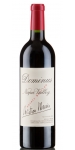
Dominus Napa Valley Red Blend is made from 88% Cabernet Sauvignon, 7% Cabernet Franc, 5% Petit Verdot.
The historic Napanook Vineyard, a 124-acre site west of Yountville, was planted in 1838. This vineyard was the source of fruit for some of the finest Napa Valley wines. Estate-bottled in the spirit of the Bordeaux châteaux, Dominus Estate is dry-farmed to allow natural stress and good concentration of fruit. Grape clusters are crop-thinned to allow sun and air to pass in between, helping to achieve full maturation and soften the tannins. Only 20% to 40% new French oak barrels are used in order to limit the extraction of oak notes. To express the unique terroir, the classic Bordeaux grape varietals of Cabernet Sauvignon, Merlot, Cabernet Franc and Petit Verdot are planted with different root stocks best suited for the varying soil composition of gravel, heavy clay and loam.
Reviews:
One of the legendary Dominus, the 2021 Cabernet Sauvignon is unquestionably in the same league as the 2018, 2016, 2015, 2013, 2010, and 1991, and to my mind, wine simply doesn't get any better. Sporting a dense purple hue as well as an incredible perfume of blackcurrants, crushed stone, cedar pencil, smoke tobacco, and baking spices, it s rich, full-bodied, and voluptuously textured, with ripe yet building tannins. It reminds me slightly of the 2010 (maybe the 2013), and I suspect it will have a similar evolution. Hide bottles for 7-8 years, and it will evolve gracefully for 30+ years. Hats off to the team of Christian Moueix and director Tod Mostero.
Jeb Dunnuck 100 Points
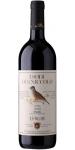
Castellare di Castellina 'I Sodi di San Niccolo' Toscana IGT is a blend of Sangioveto (85%-90%) and Malvasia nera (15-10%)
Intense ruby red in color and with a great olfactory concentration, thanks to the presence of a ripe red fruit that leads to notes of jam, but also spices, vanilla and licorice. In the mouth the wine is characterized by a dense and elegant texture, also supported by the important acidity of the Sangiovese, the tannins are absolutely sweet and the finish is long and of great persistence.
Excellent with cured meats and savory meats, with succulent dishes and mature cheeses. Much appreciated when paired with Tuscan Pecorino and Parmigiano.
The masterpiece of Castellare, I Sodi di San Niccolo, has twice placed in the top 100 of Wine Spectator, and has been awarded “Three Glasses” by Il Gambero Rosso.
I Sodi di San Niccolo is produced solely with native varieties: 85-90% of Sangioveto and 10-15% of Malvasia Nera, I Sodi comes from the two best crus of the farm.
The word "I Sodi" was used by the Tuscan farmers to describe those grounds which had to be processed by hand, being too hard (in fact firm) or too steep to allow for the employment of the horses, unlike the "fields" that make the grounds more easily cultivable.
Reviews:
Packed with ripe, juicy cherry, blackberry, pomegranate and floral aromas and flavors, this red is supple and beautifully integrated. Earth, iron and tobacco accents add detail as this winds down on the lazy, resonant aftertaste, showing terrific energy. Sangioveto and Malvasia Nera. Best from 2026 through 2043.
-Wine Spectator 97 Points
#35 Wine Spectator Top 100 of 2024
Vinous 97+ Points