
" We don't sell the wine without touching the vine "
| Country: | Japan |
| Region: | Tochigi Prefecture |
| Winery: | Matsui Shuzo |
| Organic: | Yes |
| Vintage: | NV |
| Bottle Size: | 300 ml |
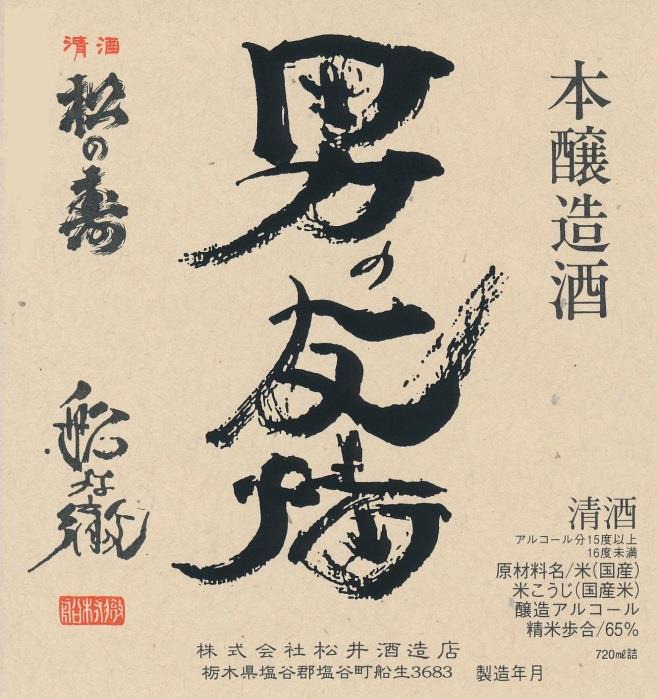
TASTING NOTES: This fresh, subtle Honjozo has a lovely nose of cantaloupe, leek, fresh clay and pear. With just a hint of sweetness, the palate is light bodied with alluring flavors of burnt caramel, chalk and marsh-mallow and a classic Honjozo clean, dry finish.
The fanciful name "Otoko no Yujyo", represents a feeling for which the sake was made, to honor brotherly love, between comrades.
PREFECTURE: TOCHIGI
POLISHING RATIO: 65%
ALCOHOL: 15.0 - 16.0%
SMV +/-: +8.0
ACIDITY: 1.4
RICE KOJI: HITOGOKOCHI
RICE KAKE: TOCHIGI 14
YEAST STRAIN: KYOKAI 901
FOOD PAIRINGS: Versatile with all foods, Grilled Fish, Paella, Smoked Fish, Fried Fish or Fried Chicken
CHEESE PAIRINGS: Foggy Morning, Prima Donna, Domaine de Village
This fresh, subtle Honjozo has a lovely nose of cantaloupe, leek, fresh clay and pear. With just a hint of sweetness, the palate is light bodied with alluring flavors of burnt caramel, chalk and marsh-mallow and a classic Honjozo clean, dry finish.
Versatile with all foods, Grilled Fish, Paella, Smoked Fish, Fried Fish or Fried Chicken. Cheese: Foggy Morning, Prima Donna, Domaine de Village.
TASTING NOTES:
This is a classic, delicious Honjozo with crimini mushroom, almonds and lilac aromas. The first sip of this sake is full of stone fruit and minerals complimented by notes of caramel, cocoa and almond and finishes with plenty of umami.
POLISHING RATIO: 60%
ALCOHOL: 16-17%
SMV +/-: +3.0
ACIDITY: 1.6
RICE KOJI: JAPANESE RICE 100%
RICE KAKE: JAPANESE RICE 100%
YEAST STRAIN: KYOKAI
FOOD PAIRINGS: Chinese Food, One Pot dishes like Beef Stew.
CHEESE PAIRINGS: Foggy Morning, Prima Donna, Domaine de Village
TASTING NOTES:
This is a classic, delicious Honjozo with crimini mushroom, almonds and lilac aromas. The first sip of this sake is full of stone fruit and minerals complimented by notes of caramel, cocoa and almond and finishes with plenty of umami.
POLISHING RATIO: 60%
ALCOHOL: 16-17%
SMV +/-: +3.0
ACIDITY: 1.6
RICE KOJI: JAPANESE RICE 100%
RICE KAKE: JAPANESE RICE 100%
YEAST STRAIN: KYOKAI
FOOD PAIRINGS: Chinese Food, One Pot dishes like Beef Stew.
CHEESE PAIRINGS: Foggy Morning, Prima Donna, Domaine de Village
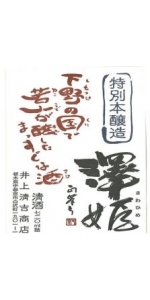
This inviting Honjozo is full of floral, quince, dried mango, anise and hazelnut aromatics. On the palate this sake has medium body and a smooth mouth feel. Forward flavors of persimmon and black pepper with lively acidity gives this sake a beautiful balance.
Pair this with: Salmon teriyaki, chicken meatballs, glazed ham, spinach and bacon salad; served warm with Shabu Shabu
RICE POLISHING RATIO: 60%
ALCOHOL: 15-16%
SWEET/DRY: +5.0
FOOD PAIRINGS: Duck, Grilled salmon, Chicken meatballs, Glazed ham, Chinese, Italian, Cured Meats
CHEESE PAIRINGS: Comte, Mimolette, Pecorino
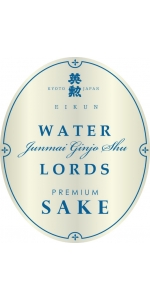
Sake Eikun Junmai Ginjo Water Lords 12/720ml is made with Iwai rice.
Eikun sake uses water from a source called "Fusui", rated as one of the top 100 sources of water in Japan. This water source is located just south of the ancient Japanese, and still cultural capital of Japan, Kyoto.
Aromas of macadamia oatmeal cookie, spicy zucchini bread, and vanilla cream with a satiny fruity-yet-dry medium-to-full body and a layered, banana custard, jicama, salted whole nut, apple, and radish nuanced finish. A Wonderfully vibrant and flavorful sake.-Beverage Tasting Institute 94 points (Exceptional)
RATING: 94 points (Exceptional)
CATEGORY: Junmai Ginjo Sake, Sake
ALCOHOL BY VOLUME: 15.3%
TASTING LOCATION: In Our Chicago Tasting Room
TASTING DATE: Dec-05-2012
WINE ID: 200768
Made with Iwai rice.
Eikun sake uses water from a source called "Fusui", rated as one of the top 100 sources of water in Japan. This water source is located just south of the ancient Japanese, and still cultural capital of Japan, Kyoto.
Rice milling: 60%
TASTING NOTES: This fresh, subtle Honjozo has a lovely nose of cantaloupe, leek, fresh clay and pear. With just a hint of sweetness, the palate is light bodied with alluring flavors of burnt caramel, chalk and marsh-mallow and a classic Honjozo clean, dry finish.
The fanciful name "Otoko no Yujyo", represents a feeling for which the sake was made, to honor brotherly love, between comrades.
PREFECTURE: TOCHIGI
POLISHING RATIO: 65%
ALCOHOL: 15.0 - 16.0%
SMV +/-: +8.0
ACIDITY: 1.4
RICE KOJI: HITOGOKOCHI
RICE KAKE: TOCHIGI 14
YEAST STRAIN: KYOKAI 901
FOOD PAIRINGS: Versatile with all foods, Grilled Fish, Paella, Smoked Fish, Fried Fish or Fried Chicken
CHEESE PAIRINGS: Foggy Morning, Prima Donna, Domaine de Village
Matsui Shuzo is nestled in a pine forest for which it is named, this small family owned brewery uses only local rice for its brewing. The toji, Motohiro Matsui, is also the owner, taking over from his father, running the company and responsible for all the brewing. He studied at Tokyo University and is a member of the Shimotsuke Brewer's Association. The water in Shioyamachi is soft, running through the mountains of pine forest surrounding the brewery for use in all production of sake. Unique to the brewing process is the blending of two yeast strains which is used to obtain a special flavor element within the sake.
TASTING NOTES:
This is a classic, delicious Honjozo with crimini mushroom, almonds and lilac aromas. The first sip of this sake is full of stone fruit and minerals complimented by notes of caramel, cocoa and almond and finishes with plenty of umami.
POLISHING RATIO: 60%
ALCOHOL: 16-17%
SMV +/-: +3.0
ACIDITY: 1.6
RICE KOJI: JAPANESE RICE 100%
RICE KAKE: JAPANESE RICE 100%
YEAST STRAIN: KYOKAI
FOOD PAIRINGS: Chinese Food, One Pot dishes like Beef Stew.
CHEESE PAIRINGS: Foggy Morning, Prima Donna, Domaine de Village
Guillemot-Michel Vire Clesse is made from 100 percent Chardonnay.
Beautifully expressive, with yellow fruits, orange blossom, smoke & flint. Thick and saline on entry, then seriously deep in the mid-palate, with suggestions of exotic fruits perfectly countered by strong minerality. This wine strikes a perfect balance between sweet and salty elements, and it shows vibrant acidity. It boasts a thickness that few other northern Mâconnais can match.
Enjoy with fish (such as sole meuniere), seafood, roasted chicken, goat cheese.
Review:
"The 2018 Viré-Clessé Quintaine is showing beautifully, wafting from the glass with a lovely bouquet of honeyed citrus fruit, fresh pastry and orange blossom. Medium to full-bodied, satiny and supple, it's elegantly textural and refined, with a fragrant core of fruit and a long, penetrating finish. Even though it will reward a bit of bottle age, it's slightly finer-boned than the more concentrated, muscular 2017, so I would opt to drink this immensely charming wine before its older sibling. – William Kelley"
- The Wine Advocate (Issue 249, June 30th 2020), 93 pts
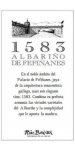
Fefinanes Albarino de 1583 Albarino is made from 100% Albarino.
Aged for 5 months in oak barrels (a combination of fine-grained American and French Allier barrels).
1583 is the birth date of the Viscount of Fefinanes, Gonzalo Sarmiento Valladares, builder of the Castle of Fefinanes, in Cambados.
They wanted to pay tribute to their ancestor with this wine that managed to reach a perfect harmony between the fruitiness of the Albarino grape and the complexity brought by the oak aging.
Lovely straw yellow color, clean and bright. The nose is reminiscent of ripe crystallized fruit and spices. The palate is elegant, round and well balanced, with a silky texture.
Excellent with shellfish, grilled or stewed fish, white meats, poultry.



