" We don't sell the wine without touching the vine "
| BUY MORE! SAVE MORE! | ||||||||||||||||||||
|
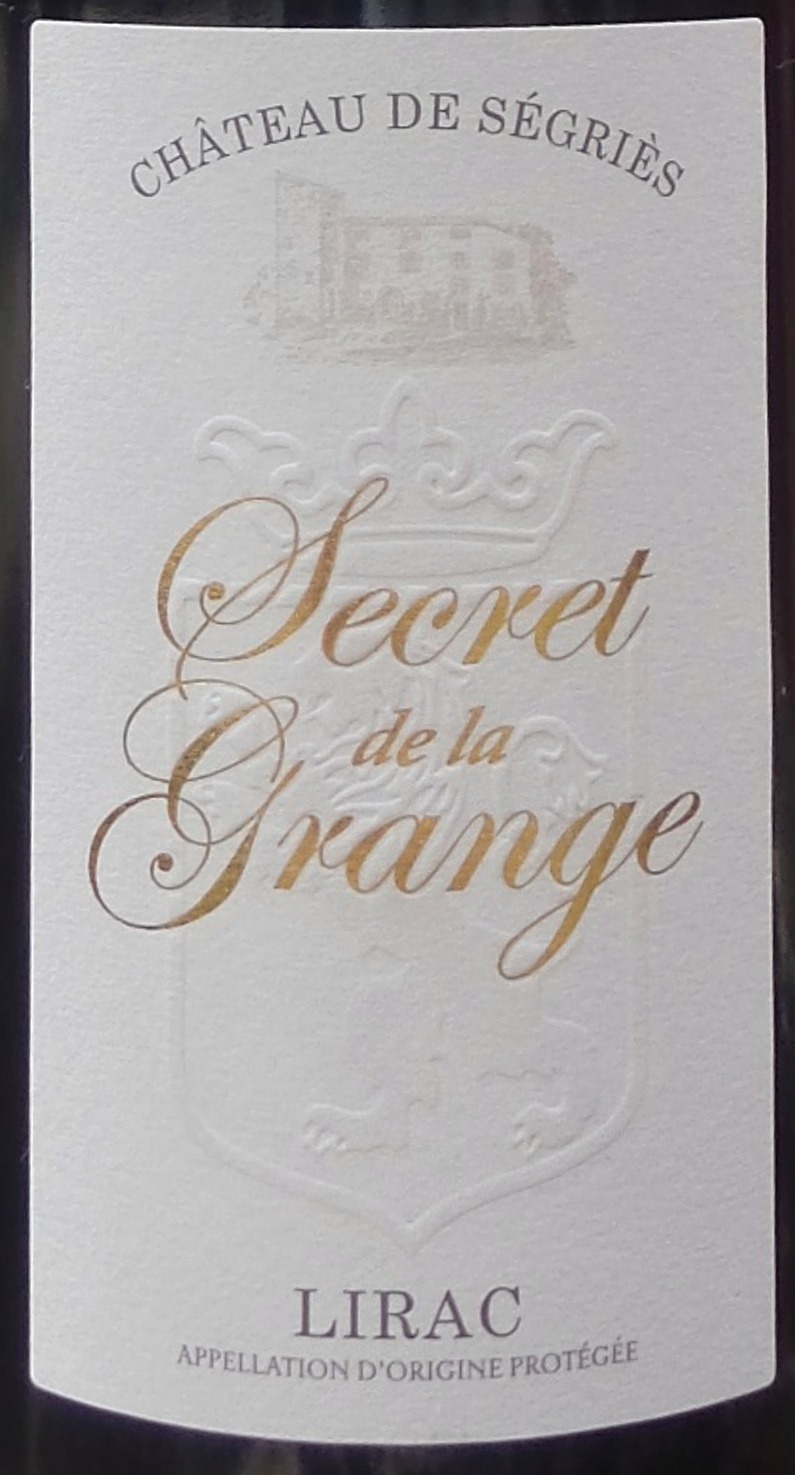
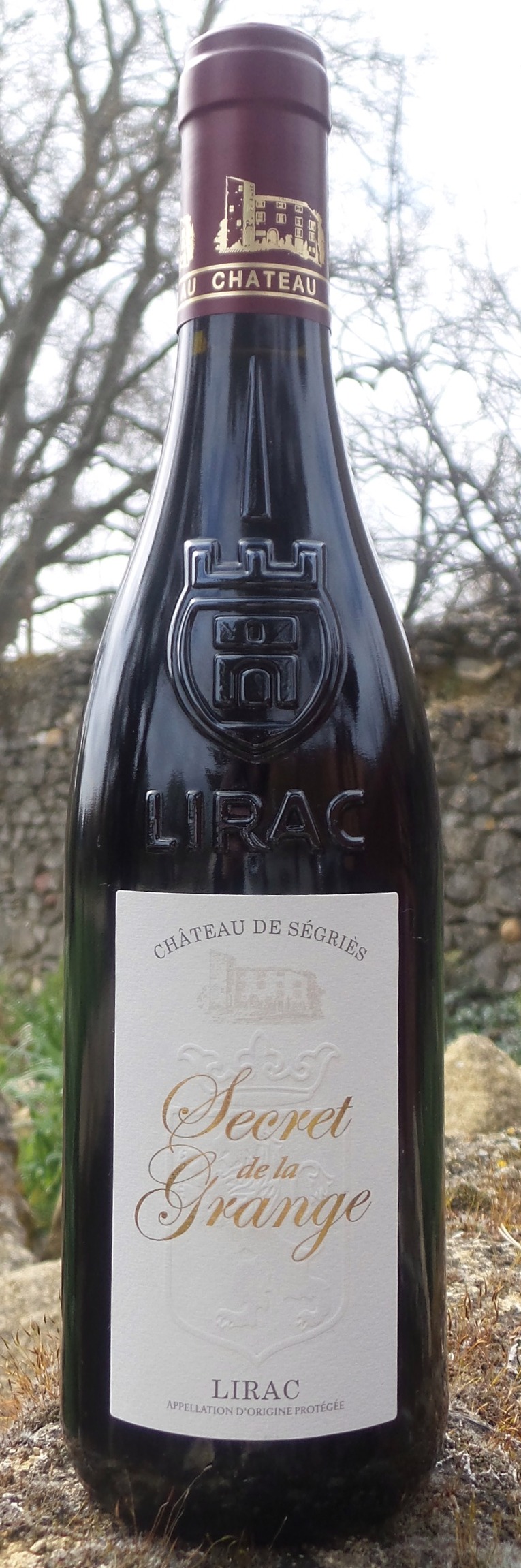
Segries Secret Grange Lirac Rouge is made from 50% Grenache and 50% Syrah.
This is a new wine for Chateau de Segries. 2013 is the first vintage.
The wine is dark and inky.
The aromas are intense and complex. It has fruit flavors of course, Strawberry and Blackberry, but it also have some interesting spice components, garrigue, pepper and licorice.
The finish is long and very pleasant as the tannins are round and well integrated.
La Grange is the name of the parcel where the grapes are grown. The soil is Clay and Limestone.
The average age of the vines is 80 years old.
Classic vinification in temperature controlled tanks. The skin contact maceration lasted 30 days and was completed in cement tanks.
The wine went through MaloLactic fermentation and was bottled without filtration.La Grange is the name of the parcel where the grapes are grown. The soil is Clay and Limestone.
The average age of the vines is 80 years old.
Classic vinification in temperature controlled tanks. The skin contact maceration lasted 30 days and was completed in cement tanks.
The wine went through MaloLactic fermentation and was bottled without filtration.
The Chateau de Segries Estate
In 1994, Henri de Lanzac, cousin of Christophe Delorme from Domaine de la Mordoree, purchased the Domaine and began to improve the quality of the wine. "Segries" in provencal means "water spring". This family owned and operated winery is located in Lirac and produces some of the best values in my portfolio. They produce the following A.O.C. wines:
* Tavel Rose
* Cotes du Rhone Rouge
* Lirac Rouge
* Lirac Blanc
"An old Lirac estate with recent signs of revival under the new owners; the reds are medium weight, good to drink inside six years; charming Tavel." - Anthony Dias Blue's pocket guide to wine 2006
"A super value treasure trove in the southern Rhone, Segries is a large estate of 109 acres brought back to life over the last decade by Henri de Lanzac. The wines continue to go from strength to strength."- Wine Advocate (#178, Aug. 2008)
"Over the last fifteen years, this property has been transformed into one of the better value producers in the Cotes du Rhone. The old, oxidized, vegetal offerings have been replaced with classic examples of Provencal wines that are fresh and fruity with ripe tannins." - Wine Advocate (#190, Aug. 2010)
"The new releases from proprietor Henri de Lanzac are all impressive." - Wine Advocate (#195, June 2011)
"This has been a reliable producer of terrific values in the Cotes du Rhone (and for their Tavel rose) for a number of years, and they have once again done an admirable job." - Wine Advocate (#201, June 2012)
The Chateau de Segries Vineyard
The Domaine Chateau de Segries owns 44.5 hectares of vineyard land (108.91 acres), all in old vines, 30 hectares in one piece alone:
- 7 ha (17.30 acres) in Tavel, on limestone, pebble stone, sand and clay based soils.
- 30 ha (74.10 acres) in Lirac, on clay and limestone based soils.
- 4 ha (9.88 acres) in Cotes du Rhone.
- 3.5 other ha (8.65 acres) in Cotes du Rhone for the "Clos de l'Hermitage"
Many of the vines date back to 1925, and were planted by the former owner Count de
Mordoree Chateauneuf du Pape Rouge Dame Voyageuse is made from Grenache 90 % Mourvèdre 4% Syrah 4 % Counoise 1% Vaccarese 1% .
Mordoree Chateauneuf du Pape Rouge Dame Voyageuse is a more approachable version of the La Reine des Bois. It is meant to be enjoyable early compared to her sister Cuvée which is made for the long run.
Color : deep ruby red, opaque.
Aromas : red fruits, changing to touches of leather, black truffles and coffee.
Palate : fat, concentrated and full flavored with a very long liquoriced and fruity finish.
Ageing potential : 6 to 10 years.
Surface : 5 Ha.
Yield : 30 Hl./Ha.
Vineyard age: 60 Years
Terroir : Clay-siliceous on pebble stones
Harvest : by hand
Vinification : 100 % destemmed, long 30 days maceration with a maximum of 34° C temperature.
Estate bottled
Review:
"Moving to the 2019s from bottle, the Grenache-heavy 2019 Châteauneuf Du Pape La Dame Voyageuse offers a beautiful array of both red and black fruits as well as classic Provençal notes of lavender, peppery garrigue, and flowers. Rich, medium to full-bodied, and beautifully textured on the palate, this is another terrific vintage for this cuvée, which remains an incredible value in the market today. It will drink nicely for 10-12 years if stored correctly."
- Jeb Dunnuck (November 2021), 95 pts
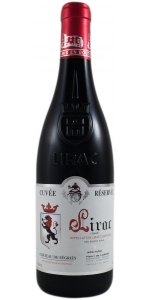
Segries Lirac Rouge Cuvee Reservee is made from 50% Grenache, 30% Syrah, 10% Cinsault, 10% Mourvèdre
Dark garnet in color. Expressive Red fruits and spicy. Sweet tannins and good length
Ageing up to 10 years
Vineyards Clay and limestone Area: 24 hectares Age of Vines: 80 years Yeild: 24 Hl/Ha Production: 570 Hl Harvest and VInification Harvest by hand and 100% destemmed. Maceration for 21 days in cement tank - Fermentation with controlled temperature at Château de Ségriès.
Pairs well with Stews, Grilled meats, Game, Various cheeses
Segries Lirac Rouge Cuvee Reservee is made from 50% Grenache, 30% Syrah, 10% Cinsault, 10% Mourvèdre
Dark garnet in color. Expressive Red fruits and spicy. Sweet tannins and good length
Ageing up to 10 years
Vineyards Clay and limestone Area: 24 hectares Age of Vines: 80 years Yeild: 24 Hl/Ha Production: 570 Hl Harvest and VInification Harvest by hand and 100% destemmed. Maceration for 21 days in cement tank - Fermentation with controlled temperature at Château de Ségriès.
Pairs well with Stews, Grilled meats, Game, Various cheeses
Segries Lirac Rouge Cuvee Reservee is made from 50% Grenache, 30% Syrah, 10% Cinsault, 10% Mourvèdre
Dark garnet in color. Expressive Red fruits and spicy. Sweet tannins and good length
Ageing up to 10 years
Vineyards Clay and limestone Area: 24 hectares Age of Vines: 80 years Yeild: 24 Hl/Ha Production: 570 Hl Harvest and VInification Harvest by hand and 100% destemmed. Maceration for 21 days in cement tank - Fermentation with controlled temperature at Château de Ségriès.
Pairs well with Stews, Grilled meats, Game, Various cheeses
Review:
The 2022 Lirac Cuvée Réservée is also brilliant, with a juicy, layered, incredibly Provençal profile that has so much to love. Ripe black cherries, leather, peppery garrigue, and spice notes all give way to a medium to full-bodied, round, lush Southern Rhône that's balanced and has beautiful fruit as well as outstanding length. Based on 50% Grenache, 30% Syrah, and the balance Cinsault and Mourvèdre, destemmed and brought up in concrete, drink bottles over the coming 5-7 years.
-Jeb Dunnuck 93 Points
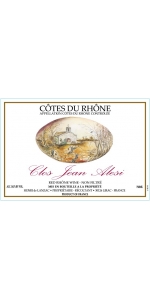
Segries Clos Jean Alesi Cotes du Rhone Rouge is made from 1/3 each of Grenache, Syrah and Mourvèdre.
This wine was originally called Segries Lanzac Clos Hermitage Cotes du Rhone Rouge
This 3.5 hectare vineyard, located in the famous “Quartier de la Chartreuse de Villeneuve-les-Avignon”, has been owned by the Formula 1 race car driver Jean Alesi since 1995. It is managed by Château de Ségriès.
This wine is a blend of 33% Grenache, 33% Syrah, and 33% Mourvedre sourced from 40-year-old vines. It was fermented in concrete vats then aged for nine months in 5% new oak barrels. The wine is a very grapey color in the glass. There is a light nose of tightly packed black fruit, dried herbs, pepper, and licorice. In the mouth there are tight-grained blue fruit, fine, powerful tannins, and a little strawberry flavor breaking loose. With air the wine reveals pencil and pepper flavors along with the structure for aging.
Yield: 40 hl/ha
Age of the vines: 40 years.
Vinification: 21 days skin maceration in temperature controlled concrete vats
Ageing: 9 months oak aging -5% new French oak from Seguin Moreau cooper and 95% of 1 year old barrels.
Delicious with roast meat, grilled vegetables, strong cheese and chocolate desserts.
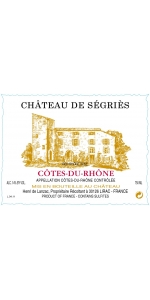
Segries Cotes du Rhone Rouge is made from 50% Grenache, 30% Syrah, 10% Cinsault, 10% Carignan
The wine is ripe, rich and round, with black raspberry, white pepper and spice flavors. True Cotes du Rhone in a Bistro style.
Segries Cotes du Rhone Rouge is made from 50% Grenache, 30% Syrah, 10% Cinsault, 10% Carignan
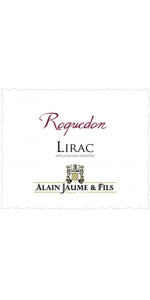
Alain Jaume Lirac Rouge Roquedon is made from 60% Grenache, 20% Syrah, 10% Mourvedre, 10% Carignan.
A blend of Grenache, Syrah, Mourvèdre, and Carignan grown on clay and sandy soils, mostly on terraces covered by pebble stones. Lirac is located in front of Chateauneuf du Pape, on the opposite side of the Rhone River.
Lirac Roquedon reveals an intense red garnet color and a nose dominated by a bouquet of red and black ripe fruits (kirsch and wild Blackberry). The mouth is full, with flavors of blackcurrant, liquor and spice. Tannins are both harmonious and elegant. The palate finishes with hints of liquorice and vanilla, which brings length and complexity to the wine.
Traditional wine-making in stainless still vats. Crushed and destemmed grapes. Fermentation temperature : 30°C. 18 days of vatting with pigeages. Ageing mainly in vats and about 10% in oak barrels. Bottling 15 months after the harvest.

All older vintage wines have been purchased from a single collectors cellar. Pictures can be requested before shipment.
Argot Sauvignon Blanc Sonoma County is made out of 100 percent Sauvignon Blanc.
Massive aromatics, and a bold, intensely, full-flavored palate define the personality of this wine. Juicy stone fruits, laser-focused lemon Jolly Rancher and a full-blown tropical fruit character explode on the palate. This bright and inviting wine is perfectly suited to sunny afternoons or paired with classic summer fare.
This bright and inviting wine is perfectly suited to sunny afternoons, or paired with classic summer fare.