
" We don't sell the wine without touching the vine "
| Country: | Australia |
| Region: | Barossa Valley |
| Winery: | Thorn Clarke - William Randell |
| Grape Type: | Cabernet Sauvignon |
| Vintage: | 2019 |
| Bottle Size: | 750 ml |

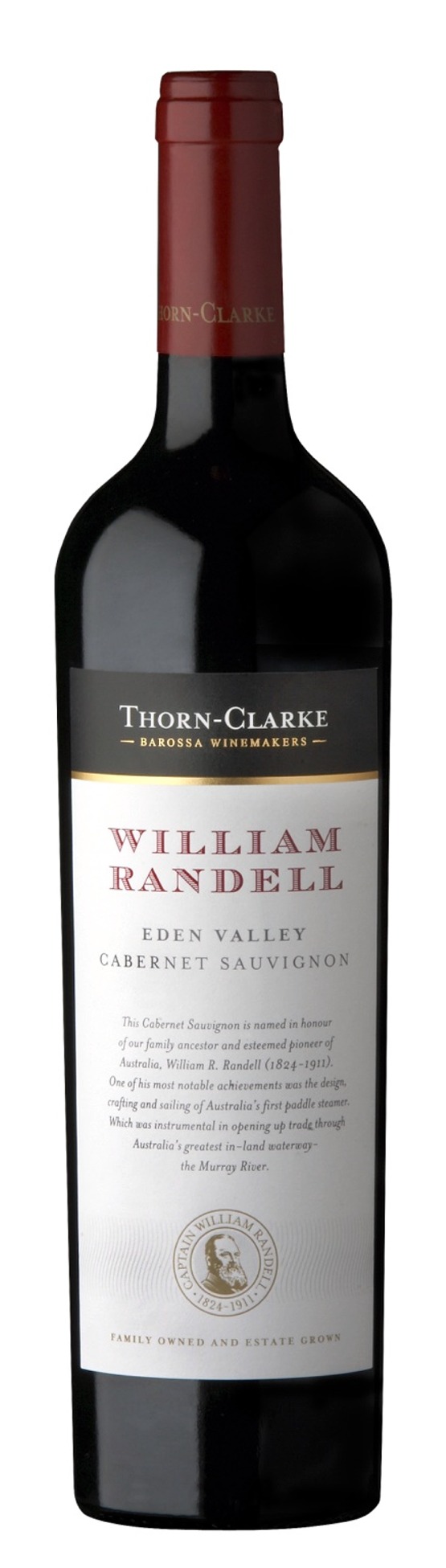
Thorn Clarke William Randell Cabernet is made from 100 percent Cabernet
The William Randell range of wines were created in honor of the family ancestor - the esteemed pioneer William Richard Randell (1824 - 1911). The wines are sourced solely from grapes grown on the family estate vineyards. Wines in this range are only made in exceptional vintages.
The deep red color with purple hues of this wine draw you in. The nose is brimming with notes of fresh blackcurrant intertwined with complexing savory spice. The palate has an integrated French oak influence with notes of toasty cedar accompanied by further notes of briary fruits. A wine with great depth and drive.
Review:
-The Real Review (Melissa Moore) 95 Points — “Top Value”

Thorn Clarke William Randell Shiraz is made from 100 percent Shiraz
The William Randell range of wines were created in honor of our family ancestor - the esteemed pioneer William Richard Randell (1824 - 1911). The wines are sourced solely from grapes grown on our estate vineyards. Wines in this range are only made in exceptional vintages.
Deep red with inky purple hues. This classic Barossa style shows rich blackberry, licorice, spice plum and smoky oak on the nose. The palate is dense with ripe mulberry and berry compote and generous supporting oak. The tannins are savory and long with spicy refined finish
Following harvest the fruit was crushed into a variety of small fermenters (4 to 6T in capacity). Fermentation was carried out at a warm temperature (25-28 degrees ). The ferments were manually pumped over to provide good control of tannin extraction. Each fermenter was treated as a separate parcel of wine and once dry was filled to American oak (40% new). Following malolactic fermentation the wines were racked and returned to the same oak. Parcels remained in barrel for an average of 18 months prior to blending. Only the best barrels from the multiple parcels were used to make the final blend. Once blended the wine was prepared for bottling.
Review:
-Campbell Mattinson 94 Points

Thorn Clarke Terra Barossa Cabernet Sauvignon is made from 100% Cabernet Sauvignon
The range is named is named in honor of the rich soils in the region which are a major factor in the Barossa’s reputation as one of the great wine regions of the world.
The wine shows a bright red with a purple hue on release. Lifted blackcurrant balances the fresh herb characters on the nose. A hint of eucalyptus is evident. The palate has bright currant characters throughout. Spice and chocolate add to the complexity of the wine. The tannins are ripe and grainy and give the wine good structure.
-150x300.jpg "Thorn Clarke Single Vineyard Mataro 2019")
Thorn Clarke Single Vineyard Mataro is made from 100 percent Mataro.
The Single Vineyard Selection range focuses on single site, small batch wines, highlighting the true characteristics of each individual variety. Each block is hand selected by our winemaker and viticulturist each year, choosing the wines that best reflect the strengths of each individual vintage.
Striking with its inky red color and purple hues, a hallmark of a classic vintage. On the nose, briary black fruits are in abundance. Notes of Chinese five spice and currants also shine through. On the palate, blackberries and winter spice are evident. The generous and silky tannins in this wine support a long and complex finish.
The grapes were destemmed and fermented in 4 tonne open fermenters for a period of 10 days. The wine was pressed off into 10 year old oak where it was matured for a duration of 18 months before being racked in preparation for bottling. This wine has no filtration.

Thorn Clarke Shotfire Quartage is made from 58% Cabernet Sauvignon, 16% Cabernet Franc, 16% Merlot, 10% Petit Verdot.
.
The fruit was harvested at night. Fermentation was carried out in a variety of small capacity fermenters. After pressing the parcels were filled to French oak (12 months) for maturation. The wine was racked after six months and the parcels were blended to form the final wine.
Shotfire Quartage is based on the five traditional red varieties found in the Bordeaux region of France (Cabernet Sauvignon, Merlot, Cabernet Franc, Petit Verdot and Malbec). The Thorn-Clarke winemakers use at least four of the varieties to create the blend each year (occasionally, they can get over excited and use all five). The blend is a reminder to not only look to the future but also to keep an eye on the past and tradition.
Much like the previous vintage, the 2020 harvest has produced wines of immense quality but with very low quantities. Another dry winter and mild weather during the ripening period lead to great varietal flavours and excellent tannin structure. Upon harvest the bunches were few and far between and the berries themselves small. This led to fruit with intense flavor and color along with great power and balance.
This generous blend boasts a rich deep red-purple color. Aromas of blackberries, satsuma plum and anise fill the glass. On the palate, plush tannins are accompanied by rich notes of cassis and blackcurrant. Together they produce a wine with lavish density, complexity and length. A wine that can be enjoyed now or laid down to age for many years.
The Shotfire range honors a family pioneer who worked the Barossa goldfields in the late 1800's. He had the hazardous job of being a 'Shotfirer'; one who handled the explosives to be used in finding that rich vein of gold.
Review:
-James Suckling 91 Points

Thorn Clarke Milton Park Chardonnay grapes were crushed, destemmed and then pressed using a membrane press. Pressings were not used. Fermented using French Yeast at 12-15 degrees Celcius. The ferment was kept slow and cool to retain all the natural flavors of the grape. The wine was then racked and filtered. Bottling took place soon afterwards so the wine was a true expression of the grape and the terroir from which it was made.
The color is a rich vibrant green. The nose shows lifted clean, sweet fruit of apricot and peach. The palate is medium to full bodied and exhibits predominantly peach and nectarine flavors, with cloves and cardamom evident from the use of a small amount of French oak. The wine finishes full and long with a nice balance of sweet fruit and creaminess.
Thorn Clarke William Randell Cabernet is made from 100 percent Cabernet
The William Randell range of wines were created in honor of the family ancestor - the esteemed pioneer William Richard Randell (1824 - 1911). The wines are sourced solely from grapes grown on the family estate vineyards. Wines in this range are only made in exceptional vintages.
The deep red color with purple hues of this wine draw you in. The nose is brimming with notes of fresh blackcurrant intertwined with complexing savory spice. The palate has an integrated French oak influence with notes of toasty cedar accompanied by further notes of briary fruits. A wine with great depth and drive.
Review:
-Wine & Spirits Magazine 94 Points
-Antonio Galloni 93 Points
The Thorn Clarke William Randell Estate
The winery owners are David and Cheryl Clarke (born Thorn) and their son Sam is the manager of the winery. The Thorn-Clarke family has a long history in the Barossa - six generations of involvement in the region's world famous wine industry. The Thorns have been grape growers in the Barossa since the 1870's. David Clarke's passion for the wine industry lead to the planting of the Kabininge vineyard outside of Tanunda in 1987, which represents the start of a deeper involvement by the family in the Barossa wine industry.
The Thorn Clarke William Randell Vineyards
William Randell is sourced from Thorn-Clarke's 33 hectare Kabininge vineyard (81.51 acres) is true Barossa Valley floor terroir. This is the oldest of their 100% family-owned vineyards and is situated in the heart of one of the great wine regions of the world - the Barossa Valley. Kabininge is planted predominantly to Shiraz - the variety for which the Barossa Valley is best known - supported by smaller plantings of Cabernet Sauvignon and Cabernet Franc. At just 270 metres above sea level and located on dark grey to dark brown carbonaceous soils (known as Bay of Biscay soil) red winegrapes ripen easily here. By monitoring soil moisture levels to limit yield and berry size, we can achieve exceptional red wines with superb varietal flavor and concentration.

Deep red with a slight purple hue on release. The wine has a rich mix of dark chocolate infused with coffee bean and black liquorice, then scents of tar, aniseed, raw (pure) soy and black olive on the nose. The palate is expansive, and yet balanced and finessed. An amalgam of dark berried flavors and textural sensations. The 100% new oak is completely absorbed, meshed with ripe tannins, completing a palate of impressive length and youthfulness.
Parcels of fruit for this wine were identified in the vineyard by the winemakers. Daily fruit inspection led to the fruit being harvested at optimum flavor ripeness. The fruit was harvested at night and quickly transported to the winery. The fruit was destemmed to 6T open fermenters for fermentation. A Shiraz specific yeast was selected to ferment the wine and fermentation was carried out at a maximum of 28°C. The fermenter was manually pumped over twice daily in the first half of fermentation to give the winemakers control of color, flavor and tannin extraction. Pump over regimes were adjusted toward the end of fermentation to suit the tannin and flavor extraction of the wine. The cap was completely broken up on each pump over. The wine remained in fermenters for 6-8 days (dependent on parcel) before being pressed, inoculated with malolactic bacteria and filled to American oak (100% new barrels). The wine was racked post malolactic fermentation and returned to the same barrels. The wine was topped every month and after six months racked and returned to the same barrels again. Prior to bottling the parcels were emptied from oak and blended. Minimal fining and filtration was carried out prior to bottling.
Review:
-Jeb Dunnuck 96 Points
-Wine Spectator 94 Points

Burgo Viejo Rioja Gran Reserva is made from 100 percent Tempranillo. 30 year old vines.
Burgo Viejo Gran Reserva shows a deep red ruby color and offers powerful aromas of blackberry jam, spice, leather, chocolate with toasty nuances. Smooth yet full-bodied with firm tannins and a long finish.
Review:
-Antonio Galloni's Vinous 92 Points
-Wine & Spirits 91 Points
-Antonio Galloni's Vinous 91 Points

I feel this wine expresses the greatness of California and its hidden pockets where Cabernet can excel. The cold Pacific Ocean running the entire length of the state presents maritime influences – and with each small distance eastward the climate warms. Stony soils, south facing slopes and moderately warm conditions are the keys to producing dark, rich and good tasting Cabernet.
A small release from Caymus Vineyards, this wine is a California-appellation Cabernet Sauvignon – supple, dark and rich, bearing the signature hallmarks of Caymus. It is sourced from sites throughout the state which feature climatic conditions, soils and topography that are ideally suited to Cabernet. This project stems from excitement over California's diverse vineyard land, often in lesser-known areas, with the potential to produce exceptional Cabernet.

Bella Union is the Napa Valley Cabernet project of the team behind Far Niente and Nickel & Nickel, founded in 2012 and devoted to a single pursuit: the art of blending Cabernet Sauvignon from across the valley. The estate sits on a 25-acre vineyard on Bella Oaks Lane, in the heart of Rutherford.
The 2022 is a blend of 94% Cabernet Sauvignon with small amounts of Merlot, Cabernet Franc, Malbec and Petit Verdot, aged 17 months in French oak (50% new). It opens on blackberry, cassis, mocha, cedar and sweet spice, then moves full-bodied across firm yet supple, velvet-lined tannins, with a deep, polished and persistent finish — a classic Rutherford Cabernet that drinks beautifully now with a decant and will hold for years in the cellar.
Review:
With small percentages Merlot, Cab Franc, Malbec, and Petit Verdot, this exquisitely aromatic and textural red begins with a perfume of crushed violets and black cherry. Concentrated flavors of blackberry liqueur and vanilla sandalwood stream across chewy, velvet-lined tannins. Within its sculpted frame is sweet earth, dark chocolate, and roasted coffee.
Tasting Panel 95 Points
Aromas of blackberries, cassis, mocha, cedar and sweet spices. The palate is full-bodied with firm yet supple tannins and balanced acidity, giving depth and freshness to the ripe fruit. Classic. Drink or hold.
James Suckling 94 Points

On the palate, it reveals a fresh attack followed by an ample, structured, long-lasting finish. The wine unfurls in successive stages and ends with top-quality tannins produced by whole cluster fermentation. It features aromas and flavors of smoked ham, violet, graphite, graphite, and licorice.
Syrah, with its deep flavors and firm tannins, is a natural match for grilled or smoked meat and dishes featuring herbs, roasted mushrooms, and onions. Seared venison or beef with black pepper and thyme or a Moroccan tagine of pigeon or chicken are complimented by the spicy characteristic of Syrah.
Review:
This refined, graceful version is winey, offering steeped currant flecked with bacon fat, dried leaves, white pepper and mocha. Streaming and fluid in feel, with salty, mineral intensity building toward the long, elegant finish, which shows polished tannins. Though drinking beautifully now, this will benefit from time in bottle. Best from 2026 through 2038.
-Wine Spectator 94 Points



