
" We don't sell the wine without touching the vine "
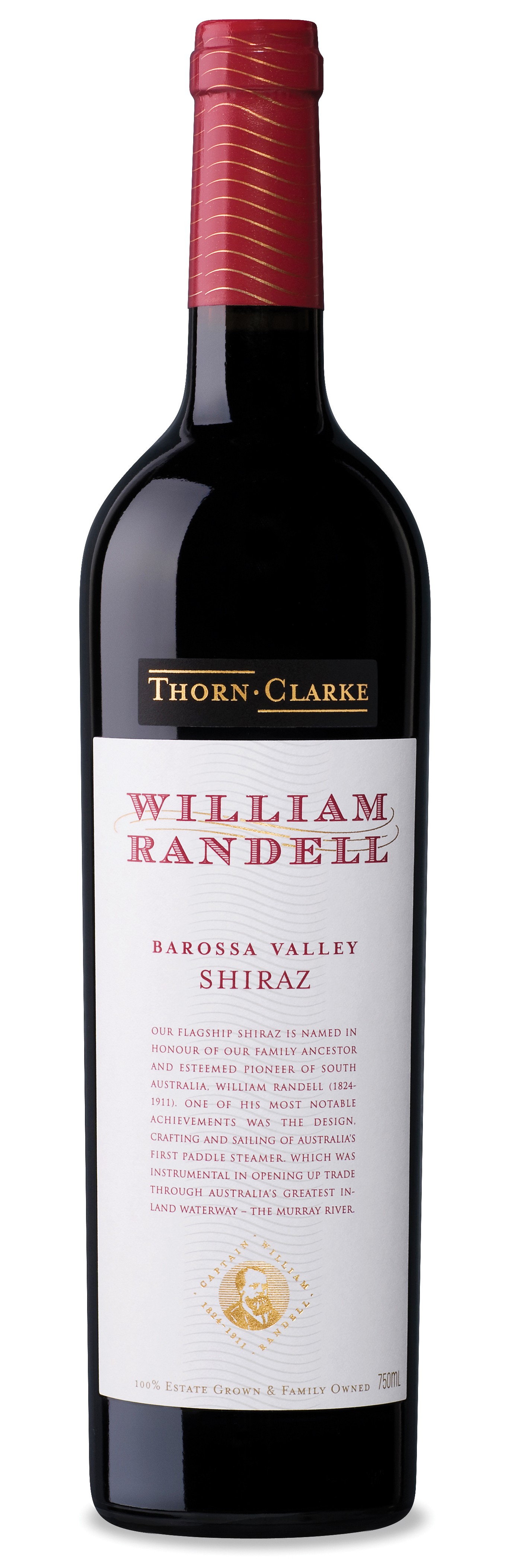
| Country: | Australia |
| Region: | Barossa Valley |
| Winery: | Thorn Clarke - William Randell |
| Grape Type: | Shiraz |
| Vintage: | 2019 |
| Bottle Size: | 750 ml |

Thorn Clarke William Randell Shiraz is made from 100 percent Shiraz
The William Randell range of wines were created in honor of our family ancestor - the esteemed pioneer William Richard Randell (1824 - 1911). The wines are sourced solely from grapes grown on our estate vineyards. Wines in this range are only made in exceptional vintages.
Deep red with inky purple hues. This classic Barossa style shows rich blackberry, licorice, spice plum and smoky oak on the nose. The palate is dense with ripe mulberry and berry compote and generous supporting oak. The tannins are savory and long with spicy refined finish
Following harvest the fruit was crushed into a variety of small fermenters (4 to 6T in capacity). Fermentation was carried out at a warm temperature (25-28 degrees ). The ferments were manually pumped over to provide good control of tannin extraction. Each fermenter was treated as a separate parcel of wine and once dry was filled to American oak (40% new). Following malolactic fermentation the wines were racked and returned to the same oak. Parcels remained in barrel for an average of 18 months prior to blending. Only the best barrels from the multiple parcels were used to make the final blend. Once blended the wine was prepared for bottling.
Review:
-Campbell Mattinson 94 Points

Thorn Clarke William Randell Cabernet is made from 100 percent Cabernet
The William Randell range of wines were created in honor of the family ancestor - the esteemed pioneer William Richard Randell (1824 - 1911). The wines are sourced solely from grapes grown on the family estate vineyards. Wines in this range are only made in exceptional vintages.
The deep red color with purple hues of this wine draw you in. The nose is brimming with notes of fresh blackcurrant intertwined with complexing savory spice. The palate has an integrated French oak influence with notes of toasty cedar accompanied by further notes of briary fruits. A wine with great depth and drive.
Review:
-The Real Review (Melissa Moore) 95 Points — “Top Value”

Thorn Clarke Milton Park Shiraz is aged for 12 months in American oak barrels.
Deep red color. The wine is deep and rich smelling with dark fruits, plums and spice with some good oak. There is very rich fruit on the palate with plums, blackberry and sweet spice from the oak. The palate is vibrant and young with a flavorsome viscous mouthfeel which will develop complexity with time. There are some slightly chewy tannins which will soften with time and there is great length of fruit flavor.
Review:
-Wine Enthusiast 89 Points
Thorn Clarke Milton Park Shiraz is aged for 12 months in American oak barrels.
Deep red color. The wine is deep and rich smelling with dark fruits, plums and spice with some good oak. There is very rich fruit on the palate with plums, blackberry and sweet spice from the oak. The palate is vibrant and young with a flavorsome viscous mouthfeel which will develop complexity with time. There are some slightly chewy tannins which will soften with time and there is great length of fruit flavor.

Thorn Clarke Shotfire Shiraz is made from 100% Shiraz.
Striking deep red-purple in color. A rich, voluptuous wine with aromas of blackcurrant and mulberries accompanied by notes of smokey oak and hints of cloves. The palate is filled with dark fruits and chocolate backed up by taut tannins and lingering oak.
Story:
When the Clarke forebearers discovered gold in 1870 at the Lady Alice mine in the Barossa goldfields, so began a family dynasty intrigued by geology. A fine legacy that is reflected today in the terroir of our vineyards. The Shotfire range immortalizes the Shotfirer's hazardous job of setting and lighting the charges in the mines.
Fran shares his story on how he discovered Thorn-Clarke:
"It was October 2001 and I was searching for and sourcing for Australian wines, as it was clear that Australia was going to become the "next big thing." After tasting about 100 assorted wines, I decided I liked the style of Barossa, Shiraz best - chocolate, cherries, mint and eucalyptus - so I started focusing on Barossa growers (years later, Barossa Shiraz would develop its reputation as the Icon Shiraz for Australia).
Late on a Thursday afternoon, the carrier delivered a beat-up box of 12 bottles from Australia, 10 of which were leaking. The box was from a guy named Steve Machin, who had just left Hardy's and was beginning work with the Clarke family on setting up a possible new brand. The samples were sticky and messy, but I popped the corks anyway ..... and I was glad that I did. The wine inside tasted like Christmas - mint, eucalyptus, camphor, and evergreen aromas. Great acidity, color, flavor and length of finish - very tasty. These samples were so good and so exciting, especially compared to what I had tasted prior, that I immediately called the number on the card. I didn't realize that it was a Perth number (Western Australia) and it was actually 3:00 in the morning. It turned out I was calling the residence of David and Cheryl Clarke, where a sleepy Cheryl answered the phone. I told her, you don't know who I am, but we are going to be doing business together very soon, and lots of it! After a few months of talking, faxing (yes, faxing) and sorting out the details, I began importing their wines.
That super-star wine from the busted box of samples is the wine we know today as Shotfire Shiraz. It was originally called Stone Jar, but fortunately we came up with a better name. Many years and vintages later, I'm still glad to be importing Shotfire Shiraz and other Thorn-Clarke selections .... and I'm still glad that Cheryl Clarke woke up for that phone call."
Review:
-James Suckling 92 Points
-Angus Hughson (Vinous) 91 Points
Thorn Clarke William Randell Shiraz is made from 100 percent Shiraz
The William Randell range of wines were created in honor of our family ancestor - the esteemed pioneer William Richard Randell (1824 - 1911). The wines are sourced solely from grapes grown on our estate vineyards. Wines in this range are only made in exceptional vintages.
Deep red with inky purple hues. This classic Barossa style shows rich blackberry, licorice, spice plum and smoky oak on the nose. The palate is dense with ripe mulberry and berry compote and generous supporting oak. The tannins are savory and long with spicy refined finish
Following harvest the fruit was crushed into a variety of small fermenters (4 to 6T in capacity). Fermentation was carried out at a warm temperature (25-28 degrees ). The ferments were manually pumped over to provide good control of tannin extraction. Each fermenter was treated as a separate parcel of wine and once dry was filled to American oak (40% new). Following malolactic fermentation the wines were racked and returned to the same oak. Parcels remained in barrel for an average of 18 months prior to blending. Only the best barrels from the multiple parcels were used to make the final blend. Once blended the wine was prepared for bottling.
Review:
-Antonio Galloni's Vinous 92 Points
The Thorn Clarke William Randell Estate
The winery owners are David and Cheryl Clarke (born Thorn) and their son Sam is the manager of the winery. The Thorn-Clarke family has a long history in the Barossa - six generations of involvement in the region's world famous wine industry. The Thorns have been grape growers in the Barossa since the 1870's. David Clarke's passion for the wine industry lead to the planting of the Kabininge vineyard outside of Tanunda in 1987, which represents the start of a deeper involvement by the family in the Barossa wine industry.
The Thorn Clarke William Randell Vineyards
William Randell is sourced from Thorn-Clarke's 33 hectare Kabininge vineyard (81.51 acres) is true Barossa Valley floor terroir. This is the oldest of their 100% family-owned vineyards and is situated in the heart of one of the great wine regions of the world - the Barossa Valley. Kabininge is planted predominantly to Shiraz - the variety for which the Barossa Valley is best known - supported by smaller plantings of Cabernet Sauvignon and Cabernet Franc. At just 270 metres above sea level and located on dark grey to dark brown carbonaceous soils (known as Bay of Biscay soil) red winegrapes ripen easily here. By monitoring soil moisture levels to limit yield and berry size, we can achieve exceptional red wines with superb varietal flavor and concentration.

Deep red with a slight purple hue on release. The wine has a rich mix of dark chocolate infused with coffee bean and black liquorice, then scents of tar, aniseed, raw (pure) soy and black olive on the nose. The palate is expansive, and yet balanced and finessed. An amalgam of dark berried flavors and textural sensations. The 100% new oak is completely absorbed, meshed with ripe tannins, completing a palate of impressive length and youthfulness.
Parcels of fruit for this wine were identified in the vineyard by the winemakers. Daily fruit inspection led to the fruit being harvested at optimum flavor ripeness. The fruit was harvested at night and quickly transported to the winery. The fruit was destemmed to 6T open fermenters for fermentation. A Shiraz specific yeast was selected to ferment the wine and fermentation was carried out at a maximum of 28°C. The fermenter was manually pumped over twice daily in the first half of fermentation to give the winemakers control of color, flavor and tannin extraction. Pump over regimes were adjusted toward the end of fermentation to suit the tannin and flavor extraction of the wine. The cap was completely broken up on each pump over. The wine remained in fermenters for 6-8 days (dependent on parcel) before being pressed, inoculated with malolactic bacteria and filled to American oak (100% new barrels). The wine was racked post malolactic fermentation and returned to the same barrels. The wine was topped every month and after six months racked and returned to the same barrels again. Prior to bottling the parcels were emptied from oak and blended. Minimal fining and filtration was carried out prior to bottling.
Review:
-Jeb Dunnuck 96 Points
-Wine Spectator 94 Points

Burgo Viejo Rioja Gran Reserva is made from 100 percent Tempranillo. 30 year old vines.
Burgo Viejo Gran Reserva shows a deep red ruby color and offers powerful aromas of blackberry jam, spice, leather, chocolate with toasty nuances. Smooth yet full-bodied with firm tannins and a long finish.
Review:
-Antonio Galloni's Vinous 92 Points
-Wine & Spirits 91 Points
-Antonio Galloni's Vinous 91 Points

Begude Bandol Rouge La Brulade is made from 95% Mourvedre and 5% Grenache.
"La Brulade" is the name of a select slope located at an altitude of 400 meters overlooking the Mediterranean sea between La Baie d'Amour (the town of La Ciotat) in the South and La Sainte Baume in the North. This is one of the highest parcels in the Bandol appellation.
The wine is only produced in exceptional vintages. This carefully selected blend is made of 95% Mourvedre and 5% Grenache, aged in large French oak barrels for 24 months.
The wine shows a deep purple color. It is fresh and fruity on the nose with intense garrigue aromas. Structured, elegant and well-balanced on the palate with strong tannins. Licorice, ripe black fruits, garrigue flavors and some peppery freshness on the finish.
The 35-year old grapes are grown on clay and limestone soils and are farmed organically. Yield is very low - 15hl/ha. The grapes are harvested manually.
Winemaking: Double selection, destemming, crushing before skin contact fermentation. No filtration. Aging for 24 months in French oak casks (600L).
Grilled meat (lamb, beef, boar), Mediterranean cuisine, spicy dishes.
Review:
-Wine Enthusiast 95 Points

The Grade Cellar Kingly Project Cabernet Sauvignon is made from Napa Valley Cabernet Sauvignon.
"This is a noble expression of Cabernet Sauvignon" in full regalia, with decadent aromas and a mouthfeel viscous and sleek. "This vintage of the Kingly Project Cabernet Sauvignon enters the scene" -- Thomas Rivers Brown
Review:
-Vinous 96 Points

Dr. Leimbrock Mulheimer Sonnenlay Riesling Spatlese is made from 100 percent Riesling.
A classic in the residual sweet range that impresses with filigree fruit and mineral spiciness.
The circulating mountain "Mülheimer Sonnenlay" represents a geographical feature of the Moselle. Due to the strong meandering of the Moselle, the mountain was surrounded by the course of the river in geological development in such a way that a so-called circulating mountain arose from it. Located in the northeast-southwest direction, vines are cultivated on both sides of the mountain. The site name "Sonne" and "Lay" (Mosel Franconian for slate) combines the most important prerequisites for the cultivation of Riesling vines. Soils are skeletal-rich, weathered clay-ish shale enriched with sand, stones, and clay. At the beginning of the 1930s, the Mülheim winegrowers proudly pointed out that the local wine was served in the elegant restaurant of the airship "Graf Zeppelin" on its world trips and was obviously very popular.
Pair with spicy dishes, soft cheese, cakes.

Prager Smaragd Klaus Riesling is made from 100 percent Riesling.
Franz Prager, co-founder of the Vinea Wachau, had already earned a reputation for his wines when Toni Bodenstein married into the family. Bodenstein’s passion for biodiversity and old terraces, coupled with brilliant winemaking, places Prager in the highest echelon of Austrian producers.
Smaragd is a designation of ripeness for dry wines used exclusively by members of the Vinea Wachau. The wines must have minimum alcohol of 12.5%. The grapes are hand-harvested, typically in October and November, and are sent directly to press where they spontaneously ferment in stainless-steel tanks.
Klaus sits adjacent to Achleiten and is one of the Wachau’s most famous vineyards for Riesling. The vineyard is incredibly steep with a gradient of 77% at its steepest point. The southeast-facing terraced vineyard of dark migmatite-amphibolite and paragneiss produces a tightly wound and powerful wine. The parcel belonging to Toni Bodenstein was planted in 1952.
Tasting Notes:
Austrian Riesling is often defined by elevated levels of dry extract thanks to a lengthy ripening period and freshness due to dramatic temperature swings between day and night. “Klaus is not a charming Riesling,” says Toni Bodenstein with a wink. Klaus is Prager’s most assertive and robust Riesling.
Food Pairing
Riesling’s high acidity makes it one of the most versatile wines at the table. Riesling can be used to cut the fattiness of foods such as pork or sausages and can tame some saltiness. Conversely, it can highlight foods such as fish or vegetables in the same way a squeeze of lemon or a vinaigrette might.
Review:
What a stunning example of cool climate riesling. It’s full-bodied and deep, but so cool and delicate, packing in sleek layers of honeysuckle, apricots, lemons and grapefruit married to thyme and crushed rock. So long and seamless, with tension and focus that just keeps going. Sustainable. Try from 2025.
-James Suckling 98 Points

Pago de los Capellanes Doroteo is made from 100% Tempranillo.
An intense, very attractive cherry-red. It shows clean, powerful aromas of very ripe black and red forest fruits (blackberry, cherry and blackcurrant) with balsamic nuances of black liquorice, and spicy notes of clove and cinnamon from the extra-fine-grain French oak. The palate is vibrant and very balanced — fresh, silky, long, intense and lively, with highly polished tannins and a real sensation of depth, like a pleasant end to a long journey. A versatile wine that pairs with all types of meat, fish and even rice.
Review:
Cedar, dark fruit, plums and tobacco. The palate is vibrant with polished tannins, medium- to full-bodied, with balanced fruit and a defined vibrant structure from the cool 2021 vintage. Drink or hold.
- James Suckling 93 Points



