
" We don't sell the wine without touching the vine "
| Country: | Australia |
| Region: | Barossa Valley |
| Winery: | Torbreck |
| Grape Type: | Shiraz |
| Organic: | Yes |
| Vintage: | 2021 |
| Bottle Size: | 750 ml |

The Factor is predominantly from the Gomersal and Marananga sub-regions of the Barossa, providing dense texture and richness to the palate with subtle notes of olive tapenade, saddle leather and minerals. Ripe aromas of plum and wild blackberries, olive, pepper and spice are all supported by a dark core of espresso roast, ripe blackberries and saltbush. Brooding and densely packed, this lavish wine has ample generosity to cellar for many years, where it will slowly unravel.
Review:
Offers a dense, powerful mix of violet, bittersweet chocolate and sandalwood-infused morello cherries in syrup. Blueberry, blackberry and date-nut bread flavors are plump on a frame of polished and toothsome tannins. Clove and Saigon cinnamon notes linger, with a powerful crescendo on the finish. Shiraz.
Wine Spectator 96 Points
Robert Parker's Wine Advocate 96+ Points

Every now and then, in life and in wine, we are presented with unique opportunities to express ourselves and create something truly remarkable.
When rare opportunities arise, we need to capture, nurture and develop them so that their potential is fulfilled. So when Torbreck was given the opportunity to work with one of the most famous vineyards in the Barossa Valley, it became almost inevitable that the resulting wine would be truly remarkable.
In 2003, Torbreck growers and fourth generation descendants of the Seppelt family, Malcolm and Joylene Seppelt, asked our winemakers to create for them a small batch of Shiraz from their old Gnadenfrei vineyard in the sub-region of Marananga.
Planted in 1958, the five acre vineyard is traditionally dry grown and comes from an original Barossa clonal source. South facing, on the eastern side of a ridge separating the Seppeltsfield and Marananga appellations, these aged vines have been meticulously hand tended, traditionally farmed and pruned by a grower with a lifetime’s experience on Western Barossa soils of very dark, heavy clay loam over red friable clay. The resulting low yields of small, concentrated Shiraz berries make the vineyard the envy of all winemakers in the Barossa.
We looked longingly at the wine when it was returned to the Seppelts, knowing that it was the best we had ever made. In 2005 we convinced the Seppelts to sell Torbreck the fruit and The Laird was born. In 2013 Torbreck purchased the Gnadenfrei vineyard, securing The Laird’s reputation as one of the world’s great single vineyard Shiraz wines.
Torbreck is the name of a forest near Inverness, Scotland and you’ll find more than a passing nod to the Celts in our wine naming conventions. The Laird of the Estate in Scotland is the Lord of the Manor and master of all he surveys.
Review:
I poured the 2017 The Laird, set it aside and got about doing other jobs for 45 minutes or so, to give it some room to breathe. And it does breathe. It has its own pulse and beat and life, and it flexes and moves in the mouth. This is incredibly enveloping, with aromas reminiscent of campfire coals, charred eucalyptus, lamb fat, roasted beetroot, black tea and a prowling sort of countenance. In the mouth, the wine is bonded and cohesive and seamless, there are no gaps between anything, no space between fruit, oak and tannin; it all comes as one. While this is a singular wine, it is so big and concentrated that it needs no accompaniment other than some fresh air and a good mate. It's denser than osmium and is impenetrable at this stage.
-Erin Larkin (Robert Parker) 97 Points

Bright and glossy ruby red in color. On the nose it reveals aromas of small fresh berries and a trace of sour cherry, melded with hints of blackberries and black cherries, followed by a hint of vanilla. A fragrant wine with satisfying intensity. On the palate it is warm, smooth and a medium-bodied with finely-balanced tannins. Dry and sinewy yet fresh with a persistent, aromatic finish.
It naturally accompanies dishes that are typical of Tuscan cuisine with its bold, authentic flavors, such as pasta and risottos made with mushrooms or truffles, pork, grilled meats and medium-matured cheeses.
Review:
-James Suckling 91 Points

Chateau La Nerthe Chateauneuf-du-Pape Rouge is made from Grenache 39%, Mourvédre 33%, Syrah 25%, Cinsault 2%, Others 1%.
Château La Nerthe is one of the oldest estates in Châteauneuf-du-Pape and dates from 1560. Château La Nerthe has 227 acres of vineyards that surround the château and top the renowned La Crau plateau. The terroir is typical of the region. Vineyards run along a slope and grow in sandy-clay soils. The ground is covered by a layer of ‘galets’ – large, round, well-worn stones that were carried down from the Alps by glaciers during the last ice age. All the 13 permitted primary varietals are planted here. Grenache dominates 62% of the vineyards and the average vine age is over 40 years old. The grapes are hand harvested and sorted on tables. The grapes are then put into vats for almost 4 weeks with regular pump overs and punch downs. The must is tasted every day during fermentation to ensure the best extraction of the berry compounds. At the end, the wines are racked into oak vats for malolactic fermentation. The cuvée is then aged in large French oak casks and barrels for 12 months before blending. Bottling takes place 6 months later.
The dark, deep, inky color of the wine shows immediately, stemming from the concentration of the vintage. Nose of blackcurrants, black tea and dried flowers stands out. The mouth is rich, fruity and velvety with an incredibly layered tannic structure. The wine is balanced and pure with strong intense and incredibly long aging potential.
Review:
-Wine Enthusiast 93 Points
-Jeb Dunnuck 97 Points

Matthews Cabernet Sauvignon Columbia Valley is made from 76% Cabernet Sauvignon, 15%Merlot, 6% Cabernet Franc, 2% Petit Verdot, 1% Malbec.
The 2021 Columbia Valley Cabernet Sauvignon is deep ruby in the glass with purple hues. The rich bouquet of spiced black plum and cocoa nib are balanced with aromas of fresh earth and crushed flint. Intense and opulent flavors of ripe blackberry, cedar, mocha, and black currant coat the broad and balanced palate and the ripe tannin creates a perfect frame for the lush fruit expression. Cherry cordial and cola linger on the long, quenching finish.
Review:
-Decanter 94 Points
-Owen Bargreen 94 Points
-Wine Spectator 93 Points
-Vinous 93 Points
-Jeb Dunnuck 93 Points

Matthews Winery Columbia Valley Cuvee is made from 65% Merlot, 27% Cabernet Franc, 8% Malbec.
The 2021 Columbia Valley Cuvée sparkles with purple and deep garnet in the glass. Meadow flowers, fresh red berry, black plum, and cocoa powder aromas exhilarate leading to flavors of morello cherry liqueur, cardamom, mountain blackberry, and licorice snaps. This merlot-dominant blend is plush and weighty on the palate with powdery tannins. Dark stone fruits and dusty minerality coat the palate for a long, seamless finish.
Reviews:
A handsome blend, structured and polished, with expressive black cherry flavors accented by tarragon, mocha espresso and toasty spices that sail toward refined tannins. Merlot, Cabernet Franc and Malbec. Drink now through 2031.
-Wine Spectator 93 Points
This Merlot-based blend is a part of the Matthews tradition. Wildly fruity aromatics with whole berries, destemmed aromas driven by red berries, mountain blueberries, and a touch of green peppercorn and mocha dust. A streak of graphite underlines red berries, early season blackberries and a savoury herbal character that mingles complexity with fresh ripe fruits.
-Decanter 93 Points
"The 2021 Matthews ‘Red Mountain Cuvee’ Red Wine is mostly composed of Merlot and Cabernet Franc that comes from largely the Red Mountain Vineyard. The wine is absolutely singing in its full-throttle youth. Very deep and brooding with good concentration, the palate delivers tar and anise flavors with scorched earth and heady blackberry and black currant flavors. This is very true to the region and vintage."
-Owen Bargreen 95 Points
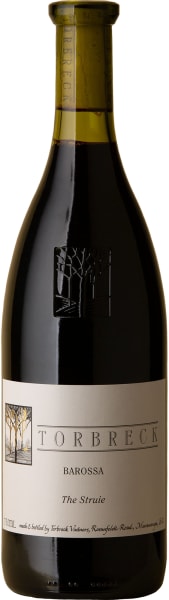
Torbreck The Struie is made from 100 percent Shiraz.
The Eden Valley, the cooler region to the east of the Barossa Valley, consists of river valleys and undulating hills covered with large gums, rocky outcrops and Aboriginal heritage sites.
It is a high-altitude area of between 400 and 500 metres, compared with the Barossa Valley’s elevation of 200 to 300 metres. This higher altitude and 1 to 2 weeks later ripening pattern results in more distinctive varietal flavour characteristics, lower pH and higher acidities. While the Eden Valley region is most associated with the white wine variety, Riesling, it also produces elegant, tautly structured Shiraz which is highly prized by winemakers.
This Torbreck Shiraz cuvée is a skilful blend of fruit from a 40 year old Eden Valley Shiraz vineyard and an 80 year old Barossa Shiraz vineyard – a marriage of elegance and intensity.
Torbreck is the name of a forest near Inverness, Scotland. You’ll find more than a passing nod to the Celts in our wine naming conventions including Struie, which is a 157 metre high mountain in the rugged highlands of north-east Scotland. The view from the Struie down across the Dornoch Firth is as inspiring as that of the Valley floor from Eden Valley.
Review:
The 2021 The Struie is 100% Shiraz from both the Barossa (57%) and the Eden Valley (43%), and it matured for 18 months in French oak (20% new). The proportion of Eden Valley inclusion is usually around 25%, but in 2019, it was down to 10% due to the very low yields. So, this 2021 Struie is blue-fruited on the nose, with blueberry, licorice, black tea, crushed rocks, summer raspberry, layers of campfire embers and clove. It might be that in many of the tasting notes from 2021, that the wines outperform previous vintages. This is because the cool season was long, so great ripeness was achieved, without the stress or impact of heat events and disease. It's a lovely, lovely year that has made wines with freshness and intensity. The tannins through the finish here are savory and fine and black.
-Wine Advocate 96 Points
Torbreck is on a quest to become one of the world’s great wine marques.
A critical part of this journey is remaining unwaveringly true to our core vision and not being diverted by trends and fashions.
SINCE 1994 TORBRECK HAS BEEN COMMITTED TO CREATING EXCEPTIONAL RHONE STYLE RED AND WHITE WINES REFLECTING THE VERY BEST VINEYARDS IN AUSTRALIA’S FAMOUS BAROSSA.
Provenance is everything to us. We believe the Barossa is the most exciting place to make wine in the world, with its gentle Mediterranean climate and 175 years of Silesian and English commitment to winemaking and grape-growing.
There is a European sense of tradition here that means vines planted in the 1840s – many of them Rhone varieties such as Shiraz, Grenache, Mourvédre – still thrive and bear fruit of unique concentration and flavour.
Torbreck pays tribute to these vineyards with minimal intervention, creating wines of richness, structure and length that age gracefully.
The multi-generational growers, whose descendants arrived here nearly two centuries ago, are the backbone of Torbreck’s winemaking aspirations. Without their knowledge of the seasons and the soil, we would not have such a precious resource of fruit to work with.
Torbreck has also been fortunate to have the opportunity to invest in the protection of some of the Barossa’s most precious vineyards, after accepting fruit from them over many years. The historic Hillside Vineyard at Lyndoch, The Laird Vineyard in the sub-region of Marananga and the Greenock Keller Vineyard owned by the Schultz family, are all now under the custodianship of Torbreck.
In 2008 this long-term commitment to the Barossa was cemented when we completed our winery and bottling line, enabling us to achieve maximum quality control through 100% estate vinification, maturation and packaging.
Our latest development was the 2017 expansion of our original settler’s cottage cellar door to become an international guest centre, where we are proud to welcome our many friends and collectors from the USA, Asia, Europe and Australia.
Torbreck has achieved a lot in less than three decades, but the journey is a long way from complete. In fact we remind ourselves every day that the best Barossa grapes are yet to be picked and the finest Torbreck wines are yet to be made.
We invite you to join us on this road to perfection.
-Pete Kight, Proprietor
-75x150.jpg "Roland Champion Champagne Non Vintage Brut Rose Carat NV(magnum)")
Roland Champion Champagne Non Vintage Brut Rose Carat (magnum) is made from 33% Chardonnay, 33% Pinot Meunier and 33% Pinot Noir
The Champagne rose shows an orange salmon color coming from the red wine base. The pinot meunier brings red fruit aromas of strawberry and raspberry with hints of spices. The palate is juicy and harmonious with good depth and minerality. A delicate balance between Chardonnay, Pinot Meunier and Pinot Noir.
It is a blend of 93% White juice (made from 33% Chardonnay, 33% Pinot Meunier and 33% Pinot Noir) and 7% Pinot Noir red wine. The grapes used to produce the Coteaux Champenois red wine are coming from their vineyards near the Village of Verneuil.
Review:
"Eye of the partridge color. With a bouquet that evokes leesy hints of red cherry and berry with a touch of stone fruit, this is a finely sculpted wine, beautifully balanced with rich flavors of cherry, shortbread,and a hint of honeyed apricot. A rosé Champagne that’s complex and dry with good palate depth and length. A blend of 20% Chardonnay, 40% Pinot Noir, and 40% Pinot Meunier; 7-85% of the juice is red wine (Pinot Noir) from 2013 vintage of Coteaux Champenois Rouge from the village of Verneuil. 3+ years on the lees." - I-WineReview (Champagne: Diversity and Change, January 2020), 92 pts
"A delicate, subtle Champagne, delivering aromatic notes of mulling spices and yeast that accent the flavors of kirsch, bread dough, candied lemon zest and rose petal. This is finely tuned, with lively acidity and a minerally finish. 330 cases made. –AN"
- Wine Spectator , 91 pts
"Bright orange. Aromas of blood orange, dried rose, allspice and minerals, with a subtle note of anise. Juicy and precise, with very good depth to its spicy red berry and citrus pith flavors. Finishes smooth and long, with excellent clarity and lingering spiciness."
- Stephen Tanzer's International Wine Cellar , 91 pts
"Champion is a small grower in Chouilly, in the Cotes des Blancs, an area known for fantastic chardonnay. This rosé — of which he makes only about 330 cases — includes 10 percent red wines (pinot noir, pinot meunier) to give it a pale, salmonlike color and a beguiling palate of cranberries, strawberries and currants. Wow. And yum."
- Washington Post, ***

Westering is an estate Pinot Noir from Faite de Mer Farm atop the Mendocino Ridge, grown on uplifted marine soils within sight of the Pacific. Fermented with about 20% whole cluster and native yeast, gravity-racked and aged some eighteen months in French oak (around 20% new), it leans savory and structured in Drew's far-coastal style.



