
" We don't sell the wine without touching the vine "
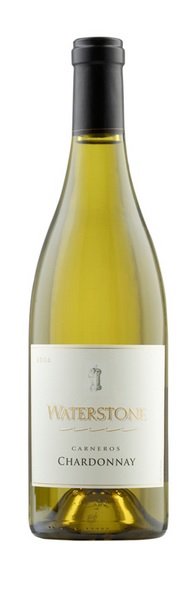
| Country: | United States |
| Region: | California |
| Winery: | Waterstone |
| Grape Type: | Chardonnay |
| Vintage: | 2013 |
| Bottle Size: | 750 ml |

This Chardonnay features bright, concentrated citrus, pear, green apple and nectarine fruit, with just a touch of oak to add richness to the palate. The wine lingers on the palate, and has the structure and acidity to provide for good longevity.
fter whole-cluster pressing, the Chardonnay juice was barrel-fermented in French oak barrels and aged sur lie for 8 months. During this period, the barrels were routinely stirred to increase yeast contact and add richness; 30% of the wine underwent secondary malo-lactic fermentation. One- and two-year-old French oak barrels were used. Prior to bottling, the wine received minimal filtration and fining to preserve the fresh fruit flavors.

The grapes for this wine were grown in the Oak Knoll District of Napa Valley, where soils are transitional from gravel to silty clay loam. The climate is moderate to cool with marine air until mid-morning and frequent late afternoon breezes that maintain cooler temperatures and ensure a longer growing season. Chardonnay from this region showcase flavors of crisp apple, mineral notes and tropical fruit with good acidity.
Aromas of lemon curd, sweet butter, brioche and sun-ripened peach mingle with notes of nutmeg and vanilla bean. The palate is creamy, with zesty lemon overtones and minerality persisting on the finish.

Ancien Chardonnay Carneros is made from 100 percent Chardonnay.
Chardonnay Carneros owes its style, depth, and structure to intensely flavored, low yielding, heirloom clones growing in two Carneros vineyards: on the Napa side, the Toyon Farm and on the Sonoma side, the Sangiacomo Vella Ranch. Ancien Wines hand-selected the cuttings themselves, from older vineyards in the Carneros area. These cuttings are reputed to have origins tracing to Paul Masson who imported them from Burgundy in the early 1940’s, from Louis Latour's renowned Corton Charlemagne vineyard. These selections are often referred to as “Old Wente”or “Robert Young,”denoting the sourced mother blocks in the 1960s.
Notes of ripe apple and honeydew melon greet and are delicately perfumed by notes of freesia and citrus blossom. Brighter notes of lime and Meyer lemon match the refreshing acidity of this wine, balanced by a creamy palate and leading to a finish that will continue to lengthen in the coming months. A wonderfully textured and vibrant Chardonnay displaying the best of Carneros.
Chardonnay Carneros is guided toward a layered, complex, and expressive style that develops gracefully in the bottle and shows enticing minerality, vivacious fruit, length and structure. The watchword is balance. Grapes were pressed as whole clusters, settled and fermented entirely in French oak from four different coopers, chosen for their unique synergism and support of the fruit on the palate. One third of the barrels were new. A variety of yeasts were used, including native strains, and fermentation proceeded evenly and slowly, averaging a cool 55°F. The wine was aged on its yeast lees, which were stirred weekly through the spring.

The backbone of this Cabernet Sauvignon is derived from a vineyard in the Atlas Peak AVA of Napa Valley where soils are volcanic in origin and have limited water retention. The balance of fruit is sourced from Coombsville and Oak Knoll. The small berry clusters and intense fruit from low-yielding vines create a wine with full flavor and longevity.
This Cabernet delivers multi-layered aromas of ripe black cherries, toasted oak, dark chocolate, cardamom, vanilla bean, and cedar. A rich medium-bodied wine with plush rounded tannins and juicy blackberries and orange zest that linger on the finish.
TA: 0.72 g/100ml
pH: 3.59

Charles Heidsieck Vintage Brut is made from 57% Pinot Noir, 43% Chardonnay.
A beautiful golden robe offers glints of green accentuated by a delicate, dynamic effervescence. The initial nose introduces intense toasted and smoky notes along with ripe fruit. When swirled in the glass, the nose takes on a heartier dimension with touches of apricot and vineyard peaches. The aromatic concentration, due to a heat wave of several weeks, is reminiscent of the summer sun. The attack is taut and decisive. the creamy texture, the crisp fruitiness and spiced notes of cinnamon, licorice and pepper are the hallmark of the House style.
Review:
Aged for eight years on the lees before disgorgement, the Champagne is deliciously toasty with acidity and fine dryness.
-Wine Enthusiast 96 Points
Disgorged in January of 2023, the 2013 Champagne Millésime Brut was the last vintage from the cellar master for Heidsieck prior to Cyril Brun. The 2013 Champagne Millésime Brut is a bright straw yellow color and is based on the crus of Les Mesnil, Avize, Averney, and Aÿ. It’s fresh with aromas of wet stones, fresh quince, and fresh jasmine flowers. It has a chalky and focused texture, with ripeness to balance it out, and a long, graceful finish. At this stage, it feels more forward with 57% Pinot Noir and the rest Chardonnay. A more mineral-tinged expression, it has a lot of charm and the promise of longevity over the coming two decades. Drink 2024-2044. It will be interesting to see how the Pinot shows itself over time. 8 grams per liter dosage.
-Jeb Dunnuck 95 Points

“1752” is the name of the Damilano Barolo Cannubi Riserva, in honor of the year in which the historic bottle was first marked “Cannubi”. It still exists today perfectly conserved by the Manzone family in Bra, close to Barolo. The bottle is clearly marked as being of “1752” vintage, indicating that Cannubi historically precedes Barolo.
About the Vineyard:
The Cannubi Cru is in found within one of the 6 core zones which comprise a UNESCO heritage site in Italy. A mixture of Tortonian and Helvetian calcareous marl gives the grapes intense aromas of cherry, plum and tobacco, rose and violet in sequence. Its low potassium and high calcium/magnesium content offer the wine a fine and polished touch. The vineyard is located at about 270 m. a.s.l. and has a south-east sun exposure. Barolo Riserva Cannubi 1752 It is a small plot of about 2 hectares of Nebbiolo vines, currently between 30 and 50 years of age.
Tasting Notes:
Garnet ruby red in color, the bouquet is intense and balanced, with notes of violet, red fruit, cherry and plum, spices, liquorice, cocoa, leather and tobacco. Dry, robust, full-bodied, very persistent, rich and velvety
Food Pairing:
This wine is excellent with typical piedmontes pasta (tajarin, ravioli); perfect with red meat, braised and roast meat, game and absolutely ideal with all types of cheeses.
Review:
The purity of this wine is pretty phenomenal with blackberries, strawberries, fresh flowers and licorice. Hints of tar. It’s full-bodied, yet composed and compact with ultra fine tannins and a long, flavorful finish. Very structured. Try after 2024.
-James Suckling 97 Points
This Chardonnay features bright, concentrated citrus, pear, green apple and nectarine fruit, with just a touch of oak to add richness to the palate. The wine lingers on the palate, and has the structure and acidity to provide for good longevity.
fter whole-cluster pressing, the Chardonnay juice was barrel-fermented in French oak barrels and aged sur lie for 8 months. During this period, the barrels were routinely stirred to increase yeast contact and add richness; 30% of the wine underwent secondary malo-lactic fermentation. One- and two-year-old French oak barrels were used. Prior to bottling, the wine received minimal filtration and fining to preserve the fresh fruit flavors.
The Waterstone Wines Estate
In this time of multimillion-dollar vineyard estates and celebrity winemaking consultants, when it seems that financial backing has replaced skill as the key to success in enology, it is rare that a simple idea can give birth to wines that stand out for flavor and balance, rather than pedigree alone. A collaboration between veteran winemaker Philip Zorn and longtime wine executive Brent Shortridge, Waterstone Winery was formed in 2000 when the two men were introduced and discovered a shared interest in creating luxury wines at affordable prices. Bringing together their previously established relationships with Napa Valley growers and vintners, the pair set out to develop balanced wines of varietal character through intelligent sourcing. Preferring to focus on the wine itself rather than the accumulation of land and facilities, Zorn and Shortridge own no vineyards themselves, nor do they own the facility where their wines are made. Dedicated winemaking, strong relationships with top growers and long-term grape contracts are the keys to Waterstone’s quality and success.

2021 Rossj-Bass displays the main features of the vintage well, with intense fruit concentration and floral notes. The nose shows ripe citrus notes of lemon peel and orange evolving into tropical fruits. The richness of the nose and the same notes are reflected on the palate, where remarkable acidity balances the fruit concentration. The wine is rich, full-bodied and creamy, with a long finish.
Review:
The 2021 Gaja Rossj-Bass starts off with very, crisp, green fruit and much more Sauvignon Blanc dominant aromas of grassy, bright, fragrant green apple and green pepper - all very bright and cheerful. Then Chardonnay seems to take over in the medium-full bodied and pleasing creamy texture of the wine. This is balanced again by the tangy, juicy acidity of Sauvignon. This is very elegant blend of Sauvignon Blanc aromas and zestiness and the textural comfort of Chardonnay. The name Rossj is a nickname of Angelo Gaja’s second daughter, Rossanna.
-Wine Independent 94 Points

Murray Cabernet Sauvignon Red Mountain is made from 78% Cabernet Sauvignon, 10%, Merlot , 6% Malbec, 6%, Petit Verdot.
A beautiful ruby color, this wine is very fruity with lots of plum and just a hint of characteristic Red Mountain minerality. It is very smooth with a slight texture of tannin on the back. This wine is a real Cab crowd pleaser.
As much as possible, winemakers Tim and Kelly Hightower take a non-interventionist approach to winemaking. They place great emphasis on vineyard selection, picking, pressing, and blending so that Hightower wines are naturally beautiful and free from pretense. They let the powerful and concentrated fruit from Red Mountain speak for itself. The result is a collection of well-balanced, nuanced wines that reveal something new and interesting each time you open a bottle.
They age in the oak barrels until they are ready to bottle.Neutral Oak 52%, New Oak 48% (American 57%, Hungarian 15%, French 14%, European 14%).
After primary fermentation, all wines are pressed directly into 59 gallon oak barrels. Aging for 19 months.
Estate Vineyard 75%, Shaw Vineyard 21%, Red Willow 4%
Red Mountain AVA 100%



