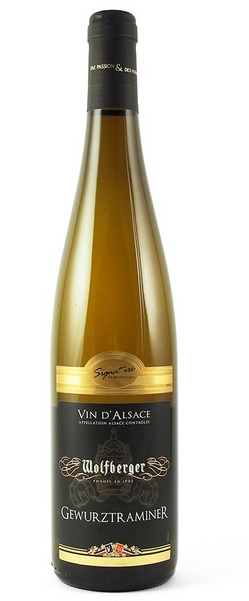
" We don't sell the wine without touching the vine "
| Country: | France |
| Region: | Alsace |
| Winery: | Wolfberger |
| Grape Type: | Gewurztraminer |
| Vintage: | 2021 |
| Bottle Size: | 750 ml |
Wolfberger Alsace Edelzwicker is made from 40 % Pinot Blanc, 30% Riesling, 15% Gewurztraminer and 15 % Muscat
Edelzwicker has a nose of grilled almonds and walnuts, with a light floral hint following. The first sip shows its true character: fresh and lemony with vegetal, herbaceous flavor. It is round and easy drinking, not overpowering and finishes clean.
Each grape variety is harvested individually in early or mid-October on the most suitable date for each vineyard.
It is a good companion for food without ever dominating it. In Alsace it is served by the glass or in large jugs to partner regional specialties. In general Edelzwicker goes well with fresh salads, cold or warm starters, but also with oysters, mussels and seafood. It should always be served chilled, around 10 ° C.
Wolfberger Alsace Grand Cru Riesling Rangen de Thann is made from 100 percent Riesling.
Mineral, spicy, minty with some eucalyptus notes, tropical fruits, grapefruit. Balanced and exotic in the finish, with long lasting flavors.
The Rangen Grand Cru is located in Thann, deep in the south of Alsace. Its particular soil is made of volcano-clastic rocks that drink up the heat of the day and send it back out again at night. The composition of the soil allows the roots of the vines to drink deeply from the mineral-rich sub-soil. Its southern exposure has the advantage of refreshing, drying winds in case of dampness. The high slopes are quite steep, reaching 68% in some places, requiring that the harvest be done by abseiling or roping down. Perfect for aging, these wines will reveal even more qualities after several years in the cellar.
Pair with Serve with fish, seafood, sushi, sashimi, goat cheese, vegetarian food.
Review:
"Aromas shimmy out of the glass. An enticing haze of petrol is lifted by lime and grapefruit zest, as well as pineapple. The texture of this wind is smooth and heavy, but the acidity and citrus notes bring freshness and light. A long finish carries just a hint of menthol. - LAYLA SCHLACK"
- Wine Enthusiast (November 2021), 93 pts
Wolfberger Alsace Grand Cru Riesling Rangen de Thann is made from 100 percent Riesling.
Mineral, spicy, minty with some eucalyptus notes, tropical fruits, grapefruit. Balanced and exotic in the finish, with long lasting flavors.
The Rangen Grand Cru is located in Thann, deep in the south of Alsace. Its particular soil is made of volcano-clastic rocks that drink up the heat of the day and send it back out again at night. The composition of the soil allows the roots of the vines to drink deeply from the mineral-rich sub-soil. Its southern exposure has the advantage of refreshing, drying winds in case of dampness. The high slopes are quite steep, reaching 68% in some places, requiring that the harvest be done by abseiling or roping down. Perfect for aging, these wines will reveal even more qualities after several years in the cellar.
Pair with Serve with fish, seafood, sushi, sashimi, goat cheese, vegetarian food.
Wolfberger Alsace Riesling is 100 percent Riesling.
Riesling is the most popular grape variety in Alsace. Racy yet slightly fruity, Wolfberger Riesling is a subtle fine wine of citrus and mineral aromas, good acidity and freshness. It has been known for being the perfect "food wine" - great with traditional Alsatian dishes such as sauerkraut, but also, thanks to their vivacity, with fish and shellfish.
A very slow-growing variety, Riesling ripens with chilly nights. The leaves are round and thick with sharp teeth.
The berries – small, green or yellow, with thick skin – grow on a short-stemmed, cylindrical, compact cluster.
The Reisling grows best in soil that isn’t too rich, with a preference for light terroirs with lots of sunshine.
After the harvest, the grapes are put into horizontal pneumatic presses where the juice is slowly extracted. After crushing the grapes, the juice (actually the must, which includes the skins, stems and seeds) is stored in different vats, then it is carefully clarified.
Fermenting in temperature-controlled stainless steel vats for 3-4 weeks.
Racking. Fining (3-4 months). Filtration and stabilization, then aging in the bottle.
Excellent with grilled fish or cooked in a sauce, and shellfish.

Wolfberger Alsace Grand Cru Riesling Rangen de Thann is made from 100 percent Riesling.
Mineral, spicy, minty with some eucalyptus notes, tropical fruits, grapefruit. Balanced and exotic in the finish, with long lasting flavors.
The Rangen Grand Cru is located in Thann, deep in the south of Alsace. Its particular soil is made of volcano-clastic rocks that drink up the heat of the day and send it back out again at night. The composition of the soil allows the roots of the vines to drink deeply from the mineral-rich sub-soil. Its southern exposure has the advantage of refreshing, drying winds in case of dampness. The high slopes are quite steep, reaching 68% in some places, requiring that the harvest be done by abseiling or roping down. Perfect for aging, these wines will reveal even more qualities after several years in the cellar.
Pair with fish, seafood, sushi, sashimi, goat cheese, vegetarian food.
Wolfberger Cremant d Alsace Rose Brut is 100 % Pinot Noir.
The wines from Alsace date back to 589 A.D., but Cremant d’Alsace has more recent beginnings, starting in 1900. Dopff au Moulin (founded in 1574) was the first to produce Cremant d’Alsace in the Method Champenoise style. Cremant d’Alsace received AOC status for sparkling wine in 1976. Two types of Cremant are produced today, resulting in about 2.5 million+ cases of Cremant d’Alsace production annually:
Wolfberger's Cremant d'Alsace Rose Brut displays a lovely delicate salmon color with active, small bubbles. Round and full-bodied, this Cremant Rose displays beautiful watermelon and strawberry aromas cascading in a smooth finish. A minimum of 15 months bottle aging before disgorging ensures ripeness.
Wolfberger Alsace Gewurztraminer is made from 100 percent Gewurztraminer
Very aromatic, with rose petal, peach and honeysuckle aromas. Full bodied, bright, zesty and crisp, this wine is extravagant and extroverted.
This wine has been awarded with silver and gold medal on a regular basis for the last decade.
The Wolfberger Estate
Wolfberger is a union of producers located in Eguisheim, south of Colmar. The city was also the home of Pope Leo IX, the Reformer (Pope from 1048 – 1054 A.D.). The winery was founded in 1902 when a group of wine-growers in Eguisheim decided to join forces to create one of the first cooperatives in Alsace. The cave counts 800 members today. Wolfberger combines tradition and constant innovation to elaborate high quality wines and preserve their typicity.
The resident oenologist at Wolfberger is Bertrand Praz. A young but extremely capable winemaker, he learned his craft at the famous Dijon wine school and from working at the Mumm Champagne House. He has taken huge strides in raising the quality level here. They also take their evaluative wine tasting very seriously and have a highly efficient set-up for tasters. The amphitheatre style classroom has individual wine-tasting desks each with light, spit bowl and automatic water faucet.
"This huge cooperative with more than 800 members makes charming crémant sparklers and clean varietals at a bargain price." - Anthony Dias Blue's Pocket Guide to Wine 2006
"An Alsatian cooperative located just south of the town of Colmar, these are tasty, fairly priced, dry white wines from a region that could use some help." - Wine Advocate (Aug. 2010)
Wolfberger is the rare example, in the wine world, of bigger actually being better.
The Wolfberger Vineyard
With 1300 hectares (3,211 acres), 500 hectares of which are in and around Eguisheim, there is a lot of raw material for a specialty importer to choose from. Pinot Blanc has been known in Alsace since the 16th century. Today it covers 22% of the vineyards and is the second most important variety after Riesling. It succeeds well in most soils and enjoys the dry microclimate of the area. The grapes are gathered in vineyards situated above Eguisheim and in surrounding villages. Rangen is the most southerly vineyard in Alsace and belongs to the towns of Thann and Vieux-Thann. This mountainside vineyard ranges from 340 to 470 m in altitude, and its slopes are extremely steep (up to 85%), with dark, stony soil, where harvesting resembles mountain climbing because the grape-pickers work from top to bottom, secured with harnesses and ropes. The grapes are brought down on sledges. The river Thur which flows at its base helps to preserve it from spring frosts. From the geological point of view, Rangen is immediately adjacent to the main Vosges fault and lies on the Devonian-Carboniferous volcano-clastic base. This gives a siliceous rock, more or less coarse sand, with acid and basic minerals, fertilizing elements for the soil: Ca, K, Mg, Mn, Fe, F, P, S, with trace elements. Rangen is the only vineyard
Mascot is a small-production label founded by Will Harlan in Napa Valley. The wines under this label are made from the younger vines of Harlan Estate, BOND, and Promontory, but The Mascot bottles share an exclusive preview at the development of their estates. Founded as an initial experiment to see what the young vines were capable of producing, the wines were initially only shared with close friends and family. By 2008, Will officially released the first vintage to the public since production had increased significantly. They create just one wine made from Cabernet Sauvignon, and the bottle is aged for five years before release. Assembled into a single, youthful expression, this wine shares a glimpse into the evolution and pedigree of its parent estates.
Tasting Notes:
Following a vintage full of changing conditions and demanding decision points, the steady and pleasant progress of the 2018 vintage left our team, at times, in limbo. Contradictory as it may seem, the dramas that sometimes punctuate the definitive months for the growing season help to frame the winegrowing team’s course of action; yet the tranquil succession of weeks that emerged between spring and fall in 2018 left almost entirely open the question of when to harvest. Healthy rainfall in March and April preceded a benevolent summer, whose mildness was interrupted only briefly by a few warming periods. The fruit of the young vines maintained a measured balance that gave the team little indication that harvest was imminent. Fog and temperate days followed in September, when—relying more on instinct than empirical cues—we began to pick. This judgment—as well as the gentle nature of the season—is confirmed in the subtle, ethereal power of the vintage, which reveals itself first in the deep, brooding aromas of dark fruit, black tea, and herbal notes. The texture expands around a lifted structure, as powdery tannins gently resolve. This diffused, enigmatic softness is anchored on the mid-palate by a gratifying density, which prepares the senses for a flourish of hidden energy and vivid detail that illuminates the finish.
Gimenez Mendez Alta Reserva Sauvignon Blanc is made from 100 percent Sauvignon Blanc.
Gimenez Mendez Sauvignon Blanc shows a very pale hue, almost crystal clear in color. Intense and herbal bouquet in harmony with fruity notes of guava and green apple, mango and maracuja. The wine is full and ample on the palate with a very firm structure. Dry, crisp and lively in the mouth.
Sauvignon blanc grapes are hand harvested very early during some mornings of February. Banches are destemmed and delicately crushed. With a quick press, fresh and very aromatic juice are obtained. Juice is fermented in stainless steel tanks during 15 days at controlled low temperatures, between 14 to 16 °C .Once fermentation is finished lees are kept and stirred for 1 month to get a creamy texture. Then a carefully clarification is necessary. The wine is filtered and stabilized without cold, and finally bottled to keep the freshness. No oak.
Ideal to serve with very spicy seafood, sushi or salads, as well as white meats with sweet-sour sauces, paté. Serve chilled.
Review:
Wolfberger Alsace Edelzwicker is made from 40 % Pinot Blanc, 30% Riesling, 15% Gewurztraminer and 15 % Muscat
Edelzwicker has a nose of grilled almonds and walnuts, with a light floral hint following. The first sip shows its true character: fresh and lemony with vegetal, herbaceous flavor. It is round and easy drinking, not overpowering and finishes clean.
Each grape variety is harvested individually in early or mid-October on the most suitable date for each vineyard.
It is a good companion for food without ever dominating it. In Alsace it is served by the glass or in large jugs to partner regional specialties. In general Edelzwicker goes well with fresh salads, cold or warm starters, but also with oysters, mussels and seafood. It should always be served chilled, around 10 ° C.
Wolfberger Auxerrois is made from 100% Auxerrois
Auxerrois blanc is thought to have originated in Lorraine, rather than near Auxerre in the Yonne. Recent DNA fingerprinting suggests that it is a cross between Gouais blanc and Pinot noir, the same ancestry as Chardonnay. The name Auxerrois blanc has actually been used as a synonym for Chardonnay in the Moselle region in France, which explains why there is also a longer name (Auxerrois Blanc de Laquenexy) for the grape variety.
This pale yellow Auxerrois Pinot Blanc shows an intense nose of fresh white fruits, rhubarb and spring flowers. Easy to drink and fresh on the palate, this wine ends on a fruity and crunchiness tast.
Alcoholic fermentation at 16°C followed by a short fermentation at 18°C allowing to keep some crispiness to the wine.
Then the wine was aged on the fine lees for 6-7 months. No Oak.
No Malo-Lactic fermentation.
Right before bottling, the wine was filtered using a tangentiel filtration system.
Quiche, grilled fish, rhubarb pie, mixed salad, and also fresh sheep milk cheese.
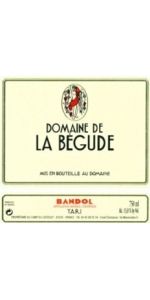
Begude Bandol Rouge is made from 90% Mourvèdre, 10% Grenache.
Eye: dark ruby colored
Nose: Intense, aromatic, fresh and elegant
Mouth: Structured on black fruits flavors, lightly woody , tanins are strong an firm in their early days (<5years) Good acidity give freshness backbone and great fruit/alcoholic balance . Delicate final on spices.
Opening: Decant 4-6 hours before serving
Soil: Clay-limestone Culture: Organic without pesticides nor chemicals additives Yield: 20 hectoliters/hectare Harvest: Manual in small cases Winemaking: Double sorting, 100% destemming, skin contact, with daily sticking in order to optimize color and aromatic extraction Alcoholic fermentation 15 days followed by malo lactic fermentation. Aging: 18 months in oak cask Bottling:
Grilled lamb, meat cooked with sauce, southern French cuisine and tasty dishes (tajines, couscous, paellas).
Review:
"Inviting spicy oak, malt and blackberry cream scents. Powerfully structured tannins, spicy liquorice and clove flavours as well as bramble fruit; very long finish. Its best years are far into the future. Terrific stuff."
- Decanter World Wine Awards 2020, 97 pts & Platinum Medal
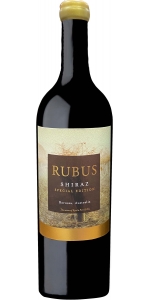
Rubus Special Edition Barossa Shiraz is made from 100 percent
The Rubus Project was created by Fran Kysela as a way to source & sell incredible wines at value prices. All wines in this international project are hand-selected by Fran Kysela. Rubus wines are fruit driven, true-to-type values that over deliver - a true representation of quality for the consumer at an excellent price.
Deep red with a slight purple hue on release. The wine has a rich mix of dark chocolate infused with coffee bean and black liquorice, then scents of tar, aniseed, raw (pure) soy and black olive on the nose. The palate is expansive, and yet balanced and finessed. An amalgam of dark berried flavors and textural sensations. The 100% new oak is completely absorbed, meshed with ripe tannins, completing a palate of impressive length and youthfulness.
Sourced from Thorn-Clarke’s St Kitts vineyard (Block 7) in the far north of the Barossa, the Rubus Reserve demonstrates both the strengths of the region and the unique characters of the vineyard.
A thin layer of topsoil over weathered marble, schist and shale mean the vines work hard to source water and nutrients. The result is naturally low yields concentrating the power and density of the fruit. Diurnal temperature variation is another important aspect of St. Kitts. Warm daytime temperatures are followed by cool nights with variations of up to 30°C (55°F) from the peak during the day into the cool night minimums.
Review:
“Earthy detail develops in this sleek and juicy shiraz, a tarry streak under fresh plum and bruised strawberry. The tannins have gravity and precision, their bracing intensity and concentration integrated into what panelist David Hawkins described as “a big, powerful wine with great liveliness.” While suited to aging, this is accessible now if you’re grilling meats to serve with it.”
- Wine & Spirits (February 2023), 94 pts
"Made by Thorn-Clarke for the US market, this has a rich and vivid nose with blueberry, violet, dark plum and subtle oak spice in play. The palate has a succulent feel with plenty of rich, open-knit blackberry and blueberry flavor. Smoothly delivered tannins carry long and even. Drink over the next decade."
- James Suckling (November 2021), 94 pts
Grand Veneur Chateauneuf Du Pape Vieilles Vignes is made from 50% Grenache, 40% Mourvedre, 10% Syrah
Matured in concrete vats (40%) and oak casks (60%)
It boasts an inky/purple color in addition to a gorgeous perfume of crushed rocks, jammy black fruits, charcoal and graphite. Blackberry aroma with an air of dates pressed in alongside – this is sweet-noted. It is easy to appreciate, a sleek and stylish start. The palate holds excellent fruit that runs well and has kick. Its tannins move round freely and a minted finale comes forward. Its dark fruit is tasty, darkens on the finish, where tar and char from its oak enter. It is all very much together, a bundle of harmony, and will gain local attributes as it ages.
An outstanding Chateauneuf du Pape which display the best of its terroir.
The vines are 50 to 100+ year old. They are planted on red clay soils covered with pebble stones.
Harvest is destemmed and crushed. Fermentation temperature is controlled at 30°C. Vatting period of 18 to 20 days. Matured in concrete vats (40%) and oak casks (60%).
The vineyards are located in the north of Châteauneuf du Pape. GRAND VENEUR «Vieilles Vignes» cuvee is produced from the older vines. Thanks to time and an organic growing, roots go very deep in the soil. Yields are naturally low and grapes highly concentrated.
The vines are 50 to 100+ year old. They are planted on red clay soils covered with pebble stones.
Winemaking and aging
Harvest is destemmed and crushed. Fermentation temperature is controlled at 30°C. Vatting period of 18 to 20 days. Matured in concrete vats (40%) and oak casks (60%).
Pair with venisson, duck, braised lamb or strong cheese.
Review:
"Up with the crème de la crème of the vintage, the 2018 Châteauneuf Du Pape Vieilles Vignes is a bigger, richer wine than the Les Origines cuvée and has a beautiful core of smoked black fruits, candied violets, peppery garrigue, and scorched earth-like aromas and flavors. Playing in the medium to full-bodied end of the spectrum, it’s flawlessly balanced and has terrific tannins, a stacked mid-palate, and a great finish. It certainly shows the more front end-loaded, fleshy, mildly concentrated style of the 2018 vintage, yet the balance is top-notch, and it’s just a thrill to drink today. It should evolve nicely for 10-15 years."
- Jeb Dunnuck (October 2020),96 pts
Pahlmeyer Jayson Red Napa Valley is made from 51% Merlot, 27% Cabernet Sauvignon, 11% Malbec, 7% Petit Verdot, 4% Cabernet Franc.
Voluptuousness meets vibrance in this classic Bordeaux-inspired blend. Ripe Merlot-dominant aromas of juicy macerated raspberry unfurl with hints of pencil lead, clove, cedar, and fresh sage. The compact fruit core, flanked by fine, polished tannin, surges open on a full, silky palate, giving way to complex underpinnings of earth and spice. A beam of bright acidity keeps the fruit fresh and focused through a soft, lingering finish of dusty plum and cocoa.
It’s best to serve this rich, layered wine at a temperature between 60°F and 65°F. Open and opulent in its youth, this wine is ready to match with a range of flavorful summer dishes such as Carolina-style pulled pork, bánh mì sandwiches, or bacon cheddar burgers.
Review:
This is a very polished wine in 2022, well-built with neatly knit tannins that form a solid foundation for the dark currant and blackberry fruit that floods the mid-palate. Good depth of concentration and driving energy create a sense of tension and vibrancy. Indeed not a shy wine, yet more approachable, with tannins almost melting away on the finish—very characteristic of the warm vintage. Grape sources include William Hill and Broken Rock in Napa, Stagecoach, Waters, and Round Pond in Rutherford, along with Cabernet Franc and Cabernet Sauvignon from the iconic Monte Rosso Vineyard in Sonoma. Grapes are sorted by hand, fermented in stainless steel with a small percentage in oak tanks, and then aged for 15 months in 80% new French oak. (JC)
-Decanter 94 Points