" We don't sell the wine without touching the vine "
| Country: | France |
| Region: | Alsace |
| Winery: | Wolfberger |
| Grape Type: | Pinot Blanc |
| Vintage: | 2020 |
| Bottle Size: | 750 ml |
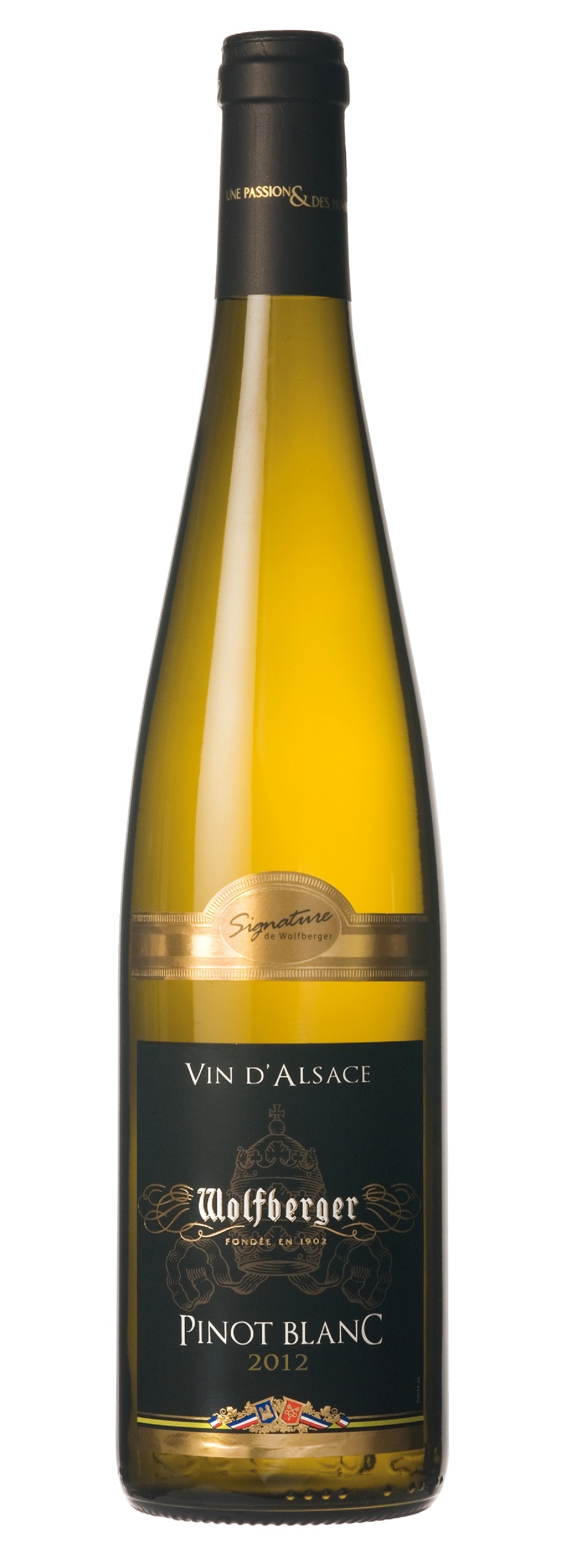
Wolfberger Alsace Pinot Blanc is 100 percent Pinot Blanc
This clean and crisp style of wine displays delicate peach aromas with a hint of almonds. Smooth on the palate, it is balanced, with a creamy texture and a clean finish.
Wolfberger Alsace Pinot Gris is made from 100 percent Pinot Gris.
Powerful and well structured wine. Round, rich, offering fruity aromas, toasty and spicy notes.
Excellent as an aperitif, it also pairs well with poultry, game and numerous cheeses.
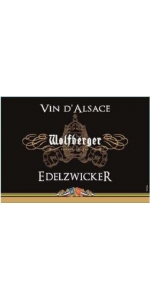
Wolfberger Alsace Edelzwicker is made from 40 % Pinot Blanc, 30% Riesling, 15% Gewurztraminer and 15 % Muscat
Edelzwicker has a nose of grilled almonds and walnuts, with a light floral hint following. The first sip shows its true character: fresh and lemony with vegetal, herbaceous flavor. It is round and easy drinking, not overpowering and finishes clean.
Each grape variety is harvested individually in early or mid-October on the most suitable date for each vineyard.
It is a good companion for food without ever dominating it. In Alsace it is served by the glass or in large jugs to partner regional specialties. In general Edelzwicker goes well with fresh salads, cold or warm starters, but also with oysters, mussels and seafood. It should always be served chilled, around 10 ° C.
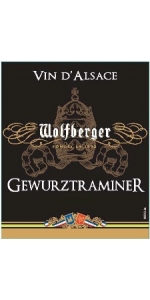
Wolfberger Alsace Gewurztraminer is made from 100 percent Gewurztraminer
Very aromatic, with rose petal, peach and honeysuckle aromas. Full bodied, bright, zesty and crisp, this wine is extravagant and extroverted.
This wine has been awarded with silver and gold medal on a regular basis for the last decade.
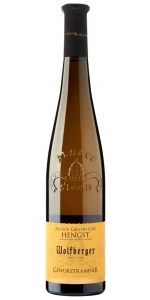
Wolfberger Alsace Grand Cru Hengst Gewurztraminer is made from 100 percent Grand Cru Gewurztraminer.
Hengst means stallion in alsatian.
Floral nose, yellow fruits, sweet spices. The mouth is ample with the same aromatic.
Tangential filtration before bottling.Vinification in stainless steel tanks at 16°C then aging on fine lees until spring of the following year.
Full-bodied cheese (munster, époisses), curry, dessert with fresh fruit
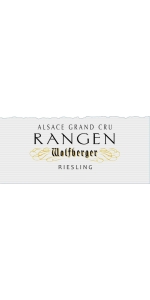
Wolfberger Alsace Grand Cru Riesling Rangen de Thann is made from 100 percent Riesling.
Mineral, spicy, minty with some eucalyptus notes, tropical fruits, grapefruit. Balanced and exotic in the finish, with long lasting flavors.
The Rangen Grand Cru is located in Thann, deep in the south of Alsace. Its particular soil is made of volcano-clastic rocks that drink up the heat of the day and send it back out again at night. The composition of the soil allows the roots of the vines to drink deeply from the mineral-rich sub-soil. Its southern exposure has the advantage of refreshing, drying winds in case of dampness. The high slopes are quite steep, reaching 68% in some places, requiring that the harvest be done by abseiling or roping down. Perfect for aging, these wines will reveal even more qualities after several years in the cellar.
Pair with Serve with fish, seafood, sushi, sashimi, goat cheese, vegetarian food.
Review:
"Aromas shimmy out of the glass. An enticing haze of petrol is lifted by lime and grapefruit zest, as well as pineapple. The texture of this wind is smooth and heavy, but the acidity and citrus notes bring freshness and light. A long finish carries just a hint of menthol. - LAYLA SCHLACK"
- Wine Enthusiast (November 2021), 93 pts
Wolfberger Alsace Pinot Blanc is 100 percent Pinot Blanc
This clean and crisp style of wine displays delicate peach aromas with a hint of almonds. Smooth on the palate, it is balanced, with a creamy texture and a clean finish.
Review:
- Wine Enthusiast (November 2022), 92 pts
The Wolfberger Estate
Wolfberger is a union of producers located in Eguisheim, south of Colmar. The city was also the home of Pope Leo IX, the Reformer (Pope from 1048 – 1054 A.D.). The winery was founded in 1902 when a group of wine-growers in Eguisheim decided to join forces to create one of the first cooperatives in Alsace. The cave counts 800 members today. Wolfberger combines tradition and constant innovation to elaborate high quality wines and preserve their typicity.
The resident oenologist at Wolfberger is Bertrand Praz. A young but extremely capable winemaker, he learned his craft at the famous Dijon wine school and from working at the Mumm Champagne House. He has taken huge strides in raising the quality level here. They also take their evaluative wine tasting very seriously and have a highly efficient set-up for tasters. The amphitheatre style classroom has individual wine-tasting desks each with light, spit bowl and automatic water faucet.
"This huge cooperative with more than 800 members makes charming crémant sparklers and clean varietals at a bargain price." - Anthony Dias Blue's Pocket Guide to Wine 2006
"An Alsatian cooperative located just south of the town of Colmar, these are tasty, fairly priced, dry white wines from a region that could use some help." - Wine Advocate (Aug. 2010)
Wolfberger is the rare example, in the wine world, of bigger actually being better.
The Wolfberger Vineyard
With 1300 hectares (3,211 acres), 500 hectares of which are in and around Eguisheim, there is a lot of raw material for a specialty importer to choose from. Pinot Blanc has been known in Alsace since the 16th century. Today it covers 22% of the vineyards and is the second most important variety after Riesling. It succeeds well in most soils and enjoys the dry microclimate of the area. The grapes are gathered in vineyards situated above Eguisheim and in surrounding villages. Rangen is the most southerly vineyard in Alsace and belongs to the towns of Thann and Vieux-Thann. This mountainside vineyard ranges from 340 to 470 m in altitude, and its slopes are extremely steep (up to 85%), with dark, stony soil, where harvesting resembles mountain climbing because the grape-pickers work from top to bottom, secured with harnesses and ropes. The grapes are brought down on sledges. The river Thur which flows at its base helps to preserve it from spring frosts. From the geological point of view, Rangen is immediately adjacent to the main Vosges fault and lies on the Devonian-Carboniferous volcano-clastic base. This gives a siliceous rock, more or less coarse sand, with acid and basic minerals, fertilizing elements for the soil: Ca, K, Mg, Mn, Fe, F, P, S, with trace elements. Rangen is the only vineyard
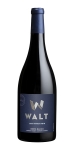
Walt Bob's Ranch Pinot Noir is made from 100 percent Pinot Noir.
Bob’s Ranch Estate Vineyard
Characterized by its proximity to the Pacific Ocean; Coastal breezes along with low rolling hills and morning fog define this cool climate site
Sonoma Coast Appellation
Heavy fog and strong winds tempered by bright afternoon sunshine
Petaluma Wind Gap
Creates a unique micro-climate within the appellation, producing distinctive Pinot Noir
Sandy, Well-draining Soils
Stresses vines into producing grapes of full varietal intensity
43 Vineyard Blocks on 72 Acres
With an array of clones and field selections, this ranch produces complex and delicious wines
Review:
"The stunning 2021 WALT ‘Bob’s Ranch’ Pinot Noir is a masterclass by this winemaking team. This Sonoma Coast AVA property has a wide range of Pinot Noir selections and is in close proximity to the Pacific Ocean. Stored in roughly 30% new French oak, this shows off dense blackberry and black cherry notes on the nose with shades of cola. Very seamless on the mouth, this effortlessly glides throughout the drinking experience. The salty and savory aspects, as well as the length, all add to the enjoyment."
Owen Bargreen 95 Points
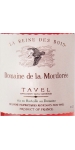
Mordoree Tavel Rose Reine des Bois is made from 60% Grenache, 15% Clairette, 10% Syrah, 10% Cinsault, 5% Bourboulenc (biodynamically farmed on a rocky/sandy plateau over clay).
This wine comes from a parcel planted on a pebbled soil covered with stones, whose geology is typical of the grands crus from the Rhone Valley (a base made of marine molasse from the Miocene period covered with an alpine diluvium from the Villafranchian period). 100 % destemming, cold maceration during 48 h., pneumatic pressing, fermentation at 18° C.
To pair with: roasted and or spicy chicken, duck, goose, fish soup, white meat, seafood and a lot of fishes (tuna, John Dorry, red mulet, etc...).Quite all Asian cuisine. Dishes with garlic, dishes with tomatoes.
In the glass the wine is deeply colored pink, almost orange/salmon. Complex aromas of white flowers, raspberry, pomegranate, strawberry, minerals, and citrus rise from the glass. Palate is full-bodied and voluptuous yet retains elegance while delivering great fruit intensity balanced by minerals and citrus. Light tannins appear mid-palate and carry through to the finish, giving it serious structure. Fresh, complex, and very long on the finish. Overall, powerful, textured, and food-driven — a “serious” Tavel that can age 1–5 years. Best enjoyed from June/July 2026 onward.