
" We don't sell the wine without touching the vine "
| BUY MORE! SAVE MORE! | ||||||||||||||||||||
|
| Country: | France |
| Region: | Alsace |
| Winery: | Wolfberger |
| Grape Type: | Pinot Noir |
| Vintage: | NV |
| Bottle Size: | 750 ml |
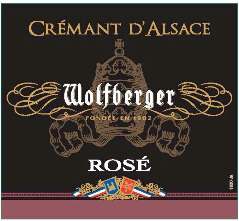
Wolfberger Cremant d Alsace Rose Brut is 100 % Pinot Noir.
The wines from Alsace date back to 589 A.D., but Cremant d’Alsace has more recent beginnings, starting in 1900. Dopff au Moulin (founded in 1574) was the first to produce Cremant d’Alsace in the Method Champenoise style. Cremant d’Alsace received AOC status for sparkling wine in 1976. Two types of Cremant are produced today, resulting in about 2.5 million+ cases of Cremant d’Alsace production annually:
Wolfberger's Cremant d'Alsace Rose Brut displays a lovely delicate salmon color with active, small bubbles. Round and full-bodied, this Cremant Rose displays beautiful watermelon and strawberry aromas cascading in a smooth finish. A minimum of 15 months bottle aging before disgorging ensures ripeness.
The Wolfberger Estate
Wolfberger is a union of producers located in Eguisheim, south of Colmar. The city was also the home of Pope Leo IX, the Reformer (Pope from 1048 – 1054 A.D.). The winery was founded in 1902 when a group of wine-growers in Eguisheim decided to join forces to create one of the first cooperatives in Alsace. The cave counts 800 members today. Wolfberger combines tradition and constant innovation to elaborate high quality wines and preserve their typicity.
The resident oenologist at Wolfberger is Bertrand Praz. A young but extremely capable winemaker, he learned his craft at the famous Dijon wine school and from working at the Mumm Champagne House. He has taken huge strides in raising the quality level here. They also take their evaluative wine tasting very seriously and have a highly efficient set-up for tasters. The amphitheatre style classroom has individual wine-tasting desks each with light, spit bowl and automatic water faucet.
"This huge cooperative with more than 800 members makes charming crémant sparklers and clean varietals at a bargain price." - Anthony Dias Blue's Pocket Guide to Wine 2006
"An Alsatian cooperative located just south of the town of Colmar, these are tasty, fairly priced, dry white wines from a region that could use some help." - Wine Advocate (Aug. 2010)
Wolfberger is the rare example, in the wine world, of bigger actually being better.
The Wolfberger Vineyard
With 1300 hectares (3,211 acres), 500 hectares of which are in and around Eguisheim, there is a lot of raw material for a specialty importer to choose from. Pinot Blanc has been known in Alsace since the 16th century. Today it covers 22% of the vineyards and is the second most important variety after Riesling. It succeeds well in most soils and enjoys the dry microclimate of the area. The grapes are gathered in vineyards situated above Eguisheim and in surrounding villages. Rangen is the most southerly vineyard in Alsace and belongs to the towns of Thann and Vieux-Thann. This mountainside vineyard ranges from 340 to 470 m in altitude, and its slopes are extremely steep (up to 85%), with dark, stony soil, where harvesting resembles mountain climbing because the grape-pickers work from top to bottom, secured with harnesses and ropes. The grapes are brought down on sledges. The river Thur which flows at its base helps to preserve it from spring frosts. From the geological point of view, Rangen is immediately adjacent to the main Vosges fault and lies on the Devonian-Carboniferous volcano-clastic base. This gives a siliceous rock, more or less coarse sand, with acid and basic minerals, fertilizing elements for the soil: Ca, K, Mg, Mn, Fe, F, P, S, with trace elements. Rangen is the only vineyard

Alain de la Treille Symphonie Cremant de Loire Brut is made from 90% Chenin Blanc and 10% Orbois (also known as Arbois or Menu Pineau)
The wines of Alain de la Treille reflect their vineyard of origin and are produced following the estate's unique guidelines: a strict selection of terroirs and vines, elaboration according to the traditional method and long maturation “sur lattes” in order to obtain the purest and most elegant expression of the Loire terroirs.
Elegant pale yellow color. The nose is delicate and complex with an array of fruity aromas such as grapefruit and peach with a touch of brioche. The flavors are fresh with floral character and a fresh finish.
Ideal for the aperitif, with a nice seafood platter or simply your favorite dessert.
-150x300.jpg "Alexandre M Vouvray Brut Methode Traditionnelle NV")
Alexandre M Vouvray Brut Methode Traditionnelle is made from 100% Chenin Blanc.
Tasting: Nose lime tree flower and brioche.
Mouth: complex and very expressive, so fresh and balanced with a smooth touch in mouth, bubbles so small who just tease the tang, light and good length.
ZERO DOSAGE !
Aperitif, seafood, oysters, light hard sheeses, and just for fun

Harmonious, fresh and clean aromas of fresh apple, lemon, orange blossom, white flower. Pure, crisp, silky and fine texture. Ripe fruit flavors and good acidity.
The vines are 40-45 years old of age on average. All of the wines are 100% barrel fermented and 100% M-L fermentation
Excellent with poultry served with a creamy sauce. (The locals enjoy it with Poulet de Bresse / Bresse Chicken).

Lismore Estate Syrah is made from 100 percent Syrah.
A careful selection of the best of the vintage that exemplifies the extraordinary terroir of Lismore.
An exotic experience which shifts your mind to another place. Cassis, brambles and succulent cherry. White pepper, classic garrigue and the strong floral perfume of crushed violets. Light and elegant, but structured with a fresh acidity. To experience the best this wine has to offer, decanting is suggested.
The grapes were fermented 40% whole bunch in a 5000 litre wooden fermenter with gentle pigeage throughout. The process allowed for a long extraction period which lends to the fruit expression of this wine. The wine was left for a 30 day extended maceration on the skins and then pressed in a traditional baskets press. Matured in 500 litre barrels for 10 months (35% new). Time in the bottle will allow integration, the deepening of layers and full expression of the fruit.
Review:
Bursting with purple flowers and savory, spicy notes, the 2022 Estate Reserve Syrah was made with 50% whole-cluster fruit, offering a crunchy, red-fruited nose that pops with delightful tertiary expressions of turned earth and pencil lead. Light to medium-bodied and with 12% alcohol, the wine compresses slightly to show an earthy, graphite edge on the palate while slightly stemmy notes sway with fine-grained tannins across the mid-palate. Flavors of potpourri with spiced cherry skin somersault with red and purple flower essences before finishing with hints of pink peppercorn over the elegant and elongated finish. Just under 5,000 bottles were produced after the wine spent 11 months in 25% new oak barrels.
-Wine Advocate 96 Points

Georges Cartier Champagne Brut Tradition NV is made from 65% Pinot Meunier, 25% Pinot Noir, and 10% Chardonnay.
This champagne was made to reflect the potential of each grape growing areas of the Champagne region.
The grapes for Georges Cartier Brut Tradition have been carefully selected from the 3 emblematic areas of Champagne. Chardonnay is sourced from the Côte des Blancs, Pinot Noir from Montagne de Reims and Pinot Meunier from the Marne Valley.
Each grape variety brings its own character and specific quality to the wine: Pinot Meunier brings fruit and roundness, Pinot Noir brings character, power, structure and balance, while Chardonnay contributes to the finesse, minerality and elegance of the result wine.
The blend in 2022 will be 70% 2018 vintage and 30% of reserve wines (consisting of 2014, 2015 and 2016 vintages).
It will be RD (meaning "Recently Disgorged") to keep freshness, fruitiness, minerality and elegance.
Review:
"A blend of Pinot Noir, Pinot Meunier, and Chardonnay. Lemon drop and buttercup combine with lime sorbet. Bubbles burst with ease and the wine’s mineral tone keeps the palate cleansed."
- The Tasting Panel (May/June 20022), 93 pts

Wolfberger Cremant d'Alsace Chardonnay NV is made with 100 percent Chardonnay.
The production of sparkling wine was already known in Alsace in the early 1900's. The Appellation d’Origine Contrôlée (A.O.C.) Crémant d’Alsace began with an official decree in August 1976.
Adorned with a beautiful dress of a brilliant golden yellow with green tints characteristic of the Chardonnay grape, this creamy reveals a fine and elegant cord of foam. The nose is expressive with light notes of toasted brioche. After a frank attack, the mouth is fresh thanks to a good balance sugar-acid. The feeling of fullness is supported by elegant flavors of almond and vanilla.

Wolfberger Cremant d Alsace Brut NV is made with 90 % Pinot Blanc, 10% Pinot Auxerrois.
The production of sparkling wine was already known in Alsace in the early 1900's. The Appellation d’Origine Contrôlée (A.O.C.) Crémant d’Alsace began with an official decree in August 1976.
Pale golden color. Fine, persistent bubbles. Floral nose with a hint of spiciness, gentle fruitiness (peach, apricot), and lovely balance. Fruity and lively in the palate, it has a clean and crisp finish. This wine will suit any special occasion.
Review:
""Straw color. Bright, fruity, creamy aromas of green apple pastry, peaches in cream, and lemon chiffon with a supple, tangy, finely carbonated, dry-yet-fruity medium body and an effortless, amusing, medium-long white nuts, lime-pineapple sorbet, and minerals finish with no oak. A refreshing, tangy sparkling wine that will shine at the table."
-Beverage Testing Institute, 94 pts (Exceptional)
Wolfberger Cremant d'Alsace Chardonnay NV is made with 100 percent Chardonnay.
The production of sparkling wine was already known in Alsace in the early 1900's. The Appellation d’Origine Contrôlée (A.O.C.) Crémant d’Alsace began with an official decree in August 1976.
Adorned with a beautiful dress of a brilliant golden yellow with green tints characteristic of the Chardonnay grape, this creamy reveals a fine and elegant cord of foam. The nose is expressive with light notes of toasted brioche. After a frank attack, the mouth is fresh thanks to a good balance sugar-acid. The feeling of fullness is supported by elegant flavors of almond and vanilla.

Wolfberger Cremant Reverence IX is made from 100% Pinot Blanc.
This Crémant shows a brilliant and shining gold color. The bubbles are fine and form a persistent ring.
The complex nose presents a floral character of acacia flowers, with light tones of brioche and a roasting hint. This racy character comes from the high quality of this cuvée carefully selected and aged 30 months on lees.
The mouth is enhanced by a fine and refreshing acidity, great and persistent floral flavors and an unctuous and delicate effervescence.
This Crémant d'Alsace REVERENCE IX accompanies elegantly the aperitif, dishes with marine and iodized tones and desserts…

Wolfberger Alsace Edelzwicker is made from 40 % Pinot Blanc, 30% Riesling, 15% Gewurztraminer and 15 % Muscat
Edelzwicker has a nose of grilled almonds and walnuts, with a light floral hint following. The first sip shows its true character: fresh and lemony with vegetal, herbaceous flavor. It is round and easy drinking, not overpowering and finishes clean.
Each grape variety is harvested individually in early or mid-October on the most suitable date for each vineyard.
It is a good companion for food without ever dominating it. In Alsace it is served by the glass or in large jugs to partner regional specialties. In general Edelzwicker goes well with fresh salads, cold or warm starters, but also with oysters, mussels and seafood. It should always be served chilled, around 10 ° C.

Baron Aime Cremant de Bourgogne Brut Rose NV is made from 85% Pinot Noir & 15% Chardonnay.
Light pink color with coppery shades. The citrus notes blend subtly with aromas of strawberry, forming a fresh and delicate bouquet. The palate is lively, with notes of grapefruit and fresh bread. Together they form a rich, fresh and vibrant wine.
Review:
"Steely amber color. Aromas and flavors of strawberry, green apple, toasted oats, and creme fraiche with a satiny, lively, finely carbonated, dry light-to-medium body and a tingling, intricate, medium-length finish that presents overtones of slightly under ripe wild strawberries, apricot, warm bread dough, and lemon zest. Lively and bright for a perfect apéritif yet with just enough richness and body to carry you in seamlessly to the first course."
- Beverage Testing Institute (November 2022), 94 pts - GOLD MEDAL - BEST BUY

Wolfberger Alsace Grand Cru Riesling Rangen de Thann is made from 100 percent Riesling.
Mineral, spicy, minty with some eucalyptus notes, tropical fruits, grapefruit. Balanced and exotic in the finish, with long lasting flavors.
The Rangen Grand Cru is located in Thann, deep in the south of Alsace. Its particular soil is made of volcano-clastic rocks that drink up the heat of the day and send it back out again at night. The composition of the soil allows the roots of the vines to drink deeply from the mineral-rich sub-soil. Its southern exposure has the advantage of refreshing, drying winds in case of dampness. The high slopes are quite steep, reaching 68% in some places, requiring that the harvest be done by abseiling or roping down. Perfect for aging, these wines will reveal even more qualities after several years in the cellar.
Pair with Serve with fish, seafood, sushi, sashimi, goat cheese, vegetarian food.
Review:
"Aromas shimmy out of the glass. An enticing haze of petrol is lifted by lime and grapefruit zest, as well as pineapple. The texture of this wind is smooth and heavy, but the acidity and citrus notes bring freshness and light. A long finish carries just a hint of menthol. - LAYLA SCHLACK"
- Wine Enthusiast (November 2021), 93 pts

Pio Cesare Ornato Barolo is made from 100 percent Nebbiolo.
Vineyards
The very first Single Vineyard Barolo produced by the Pio Family, for the first time in 1985. Great structure, power, concentration, with a very long life. Produced in small quantities.
Vinification
In stainless steel tanks at high temperatures. Maceration for 30 days. Ageing In large oak “botti” for about 30 months; a small amount in French oak barriques for the first 12 months.
Review:
Complex on the nose, offering a blend of ripe red berries, nutty minerals, orange-peel and spice. Some savory, almost meaty notes, too. Full, compact and intense, yet there’s a graceful feel to the palate, thanks to the really fine web of tannin. Super polish and promise here. Classy. Needs some time.
-James Suckling 96 Points

Obsidian Vineyard Syrah is bathed in terroir. The vines experience severe stress, pushing the roots ever deeper through rock in search of water, producing miniature clusters of intense power. Given the wine’s natural propensity for tannin, we take extreme care in the cellar to chisel/whittle its rough edges and leave room for richness to flatter its distinctive scaffold. The mid-palate supports flavors of roasted coffee beans, sarsaparilla, and dark chocolate. The finish marches on long after most wines have tired.
Our estate vineyard — the six-acre Obsidian Vineyard in the Knights Valley AVA — has an incredibly complex soil structure. It takes its name from a layer of volcanic obsidian rock that was discovered when we drilled for water.
Chocolate ganache, black currants, fig, graphite, and an expansive mouthfeel.
Review:
"Joe Donelan believes his Obsidian Vineyard is one of the world’s greatest sites for Syrah. I’ve visited the site twice, and can say candidly it certainly sits among the most striking vineyards I've ever laid eyes on within the U.S. It sits like a rock on a promontory—two switchbacks to reach the top—and the stones under the top soil, quite literally, never stop emerging from the ground. The place has an ancient, almost sacred, temple-like feel. It is consistently swept by afternoon breezes. The vineyard was replanted in 2017 after fires ravaged it. Winemaker David Milner laid out the site at denser spacing than before, at 2,000 vines per acre to keep yields per vine low while still achieving sensible tonnage, averaging around three tonnes per acre. Viognier was planted for co-fermentations, alongside some Cabernet Sauvignon, for a single vineyard bottling of that grape. ‘God put on his viticultural hat when he designed this site,’ says Milner. The vineyard is planted with ENTA 174, 877, and Alban 1 clones, along with Donelan Heritage selections certified virus-free. The wine, the 2023 vintage release (the first from the new vines), was aged for 21 months in 36% new oak and co-fermented with 1.8% Viognier, using 32% whole clusters. And it is positively gorgeous: composed of nine different blocks, each fermented separately, then assembled through sequential blending, with no racking until bottling. From just five-year-old vines, this wine is utterly extraordinary—something oddly achievable from young vines on rare occasion. I tasted this wine from the same bottle over three days. While the high-toned espresso-bean and cedar accents are present at first pull of the cork, they mellow out a day later, and the fruit profile is so vibrant. This is the sign of an excellent wine. I first tasted wines from the Donelan’s Obsidian Vineyard years ago at Tasting Panel Magazine in the late, great Anthony Dias Blue’s office. Cushing Donelan showed the wines, and to this day, I recall the first moment I put my nose into a glass of Obsidian Syrah. In early January of 2026, as I nosed this brand new release of Obsidian Syrah, I was transported straight back to that tasting twelve years ago. What’s remarkable is that the aromatics are unmistakably the same, yet from these new, more densely planted vines, the aromas are more refined—precision-farmed wines from young vines delivering a level of detail and poise that feels beyond their years. So what’s in the glass? Pure red, black, and blue fruit nuances layered with tobacco, white truffle character, violet pastille, and an intoxicating perfume. White pepper notes emerge on the medium- to full-bodied palate, framed by velvety tannins. Iron-like and crushed slate minerality underpins dazzling black cherry and blackberry fruit, brown spices, and blood orange richness. There’s a velvety, iron-fist quality here that exudes polish, complexity, and undeniable quality. You want to drink it now—and you absolutely can—but it will also reward time in the cellar. Either way, you’ll be utterly wowed. And when you realise the price is under £100, the achievement becomes even more staggering. As these vines mature, what will become of them in subsequent vintages? I suspect that as the vines mature, they'll go in and out of phases, but so long as Mother Nature cooperates, I expect this wine to continue to dazzle each vintage. - Jonathan CRISTALDI"
Decanter (January 5th 2026), 100 points
This is the first vintage of the Obsidian Syrah after wildfires torched the vineyard in 2017, leading to significant redevelopment. Throughout all those years, the Donelans have exhibited remarkable patience and a clear sense of purpose. This is their reward: a truly magnificent, towering wine of the highest level.
Knights Valley is one of the most magical grape-growing districts in the United States, but it is not very well known because only a few estate wineries are located there.
The 2023 Syria Obsidian Estate is one of the most profound, moving wines I have tasted in Sonoma County. Blackberry, gravel, incense, chocolate, lavender, and dried herbs race out of the glass. Delicate yet powerful, the 2023 is spectacular. It is also very fairly priced in today’s market.
Vinous 100 Points



