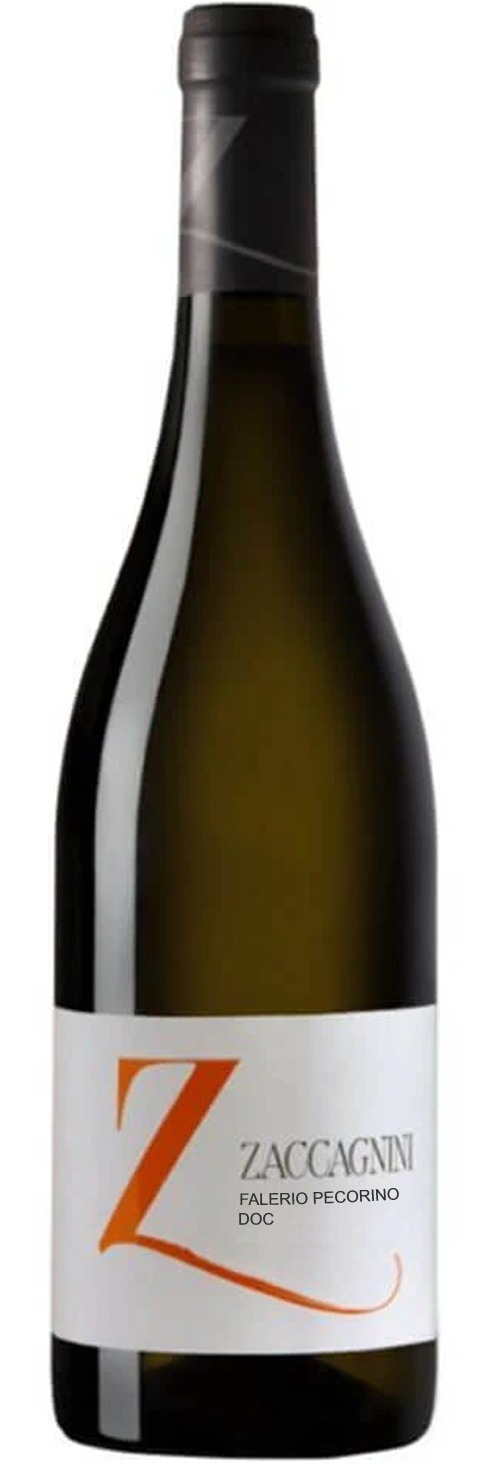
" We don't sell the wine without touching the vine "
| BUY MORE! SAVE MORE! | ||||||||||||||||||||
|
| Country: | Italy |
| Regions: | Emilia-Romagna Marche |
| Winery: | Zaccagnini |
| Grape Type: | Pecorino |
| Vintage: | 2024 |
| Bottle Size: | 750 ml |
Zaccagnini Falerio Pecorino DOC 2024 is an italian white wine made from 100% Pecorino.
Straw yellow color, with golden to greenish reflections.
On the nose this wine is complex and intense, with floral, herbaceous and fruity notes.
Pairs well with any seafood, white meat and vegetables or soft cheese.
In 1973 the Zaccagnini brothers established their Azienda Agricola (farm company), driven by a hobby, that became a real passion over time. Mario devoted himself to this activity and passed on his passion to daughter Rossella and to Franco, making the farm a 100% family-owned estate. In recent years spectacular improvements in product quality have been obtained thanks to a careful selection of the grapes, to the research and new technologies.
The Salmàgina vineyards extend to 42 hectares in the Municipality of Staffolo, Ancona, 500 meters above sea level. The strategic climate and particular soil that has been rich in iodine in the recent past, combined with the hard work of Zaccagnini, allowed to obtain great and distinctive wines (for example the excellent quality of "Verdicchio"). The vineyard colors the fields, leaving uncultivated spaces to the historical remnants of Mediterranean maquis, aligned to the west, protected from the north wind and from the dangers of bad weather.
For the last 10 years the Zaccagnini Azienda Agricola has been practicing clone experimentation of native varietals, fermentation temperature control and microbiogically sterile bottle filling. Through these important researches, thanks to an accurate grapes selection and the long experience in this field, the quality of Zaccagnini wine has achieved spectacular improvements.
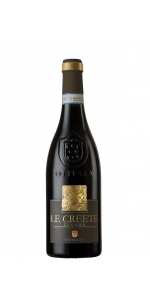
Ottella Lugana DOC Le Creete is made from 100% Turbiano (clonal type of Trebbiano di Lugana)
PRODUCTION AREA: S. Benedetto di Lugana. The grapes are harvested exclusively from our own vineyards; harvesting is strictly manual in small 17kg-crates
TRAINING METHOD: Guyot, double arc
Golden, warm, intense straw yellow. Immediate exotic notes.
It develops in a very pleasant fashion, good mineral impression Rich, succulent and well balanced for a truly
satisfactory mouthfeel. Mineral on the finish with just enough acidity to
provide lift and depth.
FOOD: Sea or lake fish to bring out its outstanding features; goes well with white meat and soup, and has quite a surprising affinity with tasty cheese
ALCOHOL BY VOLUME: 13% vol
SERVING TEMPERATURE: 10-12 degrees Celcius
Ottella Lugana DOC Le Creete is made from 100% Trebbiano di Lugana (same as Verdicchio)
The grapes for this wine come from the estate vineyards in San Benedetto di Lugana.
Golden, warm, intense straw yellow. Exotic notes of pineapple and grapefruit with delicate minerality.
Finesse yet a strong character. Rich and well balanced, firm, mineral wine with a superb pulp.
Pairs best with sea or lake fish to bring out its outstanding features; goes well with white meat and soup, and has quite a surprising affinity with full-flavored and blue cheeses.
-150x300.jpg "Pomerols Picpoul Pinet H.B. Languedoc 2024")
Pomerols Picpoul Pinet HB Languedoc is made from 100 percent Picpoul.
Pale yellow color with green tints. Fresh and fine aromas of grapefruit and exotic fruit. Lime flavors, with typical focusing acidity, are hallmarks of Picpoul. Our best value, this wine impresses novices and hardened geeks equally.
Zaccagnini Verdicchio dei Castelli di Jesi 100% Verdicchio.
Verdicchio is an historic wine that has been made since the 1400’s. There is an ancient bond between the Verdicchio vine and the region of Le Marche, a seaside province on the Adriatic sea, which stems from a cherished relationship with the Benedictine, and later the Camaldolese, Monks. The monks helped spread Verdicchio vines – which had been present for centuries – as well as viticultural-oenological techniques throughout the Marche region. The efforts of the monks, along with improvements in the quality of the vines & vinification methods, have allowed Verdicchio to thrive for centuries. At one time, Verdicchio measured 65,000 hectares (158,080 acres) of grapes throughout Italy.
Verdicchio means “little green one”, in reference to the grape and the color of the resulting wine. The Verdicchio grape – which also goes by Giallo and Turbiana (Lake Garda) – is grown across Italy, and it is closely related to Trebbiano and Greco. The grape is subject to mutations.
The wine is refreshing, exhibiting lemon citrus flavors, aromas of flowers and apples, with herbaceous qualities.
Zaccagnini Verdicchio dei Castelli di Jesi 100% Verdicchio.
Verdicchio is an historic wine that has been made since the 1400’s. There is an ancient bond between the Verdicchio vine and the region of Le Marche, a seaside province on the Adriatic sea, which stems from a cherished relationship with the Benedictine, and later the Camaldolese, Monks. The monks helped spread Verdicchio vines – which had been present for centuries – as well as viticultural-oenological techniques throughout the Marche region. The efforts of the monks, along with improvements in the quality of the vines & vinification methods, have allowed Verdicchio to thrive for centuries. At one time, Verdicchio measured 65,000 hectares (158,080 acres) of grapes throughout Italy.
Verdicchio means “little green one”, in reference to the grape and the color of the resulting wine. The Verdicchio grape – which also goes by Giallo and Turbiana (Lake Garda) – is grown across Italy, and it is closely related to Trebbiano and Greco. The grape is subject to mutations.
The wine is refreshing, exhibiting lemon citrus flavors, aromas of flowers and apples, with herbaceous qualities.
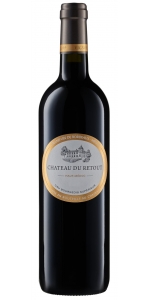
For many wine lovers or consumers, wine tasting is the preserve of professionals or real connoisseurs. People still have this image of it being a complex, technical, precise and highly-formalised process. In fact, wine tasting isn’t and shouldn’t be just that. No, it should be straightforward, convivial, interesting and fun. Tasting a wine should provoke curiosity, excitement, pleasure and dreams…
When you taste a Château du Retout wine, you use all five of your senses: the sense of touch when you pick up the bottle to gauge its temperature, the sense of hearing which allows you to enjoy the sound of he popping of the cork and the wine being poured into the glass, and then, of course, you use your senses of sight, smell and taste when you drink the wine:
The Médoc grape varieties and soils give us wines with superb, dense, dark hues, ranging from deep garnet to ruby-crimson, taking on brick red shades with orange tints with age.
Very intense and expressive aromas with powerful notes of black fruit such as blackcurrants and blackberries. In older wines, the nose develops a spicy bouquet of liquorice, leather and marshmallow mingled with the vanilla scents created by well-integrated oak.
Harmonious, elegant and velvety, with smooth, round tannins, that can be appreciated from the wine's entry to the palate through to the finish. These are delightfully full-bodied wines with great aromatic persistence.
Review:
"Shows the ripeness of the vintage, with dark currant and blackberry framed by singed cedar and vanilla. Ends with a tug of warm earth, a light twang of iron and a steady grip. Cabernet Sauvignon, Merlot and Petit Verdot. Drink now through 2034."
- Wine Spectator (TOP 100 wines of 2024), 92 pts and #45 on Top100

All older vintage wines have been purchased from a single collectors cellar. Pictures can be requested before shipment.
Bastgen Blauschiefer Riesling is 100 percent Riesling.
Bright, clean, fresh and zesty. Grapefruit like flavors. Fruity aromas and a nice minerality, typical of the Riesling grape grown on blue slate soil. Round, rich and a very long finish.
They meticulously tend 4.5 ha (11.11 acres) of which 80% is Riesling. The soil is made of slate. Their vineyards are located in Kesten and Brauneberg, on a steep terrace, and planted to 50-year old vines. Fortunately for Bastgen, they own part of the famous Brauneberger Juffer Sonnenuhr. The vines produce very small, ripe berries that are very tasty. Excellent with oysters, seafood and deliciously refreshing on it's own.