" We don't sell the wine without touching the vine "
| BUY MORE! SAVE MORE! | ||||||||||||||||||||
|
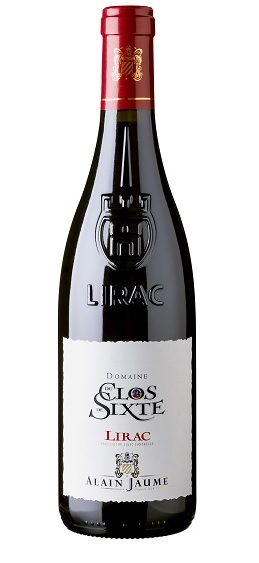
Alain Jaume Domaine du Clos de Sixte Lirac is made from 50% Grenache, 35% Syrah, 15% Mourvedre
An intense red garnet color. On the nose, aromas of red and black ripe fruit (kirsch and wild blackberry). The mouth is full, with aromas of blackcurrant liqueur and spice. Tannins are both harmonious and elegant thanks to the fleshiness of the wine. Hints of licorice and vanilla on the finish, which gives the wine length and complexity.
Soil type LIRAC vineyard is facing Chateauneuf du Pape, opposite side of the Rhône river. As showed by the picture and following geologist George Truc, soils are almost similar in both side. They are marked by the violence wrought by the Rhone river. It consists of a layer of marine molasses of the Miocene period covered by alpine alluvium. The presence of a great number of rounded stones known as "galets" in the earth is evidence of the time when the Rhone, then a torrent, tore fragments of rock from the Alps and deposited them on the plain. LIRAC is one of the up-coming best area from the southern Rhône valley, as it delivers outstanding wines. Winemaking & ageing Traditional wine-making in stainless still vats. Hand sorted bunches, crushed and destemmed grapes. Fermentation temperature : 30°C. 18 days of vatting with pigeages.
The Alain Jaume Winery
Established in 1826 in the Northern part of Chateauneuf du Pape, the Alain Jaume Winery boasts both the exceptional terroir of the Southern Rhone Valley and a long line of dedicated winemakers. Alain Jaume works in accordance with certified organic agricultural practices for both the Grand Veneur and Clos de Sixte vineyards. They strive to let the true terrior be expressed in their wines.
The principal winemaker is Alain Jaume. His sons Sebastien and Christophe are both heavily involved with the winery in sales and marketing and winemaking respectively. The Alain Jaume winery consists of 40 acres in Chateauneuf du Pape, 50 acres in Lirac, and 75 acres of Cotes du Rhone vines. The family produces wines under two labels: Domaine Grand Veneur and Alain Jaume.
In 1320 Pope Jean XXII planted the first vines of Chateauneuf-du-Pape, but it was only in 1360 that the wines of the region first gained fame. Oddly, the wine that gave Chateauneuf-du-Pape its original reputation was the White and not the Red. The white wine was a favorite of Pope Innocent VI. The Domaine dates back to 1826, having been founded at that time by Mathieu Jaume. Since 1979, Alain Jaume has run the Domaine and now has the help of his two sons: Sebastien and Christophe.
"Popes throughout history have liked their juice, and when the papal see moved to Avignon in the 13th century, that juice was Chateauneuf-du-Pape ("the pope's new castle") made from grapes grown nearby in the Southern Rhône. The castle is a ruin now, the papal court long gone back to Rome, but the wines that bear the pope's coat of arms emblazoned on the bottle are still produced more or less according to the long-standing recipe. Not every winemaker uses all 13 of the grapes in the proscribed blend, though. At Domaine Grand Veneur, an estate that dates to 1826, Alain Jaume and his sons Sebastien and Christophe emphasize Grenache blended with Syrah and Mourvèdre."
- Los Angeles Times
"Improved Chateauneuf with very accomplished, stylish reds since the late 1990s; also very good Vacqueyras and Cotes-du-Rhône Villages." - Anthony Dias Blue's pocket guide to wine 2006
"Grand Veneur is one of the most brilliant estates in Chateauneuf du Pape as well as the force behind the negociant wines sold under the Alain Jaume label. Virtually everything they produce has merit. Some of this estate’s 2009 red wines are just hitting the market as they are bottled early to preserve their fruit and freshness. I can’t say enough about the job Alain Jaume’s two sons, Sebastian and Christophe, have done with this estate. The impeccable attention to detail in the vineyards, the meticulous vinification, and the careful bottling benefit every consumer." - Wine Advocate (#190, August 2010)
"Great bargains continue to emerge from Domaine Grand Veneur as well as from their negociant arm of the business, labeled Alain Jaume" - Wine Advocate (#195, June 2011)
"One of the best-run and highest quality estates of the Southern Rhone is Domaine Grand Veneur, now run by the younger generation of the Jaume family, Sebastien and Christophe. The brothers have done a fabulous job taking over for their quality-oriented father, Alain. These are their less expensive wines, but I will follow up later this year with my reviews of their 2010 Chateauneuf du Papes as well as the 2011s, which I have not yet tasted. They have certainly gotten a good start on their 2011 less expensive Cotes du Rhone selections. The Jaumes are some of the finest practitioners of white winemaking in the Southern Rhone and showcase that with their least expensive offerings, which are creative blends that over-deliver." - Wine Advocate (Issue #201, June 2012)
Some wines by Alain Jaume Winery:
Any Alain Jaume wines we have in stock are listed below, if you don’t see the wine you are looking for please don’t hesitate to ask for it.
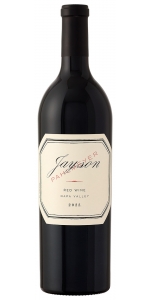
Pahlmeyer Jayson Red Napa Valley is made from 51% Merlot, 27% Cabernet Sauvignon, 11% Malbec, 7% Petit Verdot, 4% Cabernet Franc.
Voluptuousness meets vibrance in this classic Bordeaux-inspired blend. Ripe Merlot-dominant aromas of juicy macerated raspberry unfurl with hints of pencil lead, clove, cedar, and fresh sage. The compact fruit core, flanked by fine, polished tannin, surges open on a full, silky palate, giving way to complex underpinnings of earth and spice. A beam of bright acidity keeps the fruit fresh and focused through a soft, lingering finish of dusty plum and cocoa.
It’s best to serve this rich, layered wine at a temperature between 60°F and 65°F. Open and opulent in its youth, this wine is ready to match with a range of flavorful summer dishes such as Carolina-style pulled pork, bánh mì sandwiches, or bacon cheddar burgers.
Review:
This is a very polished wine in 2022, well-built with neatly knit tannins that form a solid foundation for the dark currant and blackberry fruit that floods the mid-palate. Good depth of concentration and driving energy create a sense of tension and vibrancy. Indeed not a shy wine, yet more approachable, with tannins almost melting away on the finish—very characteristic of the warm vintage. Grape sources include William Hill and Broken Rock in Napa, Stagecoach, Waters, and Round Pond in Rutherford, along with Cabernet Franc and Cabernet Sauvignon from the iconic Monte Rosso Vineyard in Sonoma. Grapes are sorted by hand, fermented in stainless steel with a small percentage in oak tanks, and then aged for 15 months in 80% new French oak. (JC)
-Decanter 94 Points
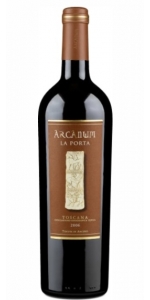
Tenuta di Arceno is a 2,500 acre estate nestled in the rolling hills of the Chianti Classico region in Tuscany.
Once an ancient Etruscan settlement, the estate has 220 acres planted under vine, leaving the rest of the land
to rolling hills of olive groves, open fields, and forests inhabited by wild boar and truffles. Arcanum La Porta
is composed entirely of Sangiovese sourced from the estate’s prized La Porta Vineyard. This single variety,
single vineyard wine holds its head high as a worthy homage to the great tradition of wine in Tuscany.
TASTING NOTES
The nose has floral tones reminiscent of rose petals, sweet plums and a hint of
cassis and vanilla. On the palate, the entrance is soft but defined by firm fresh
acidity with flavors of raspberries and our trademark flavor of the La Porta
Vineyard, candied orange peel. The finale is long with notes of cinnamon spice,
and mild cedar on the finish.
FOOD PAIRINGS
Aged Parmigiano Reggiano, Pasta Bolognese, Rack of Lamb
SERVE
Decant one to two hours before enjoying with family, friends and food
WINE STATISTICS
composition: 100% Sangiovese
alcohol: 14.0%
aging: French oak - 12 months
total acidity: 5.1 g/l
ph: 3.59 g/l
bottles produced: 19,464 (3,244 six packs)
Cellar Release
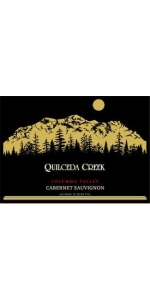
Since the founding in 1978, Quilceda Creek has dedicated itself to one thing: producing world-class Cabernet Sauvignon. Director of Winemaking Paul Golitzin believes that the winery’s greatest assets are the vineyards of the Columbia Valley. Through vineyard ownership and control, and through precision farming, they are able to grow and produce the highest caliber Cabernet Sauvignon. In award of their relentless pursuit of producing perfect Cabernet Sauvignon, Quilceda Creek has received seven 100 Point ratings from Wine Advocate, three 100 Point ratings from Owen Bargreen, two 100 Point ratings from Decanter and three Top Ten Wines of the Year from Wine Spectator.
The 2021 Quilceda Creek Cabernet Sauvignon is a wine for the ages. Potent aromas jump out of the glass, showing framboise candy, black tea, and a strong classic note of sandalwood. Savory cumin, sage, and garrigue round out this powerful nose. The palate is sweet and velvety, leading to an amazing crescendo of power and refinement.
Review:
The flagship 2021 Cabernet Sauvignon Columbia Valley is 100% Cabernet Sauvignon (90% from Champoux Vineyard and 10% from Mach One Vineyard) raised all in new barrels. It's slightly deeper hued than the CVR and has a stunning nose of blackcurrants, smoked tobacco, toasted spices, and graphite with a beautiful varietal, herbal undertone that comes through with time in the glass. Deep, rich, full-bodied, and velvety textured, this thrilling Washington State Cabernet Sauvignon will benefit from 4-5 years of bottle age and evolve for two decades. This is unquestionably up with the greatest vintages of this cuvée ever made.
-Jeb Dunnuck 100 Points
The 2021 Columbia Valley Cabernet Sauvignon from Quilceda Creek is once again another monumental release. It begins to impress with its striking perfumed aromas of ripe blackberries and dark currants, which are joined together with crushed violets, graphite, tobacco, and hints of licorice all developing in the glass. On the palate this possesses a gorgeous full body that is impeccably structured with beautifully polished tannins that result in an utterly seamless texture. This continues to impress with its excellent balance and concentration combined with remarkable overall power and finesse. There is a lovely touch of underlying acidity that ties it all together and provides a wonderful sense of freshness that carries it into the lavish finish. While this is already stunning in its youth, it is ultimately an age worthy wine which will go on to evolve for decades. Quilceda Creek sets the benchmark for Cabernet Sauvignon in Washington, and this is a clear example of why they have earned that reputation.
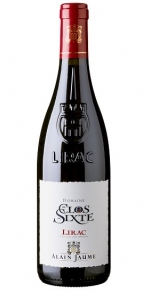
Alain Jaume Domaine du Clos de Sixte Lirac is made from 50% Grenache, 35% Syrah, 15% Mourvedre
An intense red garnet color. On the nose, aromas of red and black ripe fruit (kirsch and wild blackberry). The mouth is full, with aromas of blackcurrant liqueur and spice. Tannins are both harmonious and elegant thanks to the fleshiness of the wine. Hints of licorice and vanilla on the finish, which gives the wine length and complexity.
Soil type LIRAC vineyard is facing Chateauneuf du Pape, opposite side of the Rhône river. As showed by the picture and following geologist George Truc, soils are almost similar in both side. They are marked by the violence wrought by the Rhone river. It consists of a layer of marine molasses of the Miocene period covered by alpine alluvium. The presence of a great number of rounded stones known as "galets" in the earth is evidence of the time when the Rhone, then a torrent, tore fragments of rock from the Alps and deposited them on the plain. LIRAC is one of the up-coming best area from the southern Rhône valley, as it delivers outstanding wines. Winemaking & ageing Traditional wine-making in stainless still vats. Hand sorted bunches, crushed and destemmed grapes. Fermentation temperature : 30°C. 18 days of vatting with pigeages.
Alain Jaume Domaine du Clos de Sixte Lirac is made from 50% Grenache, 35% Syrah, 15% Mourvedre
An intense red garnet color. On the nose, aromas of red and black ripe fruit (kirsch and wild blackberry). The mouth is full, with aromas of blackcurrant liqueur and spice. Tannins are both harmonious and elegant thanks to the fleshiness of the wine. Hints of licorice and vanilla on the finish, which gives the wine length and complexity.
Soil type LIRAC vineyard is facing Chateauneuf du Pape, opposite side of the Rhône river. As showed by the picture and following geologist George Truc, soils are almost similar in both side. They are marked by the violence wrought by the Rhone river. It consists of a layer of marine molasses of the Miocene period covered by alpine alluvium. The presence of a great number of rounded stones known as "galets" in the earth is evidence of the time when the Rhone, then a torrent, tore fragments of rock from the Alps and deposited them on the plain. LIRAC is one of the up-coming best area from the southern Rhône valley, as it delivers outstanding wines. Winemaking & ageing Traditional wine-making in stainless still vats. Hand sorted bunches, crushed and destemmed grapes. Fermentation temperature : 30°C. 18 days of vatting with pigeages.
Review:
"I love the dark and meaty aromas of this Lirac, which also has an herbal freshness and just a hint of bitter chocolate. Medium- to full-bodied with licorice and restrained forest berry fruit on the velvety palate. Extremely well-balanced finish. From organically grown grapes. Drink or hold."
- James Suckling (April 2024), 92 pts
Alain Jaume Cotes Du Rhone Rouge Haut de Brun is made from 60% Grenache, 30% Syrah, 10% Cinsault
The colour is purple-tinged garnet.The aromatic range of the nose goes from fresh berries (wild raspberry, blackcurrant, blackberry) to spices.The palate is big and full-flavoured, with silky-smooth tannins and aromas of the fruit already mentioned. The finish introduces touches of liquorice and pepper. A Côtes du Rhône with great complexity for an every day drinking.
A classic Rhône to drink between 1 and 4 years. Best poured at 17°C.
Traditional wine making and ageing is performed in vats only. Bottling after 10-12 months.
Ideal throughout the meal, but particularly with poultry and other white meats, as well as mild cheeses.
Alain Jaume Cotes Du Rhone Rouge Haut de Brun is made from 60% Grenache, 30% Syrah, 10% Cinsault
The colour is purple-tinged garnet.The aromatic range of the nose goes from fresh berries (wild raspberry, blackcurrant, blackberry) to spices.The palate is big and full-flavoured, with silky-smooth tannins and aromas of the fruit already mentioned. The finish introduces touches of liquorice and pepper. A Côtes du Rhône with great complexity for an every day drinking.
A classic Rhône to drink between 1 and 4 years. Best poured at 17°C.
Traditional wine making and ageing is performed in vats only. Bottling after 10-12 months.
Ideal throughout the meal, but particularly with poultry and other white meats, as well as mild cheeses.
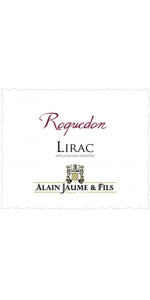
Alain Jaume Lirac Rouge Roquedon is made from 60% Grenache, 20% Syrah, 10% Mourvedre, 10% Carignan.
A blend of Grenache, Syrah, Mourvèdre, and Carignan grown on clay and sandy soils, mostly on terraces covered by pebble stones. Lirac is located in front of Chateauneuf du Pape, on the opposite side of the Rhone River.
Lirac Roquedon reveals an intense red garnet color and a nose dominated by a bouquet of red and black ripe fruits (kirsch and wild Blackberry). The mouth is full, with flavors of blackcurrant, liquor and spice. Tannins are both harmonious and elegant. The palate finishes with hints of liquorice and vanilla, which brings length and complexity to the wine.
Traditional wine-making in stainless still vats. Crushed and destemmed grapes. Fermentation temperature : 30°C. 18 days of vatting with pigeages. Ageing mainly in vats and about 10% in oak barrels. Bottling 15 months after the harvest.
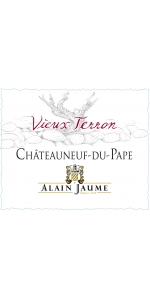
Alain Jaume Chateauneuf Du Pape Rouge Vieux Terron is made from 85% Grenache, 10% Syrah, 5% Mourvèdre
An intense purple color is followed by ripe red fruit aromas, such as sweet black cherry.
The palate reveals clearly the aromatic complexity: spices and black fruit are boasted with soft tannins. The finish is long with aromatic hints of liquorice and pepper. Red raspberries, star anise and hints of cinnamon.
It will accompany game, red meat or meat in sauce and strong cheeses.
Soil types
Châteauneuf du Pape vineyards are mostly located on plateaux. Stony-clay soil covered with large rolled stones. Some plots are more sandy.
Winemaking and aging
Harvest is destemmed and crushed. Fermentation temperature is controlled at 30°C. Vatting period of 18 to 21 days. Matured in vats (80%) and oak casks (20%).
Exceptionally aromatic with aromas of violets, hints of blackberry, blackcurrant and black plum on the nose. There is some spice that is balanced with fresh acidity and minerality. A long finish with ripe but firm tannins.
Dow's Senhora da Ribeira can be enjoyed anytime and pairs wonderfully with chocolate desserts and soft cheeses like creamy Stilton or Roquefort.
Review:
Rich and fruity, this wine is packed with intense black-currant flavors. It is perfumed, ripe with a good tannic background. The density of the wine and the firm structure point to a long aging process. Drink this beautifully structured wine from 2026.
-Wine Enthusiast 93 Points
Winemaking:
Senhora da Ribeira has one of the most advanced specialist wineries in the Douro, combining the best of traditional winemaking practice, evolved over centuries, and the latest state-of-the-art automated systems. Three granite ‘lagares’ for foot treading are complemented by three ‘robotic’ lagares, designed by the Symington family and installed in the quinta’s winery in 2001.
It has long been recognised that traditional treading produced some of the finest Ports, but there are some drawbacks involved in traditional treading; temperature control is difficult, there is a limit to how long people are willing to tread and they need to sleep. The winemaker’s options are therefore limited, he or she cannot order treading at different times through the night, or pull people off the picking team at will. Furthermore, emptying the traditional lagar takes a long time; in the meantime the fermentation process is accelerating away. A further handicap arose over recent years, when an increasing scarcity of labour obliged producers to look for less labour-intensive vinification solutions. The Symingtons opted to devise a mechanical means of replicating the proven method of foot treading. The result was the Symington ‘robotic lagar’, an automated treading machine which exactly replicates the gentle action of the human foot and which has revolutionised winemaking in the Douro Valley. This equipment is very expensive but the results have been so good that an increasing proportion of Dow’s finest wines are now made in these automated lagares. Approximately half of the wines for Dow’s much praised 2003 Vintage were vinified in them.
The Senhora da Ribeira’s Quinta Vintage Ports have amassed a highly impressive number of awards: three Gold Medals at the International Wine Challenge, (2008, 2006 and 2001, for the 2005, 2002 and 1999 Vintages, respectively) as well as seven Silver Medals and two Gold Medals at the International Wine & Spirit Competition (London, 2008 for the 2005 Vintage and 2002 for the 1998 Vintage). In September 2006, Jancis Robinson MW wrote, “One very exciting new bottling is Dow’s Quinta da Senhora da Ribeira 2004...this single quinta bottling demonstrates superb quality with wonderful vibrancy. Great wine in any context - not that unlike some California reds! This is definitely a wine to look out for when it is released.”
Wine Profile
The very hot climate through the summer at this vineyard results in highly complex and concentrated wines but very low yields. Colours of the musts in the fermentation tanks are always purple-black due to the very high skin to juice ratio. The old vines add further to the intensity of the wine as they make up a very large percentage of the vineyard. The resulting wine can be described as being the essence of Vintage Port, with powerful wild red-fruit flavours, leading into rich black chocolate notes, the whole balanced by complex, attractive and peppery tannins.
One of the Douro’s most beautiful vineyards, Senhora da Ribeira is located 24km (15 miles) upriver from Quinta do Bomfim in the remote Douro Superior. The vineyard commands a magnificent north bank position, overlooking a broad sweep of the Douro, directly opposite another famous Symington owned vineyard: Quinta do Vesuvio. Senhora de Ribeira was built close to an ancient river crossing, guarded by two 12th century castles on either side of the river built by the Moors during their centuries long occupation of Iberia. A small chapel dedicated to the ‘Lady of the River’ (literally: Senhora da Ribeira) has stood here for centuries and gave the quinta its name. Travellers would pause here to ask for a safe river passage and onward journey.
Senhora da Ribeira’s wines are some of the finest in the Douro and they complement those from Bomfim in the composition of Dow’s classic Vintage Ports. The quinta’s high proportion of old vines (45% are over 25 years old) is of critical importance. The old vines are very low-yielding, producing on average less than 1Kg of grapes each, giving intense and concentrated musts which are ideal for classic Vintage Port. The remainder of the vineyard was replanted as follows: 21% in 2001 and 34% from 2004, the latter involving mainly Touriga Nacional vines. This grape variety - very important for Vintage Port - now represents almost exactly a third of the total planted at the quinta. The entire vineyard has the maximum ‘A’ rating.
As with Bomfim, the consistency of the climate plays a key role, although the rainfall is only half of that experienced at Bomfim: 448mm is the 10 year average. This more extreme climate, hot dry summers and cold, equally dry winters results in wines with unique depth of colour and complexity.
As with Quinta do Bomfim, the best Ports from Senhora de Ribeira are used to make Dow’s Vintage Ports in the great and rare ‘Declared’ years. In the good year’s when Dow’s does not ‘declare’ a Vintage, the best wines of ‘The Lady of the River’ are bottled as Dow’s Quinta de Senhora da Ribeira Vintage Port. They will tend to mature a little earlier than the very rare ‘Declared’ years, but can be every bit as good as some other Vintage Ports.

Garnet red in the glass. The nose is full of red cherry, raspberry, and black currant, backed by rose pedal, cinnamon, clove, porcini, toasted vanilla, rosemary blossom and thyme. Ripe strawberry, sour cherry, and damson plum, give way to an airy, and velvety texture reigned in by a firm acidic backbone. The long finish is full of floral character, backed by sweet earth and loads more spice.
Alcohol:12.9%
Acid TA: 5.7 g/L
pH: 3.45