" We don't sell the wine without touching the vine "

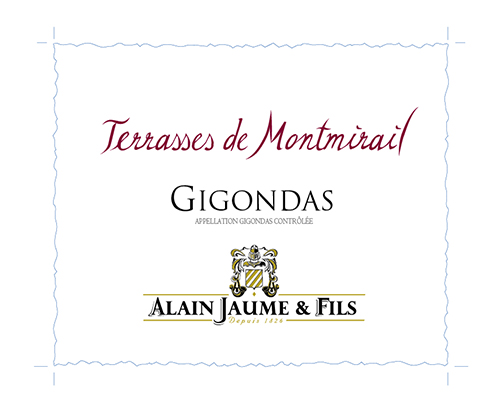
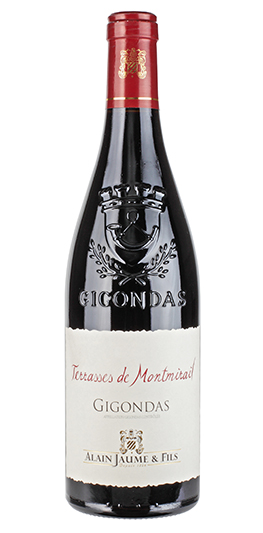
Alain Jaume Gigondas Terrasses de Montmirail is made from 65% Grenache the rest Syrah, Mourvèdre by less than 15%.
Deep red garnet color. Aromas of ripe and black fruits. On the palate the wine is rich, powerful and harmonious - well balanced with wild berry and pepper dominating.
Soil types
Located in and around the famous area called “Dentelles de Montmirail”, the landscape typicity is made by a rocky bar (between 100 and 600 meters high). Soils are made of clay and sand with limestone. The “Dentelles” appeared thanks to the pressure between the Pyrenees and Alps mountains. This is a land of predilection to produce both powerful and fresh wines. Nights are cooler and the grapes ripeness usually comes in late September.
Winemaking & aging
Traditional wine-making in stainless and concrete vats. Crushed and destemmed grapes. Average of 18 days of vatting with pigeages. Ageing in vats mostly and oak barrels. Bottling after 12 – 14 months.

Alain Jaume Vacqueyras Grande Garrigue is made from 65% Grenache Noir, 20% Syrah, 10% Mourvedre and 5% Old vines Cinsault
Deep, intense hue. Aromas of fresh black fruit a little meaty, with dried herbs smells. On the palate, the richness of the tannins harmonizes with the smoothness of the wine. The finish is long, with spices aromas, licorice. A typical wine from this specific terroir called "Les Garrigues".
Soil type Vacqueyras is located right next to Gigondas AOC. It mostly streches on Sarrians territory, where is the famous plateaux named “Les Garrigues”. This area is made of clay and rocks. The beautiful landscape of the “garrigue” is typical of the mediterranean area. The wines itself smell the spices, the dried herbs…you will taste the “Garrigue” in your glass, welcome to Provence … Winemaking & ageing Traditional winemakeing methods, temperature controlled fermentation. Long soaking on the skins.
Review:
"A well-built, spicy and textured Vacqueyras red with dark berries, currants, dried herbs and baking spices on the nose, following through to a full body with fine, firm tannins. Spicy and intense mid-palate with a compact finish. From organically grown grapes. Try after 2026."
- James Suckling (May 3rd 2024), 91 pts

Alain Jaume Cotes Du Rhone Rouge Haut de Brun is made from 60% Grenache, 30% Syrah, 10% Cinsault
The colour is purple-tinged garnet.The aromatic range of the nose goes from fresh berries (wild raspberry, blackcurrant, blackberry) to spices.The palate is big and full-flavoured, with silky-smooth tannins and aromas of the fruit already mentioned. The finish introduces touches of liquorice and pepper. A Côtes du Rhône with great complexity for an every day drinking.
A classic Rhône to drink between 1 and 4 years. Best poured at 17°C.
Traditional wine making and ageing is performed in vats only. Bottling after 10-12 months.
Ideal throughout the meal, but particularly with poultry and other white meats, as well as mild cheeses.

Alain Jaume Domaine du Clos de Sixte Lirac is made from 50% Grenache, 35% Syrah, 15% Mourvedre
An intense red garnet color. On the nose, aromas of red and black ripe fruit (kirsch and wild blackberry). The mouth is full, with aromas of blackcurrant liqueur and spice. Tannins are both harmonious and elegant thanks to the fleshiness of the wine. Hints of licorice and vanilla on the finish, which gives the wine length and complexity.
Soil type LIRAC vineyard is facing Chateauneuf du Pape, opposite side of the Rhône river. As showed by the picture and following geologist George Truc, soils are almost similar in both side. They are marked by the violence wrought by the Rhone river. It consists of a layer of marine molasses of the Miocene period covered by alpine alluvium. The presence of a great number of rounded stones known as "galets" in the earth is evidence of the time when the Rhone, then a torrent, tore fragments of rock from the Alps and deposited them on the plain. LIRAC is one of the up-coming best area from the southern Rhône valley, as it delivers outstanding wines. Winemaking & ageing Traditional wine-making in stainless still vats. Hand sorted bunches, crushed and destemmed grapes. Fermentation temperature : 30°C. 18 days of vatting with pigeages.

Alain Jaume Cairanne Les Travees is made from 65% Grenache, 35% Syrah, 5% Mourvèdre.
Our selected vines for this cuvée are on slopes facing south.
.
The wine delivers an intensive nose, with loads of black fruits.
Starting full and concentrated, with silky tannins, the mouth reveals blackcurrant and a cherry fruit typicity.
It finishes with typical notes of pepper and earth.
Enjoy with roasted lamb or braised or BBQed pork. gpoes also very well with mild cheese, such as brie or camenbert.

Alain Jaume Lirac Rouge Roquedon is made from 60% Grenache, 20% Syrah, 10% Mourvedre, 10% Carignan.
A blend of Grenache, Syrah, Mourvèdre, and Carignan grown on clay and sandy soils, mostly on terraces covered by pebble stones. Lirac is located in front of Chateauneuf du Pape, on the opposite side of the Rhone River.
Lirac Roquedon reveals an intense red garnet color and a nose dominated by a bouquet of red and black ripe fruits (kirsch and wild Blackberry). The mouth is full, with flavors of blackcurrant, liquor and spice. Tannins are both harmonious and elegant. The palate finishes with hints of liquorice and vanilla, which brings length and complexity to the wine.
Traditional wine-making in stainless still vats. Crushed and destemmed grapes. Fermentation temperature : 30°C. 18 days of vatting with pigeages. Ageing mainly in vats and about 10% in oak barrels. Bottling 15 months after the harvest.
Alain Jaume Gigondas Terrasses de Montmirail is made from 90% Grenache, 10% Syrah.
Deep red garnet color. Aromas of ripe and black fruits. On the palate the wine is rich, powerful and harmonious - well balanced with wild berry and pepper dominating.
Reviews:
Another winner is the 2015 Gigondas Terrasses de Montmirail. Coming from higher elevation sites and mostly limestone soils, its vibrant purple color is followed by beautiful spice, black raspberry, kirsch and dried flower-like aromas and flavors. Medium to full-bodied, balanced and polished, with plenty of fruit yet also solid underlying ripe tannic structure, buy a case and enjoy bottles over the coming 7-8 years.
Wine Advocate 90-92 pts
The Alain Jaume Winery
Established in 1826 in the Northern part of Chateauneuf du Pape, the Alain Jaume Winery boasts both the exceptional terroir of the Southern Rhone Valley and a long line of dedicated winemakers. Alain Jaume works in accordance with certified organic agricultural practices for both the Grand Veneur and Clos de Sixte vineyards. They strive to let the true terrior be expressed in their wines.
The principal winemaker is Alain Jaume. His sons Sebastien and Christophe are both heavily involved with the winery in sales and marketing and winemaking respectively. The Alain Jaume winery consists of 40 acres in Chateauneuf du Pape, 50 acres in Lirac, and 75 acres of Cotes du Rhone vines. The family produces wines under two labels: Domaine Grand Veneur and Alain Jaume.
In 1320 Pope Jean XXII planted the first vines of Chateauneuf-du-Pape, but it was only in 1360 that the wines of the region first gained fame. Oddly, the wine that gave Chateauneuf-du-Pape its original reputation was the White and not the Red. The white wine was a favorite of Pope Innocent VI. The Domaine dates back to 1826, having been founded at that time by Mathieu Jaume. Since 1979, Alain Jaume has run the Domaine and now has the help of his two sons: Sebastien and Christophe.
"Popes throughout history have liked their juice, and when the papal see moved to Avignon in the 13th century, that juice was Chateauneuf-du-Pape ("the pope's new castle") made from grapes grown nearby in the Southern Rhône. The castle is a ruin now, the papal court long gone back to Rome, but the wines that bear the pope's coat of arms emblazoned on the bottle are still produced more or less according to the long-standing recipe. Not every winemaker uses all 13 of the grapes in the proscribed blend, though. At Domaine Grand Veneur, an estate that dates to 1826, Alain Jaume and his sons Sebastien and Christophe emphasize Grenache blended with Syrah and Mourvèdre."
- Los Angeles Times
"Improved Chateauneuf with very accomplished, stylish reds since the late 1990s; also very good Vacqueyras and Cotes-du-Rhône Villages." - Anthony Dias Blue's pocket guide to wine 2006
"Grand Veneur is one of the most brilliant estates in Chateauneuf du Pape as well as the force behind the negociant wines sold under the Alain Jaume label. Virtually everything they produce has merit. Some of this estate’s 2009 red wines are just hitting the market as they are bottled early to preserve their fruit and freshness. I can’t say enough about the job Alain Jaume’s two sons, Sebastian and Christophe, have done with this estate. The impeccable attention to detail in the vineyards, the meticulous vinification, and the careful bottling benefit every consumer." - Wine Advocate (#190, August 2010)
"Great bargains continue to emerge from Domaine Grand Veneur as well as from their negociant arm of the business, labeled Alain Jaume" - Wine Advocate (#195, June 2011)
"One of the best-run and highest quality estates of the Southern Rhone is Domaine Grand Veneur, now run by the younger generation of the Jaume family, Sebastien and Christophe. The brothers have done a fabulous job taking over for their quality-oriented father, Alain. These are their less expensive wines, but I will follow up later this year with my reviews of their 2010 Chateauneuf du Papes as well as the 2011s, which I have not yet tasted. They have certainly gotten a good start on their 2011 less expensive Cotes du Rhone selections. The Jaumes are some of the finest practitioners of white winemaking in the Southern Rhone and showcase that with their least expensive offerings, which are creative blends that over-deliver." - Wine Advocate (Issue #201, June 2012)
Some wines by Alain Jaume Winery:
Any Alain Jaume wines we have in stock are listed below, if you don’t see the wine you are looking for please don’t hesitate to ask for it.

Jubilation is our newest wine in the Colgin Cellars collection. Jubilation is our Cabernet Sauvignon-based wine created with a selection of barrels that display earlier drinking characteristics from our three hillside vineyards. As our vine age has matured and small additions have been made to our original holdings, we had the privilege of increasing our selectivity. Following the blending of our single-vineyard wines, we were fortunate to have a collection of barrels that conveyed the same elegance and complexity for which we are known, yet on a more supple, approachable frame. Jubilation is a wine ready to enjoy now, with the pedigree to age gracefully in the cellar, maintaining the Colgin Cellars’ hallmarks of perfume, freshness, and minerality. The inaugural bottling of Jubilation from the 2016 vintage was released in late 2020. Future vintages are destined for select members of the fine wine trade.

Golden color. Very aromatic. White flowers, fresh fruit, lime, citrus aromas as well as a bergamot. Pleasant mouthfeel, supple, crisp, fruity flavors. There is a touch of acidity, revealing a deliciously integrated minerality.
Machine harvested at full maturity (around Sept. 25th - lasts 12-18 days); pneumatic press; fermentation in temperature controlled stainless steel tanks for 8-10 days; M.L (2 months after the harvest); aging on the lees until May (3 month extra compared to the Petit Chablis); racking; fining if necessary; cold stabilization; filtration right before bottling in July.
Ideal as an aperitif, the wine is an excellent companion to seafood, smoked salmon for example.