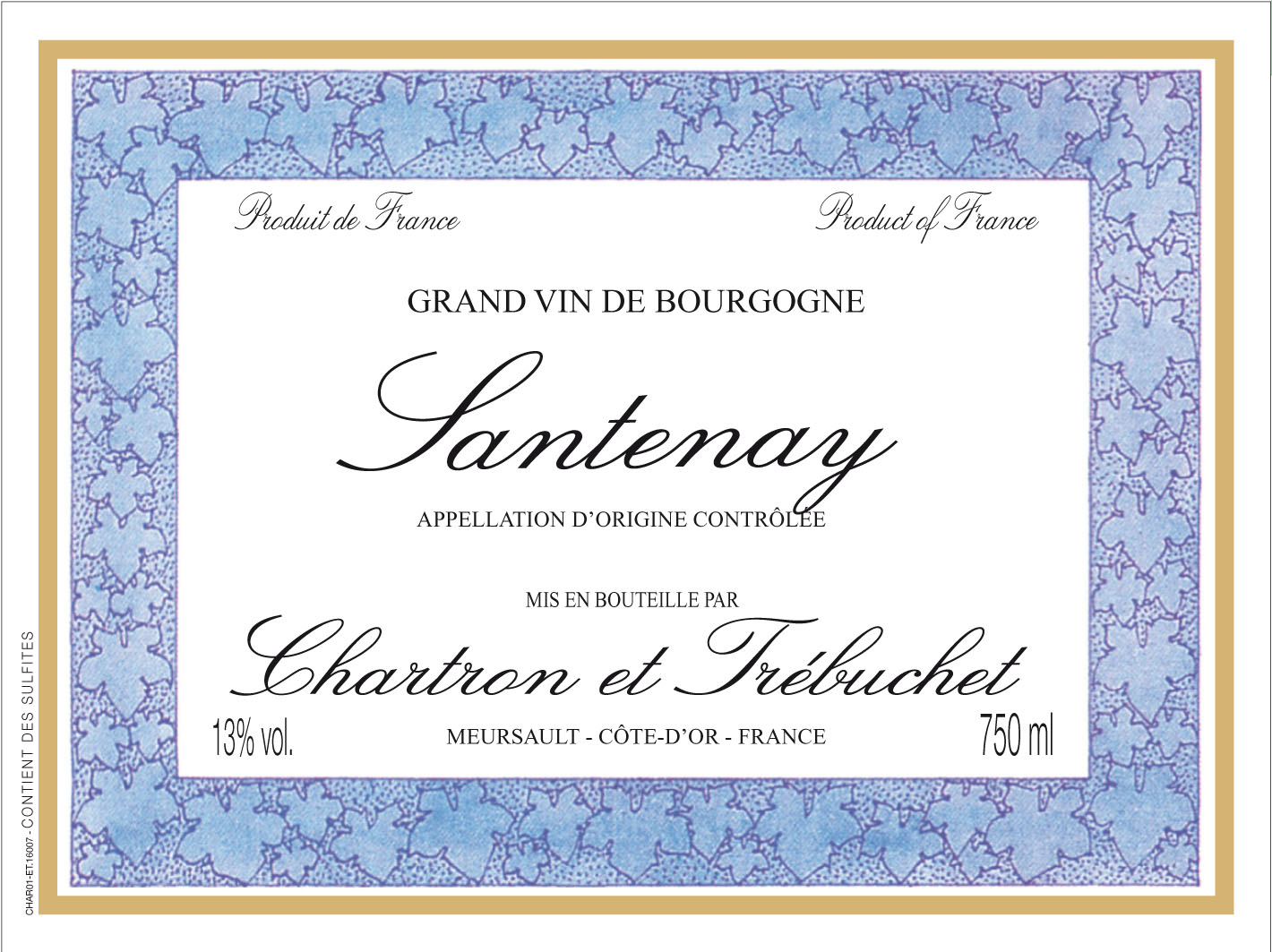
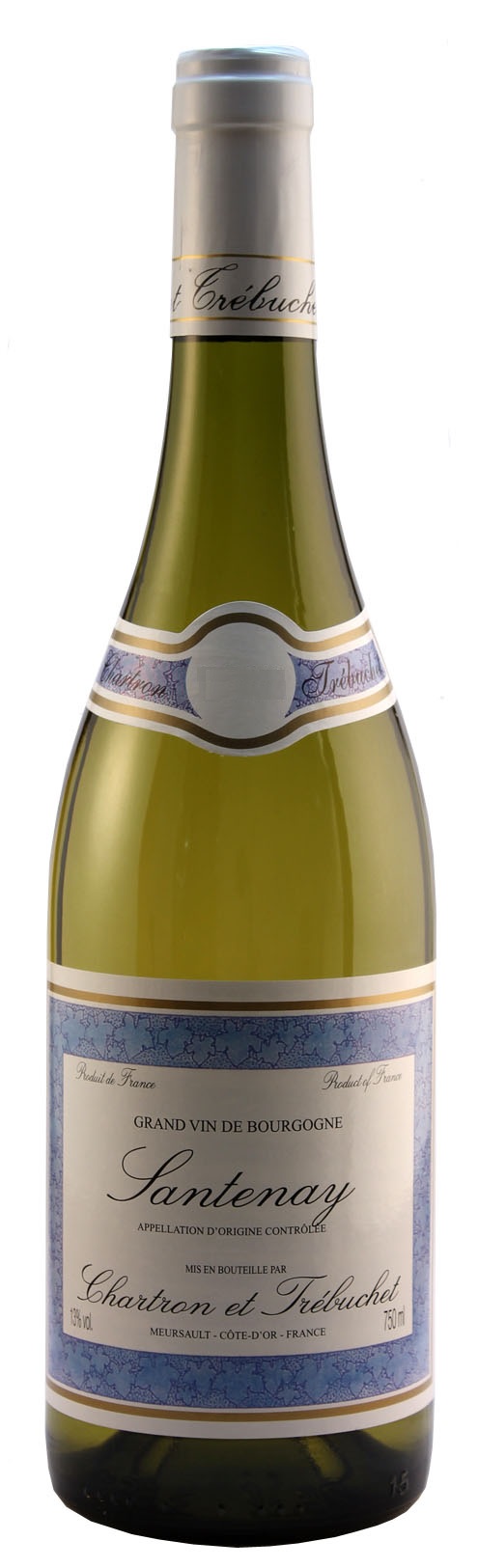
" We don't sell the wine without touching the vine "
| Country: | France |
| Region: | Burgundy |
| Winery: | Chartron et Trebuchet |
| Grape Type: | Chardonnay |
| Vintage: | 2016 |
| Bottle Size: | 750 ml |

Bachelet Bertrand Santenay Blanc is made from 100 percent Chardonnay.
Tasting Notes:
The Santenay Blanc comes from a parcel that is 1.2 hectares in size (3 acres) in the village called “En Charron”, at around 300 meters above sea level, with excellent sunshine and thin limestone soil, guaranteeing great aromatic finesse.
The wine shows a beautiful golden color, a fresh and slightly roasted nose combining lemon and lime aromas with a hint of vanilla. On the palate, almond and toasted hazelnut flavors, along with notes of white flowers and vanilla nuances.

Brulesecaille Blanc Grande Reserve is made from 75% Sauvignon Blanc, 25% Sauvignon Gris.
Average age of the vines is 25 years.
Manual harvest from September 19th-20th 2016.
Direct press at low pressure (whole cluster) with low amount of SO2, settling at 10°C.
Addition of yeast and alcoholic fermentation in casks 400 liters.
Raised on the lees for 6 months with regular batonnage (stirring of the lees).
Bottling in april 2017.
Fish, seafood, white meats, fine goat cheeses.

Roland Champion Champagne Blanc de Blancs Grand Cru Vintage Brut Grand Eclat is 100% Grand Cru Chardonnay from the chalky soils of Chouilly.
This Champagne is full of elegance and finesse. Very complex nose, with a bouquet of aromas dominated by honey, brioche and notes of dried fruits, hazelnuts and sweets. Perfectly matured.

Roland Champion Champagne Blanc de Blancs Grand Cru Vintage Brut Grand Eclat is 100% Grand Cru Chardonnay from the chalky soils of Chouilly.
This Champagne is full of elegance and finesse. Very complex nose, with a bouquet of aromas dominated by honey, brioche and notes of dried fruits, hazelnuts and sweets. Perfectly matured.

All older vintage wines have been purchased from a single collectors cellar. Pictures can be requested before shipment.

Bling de la Ferme Blanche Sparkling Millesime is made from 90% Sauvignon Blanc and 10% Clairette.
This is a Traditional Method Vintage Sparkling wine. Grapes are coming from the region of Cassis, but this sparkling wine can't be classified as Cassis AOC as the AOC is strictly for still White, Rosé and Red.
It is made with the local grape variety : Sauvignon Blanc and Clairette.
Fine bubbles, crisp and delicate, citrus zest, lime, stone fruit.
Chartron & Trebuchet Santenay Blanc is 100% Chardonnay.
The wine is clear and brilliant, mineral and floral, fresh and vigorous. Its aromatic expression features notes of bracken fern and hazelnut.
Its lightness, vivacity and edge would be a good choice for fluid and creamy like pasta or risotto with mushrooms. It would harmonize well with cheeses like Comté and goat cheeses.
The Chartron et Trebuchet Estate
Owners of Premiers and Grands Crus in Puligny-Montrachet since 1859 with the Domaine Jean Chartron, Jean-René Chartron founded the Maison Chartron et Trébuchet in 1984 with Louis Trébuchet, manager of a wine trading company.
Vincent Sauvestre acquired the company in 2004. His objective is to continue to promote the great white wines of Burgundy, whilst respecting and perpetuating the quality work achieved by Jean Chartron and Louis Trébuchet.
The Maison Chartron et Trébuchet specialises in producing great white Burgundy wines. The know-how of the winemakers begins with a radical selection of the very best plots: the highest-quality terroirs of the Côte are chosen and the grapes are carefully monitored throughout the ripening period. Grapes are hand-picked when the balance between acidity and sweetness is at its prime: the fruit must not be too ripe so that the full potential of the terroir is maintained, including its acidity, to ensure that the wines age properly. All of the winemaking is done in casks: the alcoholic fermentation is followed by malolactic fermentation. A proportion of 20 to 40% of new barrels is used, depending on the appellations and the vintage. Wines are left to age for 12 to 18 months depending on the appellations.
The Chartron et Trebuchet Vineyards
Chartron et Trébuchet's vineyards are all planted on Limestone and Clay based soils. In average, the age of the vines is 30 years old.

All older vintage wines have been purchased from a single collectors cellar. Pictures can be requested before shipment.

Brize Clos Medecin Anjou Villages Rouge is made from 60% Cabernet Franc and 40% Cabernet Sauvignon.
This is the flagship of the Estate. Clos Medecin has been produced at the estate for 90 years. All the grapes for this wine come from a very special parcel. The wine offers red fruit aromas. It is fresh, round and ample in the mouth.