
" We don't sell the wine without touching the vine "
| BUY MORE! SAVE MORE! | ||||||||||||||||||||
|
| Country: | France |
| Regions: | Rhone Chateauneuf du Pape |
| Winery: | La Nerthe |
| Grape Type: | Grenache |
| Organic: | Yes |
| Vintage: | 2021 |
| Bottle Size: | 750 ml |
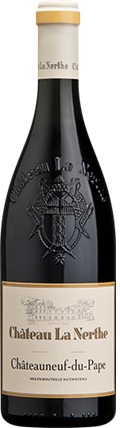
Chateau La Nerthe Chateauneuf-du-Pape Rouge is made from Grenache 39%, Mourvédre 33%, Syrah 25%, Cinsault 2%, Others 1%.
Château La Nerthe is one of the oldest estates in Châteauneuf-du-Pape and dates from 1560. Château La Nerthe has 227 acres of vineyards that surround the château and top the renowned La Crau plateau. The terroir is typical of the region. Vineyards run along a slope and grow in sandy-clay soils. The ground is covered by a layer of ‘galets’ – large, round, well-worn stones that were carried down from the Alps by glaciers during the last ice age. All the 13 permitted primary varietals are planted here. Grenache dominates 62% of the vineyards and the average vine age is over 40 years old. The grapes are hand harvested and sorted on tables. The grapes are then put into vats for almost 4 weeks with regular pump overs and punch downs. The must is tasted every day during fermentation to ensure the best extraction of the berry compounds. At the end, the wines are racked into oak vats for malolactic fermentation. The cuvée is then aged in large French oak casks and barrels for 12 months before blending. Bottling takes place 6 months later.
The dark, deep, inky color of the wine shows immediately, stemming from the concentration of the vintage. Nose of blackcurrants, black tea and dried flowers stands out. The mouth is rich, fruity and velvety with an incredibly layered tannic structure. The wine is balanced and pure with strong intense and incredibly long aging potential.
Review:
A focused expression, this wine delivers pure red and black fruits unfolding against a delicate rose-petal backdrop. Silky yet chewy tannins gradually reveal layers of red cherry, pomegranate, spice, violets, and a hint of clove. Its elegance is underscored by fine tannins, suggesting a wine that, while quiet now, holds the promise of revealing its full beauty with time in the bottle. Cellaring through 2028+ before revisiting should prove to be rewarding.
-Wine Enthusiast 93 Points
Wine grapes have been grown at the estate since the 1500s, making it one of the oldest estates in Châteauneuf-du-Pape.
Château La Nerthe is in contention for being one of the oldest estates in Châteauneuf-du-Pape. The estate was first purchased by the Tulle de Villefranche family in 1560. The historic Château was built in 1736. Château La Nerthe deserves credit for being one of the first estates to bottle their own wine. This took place to some extent starting in 1784. Château La Nerthe is one of the first, if not the first estate in Châteauneuf-du-Pape to export their wine outside of France. Another first that belongs to the estate is that Château La Nerthe began the practice of destemming 100% of their vines in the 1800’s. By this point in time, Château La Nerthe was the most expensive wine from the Southern Rhône.
In 1870, the Tulle de Villefranche family sold the property to the Joseph Ducos family. The sale took place in part, because of the devastation caused to the vineyards by Phylloxera. The Ducos family made their mark on Chateau la Nerthe’s history by replanting the vineyard on grafted phylloxera rootstock and by planting new, local grape varieties; 10 of the 13 permitted varietals were planted. The Ducos family maintained ownership of the property until 1941 when Château La Nerthe was bought at an auction by the Leclerc and Motte families.
By 1985, Château La Nerthe had become dilapidated and was put up for sale by the Dereumaux family and purchased by the Richard family in partnership with David and Foillard negociants. Their goal for the estate was to revive the original values of excellence and innovation. A complete renovation of the estate took place and much of the vineyards were replanted. In 1991, Château La Nerthe was able to expand their holdings with the purchase of 54 acres of vines, which helped to create one of the largest estates in the Southern Rhône with 230 acres. In 1998, the vineyard is certified organic. Rémi Jean joined the Chateau la Nerthe team in late 2019 and has been placed in charge of the estate and its winemaking. Rémi Jean has had a long partnership with the Richard Family Wineries, previously worked as General Manager for their Bordeaux properties, Château de Corcelles and Château des Tours.

Ceretto Barbaresco DOCG is made from 100 percent Nebbiolo.
If we could sum this wine up in a single word, we wouldn’t hesitate to define it as “classic”. As tradition suggests, this Barbaresco is the fruit of the assembly of several parcels of land, coming from some of our most beautiful vineyards. The idea is that of naturally obtaining balance by harmonizing different expressions, often contrasting ones. The result is a liquid expression of a terroir, tempting and typical, a synopsis of one Langa, that of Barbaresco, which moves in the glass, alternating between structure and elegance.
Review:
This is a really solid, meaty and mouth-filling Barbaresco that offers vivid red fruit with floral and mineral nuances and hints of licorice and cedar. Medium- to full-bodied with compact, velvety tannins that form the backbone of the wine, showing impressive concentration and length. Drink from 2027.
- James Suckling 93 Points
Bright, brightening ruby garnet. Appealing and finely drawn nose with notes of strawberries, blood orange and sealing wax. Very juicy on the palate, fresh, precisely defined fruit, opens up with fine-meshed tannins, very tense, with a cherry finish.
-FalStaff 93 Points

Louis Barruol describes the microclimate of the vineyard Malleval as “very cold” which allows the grapes to retain acidity and showcase the floral aromas of the local Sérine variety. Aromas and flavors of blackberries and wild strawberries are accented by notes of peppercorns, tobacco, peonies, and violets.
Syrah, with its deep flavors and firm tannins, is a natural match for grilled or smoked meat and dishes featuring herbs, roasted mushrooms, and onions. Seared venison or beef with black pepper and thyme or a Moroccan tagine of pigeon or chicken are complimented by the spicy characteristic of Syrah.
Review:
This rich and impeccably balanced Gigondas has everything we look for in the wines of this appellation. What a wide spectrum of aromas with everything from raspberry to candied orange, plus a slew of delicate spicy notes and fresh Mediterranean herbs. I love the interplay of richness, fine tannins and lively acidity on the generous, but not expansive palate. Very long, refined finish. From organically grown grapes. Drink or hold.
-James Suckling 94 Points
Powerful, with steeped plum and cherry coulis merging with potpourri and charred garrigue on a ripe, lush palate. Packs a wall of iron that provides a ballast for the ripe fruit, while refined tannins build in intensity. Long and complex, with a gorgeous expression of place. Grenache, Mourve`dre, Syrah and Cinsault.
Wine Spectator 94 Points

Each year, Sea Smoke's goal for Southing is to create the ideal marriage of complexity and elegance. The ever-changing nose of the Southing exhibits fresh currant, slight strawberry and rose aromas with notes of dried fruit, fennel, clove and nutmeg. The fine tannins and minerality are enhanced by the estate vineyard's characteristic cool climate acidity.

Maison Chapoutier Chateauneuf-du-Pape La Bernardine 2021 is made from 75% Grenache, 15% Syrah, 10% Mourvèdre.
Intense crimson-red in color with a complex but subtle nose of blackcurrant and plum followed by roasted coffee, cinnamon, and cherry. On the palate, it opens into spice, licorice and fruity notes.
Review:
A textural, refined and velvety Chateauneuf-du-Pape with aromas of forest berries, wet stones, roasted meat, wild herbs and some bark. It’s medium- to full-bodied with fine, firm tannins. There is a refined texture here, silky at the center, with a delicate core of dark cherries challenged by an intense array of spices that provide verve and energy.
-James Suckling 93 Points

Chateau Mazane Vacqueyras Rouge is made from 60% Grenache, 25% Syrah, 15% Mourvedre.
30% aged in oak, 70% in concrete vats
This 50 year old single vineyard (22 Acres) consists of three main varieties with a predominance of Grenache. It stretches over the 'Garrigues' (scrubland) plateau that is ideally located between the Ouvèze (tributary of the Rhone river) terraces and the Dentelles de Montmirail.
Chateau Mazane Vacqueyras Rouge is medium-bodied, pure and elegant. It offers plenty of plum, blueberry, spring flowers and peppery notes. On the palate, the richness of the tannins harmonizes with the smoothiness of the wine. The finish is long, with spice aromas and licorice. Beautifully textured, enjoy it over the coming 6-7 years.
on.

Domaine de la Janasse Chateauneuf-du-Pape Cuvee Vieilles Vignes is made from 65% Grenache, 20% Mourvèdre, 10% Syrah, 5% divers.
In contrast to Chaupin, which is made from old-vine Grenache on sandy soils, the cuvée Vieilles Vignes is from old vines of Grenache, Mourvedre, Syrah along with smaller percentages of other permitted varieties that are grown in these old vineyards. The wine is sourced from 4 terroirs: pebbly clay, sand, gravelly red clay and sandy limestone. Vieilles Vignes is always the most powerful and concentrated Châteauneuf-du-Pape cuvée made at Domaine de la Janasse.
Review:
The 2020 Châteauneuf Du Pape Vieilles Vignes also saw some stems (the estate started keeping some stems with the 2016 vintage) and was 75% destemmed, with the blend being 70% Grenache, 20% Mourvèdre, and the rest Syrah, Cinsault, and Terret Noir. As usual, it’s a more powerful, black-fruited wine comparted to the Cuvée Chaupin and has lots of crème de cassis, liquid violet, crushed stone, woodsmoke, and peppery herbs. It displays the vintage’s purity and freshness yet brings the concentration as well as the structure. I’ll be shocked if it’s not in the handful of top wines in the vintage.
-Jeb Dunnuck 96-98 Points
Domaine de la Janasse Chateauneuf-du-Pape Cuvee Vieilles Vignes is made from 65% Grenache, 20% Mourvèdre, 10% Syrah, 5% divers.
In contrast to Chaupin, which is made from old-vine Grenache on sandy soils, the cuvée Vieilles Vignes is from old vines of Grenache, Mourvedre, Syrah along with smaller percentages of other permitted varieties that are grown in these old vineyards. The wine is sourced from 4 terroirs: pebbly clay, sand, gravelly red clay and sandy limestone. Vieilles Vignes is always the most powerful and concentrated Châteauneuf-du-Pape cuvée made at Domaine de la Janasse.
Review:
The advantages of old vines are perhaps most evident in the more difficult vintages (whether hot and dry or cool and rainy). The 2021 Chateauneuf du Pape Vieilles Vignes is a strong effort, delivering supple, velvety waves of ripe black cherries and black raspberries. Medium to full-bodied, it's rich and concentrated without seeming at all heavy or unbalanced, finishing long and juicy. It's approximately 75% Grenache, 15% Mourvèdre, 5% Syrah and 5% other varieties, keeping in mind that up to 15% of the old Grenache vines are actually Clairette Rose.
-Wine Advocate 96 Points

Grand Veneur Chateauneuf-du-Pape Rouge Les Origines is made from 50% Grenache, 30% Mourvedre and 20% Syrah
Matured in vats (grenache) and in oak casks (syrah and mourvèdre).
Deep and brilliant, purple-red colour. An exciting nose with aromas of black fruit (blackcurrant, cherry) spices and vanilla. This great aromatic complexity is found on the palate : the spices and ripe fruit appear with an elegant woodiness and harmonious tannins. The finish has good aromatic length and introduces a touch of liquorice and pepper.
A terrific Châteauneuf du Pape with great concentration and finesse.
Best between 2 and 20 years. Best to decant if young (less than 5 years old).
Soil type Extreme north of Châteauneuf du Pape. This plateau is made with a high quantity of red clay mixed with rocks. This area is considerated to be one of the best to produce rich and powerful red wines. By definition, LES ORIGINES will always deliver a great complexity and ageing potential. Winemaking & ageing Harvest is sorted by hand, destemmed and crushed. Fermentation temperature is controlled at 30°C. Vatting period of 18 to 20 days. Matured in vats (grenache) and in oak casks (syrah and mourvèdre).
Review:
"The full dry tannins shape the personality of this bold and crisp Chateauneuf. Aromas of dry earth, savory and black pepper. Seriously structured finish where the tannins need some time to resolve. A cuvee of 50% grenache, 30% mourvedre and 20% syrah. From organically grown grapes. Drinkable now, but best from 2025."
- James Suckling (April 2023), 92 pts
Maison Chapoutier Chateauneuf-du-Pape La Bernardine 2021 is made from 75% Grenache, 15% Syrah, 10% Mourvèdre.
Intense crimson-red in color with a complex but subtle nose of blackcurrant and plum followed by roasted coffee, cinnamon, and cherry. On the palate, it opens into spice, licorice and fruity notes.
Review:
A textural, refined and velvety Chateauneuf-du-Pape with aromas of forest berries, wet stones, roasted meat, wild herbs and some bark. It’s medium- to full-bodied with fine, firm tannins. There is a refined texture here, silky at the center, with a delicate core of dark cherries challenged by an intense array of spices that provide verve and energy.
-James Suckling 93 Points

Mordoree Chateauneuf-du-Pape La Reine des Bois is made from Grenache 75 %, Mourvèdre 10%, Syrah 10 % , Counoise 3% & Vaccarese 2%.
This premium cuvee - whose name means "Queen of the Woods" - is from 65-year-old vines, planted on Villafranchian-era terrasses. Yield is 30 hl/ha.
Deep ruby red; opaque. Aromas of red fruits change to wooden touches of leather, black truffles and coffee. Fat, concentrated and full flavored with a very long liquoriced and fruity finish.
Pairs with red meats, sauce dishes, game animals (woodcock, wild boar) and semi mature cheeses.
Review:
"The 2019 Châteauneuf Du Pape Cuvée De La Reine des Bois is a deeper, more masculine wine with gorgeous cassis and blackberry fruits as well as graphite, licorice, crushed stone, violets, and lavender nuances. Rich, full-bodied, and incredibly concentrated, it has a brilliant sense of freshness and purity as well as length on the finish. It's going to require 4-5 years of bottle age, but this straight-up thrilling Châteauneuf du Pape will have 20-25 years of prime drinking."
- Jeb Dunnuck (November 2021), 98+ pts

Chateau Lascombes Margaux is made from 67% Cabernet Sauvignon, 30% Merlot, 3% Petit Verdot and Cabernet Franc.
An Earth Mother, with velvet-lined blackberry, Bay leaf, graphite, and roasted coffee bean. Chalky tannins grip the teeth, with a dusty grip. From its backbone and vibrant acidity, to its notes of dried violets on the finish, we bow to its elegant nature.
- The Somm Journal, Apr/May 2025 97 Points
Precise, brilliant and engaging, a three-dimensional wine that shows itself in all its splendor. Notes of black cherries, mixed plums, mixed flowers and bergamot describe the secondary scene. Lemon peel and ginger the secondary one. Full body, perfectly extracted tannins and a vertical finish of infinite presence. Better from 2029.
-WineCritics.com 97 Points
Based on 67% Cabernet Sauvignon, 30% Merlot and the rest Petit Verdot and Cabernet Franc, the 2022 Château Lascombes pulls from 40% of the total production and was aged 18 months mostly in barrels (60% new) with a small portion in foudre. This inky hued beauty boasts a rich, concentrated, full-bodied, well-oaked style as well as pure cassis and darker berry fruits, some graphite, scorched earth, and licorice nuances, terrific overall balance, and a great finish.
-Jeb Dunnuck 96+ Points

Clos Saint-Jean is a 41-hectare estate in Châteauneuf-du-Pape run by brothers Vincent and Pascal Maurel. Considered by many critics and wine-writers as the preeminent estate espousing the modern style of winemaking in Châteauneuf, this cellar is one of the oldest in the region, having been founded in 1900 by the greatgreat-grandfather of Vincent and Pascal, Edmund Tacussel. A short time after its founding and well before the AOP of Chateauneuf-du-Pape was created in 1923, Edmund began bottling estate wines in 1910.
The farming at Clos Saint-Jean is fully sustainable due to the warm and dry climate, which prevents the need for chemical inputs. Instead, Vincent and Pascal employ organic methods for pest control, mainly pheromones, to prevent pests from taking up residence in their vines, a process called amusingly enough in French, confusion sexuelle. The vines tended manually, and harvest is conducted in several passes entirely by hand.
Combe des Fous literally means, the hill of the fool. The hill, in this case, is located in the far southern reach of Le Crau which was left barren for many centuries because the layer of galets was so exceedingly deep that everyone assumed vines could never survive there. The fool in this situation is Edmund Tacussel, the great-great-grandfather of Vincent and Pascal Maruel who planted a Grenache vineyard on this site in 1905. That old-vine Grenache form the heart of this cuvée with a small amount of Syrah, Cinsault and Vaccarèse. La Combe des Fous is only made in the best vintages.
Review:
This has good concentration and energy to the dense core of dark fruit and bitter cherry, with great poise and elegance despite its ripeness (an impressive feat for the vintage). Guided by finely crushed mineral accents and tannins, this reveals pretty high-toned floral notes and leafy tobacco. Grenache, Syrah, Mourvedre, Cinsault, Vaccarese and Muscardin. Drink now through 2032. 900 cases made.
-Wine Spectator 95 Points

Yalumba The Signature Cabernet Sauvignon Shiraz is made from 54% Cabernet Sauvignon, 46% Shiraz.
Encompassing everything the Hill-Smith family stands for and the perfect representation of Yalumba’s history and ethos, The Signature is a sentimental favorite. A classic Australian blend of Cabernet Sauvignon and Shiraz, the first vintage release of The Signature was in 1962. Since then, this outstanding wine has acknowledged more than 57 Signatories; people who have enhanced the traditions and culture of Yalumba.
Seductive and alluring florals, cool mints, red pomegranate with fine blackberry fruits and dark cherry aromas. The palate is delightfully generous with dark red cherry fruit that merges into ironstone tannins. A medium to full bodied wine with a long, flowing tannin profile.
Review:
The 2018 The Signature Cabernet Sauvignon Shiraz (the 48th vintage) is named for Nick Waterman (managing director and CEO of Yalumba 2015 - 2022). The 2018 vintage in South Australia (and specifically here, Barossa) was an excellent one: ripe/warm, even and long and produced wines with density, energy and gravitas. This is exactly that: plush and powerful. The fruit forms a perfect dovetail: the enveloping, mouth-filling abundance of the Shiraz, neatly wedged into the folds of the structuring and shapely Cabernet. Very impressive. This is one of the more impressive Signatures in recent times. It will cellar with grace and ease.
-Robert Parker 96 Points
Since its first release in 1962, The Signature has been Yalumba's deep dive into the classic Australian blend from the Barossa and one that honors the people who have enhanced the traditions and culture of Yalumba. There is a resonance and depth to this release that I really like. Wonderfully pure and concentrated blackberry and plum fruits, layered with spice, dark chocolate, earth, cedar and oak nuance. Succulent and sinewy in the mouth, it flexes considerable muscle, yet remains purely fruited and approachable even at this stage of its evolution. Rich and balanced with fine, ripe tannin and plenty of energy for such depth of fruit. Lovely.
- Australian Wine Companion 96 Points

O'Shaughnessy Estate Napa Valley Cabernet Sauvignon is made from 89% Cabernet Sauvignon, 3% Malbec, 3% Petit Verdot, 3% St. Macaire, 1% Cabernet Franc, and 1% Carmenère.
Blended from our three Estate vineyards in arguably the three best appellations within the Napa Valley: Howell Mountain, Mt. Veeder and Oakville. Howell Mountain gives us structure and ripe red fruit, while Mt. Veeder adds an extra punch of tannins along with savory mineral driven qualities, Oakville balances out the mountains with its silky texture and pure fruit. This Cabernet is deep ruby red with an opaque center. Bold aromas of aged leather, black currant, and rum raisin, creating a layered and complex bouquet. A luxuriously sweet and rich entry, unfolding with ripe blackberry and velvety cocoa powder. The texture is smooth yet structured, balanced by moderate tannins and a medium level of acidity, leading to a long, elegant finish.
Review:
Based on 89% Cabernet Sauvignon, 3% Malbec, 3% Petit Verdot, 3% St. Macaire, 1% Cabernet Franc, and 1% Carmenère and aged two years in French oak (60% new, 40% second year), the 2022 Cabernet Sauvignon offers blackcurrants, scorched earth, iron, sappy herbs, and tobacco. It's rich and medium to full-bodied, nicely concentrated, and has a layered, textured mouthfeel, ripe underlying tannins, and outstanding length. I slightly prefer the overall structure and balance here to the Mt. Veeder bottling, but both are successful 2022s with 10-12 years of longevity.
-Jeb Dunnuck 93 Points



