" We don't sell the wine without touching the vine "
| Country: | France |
| Regions: | Rhone Vacqueyras |
| Winery: | Colline St-Jean |
| Grape Type: | Grenache |
| Vintage: | 2015 |
| Bottle Size: | 750 ml |

Cazaux Vacqueyras Rouge Cuvee Saint Roch 70% Grenache, 25% Syrah and 5% Mourvedre.
Deep color. Intense and persistent red fruits, such as strawberry and black cherry. Expressive and delicate at the same time. The finish is long and the tannins are quite round and well balanced.
Grapes are hand picked, destemmed 100% but not crushed. About 20 days fermentation according to vintage. Aged in stainless steel tanks for 12 months and an additional 12 months in enamel coated concrete tank. No fining, light filtration.
Enjoy this wine with meat cooked in red wine sauce (such as Boeuf Bourguignon).

Reverdy Jean Sancerre Rouge is mader from 100% Pinot Noir
The wine is spicy and juicy with cherry aromas, and proves the point that power is not necessary for a fine wine.

Jean-Claude et Nicolas Fayolle Hermitage Rouge Donnieres is made from 100% Syrah.
Made from 40-year-old vines planted on granitic and rocky soils in the Lieu dit "Les Donnieres" at the bottom of the Hermitage's hill.
Intense inky ruby red color.
The wine has plenty to offer with red and black fruit aromas, as well as a good minerality.
The finish is very long, clean and juicy and offers a great spicy mouthfeel.
Soil is clay, silica and round pebbles.
Hand harvested in small crates. The grapes are then pumped into tanks (full cluster, not destemmed).
It will stay in this tank for 15 days for the skin contact maceration and the Alcoholic fermentation.
Tey will also use the "rack and return" technique (delestage).
Then the wine is transfered into neutral French Oak barrels where the wine will complete the Malo-Lactic fermentation.
Delicious with grilled red meat such as venison or lamb and most cheeses.

Clos Saint-Jean Chateauneuf Du Pape Vieilles Vignes is made from a Grenache, Syrah, Mourvedre, Cinsault, Vaccarèse and Muscardin, the Châteauneuf-du-Pape Vieilles Vignes is made from old vines located in and around Le Crau. The Grenache is aged in concrete for 12 months while the remainder is aged in demi-muid.
Review:
This has good concentration and energy to the dense core of dark fruit and bitter cherry, with great poise and elegance despite its ripeness (an impressive feat for the vintage). Guided by finely crushed mineral accents and tannins, this reveals pretty high-toned floral notes and leafy tobacco. Grenache, Syrah, Mourvedre, Cinsault, Vaccarese and Muscardin. Drink now through 2032. 900 cases made.
-Wine Spectator 95 Points

Clos Saint-Jean is a 41-hectare estate in Châteauneuf-du-Pape run by brothers Vincent and Pascal Maurel. Considered by many critics and wine-writers as the preeminent estate espousing the modern style of winemaking in Châteauneuf, this cellar is one of the oldest in the region, having been founded in 1900 by the greatgreat-grandfather of Vincent and Pascal, Edmund Tacussel. A short time after its founding and well before the AOP of Chateauneuf-du-Pape was created in 1923, Edmund began bottling estate wines in 1910.
The farming at Clos Saint-Jean is fully sustainable due to the warm and dry climate, which prevents the need for chemical inputs. Instead, Vincent and Pascal employ organic methods for pest control, mainly pheromones, to prevent pests from taking up residence in their vines, a process called amusingly enough in French, confusion sexuelle. The vines tended manually, and harvest is conducted in several passes entirely by hand.
Combe des Fous literally means, the hill of the fool. The hill, in this case, is located in the far southern reach of Le Crau which was left barren for many centuries because the layer of galets was so exceedingly deep that everyone assumed vines could never survive there. The fool in this situation is Edmund Tacussel, the great-great-grandfather of Vincent and Pascal Maruel who planted a Grenache vineyard on this site in 1905. That old-vine Grenache form the heart of this cuvée with a small amount of Syrah, Cinsault and Vaccarèse. La Combe des Fous is only made in the best vintages.
Review:
Pumps out heady raspberry, mulberry and blackberry compote notes that keep form and direction, thanks to a roasted apple wood spine and flanking ganache, garrigue and warm earth notes. Seriously grippy finish. Grenache, Syrah, Cinsault and Vaccarèse.
-Wine Spectator 96 Points
The 2020 Châteauneuf Du Pape La Combe Des Fous is a normal blend of 70% Grenache, 20% Syrah, and the rest Vaccarèse and Cinsault. Beautiful, full-bodied aromas and flavors of ripe black raspberries, violets, ground pepper, lavender, and herbes de Provence all emerge from this gorgeous barrel sample, and it shows the pure, fresh, yet still concentrated style of the vintage brilliantly.
-Jeb Dunnuck 94-97 Points
Clos Saint-Jean is a 41-hectare estate in Châteauneuf-du-Pape run by brothers Vincent and Pascal Maurel. Considered by many critics and wine-writers as the preeminent estate espousing the modern style of winemaking in Châteauneuf, this cellar is one of the oldest in the region, having been founded in 1900 by the greatgreat-grandfather of Vincent and Pascal, Edmund Tacussel. A short time after its founding and well before the AOP of Chateauneuf-du-Pape was created in 1923, Edmund began bottling estate wines in 1910.
The farming at Clos Saint-Jean is fully sustainable due to the warm and dry climate, which prevents the need for chemical inputs. Instead, Vincent and Pascal employ organic methods for pest control, mainly pheromones, to prevent pests from taking up residence in their vines, a process called amusingly enough in French, confusion sexuelle. The vines tended manually, and harvest is conducted in several passes entirely by hand.
Combe des Fous literally means, the hill of the fool. The hill, in this case, is located in the far southern reach of Le Crau which was left barren for many centuries because the layer of galets was so exceedingly deep that everyone assumed vines could never survive there. The fool in this situation is Edmund Tacussel, the great-great-grandfather of Vincent and Pascal Maruel who planted a Grenache vineyard on this site in 1905. That old-vine Grenache form the heart of this cuvée with a small amount of Syrah, Cinsault and Vaccarèse. La Combe des Fous is only made in the best vintages.
Review:
This has good concentration and energy to the dense core of dark fruit and bitter cherry, with great poise and elegance despite its ripeness (an impressive feat for the vintage). Guided by finely crushed mineral accents and tannins, this reveals pretty high-toned floral notes and leafy tobacco. Grenache, Syrah, Mourvedre, Cinsault, Vaccarese and Muscardin. Drink now through 2032. 900 cases made.
-Wine Spectator 95 Points
Closeout!
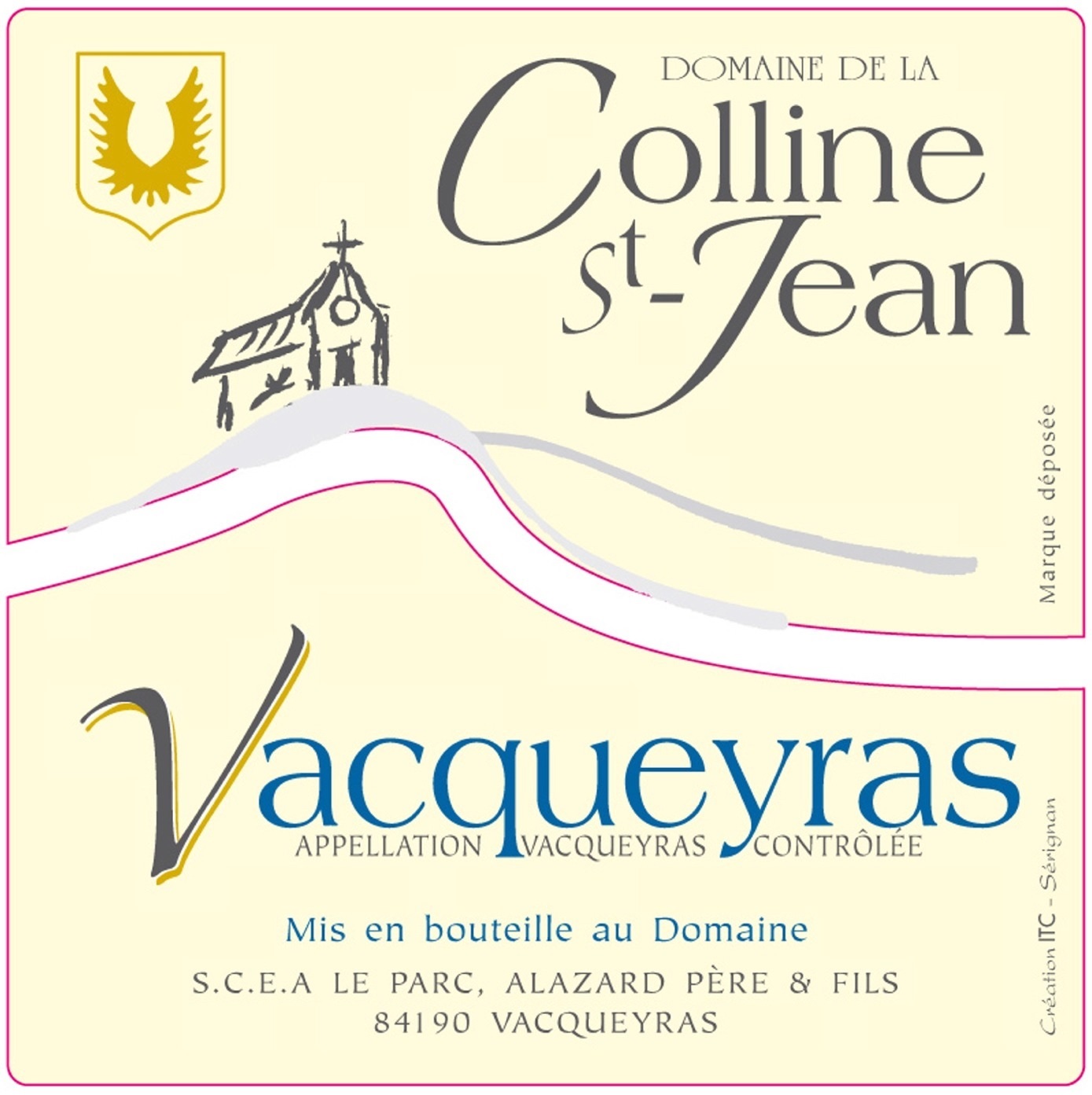
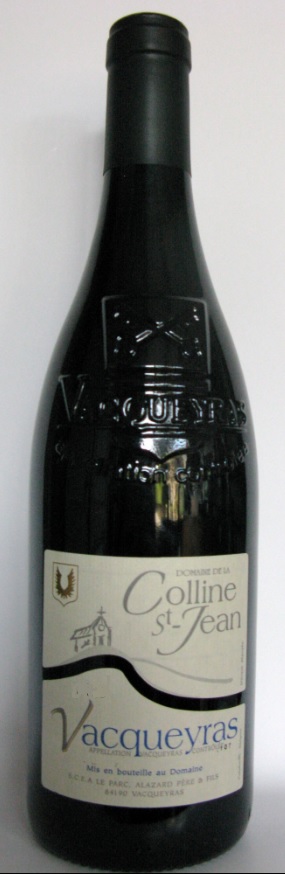
Colline Saint Jean Vacqueyras Rouge is made from 70% Grenache, 25% Syrah, 5% Mourvèdre.
Dense ruby/purple color as well as an impressive bouquet of red and black fruits (cherry, raspberry, black currant), licorice, garrigue and pepper.
The wine is dense, full-bodied, opulent and impressively endowed with sweet, well-integrated tannins.
Harvested by hand. Traditional vinification. Skin-contact maceration for 20 days in cement vats. Ageing: 70% in cement vats and 30% in oak barrels.
Pairs well with red meat, white meat, game dishes in macerate sauce and cheese.
Review:
"What looks to be a smokin’ good wine, the 2015 Vacqueyras dishes up tons of smoked herbs, licorice, spice and ripe dark fruits in a rounded, impressively textured style. Made from 70% Grenache, 25% Syrah and a splash of Mourvèdre, mostly destemmed and aged in concrete (there’s a small part in foudre), it should provide tons of pleasure over the coming decade. - Jeb Dunnuck"
- Robert Parker's Wine Advocate (Issue #228, December 2016), 90-92 pts
The Domaine St-Jean Estate
Located in the middle of the Cotes du Rhone, in the village of Vacqueyras, at the foot of Dentelles de Montmirail, Domaine de La Colline St. Jean has been a family-owned property for several generations.
The Domaine St-Jean Vineyard
They have 35 ha of vineyards in Vin de Pays du Vaucluse, Côtes-du-Rhône, Vacqueyras, Gigondas and Beaumes de Venise. Roland Alazard and his son preserve the character and the traditions of wine producers in their Cotes-du-Rhone wines. The hillside vineyards are heated by the sun giving the resulting wine a generous crimson robe, complex flavors and a delicate roundness on the palate.
Vacqueyras AOC represent 1,690 hectares (4,191 acres), of which only 1,300 hectares (3,224 acres) are planted with vines.
Total production for the entire Vacqueyras AOC is roughly 42,775 hectoliters (474,089 twelve-bottle-case equivalent).

Nickel & Nickel Truchard Vineyard Chardonnay is made from 100 percent Chardonnay.
The 2023 Nickel & Nickel Truchard Chardonnay opens with enticing aromatics of tropical fruit, tangerine, and a hint of honeysuckle. On the palate, it presents a bright and vibrant profile, with a natural lift from its fresh fruit flavors and lively acidity. The tropical and citrus notes are complemented by a subtle brioche character, while the oak imparts a pleasant roundness, bringing balance and weight to the wine.
Review:
The freshness and pure fruit flavors of this generous wine ring clear as a bell. Crisp green apples, Bosc pears and subtle oak spices like vanilla bean and toasted almonds fill the palate. While medium-bodied, it feels full and generous and has a lingering finish. Drink now or hold.
-James Suckling 94 Points
Winemaker Joe Harden ages his Truchard Vineyard Chardonnay for 10 months in 30% new French oak, with minimal stirring and no malolactic fermentation, allowing for a slightly more pronounced oak presence. Truchard, one of Carneros' most esteemed sites, is characterised by rolling hills with ideal sun exposure and cooling breezes. Harden sources fruit from eight distinct blocks across the vineyard’s expansive 109 hectares, with harvests spanning roughly a month. Among the selections is Clone 809, a Muscat clone that adds floral aromatics and a touch of baking spice. The Truchard Chardonnay exhibits a silky texture on the palate, layered with citrus peel and tropical hints of apricot and peach. A rich spine of acidity is further heightened by vivid mineral tension, creating a wine that is both racy and rich. Elegantly balanced, it’s a delightful sipper with impressive depth and vibrancy.
-Decanter 94 Points

Luis Canas Rioja Crianza is made from 95% Tempranillo and 5% Garnacha
A classic style Rioja from one of the regions most enduring family run wineries.. The hillside terraced vineyards are sheltered by the Sierra Cantabria Mountains to the north from harsh weather extremes. Small plot production is utilized in this region of infertile chalky clay soil to produce clusters of excellent quality. Almost 900 plots are needed to complete the approximately 400 hectares of estate-owned or cellar-controlled vineyards, some with vines more than 100 years in age.
Tasting notes
Made from 95% Tempranillo, 5% Garnacha of 30 years of age, the wine shows a ruby red color, a clean nose with nuances of balsamic, plum and cedar. The palate is smooth and velvety, complex and structured, with fruit, spice flavors with toasted oak. A pleasant finish with red fruits and hints of eucalyptus.
The harvest
This year in Rioja Alavesa the weather has been especially cold, the summer short and dry, and there has been plenty of rain in early September. This has produced wines with great aromatic notes, particularly those coming from high altitude areas, very fragrant and with great structure.
Winemaking and aging
Upon entering the bodega and passing the selection table, the grapes are de-stemmed and crushed before undergoing fermentation and then maceration in stainless steel tanks for a total of 8 days, obtaining better color extraction as well as much more complex wines, suitable for prolonged aging. The wine is clarified with vegetable gelatines and follows anicrobic filtration.
It is ideal to pair with meats; red meat, poultry, small game, oily fish, semi-cured cheeses, spicy dishes and hot dishes such as beans or potatoes Rioja style.
After its primary fermentation, the wine is placed in barrels where it undergoes malolactic fermentation and is aged for a minimum of 12 months. It is then bottled for at least another 12 months.
Review:
"Juicy Bing cherries, peppery herbs, leather, and cedarwood notes all emerge from the 2021 Rioja Crianza, a medium-bodied, concentrated, round, layered red that has supple tannins, beautiful fruit, and a great finish. This classic Rioja has tons to love."
- Jeb Dunnuck (Importer Highlight: Fran Kysela ; July 2024), 91 pts