" We don't sell the wine without touching the vine "
| Country: | France |
| Region: | Languedoc |
| Winery: | Chateau de Mus |
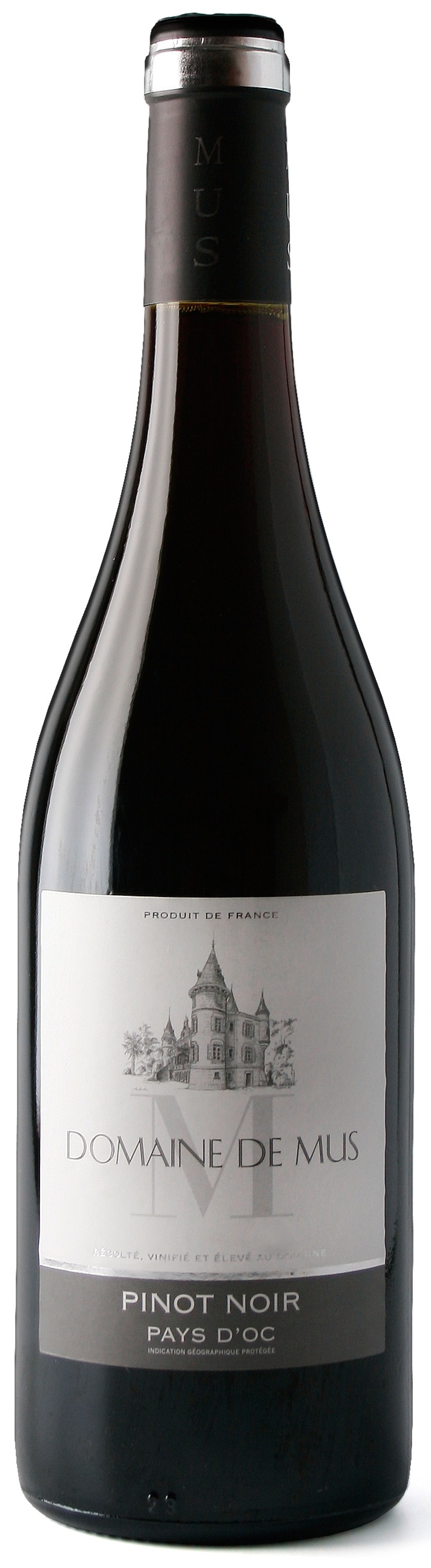
| Grape Type: | Pinot Noir |
| Vintage: | 2018 |
| Bottle Size: | 750 ml |

All older vintage wines have been purchased from a single collectors cellar. Pictures can be requested before shipment.

Domaine de la Janasse Chateauneuf-du-Pape Cuvee Vieilles Vignes is made from 65% Grenache, 20% Mourvèdre, 10% Syrah, 5% divers.
In contrast to Chaupin, which is made from old-vine Grenache on sandy soils, the cuvée Vieilles Vignes is from old vines of Grenache, Mourvedre, Syrah along with smaller percentages of other permitted varieties that are grown in these old vineyards. The wine is sourced from 4 terroirs: pebbly clay, sand, gravelly red clay and sandy limestone. Vieilles Vignes is always the most powerful and concentrated Châteauneuf-du-Pape cuvée made at Domaine de la Janasse.
Review:
The 2020 Châteauneuf Du Pape Vieilles Vignes also saw some stems (the estate started keeping some stems with the 2016 vintage) and was 75% destemmed, with the blend being 70% Grenache, 20% Mourvèdre, and the rest Syrah, Cinsault, and Terret Noir. As usual, it’s a more powerful, black-fruited wine comparted to the Cuvée Chaupin and has lots of crème de cassis, liquid violet, crushed stone, woodsmoke, and peppery herbs. It displays the vintage’s purity and freshness yet brings the concentration as well as the structure. I’ll be shocked if it’s not in the handful of top wines in the vintage.
-Jeb Dunnuck 96-98 Points

Maison Roy Willamette Valley Pinot Noir is made from 100 percent Pinot Noir.
The Willamette Valley Pinot Noir combines fruit from Roy's Dundee and Yamhill-Carlton estates. Gentle and suave, this Pinot offers inviting red fruit, baking spice, and a touch of purple floral tone. On the palate, a soft tannic structure makes this wine friendly and accessible in its youth and will keep drinking very well for the next 5-7years.

Resonance Decouverte Vineyard Pinot Noir is made from 100 percent Pinot Noir.
The wine reflects a beautiful and brilliant garnet color, with an expressive and complex nose of strawberry, plum, wild cherry, almond and licorice. The wine reveals an elegant palate, vibrant and complex, with delicate notes of noble wood, and very long and mineral finale.
Review:
James Suckling 93 Points

Domaine Nico le Paradis Pinot Noir is made from 100 percent Pinot Noir.
The cool climate vineyard that belongs to Laura and her sister Adrianna Catena feels like paradise itself to Laura. It is lined by trees and fruit orchards, with majestic views of the Andes. Inside the 12 Hectare vineyard, there is a little house with two tiny bedrooms and a kitchen, where Laura dreams of spending a whole month reading books-Laura's version of paradise. The little house is affectionately named Chateau Laura. About the Vineyard The tiny parcel where Le Paradis is grown was planted in 2011 with Dijon 667 Clones over two acres. Wine Production The grapes from this small parcel were elaborated in 15 separate microvinifications.
All the microvinifications were fermented with indigenous yeast. 20% of the microvinifications were fermented with 100% whole clusters in oak roll-fermentor of 600L and low temp (22 Celcius degrees). 40% were fermented with 20% whole cluster in small vats of 800L and 40% fermented in small vats of 800L without sulfites until 4%V/V of alcohol.
Review:
From soils rich in calcium carbonate and sand, in a vineyard 1,600 meters above sea level, this wine comes from a selection of 2.7 hectares that produced very little fruit in 2016, just barely enough to fill 800 bottles. But watch out for this white, with its edge, its minerality, those saline notes that are so characteristic of chardonnay from the chalky Gualtallary soils. The wine was aged for a year in used barrels, and it has some of the toast, but here it’s the deep minerality that dominates.
Patricio Tapia - Descorchados 96 Points

Domaine de Beaurenard Chateauneuf-du-Pape Blanc is made from Clairette blanche & Rose, Grenache Blanc & Gris, Bourboulenc, Roussanne, Picpoul and Picardan.
Gold bright green color. Expressive nose with pear and stone fruits aromas (peach, apricot) with jasmine and roasted almonds notes. The mouth is smooth and fleshy like stone fruit we can smell, with a long a nice finish.
Review:
Bright golden yellow, silver reflections. Delicate herbal spices, a hint of chamomile and mandarin zest, pears and blossom honey are underneath. Juicy, elegant, white peach, delicate honeydew melon, mineral and harmonious, fine fruit sweetness, good ripening potential.
-Falstaff 92 Points
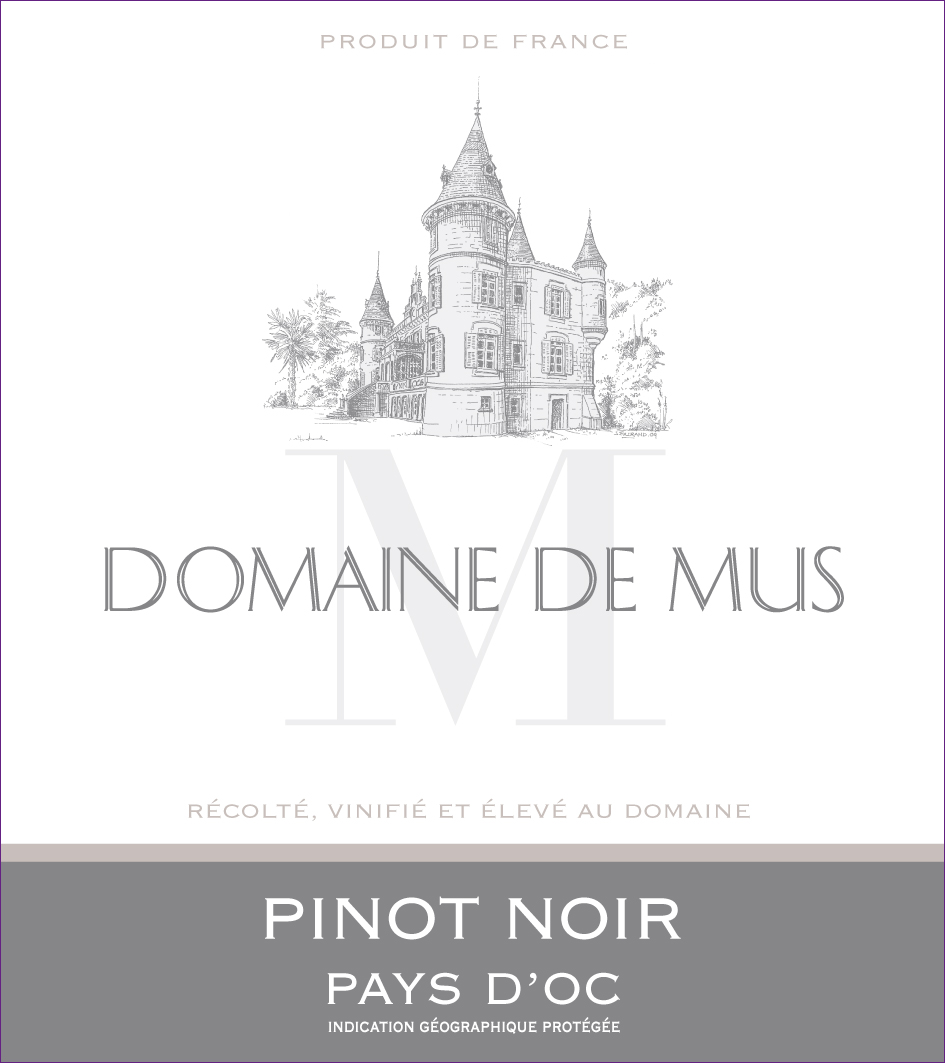
Domaine Mus de Pinot Noir is made from 100 percent Pinot Noir
Nice red color, with garnet-red shades.
Expressive and charming on the nose with nice flower notes (violet, peony).
On the palate, fresh and round, a fine and elegant red wine on red fruit notes (cranberries, redcurrants), with a beautiful balance. A nice length, with a soft spicy finish. A beautiful Mediterranean expression of the variety.
The average age of the vines is 11 years old.
Traditional winemaking. A very special attention is paid to the health state of the crop, harvested when fully matured. Complete destemming. Macerating in vats during 5 weeks, under heat monitoring. Fermentation under the effect of selected yeasts. End of fermentation under control of the temperature. When the fermenting process is achieved, free-run and press wines are kept separately and sometimes partly or totally blended, according to the vintage aromatic and gustatory expression. Ageing in vats until bottling.
The Chateau de Mus is located in Murviel-Les-Beziers in the Languedoc region.It is home to a gorgeous Renaissance-style castle.
The Julien Family has been working hard in the vineyards, in the cellars, but they also have a restoration project for the chapel and the castle located on the property. Today, Yannick and Brice are representing the 5th generation of winemakers in the Family.
Date Founded: 2004
Dating back at least 800 BC, the Château de Mus represents one of the largest archaeological sites in Hérault, illustrating the prehistoric, Celtic, Roman, Greek and Etruscan ages. The estate was named after an ancient fortified place called « Murus » («city wall» in Latin), built up on a promontory over the Orb river. At MUS, a Romanesque church was built in 1070 (today its restoration is in progress) such as one of the six first castles of the area. Twice destroyed during the crusade against the Cathars in the 13th C. the former mansion was replaced in 1848 by a Renaissance-style castle, prefiguring the great times of the “wine chateaux” in Languedoc.
The JULIEN'S bought the CHATEAU DE MUS in 2004
The vineyard is planted to traditional grape varieties of the Languedoc’s AOP, Grenache, Syrah, Mourvèdre, Cinsault, in the estate’s AOP area, and also of a range of different French varieties planted in the Vin de Pays area, mainly Cabernet Franc, Cabernet Sauvignon, Merlot, Petit Verdot, Malbec, Pinot Noir, Tannat, Marselan, Muscat, Grenache Gris, Sauvignon blanc, Sauvignon, Vermentino, Viognier.
The winery is modern and the temperature controlled vinification is a huge part of the quality process. Concrete tanks, stainless steel and open top fermenters are used for almost all of their wines

Boroli Cerequio is made from 100 percent Nebbiolo.
The Boroli family is a family of entrepreneurs, with roots in Piedmont dating back to 1831. The family started their winemaking business in1997, when Silvano and Elena Boroli felt an ardent desire to step away from the pressures of their publishing business and reconnect to nature. Silvano and Elena grew the company until their son, Achille, stepped in to run the wine-growing and production business in 2012.
With the 2012 grape harvest Achille decided to radically change the methods used in vineyards and wineries, aiming for the highest quality in Barolo and its crus. He cut production levels, updated the winemaking technology, and focused on low intervention methods to raise the quality of the Boroli wines be on par with the finest Barolo wines.
About the Vineyard
The Cerequio cru lies just across the valley from the Boroli winery in the commune of La Morra and is considered one of the most prestigious sites in the Barolo DOCG zone. It is known to produce Nebbiolo wine of enormous elegance and finesse.
Wine Production
Cerequio is distinguished by a careful selection of grapes, precise destemming, and a long maceration with submerged cap.
Tasting Notes
A clear bright ruby color with very light garnet red reflections; intense and persistent aroma of red fruit with notes of plum and cherry. A pleasant aroma of wood is noticeable after the fruity aroma, anticipating the full taste of a great wine suitable for long lasting life. A succulent, rich, full-bodied and pleasant taste emerges after the woody one, with the presence of slightly ripe red fruit.
Food Pairing
Thanks to its viscosity and body, Barolo is the ideal wine to pair with elaborate dishes and dishes like truffle dishes, meat dishes, pasta with porcini mushrooms, game, and aged cheeses. Cerequio is also perfect with dry pastries or chocolate.
Review:
Elegant bright ruby red. Fragrant and inviting nose of strawberries with whipped cream, icing sugar, elderflower and roses. Flattering palate with clear fruit and appealing acidity, unfolds into a complex style, punchy on the palate with a clear, slightly salty finish.
-Falstaff 95 Points

Mortet Bourgogne Cote d'Or Rouge is made from 100 percent Pinot Noir.
A parcel of 90 ares, one part is 20 years old and the other part is 55 years old. Its is called Les Pressonniers, in Gevrey-Chambertin.
Bourgogne Rouge Côte d’Or comes from a plot of Gevrey-Chambertin vines, giving delicate fruit and body, as well as the character and complexity of the Gevrey-Chambertin terro