" We don't sell the wine without touching the vine "
| Country: | Italy |
| Region: | Piemonte |
| Winery: | Giacomo Fenocchio |
| Grape Type: | Nebbiolo |
| Vintage: | 2017 |
| Bottle Size: | 750 ml |

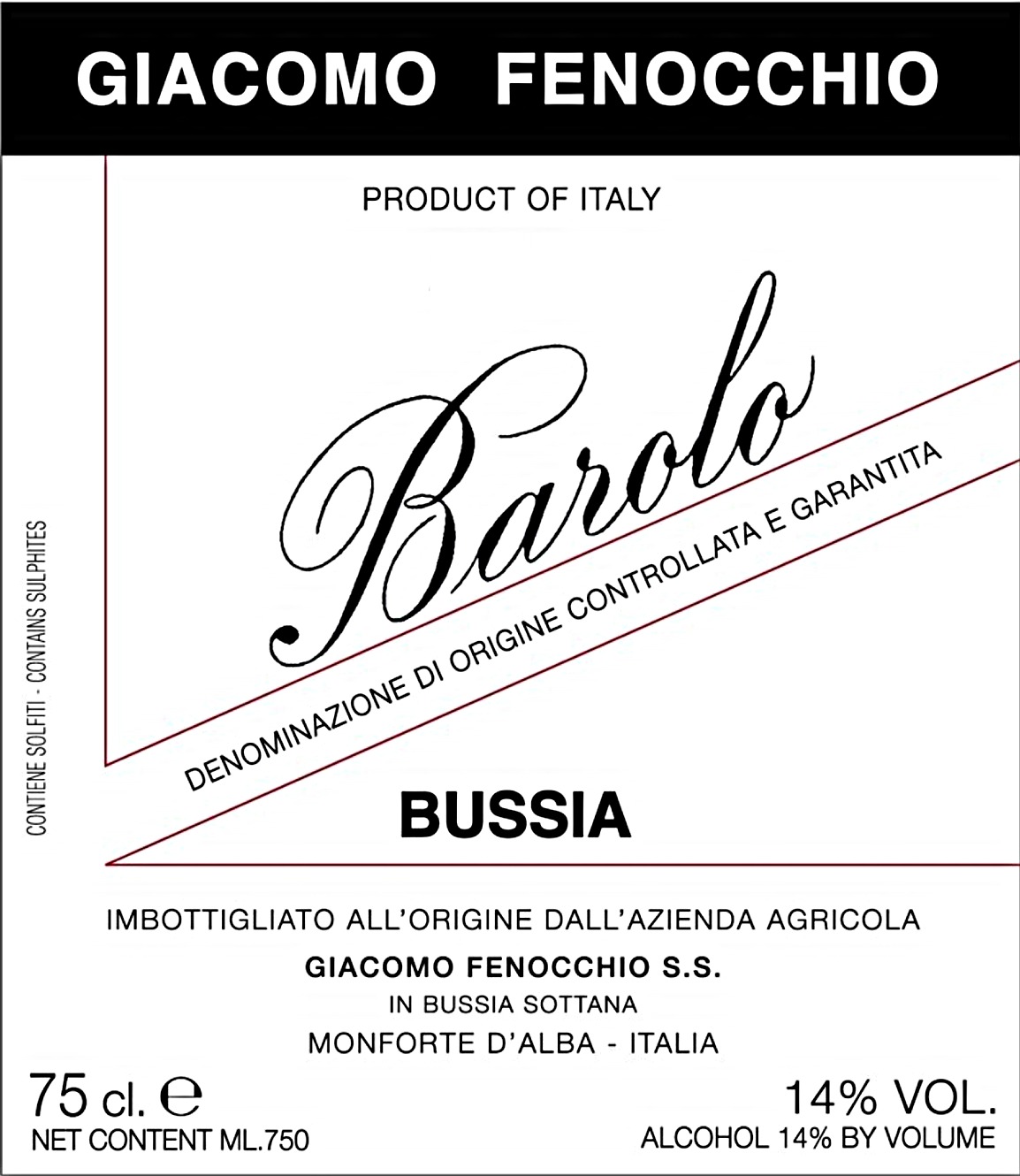
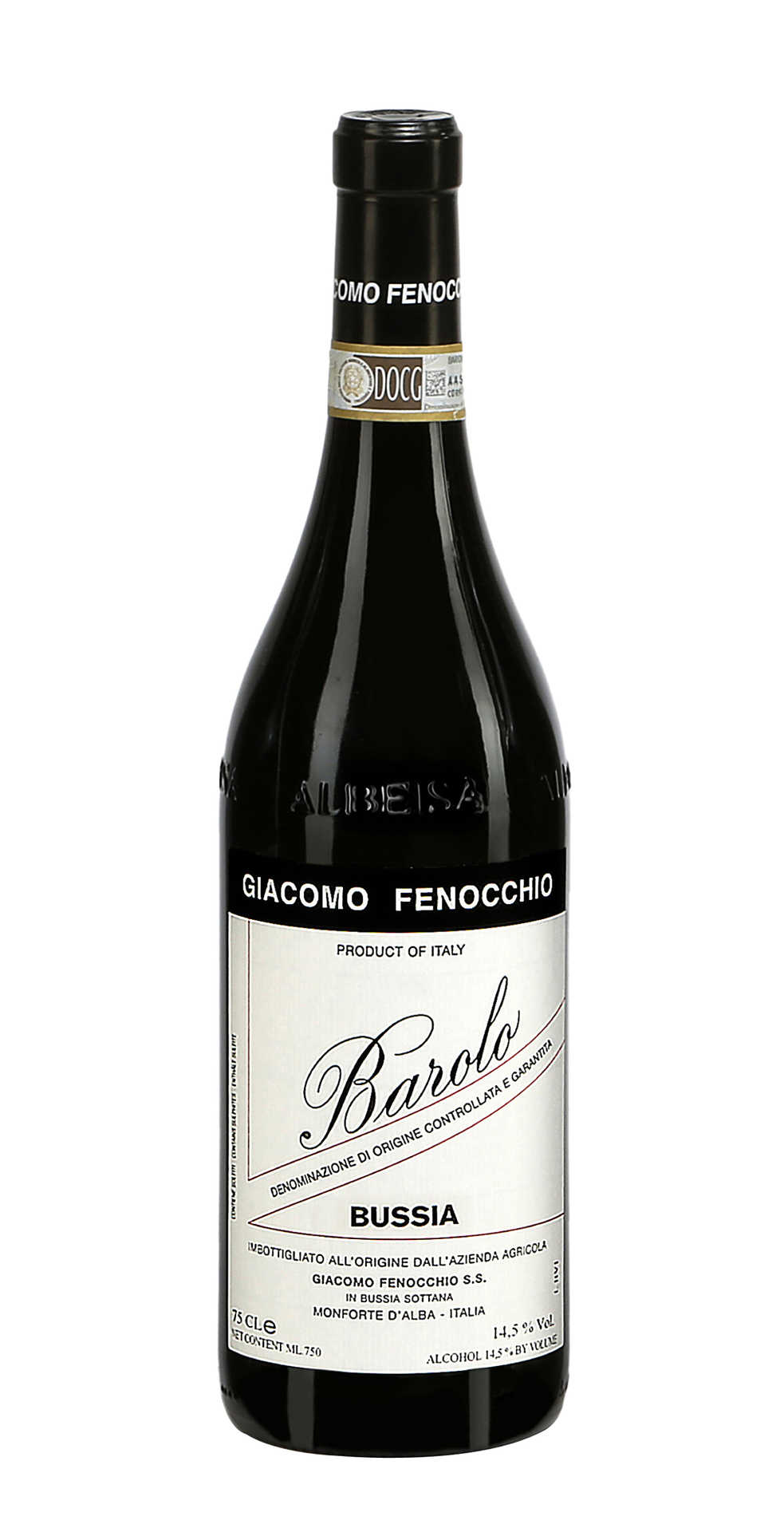
Fenocchio DOCG Bussia Barolo is made from 100 percent Nebbiolo
The color is deep garnet red and the bouquet is fine and pleasing, with intense scents of spiced rose and licorice. The flavor is dry, warm, full bodied and balanced with pronounced tannins and a persistent aftertaste. A wine particularly adapted for aging.
Traditional method of long maceration: natural fermentation without added yeasts for 30 days in stainless steel tanks.
The Barolo Bussia, with its structure and body characteristics, pairs well with dishes of meat, game and aged cheeses, typical dishes of the local cuisine, as well as with many rich international dishes.
Review:
" Pleasant dried-cherry aromas, colored with nutty spice and dried leaves. Full-to medium-bodied with fine, firm and velvety tannins and a long finish of candied-cherry and chocolate. Give it a few years to meld together better. Best from 2025."
- James Suckling (January 2022), 93 pts

Fenocchio DOC Barbera d'Alba Superiore Bussia is made from 100 percent Barbera.
The color is a deep ruby red with garnet reflections. It has a rather intense bouquet, with scents typical of the vine and a full bodied and dry flavor, with a distinct and pleasing acidity. It becomes mature with aging, acquiring a full and balanced flavor.
Parcel is 2.5 hectares (6.2 acres) planted at 300 meters above sea level.
It pairs well with red and white meats, tagliatelle pasta and cheeses.

Fenocchio DOC Nebbiolo Langhe Bussia is made from 100 percent Nebbiolo.
The color is a deep ruby red with garnet reflections and an intense and fruity bouquet of plum and cherry. The flavor is dry with good body, well balanced tannins and harmonious with hints of licorice and rose.
Parcel is 2 hectares (5 acres) planted at 300 meters above sea level.
Pairing well with all types of food, from appetizers to cheeses with red and white meat.

Elvio Cogno Cascina Nuova Barolo 2017
Born to satisfy the curiosity of consumers keen to have a more immediate understanding of Barolo, the wine is bright garnet red in color with orange tints. Pleasing and immediate, it offers scents of flowers and light, delicate spices. The mouth is agreeably rounded, juicy and fresh, with just the right balance between pleasantness and elegance. The aftertaste is very harmonious with a mineral, aromatic finish.
Review:
Attractive dried strawberry with cherry and tar on the nose. Full-bodied with powerful tannins that are dusty and intense. Very flavorful and long. Solid as a rock. Needs at least three or four years to soften and come together.
-James Suckling 95 Points

La Spinona Sori Gepin Barolo is made from 100 percent Nebbiolo.
Color: Brilliant deep ruby red with garnet reflections.
Bouquet: Rich fruity bouquet with hints of violets , spice and mature berries.
Taste: Densely structured with full, complex flavors of ripened red fruits, wood and earth tones. A Huge wine of elegant proportions that become velvety and graceful with aging.
The Beruttis bought 4 hectares in 1994 in the then relatively unknown zone of Novello which lies on the confines of Monforte and Barolo. A Sorì is an entirely south-facing vineyard. This Sori lies at 230 meters. It is named for the great grandfather that started the Barbaresco vineyards. The vines are an average of 40 years old. The first vintage was the 1996.
The Spinona is a special breed of Piedmontese hunting Dog, which the Berutti’s raise. As the legend goes, this particular dog, Baica, received her place of honor on the label for an act of great heroism. She saved the Berutti’s only son from drowning in the irrigation lake when he was a baby. The son then became a veterinarian to save the dogs and later obtained a degree in agronomy to take care of the vineyards.
Brilliant deep ruby red with garnet reflections. Rich fruity bouquet with hints of violets, spice and mature berries. Densely structured with full, complex flavors of ripened red fruits, wood and earth tones. A huge wine of elegant proportions that becomes velvety and graceful with aging.
Review:
-James Suckling 93 Points

Lodovico Barolo Cannubi is made from 100% Nebbiolo.
With a ruby-red color, the Barolo Cannubi has a rich bouquet which gradually recalls the scents of roses flowers, truffles and wood spice. The palate is at first elegant and refined, then is begins to gain in complexity with a little breathing or decanting.
Vine: Nebbiolo, sub-variety Lampia and Michet
Grapes provenance: Cannubi Boschis vineyard in the village of Barolo
Soil: composed mainly of large clayey limestone marls and sands
Vineyards: South-est facing with Guyot pruning (6-8 buds / vine)
N° Vines / hectare: 5000
Yield / hectare: 50-55 q / Ha
Plant year: 1970
Size of the vineyard: 1.3 hectare (3.21 acres) in the family since 1996 out of 40 hectares (98.8 acres) total for Cannubi.
Average height: 250-260 mt
Nebbiolo is a native black grape variety of Piedmont that gives birth also Barolo and Barbaresco. The name ‘Nebbiolo’ derives from the word ‘fog’ and there could be two reasons. The first hypothesis traces the name of Nebbiolo back to the obscured, almost clouded appearance of the grape, covered with abundant bloom. The second hypothesis, more suggestive, is linked to the very late ripening of the grapes: the Nebbiolo grape harvest often takes place in late October, when the vineyards are enveloped in morning mists.
Pairs with aged cheeses, red meat, rich/earthy dishes, truffle risotto, pasta with sausages and mushrooms. Braised or roasted meats.
Fenocchio DOCG Bussia Barolo is made from 100 percent Nebbiolo
The color is deep garnet red and the bouquet is fine and pleasing, with intense scents of spiced rose and licorice. The flavor is dry, warm, full bodied and balanced with pronounced tannins and a persistent aftertaste. A wine particularly adapted for aging.
Traditional method of long maceration: natural fermentation without added yeasts for 30 days in stainless steel tanks.
The Barolo Bussia, with its structure and body characteristics, pairs well with dishes of meat, game and aged cheeses, typical dishes of the local cuisine, as well as with many rich international dishes.
Review:
Rose petal, crushed herb and woodland berry aromas mingle with hints of forest floor and vanilla. Full-bodied and elegantly structured, the delicious palate doles out raspberry compote, ripe cherry, licorice and wild herb before closing on a salty note. Noble tannins provide firm support. Drink 2027–2032.
-Wine Enthusiast 96 Points
The Giacomo Fenocchio Estate
The Fenocchio estate was founded in 1864. For over five generations, with its twelve hectares (thirty acres) of vineyards in the heart of the Barolo production zone, it produces and ages important wines, following in the footsteps of traditions handed down from father to son. In the post-war period, new energy was given to the estate’s work by Giacomo Fenocchio, who began to acquire new vineyard land.
Before the Second World War, the wine was sold principally in local markets: either in bulk or in demijohns, Larger ambitions began only in the early 1960’s, with an eye to foreign markets as well.
Today the sons of Giacomo Fenocchio – Claudio, Albino, and Alberto – export close to eighty per cent of their production, thereby creating a name and reputation for the family and a territory as well as for their wines.
The Giacomo Fenocchio Vineyard
All of the Fenocchio wines are made from the grapes of the estate’s proprietary vineyards located in three different townships: the Bussia in Monforte d’Alba; Villero sub-zone of Castiglione Falletto; and Cannubi in Barolo. All are “grand cru” vineyards and have always been recognized as such for the special microclimates which give them the potential to produce wines of exceptional character and personality and an aristocratic structure. The different characteristics of the soil and, in particular, of the sub-soils of these three subzones give wines which are notably different from one another. The microclimates and the excellent exposures (southeast and southwest) create highly favorable conditions for the ripening of the grapes and create as well special bio-chemical characteristics which produce the outstanding aromas and flavors of the wines made from these grapes.
BUSSIA IN MONFORTE D’ALBA
The soils are of Helvetian origin: compact clay and limestone marls along with tuff in Bussia di Monforte.
CASTIGLIONE FALLETTO – THE VILLERO VINEYARD
Approximately twelve kilometers (seven miles) from Alba, the town of Castiglione Falletto dominates the hillside ridge which runs through the central part of the Barolo appellation. Soils are of Helvetian origin with clay and limestone deposits rich in iron.
THE CANNUBI SUB-ZONE OF BAROLO
Historically eminent among the vineyards and sub-zones with the highest potential for fine Barolo: the oldest bottle of the Langhe district is conserved in the city of Bra and bears the inscription “Cannubi 1752”: the Cannubi name has always been a seal of honor and a true, universally recognized guarantee. Soils are of Tortonian origin, marls and tuff together with a significant presence of sand in the Cannubi vineyard in the township of Barolo, which maintains a soft and dry texture in the soil.

The 2019 Ulysses Cabernet Sauvignon has notes of truffle, blackberries, cassis bud and tobacco with tight polished tannins. A vertical structure and persistent intensity.
Review:
The 2019 Cabernet Sauvignon is mostly Cabernet Sauvignon (90%) with the rest Cabernet Franc and Petit Verdot. Incredible aromatics of red and black currants, spring flowers, graphite, camphor, and cedar define the aromatics, and it's incredibly polished and elegant on the palate, with medium to full body, gorgeous tannins, and a great finish. This is another awesome 2019 that matches ample richness and depth with a terrific sense of finesse.
-Jeb Dunnuck 97 Points

Chateau Arnauds des Bordeaux Rouge is made from 100% Merlot.
The wine shows a deep red purple color and intense aromas of black fruits (blackcurrant, black cherry) with hints of liquorice. Very fruity and well-balanced. It is powerful and well structured in the mouth with round and silky tannins, ripe flavors of black fruits. Strong and a slightly spicy finish.
Grapes are coming from 30 year old vines planted on gravelly soils.
The land benefits from sun exposure, warmth and humidity that are strong assets for the vine culture.
The wine pairs well with game meat and beef on the grill.