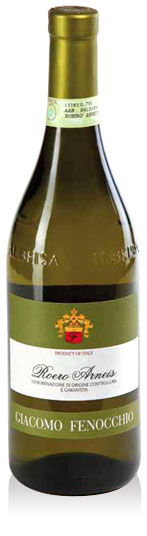
" We don't sell the wine without touching the vine "
| Country: | Italy |
| Regions: | Piemonte Roero |
| Winery: | Giacomo Fenocchio |
| Grape Type: | Arneis |
| Vintage: | 2014 |
| Bottle Size: | 750 ml |

Pazo de Senorans Seleccion de Anada Albarino is made from 100 percent Albarino.
Straw yellow with greenish tints, vivid and brilliant. High intensity and very expressive. Profusion of aromas with traces of mineral. Great volume and ample body leaving a lasting impression from beginning to end.
Reviews:
I think the 2014 Albariño Selección de Añada could be the finest vintage of this characterful long-aging Albariño, from a year with a more moderate 13% alcohol and very high acidity (and low pH) that make the wine fresher and more vibrant. It is developing very slowly and showing quite young after it spent over 30 months with lees in 1,500- and 3,000-liter stainless steel tanks. It has a pale color and an elegant nose with notes of freshly cut grass, white flowers and wet granite. The palate is vibrant with effervescent acidity, and it has a long, dry and tasty finish with an austere sensation, far away from the tropical notes of some past vintages. This is superb and should continue developing nicely in bottle. Bravo! It wasn't bottled until April 2023, and 14,000 bottles were produced.
-Wine Advocate 96 Points
Tech:

Fenocchio DOC Barbera d'Alba Superiore Bussia is made from 100 percent Barbera.
The color is a deep ruby red with garnet reflections. It has a rather intense bouquet, with scents typical of the vine and a full bodied and dry flavor, with a distinct and pleasing acidity. It becomes mature with aging, acquiring a full and balanced flavor.
Parcel is 2.5 hectares (6.2 acres) planted at 300 meters above sea level.
It pairs well with red and white meats, tagliatelle pasta and cheeses.

Fenocchio DOC Nebbiolo Langhe Bussia is made from 100 percent Nebbiolo.
The color is a deep ruby red with garnet reflections and an intense and fruity bouquet of plum and cherry. The flavor is dry with good body, well balanced tannins and harmonious with hints of licorice and rose.
Parcel is 2 hectares (5 acres) planted at 300 meters above sea level.
Pairing well with all types of food, from appetizers to cheeses with red and white meat.

Fenocchio DOCG Bussia Barolo is made from 100 percent Nebbiolo
The color is deep garnet red and the bouquet is fine and pleasing, with intense scents of spiced rose and licorice. The flavor is dry, warm, full bodied and balanced with pronounced tannins and a persistent aftertaste. A wine particularly adapted for aging.
Traditional method of long maceration: natural fermentation without added yeasts for 30 days in stainless steel tanks.
The Barolo Bussia, with its structure and body characteristics, pairs well with dishes of meat, game and aged cheeses, typical dishes of the local cuisine, as well as with many rich international dishes.
Review:
" Pleasant dried-cherry aromas, colored with nutty spice and dried leaves. Full-to medium-bodied with fine, firm and velvety tannins and a long finish of candied-cherry and chocolate. Give it a few years to meld together better. Best from 2025."
- James Suckling (January 2022), 93 pts

Early to bud and early to ripen, the 2014 vintage was our third drought year in a row. Dry, even temperatures marched the grapes along at a steady clip all year and created a wine with beautifully integrated fruit, acidity, and tannin.
Dense and dark magenta in color, this is a lithe and energetic vintage with lifted aromatics and a purity of fruit that lights up the medium-bodied tannin structure. The nose promises fresh black fruits, cherries and a touch of graphite, and the palate completely delivers. Juicy blackberry, plum, and bright cherry explode in the mouth, and develop into savory notes of baked black fruit and fresh pencil shavings on the mid-palate.
Eagle Summit Vineyard’s signature eucalyptus appears on the back palate to brighten the fruit, showing fragrant peppermint and warm, toasty spices through the finish. Whether you open it young or wait a few decades, this vintage does Howell Mountain proud--sophisticated and smart, with a rustic wild side.
Cresta Velia Cabernet Sauvignon Howell Mountain is made from 100 percent Cabernet Sauvignon.
Aged in 100% French oak (86% new)
• 100% Cabernet Sauvignon from Eagle Summit Vineyard on Howell Mountain
• Equal amounts of clone 4 and clone 7
• unfined and unfiltered
Review:
"The 2014 Cabernet Sauvignon is 100% Cabernet aged 20 months in 86% new French oak, with the typical suspects in terms of cooperage – Darnajou, Taransaud, and Remond. This opaque purple-colored wine has plenty of mulberry and blackcurrant fruit along with hints of blackberries, camphor and incense. The are some notes of unsmoked cigar and licorice as well. Ripe, medium to full-bodied and luscious, it is a classic to drink over the next 15 or more years. - RP"
- Robert Parker's Wine Advocate (Issue #228, December 2016), 90 pts

GRAPE
100% Arneis
POSITION
Hillside
EXPOSURE
Southwest
COLOR
Straw yellow with greenish reflections
NOSE
The bouquet is fruity with hints of chamomile and acacia
TASTE
Fresh elegant, fruity aromas with floral hints
TEMPERATURE
Ideal serving temperature is 8°/10°C.
ALCOHOL
12.5 % - 13%
Area of production: Monteu Roero
Fenocchio Roero Arneis 2014 is made from 100% Arneis
Vineyards area: 1.2 hectares (2.98 acres)
Exposition: Southeast
Altimetry: Hilly zone at around 300/350 meters a.s.l
Soil: calcareous,clay, soil of medium texture
Age of the vineyards: 10/15 years
Grape yield per hectare: 70 quintals
Harvest: Mid September
Vinification: The grapes are gently pressed and then the wine-must obtained is refrigerated in stainless steel vats to allow the lees to settle. After 24-36 hours the juice is separated from the lees and fermented at a controlled temperature. Bottling is done in sterile conditions. Aged in stainless steel tanks and matured in the bottle.
Tasting notes: the light hay coloring is loaded with greenish reflections. The fragrance is soft and complex, especially inviting with aromas hinting broom, chamomile and fresh fruit. The flavor is pleasantly tangy, full and very persistent.
Food Pairing: Great as an aperitif. Pairs nicely with saucy dishes white meats and grilled fish .
Serving temperature: Recommended serving temperature is around 10 - 12 degrees Celcius (52-56 degrees Fahrenheit)
Alcohol: Approx. 13-13,5% Vol
Total acidity: Approx. 5.5 – 5.8 g/L
The Giacomo Fenocchio Estate
The Fenocchio estate was founded in 1864. For over five generations, with its twelve hectares (thirty acres) of vineyards in the heart of the Barolo production zone, it produces and ages important wines, following in the footsteps of traditions handed down from father to son. In the post-war period, new energy was given to the estate’s work by Giacomo Fenocchio, who began to acquire new vineyard land.
Before the Second World War, the wine was sold principally in local markets: either in bulk or in demijohns, Larger ambitions began only in the early 1960’s, with an eye to foreign markets as well.
Today the sons of Giacomo Fenocchio – Claudio, Albino, and Alberto – export close to eighty per cent of their production, thereby creating a name and reputation for the family and a territory as well as for their wines.
The Giacomo Fenocchio Vineyard
All of the Fenocchio wines are made from the grapes of the estate’s proprietary vineyards located in three different townships: the Bussia in Monforte d’Alba; Villero sub-zone of Castiglione Falletto; and Cannubi in Barolo. All are “grand cru” vineyards and have always been recognized as such for the special microclimates which give them the potential to produce wines of exceptional character and personality and an aristocratic structure. The different characteristics of the soil and, in particular, of the sub-soils of these three subzones give wines which are notably different from one another. The microclimates and the excellent exposures (southeast and southwest) create highly favorable conditions for the ripening of the grapes and create as well special bio-chemical characteristics which produce the outstanding aromas and flavors of the wines made from these grapes.
BUSSIA IN MONFORTE D’ALBA
The soils are of Helvetian origin: compact clay and limestone marls along with tuff in Bussia di Monforte.
CASTIGLIONE FALLETTO – THE VILLERO VINEYARD
Approximately twelve kilometers (seven miles) from Alba, the town of Castiglione Falletto dominates the hillside ridge which runs through the central part of the Barolo appellation. Soils are of Helvetian origin with clay and limestone deposits rich in iron.
THE CANNUBI SUB-ZONE OF BAROLO
Historically eminent among the vineyards and sub-zones with the highest potential for fine Barolo: the oldest bottle of the Langhe district is conserved in the city of Bra and bears the inscription “Cannubi 1752”: the Cannubi name has always been a seal of honor and a true, universally recognized guarantee. Soils are of Tortonian origin, marls and tuff together with a significant presence of sand in the Cannubi vineyard in the township of Barolo, which maintains a soft and dry texture in the soil.

Paul Hobbs Chardonnay Russian River Valley is made from 100 percent Chardonnay.
Crafted with precision from six pedigreed sites comes a wine that beams with pale straw hue. The newest vintage brings wonderful aromatic intensity: candied lemon peel, white florals followed by crisp green apple. A creamy and viscous texture on the palate is buoyed by white nectarine and dried apricot that’s balanced with a vibrant acidity, bringing focus to the wine’s finish that lingers with hints of flinty mineral notes.
Review:
-Wine Enthusiast 95 Points

Mt Monster Shiraz is 100 percent Shiraz
Deep purple in color. Ripe cassis and black plum fruits on the nose with violets. Varietal fruit-driven palate, with cassis and dark berryfruit and spice flavors. Soft tannins compliment the fruit with mouth-filling generous finish.
French & American oak has been used sparingly to ensure maximum fruit expression is retained in the final wine.
Our Shiraz is fermented in static fermenters at controlled temperatures to retain the varietal aromatics. Once complete the wine is left for 7–10 days on skins to aide in the extraction of soft fleshy tannins and build wine structure.