
" We don't sell the wine without touching the vine "

| Country: | France |
| Region: | Languedoc |
| Winery: | Chateau Fontane |
| Grape Types: | Grenache Syrah |
| Vintage: | 2013 |
| Bottle Size: | 750 ml |
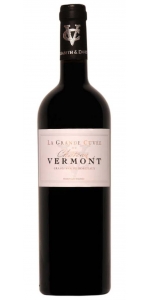
Vermont La Grande Cuvee Rouge is made from 90% Merlot and 10% Petit Verdot.
Produced from the best parcels of the estate, with low yields and optimal maturity, the wine reveals the expression of the Entre-deux-Mers terroir.
The Grande Cuvee boasts a deep ruby color and displays a pleasant bouquet of red berries and plum highlighting the expression of the dominant Merlot. Rich, refined, fruity and deep in structure, the palate shows good concentration and a harmonious balance. Long flavors of ripe fruits and vanilla nuances give way to an elegant cuvee.
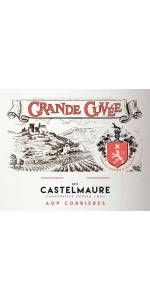
Castelmaure Grande Cuvee Corbieres Rouge is made from 50% Grenache (30 year old) and 50% Syrah (30 year old)..
In the early 1990’s, Castelmaure began experimenting with a Prestige Cuvée of Corbières. This wine has become known as “Grande Cuvée” and is made with the help of the winemaking team of Tardieu-Laurent.
Vinification: destemming, pneumatic press, end of fermentation at 25 degrees C; two racking; aging in tank then in 220 Liter Bordeaux barrels for 10-12 months. Egg fining, slight filtration..
Deep and intense color, powerful aromas of dark berry fruit, prune and coffee nuances, and a persistent finish.
Vineyards: planted on 50% Schist and 50% limestone soils.
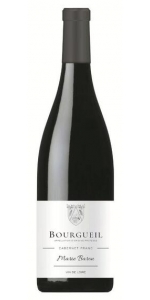
Marie Baron Bourgueil Rouge is made from 100 percent Cabernet Franc.
Bourgueil is a renowned red wine appellation in the Loire Valley, situated on the north bank of the Loire River in Touraine. The appellation is known for producing expressive Cabernet Franc wines that range from light and fruity to structured and age-worthy.
This wine displays a beautiful ruby color with aromas of red fruits, violets, and a characteristic hint of green pepper. On the palate, it is medium-bodied with supple tannins, bright acidity, and flavors of raspberry and blackcurrant with a touch of graphite.
Pairs wonderfully with charcuterie, grilled meats, goat cheese, or rillettes.
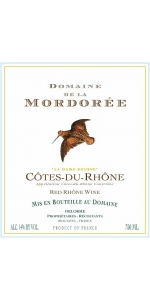
Mordoree Cotes du Rhone Rouge La Dame Rousse is made from 40% Grenache, 30% Syrah, 15% Cinsault, 10% Carignan, 5% Counoise.
20 year old vines.
100 % destemming, 15 day maceration with a maximum of 30° C temperature
Deep red color. Blackcurrant and violet aromas. Melted and fine tannins, good finish.
Food pairing: cold meats and delicatessen, grilled meats, semi-mature cheeses.
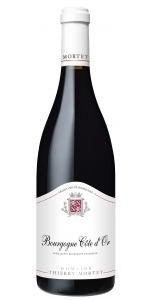
Mortet Bourgogne Cote d'Or Rouge is made from 100 percent Pinot Noir.
A parcel of 90 ares, one part is 20 years old and the other part is 55 years old. Its is called Les Pressonniers, in Gevrey-Chambertin.
Bourgogne Rouge Côte d’Or comes from a plot of Gevrey-Chambertin vines, giving delicate fruit and body, as well as the character and complexity of the Gevrey-Chambertin terro
Mortet Bourgogne Cote d'Or Rouge is made from 100 percent Pinot Noir.
A parcel of 90 ares, one part is 20 years old and the other part is 55 years old. Its is called Les Pressonniers, in Gevrey-Chambertin.
Bourgogne Rouge Côte d’Or comes from a plot of Gevrey-Chambertin vines, giving delicate fruit and body, as well as the character and complexity of the Gevrey-Chambertin terro
Grape varietals: 60% Grenache, 40% Syrah
Total production for this cuvée: 4,444 cases (400hl)
Soil: Clay and Limestone
Aromas black cherry, spice, dried herbs (garrigue) with a very fruity component in the mouth.
Tannins are present but not overpowering. They are very round and well integrated at the same time.
The Chateau Fontane Estate
Encircled by a meander in the Vidourle river, a four kilometre drive from Sommières, the "Château de la Clotte" was built on the ruins of a roman villa. In 1432, according to historical documents, the castle belonged to Comte Pierre de Gange, but it was in XVIII century that Jean Mouton de la Clotte redesigned the property in the style we see it today.(The name of the cuvée "Mouton" is a tribute to him).
In 1792, when it caught fire, the castle was owned by Comte de Montlaur; his family kept the property until last century. In the nineties, Maryline and Philippe Pagès fell under its spell and purchased the domaine. Since that time they have been working to restore the castle to its former magnificence. . Everything is worked by gravity. The first vintage was 2000.
The Chateau Fontane Vineyard
Back in 1993, they planted 40 hectares. Over time, they realized some parcels were better than others and they made a selection keeping only 25 hectares under vines. The Domaine total acreage is 130 hectares.
It is mostly Clay and Limestone soil.
Paul Hobbs Beckstoffer To Kalon Vineyard Cabernet Sauvignon is made from 100 percent Cabernet Sauvignon.
Farmed with a unique precision to match the unparalleled terroir of this historic Oakville site, this vintage is ethereal, delicate, and nuanced. An attractive deep garnet in appearance, this wine expresses soft red cherry, strawberry, floral, and graphite. The palate is full and lively with flavors of blueberry, blackberry, sandalwood, and dried herbs, supported by a lovely grip of tannins and well-tensioned texture that leads to a long, refined finish.
Review:
More expressive and open-knit, the 2019 Cabernet Sauvignon Beckstoffer To Kalon Vineyard sports a similar ruby/purple to go with an incredible array of black raspberry, cassis, flowery incense, orange blossom, smoked tobacco, and exotic spice. As are all To Kolans, it's incredibly perfumed and complex aromatically, and it's one of those wines that changes every time you come back to the glass. Full-bodied on the palate, it offers beautiful richness and depth, a light, graceful mouthfeel, silky tannins, and a heavenly finish. It's another magical wine from this talented winemaker that readers will absolutely love.
-Jeb Dunnuck 99 Points
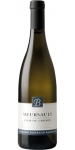
Bachelet Bertrand Meursault Clos du Cromin is made from 100 percent Chardonnay.
Meursault, the world-renowned appellation, has produced mostly fine white wines for centuries. Meursault Clos du Cromin takes its name from the village 'Le Cromin', situated in the north-east of the appellation, close to the Volnay vineyard, in rich, clay soil.
The wine reveals a beautifully transparent and brilliant color, a subtle nose of citrus fruits, butter and honey, and a long finish.
Pairs with a noble fish, or white meat in sauce.