" We don't sell the wine without touching the vine "
| Country: | Austria |
| Region: | Poysdorf |
| Winery: | Martin Hugl |
| Grape Type: | Zweigelt |
| Vintage: | 2018 |
| Bottle Size: | 750 ml |
Despite its relative youth, Zweigelt is actually an Austrian classic. This variety was created in 1922, when Dr. Fritz Zweigelt crossed two grapes - St Laurent and Blaufränkisch. Originally, it was intended for the new variety to be called Rotburger, referring to the place where it was born, Klosterneuburg. But this name never took hold, and instead, Zweigelt was named after the man who was the key in its development.
Today, Zweigelt is the most widely planted red variety in Austria, growing in nearly 9% of this country's vineyards. It is a robust grape, highly resistant to dryness, frost and various diseases.
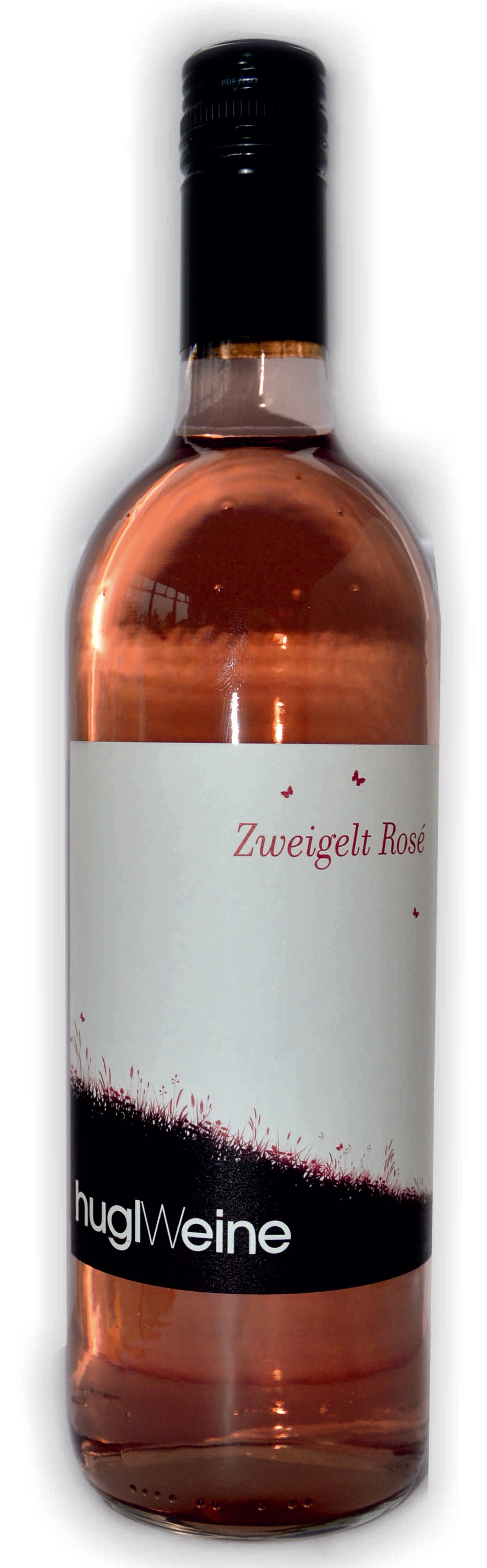
The wine boasts a pale rosé color, it has plenty of fruity aromas, with red cherry and wild strawberry flavors. It is medium-bodied, but it still have a nice long and pleasant finish with a light cinnamon type of spice to it.
Only the best grapes are harvested with a lot of experience and know-how and further processed. The grapes are fermented directly gently pressed and cooled. The fermentation takes place exclusively in stainless steel tanks.
Perfectly at home on any picnic, delicious with fried chicken, and tames the heat when paired with spicy dishes. There is also a slight watermelon note that makes it perfect for spring and summer. A great pairing with barbecued shrimp.
Despite its relative youth, Zweigelt is actually an Austrian classic. This variety was created in 1922, when Dr. Fritz Zweigelt crossed two grapes - St Laurent and Blaufränkisch. Originally, it was intended for the new variety to be called Rotburger, referring to the place where it was born, Klosterneuburg. But this name never took hold, and instead, Zweigelt was named after the man who was the key in its development.
Today, Zweigelt is the most widely planted red variety in Austria, growing in nearly 9% of this country's vineyards. It is a robust grape, highly resistant to dryness, frost and various diseases.
The wine boasts a pale rosé color, it has plenty of fruity aromas, with red cherry and wild strawberry flavors. It is medium-bodied, but it still have a nice long and pleasant finish with a light cinnamon type of spice to it.
Only the best grapes are harvested with a lot of experience and know-how and further processed. The grapes are fermented directly gently pressed and cooled. The fermentation takes place exclusively in stainless steel tanks.
Perfectly at home on any picnic, delicious with fried chicken, and tames the heat when paired with spicy dishes. There is also a slight watermelon note that makes it perfect for spring and summer. A great pairing with barbecued shrimp.
Despite its relative youth, Zweigelt is actually an Austrian classic. This variety was created in 1922, when Dr. Fritz Zweigelt crossed two grapes - St Laurent and Blaufränkisch. Originally, it was intended for the new variety to be called Rotburger, referring to the place where it was born, Klosterneuburg. But this name never took hold, and instead, Zweigelt was named after the man who was the key in its development.
Today, Zweigelt is the most widely planted red variety in Austria, growing in nearly 9% of this country's vineyards. It is a robust grape, highly resistant to dryness, frost and various diseases.
The wine boasts a pale rosé color, it has plenty of fruity aromas, with red cherry and wild strawberry flavors. It is medium-bodied, but it still have a nice long and pleasant finish with a light cinnamon type of spice to it.
Only the best grapes are harvested with a lot of experience and know-how and further processed. The grapes are fermented directly gently pressed and cooled. The fermentation takes place exclusively in stainless steel tanks.
Perfectly at home on any picnic, delicious with fried chicken, and tames the heat when paired with spicy dishes. There is also a slight watermelon note that makes it perfect for spring and summer. A great pairing with barbecued shrimp.
Despite its relative youth, Zweigelt is actually an Austrian classic. This variety was created in 1922, when Dr. Fritz Zweigelt crossed two grapes - St Laurent and Blaufränkisch. Originally, it was intended for the new variety to be called Rotburger, referring to the place where it was born, Klosterneuburg. But this name never took hold, and instead, Zweigelt was named after the man who was the key in its development.
Today, Zweigelt is the most widely planted red variety in Austria, growing in nearly 9% of this country's vineyards. It is a robust grape, highly resistant to dryness, frost and various diseases.
The wine boasts a pale rosé color, it has plenty of fruity aromas, with red cherry and wild strawberry flavors. It is medium-bodied, but it still have a nice long and pleasant finish with a light cinnamon type of spice to it.
Only the best grapes are harvested with a lot of experience and know-how and further processed. The grapes are fermented directly gently pressed and cooled. The fermentation takes place exclusively in stainless steel tanks.
Perfectly at home on any picnic, delicious with fried chicken, and tames the heat when paired with spicy dishes. There is also a slight watermelon note that makes it perfect for spring and summer. A great pairing with barbecued shrimp.
SALE!
Hugl Zweigelt Secco Rose is made from 100% Zweigelt
Despite its relative youth, Zweigelt is actually an Austrian classic. This variety was created in 1922, when Dr. Fritz Zweigelt crossed two grapes - St Laurent and Blaufränkisch. Originally, it was intended for the new variety to be called Rotburger, referring to the place where it was born, Klosterneuburg. But this name never took hold, and instead, Zweigelt was named after the man who was the key in its development.
Today, Zweigelt is the most widely planted red variety in Austria, growing in nearly 9% of this country's vineyards. It is a robust grape, highly resistant to dryness, frost and various diseases.
Lively, fruity bouquet of strawberry, cherry and floral aromas. Refreshing and beautifully balanced, this is a great wine to enjoy as an aperitif. This is a Secco for the whole day and the whole night
The wine is made of 100% Zweigelt grapes of 15-35 years old (25 years old in avarage).
The soil is mainly loam and loess.
It is made using the Charmat method and the wine is aged for 3 months on the lees in stainless steel tanks.
The wine is slightly filtered before bottling.
Drink by itself as an aperitif, it is also a great picnic or brunch wine and will be a good pick to celebrate any occasion.
Hugl Zweigelt Classic is made from 100 percent Zweiglt.
Despite its relative youth, Zweigelt is actually an Austrian classic. This variety was created in 1922, when Dr. Fritz Zweigelt crossed two grapes - St Laurent and Blaufränkisch. Originally, it was intended for the new variety to be called Rotburger, referring to the place where it was born, Klosterneuburg. But this name never took hold, and instead, Zweigelt was named after the man who was the key in its development.
Today, Zweigelt is the most widely planted red variety in Austria, growing in nearly 9% of this country's vineyards. It is a robust grape, highly resistant to dryness, frost and various diseases.
The wine boasts a concentrated color, fruity and spicy aromas, cherry flavors. Full-bodied, smooth and round, the wine is an ideal food companion.
SALE!
Despite its relative youth, Zweigelt is actually an Austrian classic. This variety was created in 1922, when Dr. Fritz Zweigelt crossed two grapes - St Laurent and Blaufränkisch. Originally, it was intended for the new variety to be called Rotburger, referring to the place where it was born, Klosterneuburg. But this name never took hold, and instead, Zweigelt was named after the man who was the key in its development.
Today, Zweigelt is the most widely planted red variety in Austria, growing in nearly 9% of this country's vineyards. It is a robust grape, highly resistant to dryness, frost and various diseases.
The wine boasts a pale rosé color, it has plenty of fruity aromas, with red cherry and wild strawberry flavors. It is medium-bodied, but it still have a nice long and pleasant finish with a light cinnamon type of spice to it.
Only the best grapes are harvested with a lot of experience and know-how and further processed. The grapes are fermented directly gently pressed and cooled. The fermentation takes place exclusively in stainless steel tanks.
Perfectly at home on any picnic, delicious with fried chicken, and tames the heat when paired with spicy dishes. There is also a slight watermelon note that makes it perfect for spring and summer. A great pairing with barbecued shrimp.
The Martin Hugl Estate
This is a young family-run winery located in the north-east of Austria, in Ketzelsdorf-Poysdorf. The owners Sylvia and Martin Hugl aim to produce fruity, full-bodied wines that are typical of the region and the soils. They make use of the experience of their parents and combine it with their know-how and modern techniques to create high-quality wines. To keep quality high they limit quantity by cutting back, thinning, and green harvesting. A careful handling of the grapes during harvesting is as necessary, along with a cool fermentation in the cellar.
Total production in 2009 was 340,000 liters: 76% white, 24% red (actually no rose and sparkling wine, production - rose is planned for vintage 2010)
For the European market they use only varietal names and offer two types of wines made from Grüner Veltliner: Weinviertel DAC – a regional brand with specially controlled quality and rules for selling it, and Grüner Veltliner classic as a second type of Grüner.
Names of their Grüner Veltliner single vineyards, and quantities produced:
Zapfersberg: 5,000 liters
Rösselberg: 15,000 liters
Waldberg: 25,000 liters
Unführ: 3,000 liters
Luss: 3,000 liters
Baumfeld: 3,000 liters
Junge Geringen: 10,000 liters
Alte Geringen: 15,000 liters
The Martin Hugl Vineyard
In addition to using the best cellar technologies, they emphasize the work in the vineyards and the soils. Prime south- and south-west-facing hillsides and the loam soil ideally suited for wine growing are the basic conditions for high quality. They own and cultivate 22 hectares of vineyards and cooperate additionally with several partners who are cultivating grapes according to their quality targets. They buy grapes from 25 hectares of vineyards.
Grüner Veltliner is the most widely planted grape variety in Austria, accounting for 37% of the country's total vineyard area, about 50,875 acres. Most of these vines are in the large wine region known as Niederösterreich (Lower Austria), along the Danube River, north of Vienna. It also grows in a few other Eastern European countries, such as Slovakia, Yugoslavia and the Czech Republic, but the variety is most closely associated with Austria, where it has been cultivated since Roman times. Grüner Veltliner is the indigenous variety of Austria.
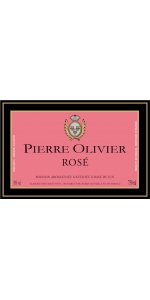
Pierre Olivier Sparkling Rose NV is a value sparkling rosé, made with Tempranillo grapes from around the French/Spanish border (next to the Pyrenees). This is a new Kysela Project.
This wine is aromatized with a very little amount of Raspberry flavor, giving a nice mouthfeel, with an extra aromatic boost.
The bubbles are obtained using the Charmat method, named after Eugene Charmat, where the second fermentation takes places in a large, closed pressurized tank. It is different from the Methode Champanoise as the secondary fermentation doesn't take place in the bottle.
"Pale pink salmon. Just a touch off-dry, this is a very pleasant sparkler that reveals aromas of spicy red apple with a hint of cinnamon that carry through to the palate. Well made and exceedingly pleasant to drink."
- International Wine Review (Annual Rosé Report / April 2013), 89 pts

Pierre Olivier Brut Vin Mousseux NV is made from 100% Airen.
A value sparkling brut, made with Airen grapes from around the French/Spanish border (next to the Pyrenees). This is a new Kysela Project.
The bubbles are obtained using the Charmat method, named after Eugene Charmat, where the second fermentation takes places in a large, closed pressurized tank. It is different from the Methode Champanoise as the secondary fermentation doesn't take place in the bottle.
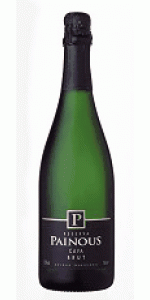
Grape varieties: Parellada 40%, Macabeo 30% and Xarel·lo 30%.
Harvest: Occurs in 3 stages. Macabeo within the first fortnight of September, Xarello during the second fortnight in September and Parellada within the first fortnight of October.
First fermentation and vinification: This is a "Methode Traditionnelle" with
soft pressing of the grapes to obtain 60% of the must (flower must). It is decanted and fermented with controlled temperatures of 18ºC for 20 days until it fully develops the primary aromas of the grapes.
Secondary fermentation: takes place in the bottle for 40 days at a temperature of 16ºC and final ageing for 20 months. Residual sugar: 7 gr. per litre.
Color: Pale yellow with green tones. Shiny and clear.
Aromas: Powerful in the nose, clean. Ageing aromas.
Taste: Soft and well structured, long aftertaste and good balance of acidity and sugar contents.
Gastronomy: It should be served chilled between 5ºC and 7ºC. A flute type glass is recommended. Excellent with pasta, red and soft meats and white fish.Painous is unique in that it is a Cava-Joven style sparkling wine, meaning, the wine receives the minimum aging of 9 months. This allows crisp, fresh aromas and flavors to be expressed. It is delicious for aperitif.
Review:
"Golden straw color. Aromas and flavors of brown butter poached pear, marzipan, lemon and apple, and floating in the pool with the grill going with a round, crisp, finely carbonated, dry medium body and an interesting, medium-length finish manifesting notes of dried apples, apricot jam, blanched almonds, and jasmine rice with no oak flavor. Layers of flavor from fruit to earth dance on the tongue for a classic expression of sparkling wine from Catalonia."
- Beverage Testing Institute (November 2022), 91 pts - Gold Medal
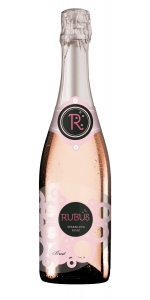
Rubus Brut Rose is made from 60% Tempranillo, 40% Bobal.
The Rubus Project was created by Fran Kysela as a way to source & sell incredible wines at value prices. All wines in this international project are hand-selected by Fran Kysela. Rubus wines are fruit driven, true-to-type values that over deliver - a true representation of quality for the consumer at an excellent price.
Stunning salmon-pink hues. The nose is intense and fine, dominated by notes of red berries. On the palate, the combination of fine bubbles and delicate aromas produces a delightfully light and silky rosé.
Machine harvest. The base wine is fermented at a low temperature. The second fermentation takes place at 14°C for 2 weeks, followed by dosing.
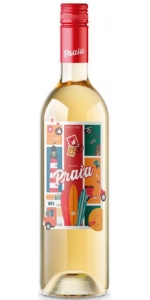
Praia Aveleda Vinho Verde NV is made from 40% Loureiro, 20% Trajadura, 20% Arinto, 20% Azal.
Praia, which means "beach" in Portuguese, is a smooth and fresh wine with delicate and lovely fruity flavors. Slightly spritzy, it is well balanced and very refreshing.
The region is typical for its unique wines that are fresh and light, combined with a very well balanced acidity. These characteristics result from the region's unique soil and climate, with a strong Atlantic influence that you will identify when you taste it.
The wine is ideal as an aperitif or throughout a meal, especially with fish, seafood, white meat and salads. Due to it freshness, it is particularly pleasant in a relaxed and informal ambiance.
SALE!
Hugl Zweigelt Secco Rose is made from 100% Zweigelt
Despite its relative youth, Zweigelt is actually an Austrian classic. This variety was created in 1922, when Dr. Fritz Zweigelt crossed two grapes - St Laurent and Blaufränkisch. Originally, it was intended for the new variety to be called Rotburger, referring to the place where it was born, Klosterneuburg. But this name never took hold, and instead, Zweigelt was named after the man who was the key in its development.
Today, Zweigelt is the most widely planted red variety in Austria, growing in nearly 9% of this country's vineyards. It is a robust grape, highly resistant to dryness, frost and various diseases.
Lively, fruity bouquet of strawberry, cherry and floral aromas. Refreshing and beautifully balanced, this is a great wine to enjoy as an aperitif. This is a Secco for the whole day and the whole night
The wine is made of 100% Zweigelt grapes of 15-35 years old (25 years old in avarage).
The soil is mainly loam and loess.
It is made using the Charmat method and the wine is aged for 3 months on the lees in stainless steel tanks.
The wine is slightly filtered before bottling.
Drink by itself as an aperitif, it is also a great picnic or brunch wine and will be a good pick to celebrate any occasion.
Long Shadows Feather Cabernet Sauvignon is made from 100 percent Washington State Cabernet.
Acclaimed Napa Valley vintner Randy Dunn has a reputation for producing world-class Cabernet Sauvignon. He brings more than four decades of winemaking experience to the Columbia Valley to produce Feather, his only wine made outside of California.
Tasting Notes: Deep crimson colored with pure and expressive Cabernet Sauvignon character. Generous aromas and flavors of dark fruits, violets, coffee and toasted herbs combine with a textured mid-palate to deliver a big, yet focused, wine with polished tannins and persistent finish.
Winemaking: Grapes were hand-harvested at the peak of ripeness, then lightly crushed and fermented in small stainless steel tanks. Once fermentation was underway, the cap was pumped over aggressively to extract color and structure. As fermentation neared completion, pump overs were handled more gently to further extract color and flavors without imparting harsh tannins. The finished wine was aged 22 months in 90% new Vicard French oak barrels (Randy's cooper of choice at Dunn Vineyards as well).
Alcohol: 14.4%
pH: 3.86
TA: 0.58 grams / 100ml
Review:
All Cabernet Sauvignon and a blend put together by Randy Dunn, the 2021 Cabernet Sauvignon Feather is inky purple-hued and offers a brilliant nose of cassis, new leather, graphite, and truffly earth. This rich, spicy, full-bodied Cabernet Sauvignon has terrific purity, a deep, layered mid-palate, and a broad, layered, expansive mouthfeel that keeps you coming back to the glass. Drink this remarkable Washington State Cabernet Sauvignon over the coming two decades.
-Jeb Dunnuck 97 Points
Ruttenstock Gruner Veltliner Ried Reipersberg DAC is 100% Gruner Veltliner.
The wine offers a touch of pear, spice and dried fruit aromas on the nose, and exotic fruit characters.
Minerality emerges from the primary rock soils, followed by an elegant and lively finish.
Pairs well with chicken and pork dishes.